Artwork
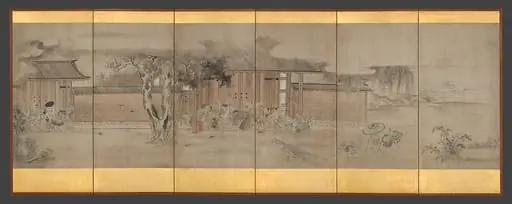
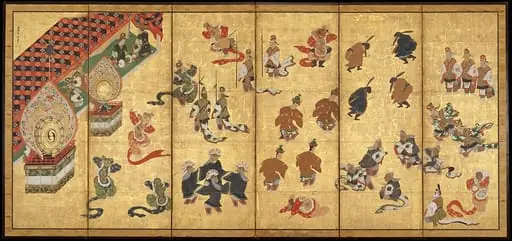
舞楽図屏風 ・唐獅子図屏風|Bugaku Dances (front); Chinese Lions (reverse)
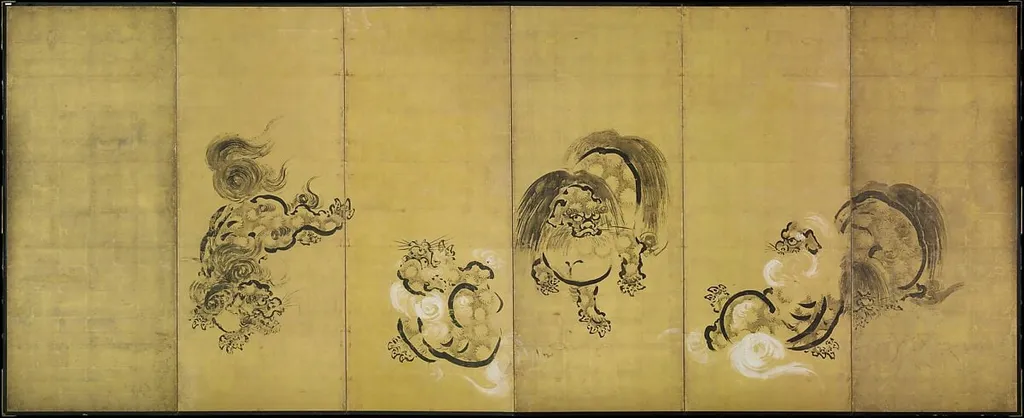
舞楽図屏風 ・唐獅子図屏風|Bugaku Dances (front); Chinese Lions (reverse) is an ink painting by the Baroque artist Hanabusa Itchō. It dates from 1716 and is held in the collection of the Metropolitan Museum of Art.
About this work
Overview
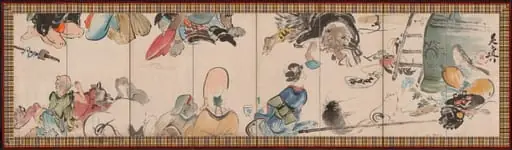
Hanabusa Itchō’s six‑panel folding screens, completed in 1716, present a dual program: the front side depicts a procession of dancers performing the courtly Bugaku, while the reverse side portrays three stylized Chinese lions poised amid swirling clouds. Both scenes are rendered on paper with ink, pigments and gold leaf, creating a vivid contrast between human ceremony and mythic animal vigor.
Subject & Meaning
The Bugaku figures, dressed in richly patterned robes, advance in a synchronized line, their outstretched arms suggesting ritualized movement and the auspicious power of music in the imperial court. Opposite them, the lions—symbols of protection and exotic prestige imported from Chinese iconography—stand on ethereal clouds, their dynamic forms embodying strength and the supernatural.
Technique & Style
Itchō employs bold, flowing lines to delineate the dancers, while the lions are rendered with thick, expressive brushstrokes that convey the texture of fur and a sense of motion. Gold leaf applied to the background amplifies the luminous atmosphere, and the use of vibrant mineral pigments accentuates the ceremonial costumes and the fantastical cloudscape.
History & Provenance
Created during the Edo period, the screens reflect the era’s fascination with courtly performance and foreign motifs. They entered the collection of The Metropolitan Museum of Art in the early twentieth century, where they have been conserved as a representative example of Itchō’s versatile oeuvre and the period’s screen painting tradition.
Context
The work illustrates the cross‑cultural exchange prevalent in early eighteenth‑century Japan, merging indigenous Bugaku dance traditions with Chinese lion imagery that had become fashionable in decorative arts. Such paired screens were often used as interior partitions, allowing viewers to experience contrasting narratives within a single decorative object.
Artist & collection