Artwork
Untitled
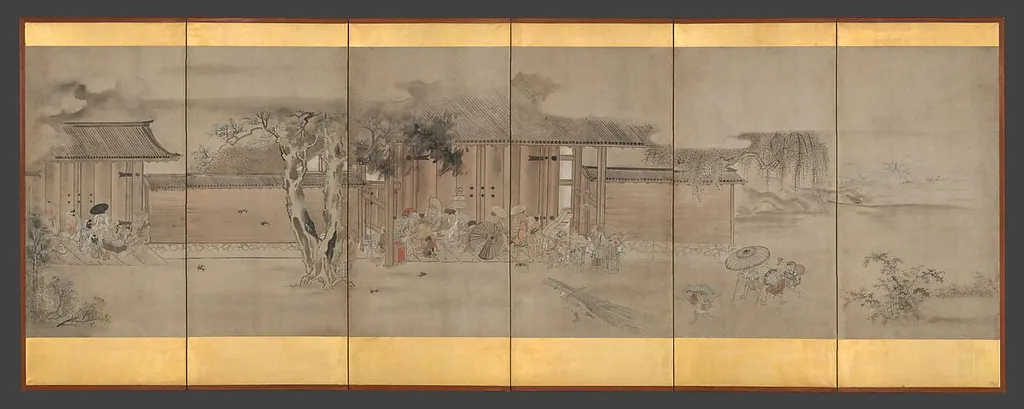
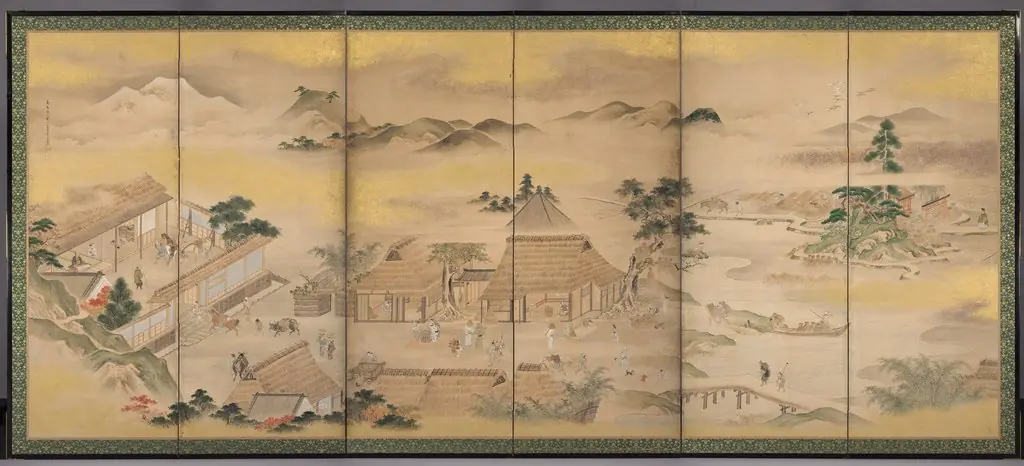
Untitled is an ink painting by the Baroque artist Hanabusa Itchō. It dates from 1709 and is held in the collection of the Metropolitan Museum of Art.
About this work
Overview
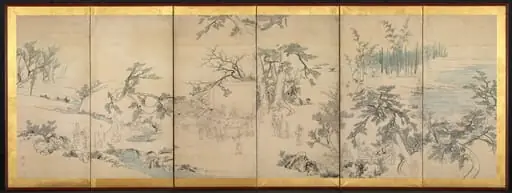
The composition is rendered in ink and subtle color washes, dominated by grays, browns and soft greens, with occasional red highlights on garments and parasols.
Hanabusa Itchō’s six‑panel folding screen, dated 1709, presents a muted landscape of a courtyard where figures are seated, strolling, or pausing beneath trees and tiled roofs. The composition is rendered in ink and subtle color washes, dominated by grays, browns and soft greens, with occasional red highlights on garments and parasols. A veil of rain or mist softens the architectural outlines, giving the scene a tranquil yet animated atmosphere.
Subject & Meaning
The work captures an everyday moment in a communal space, emphasizing the rhythm of ordinary life. Small groups of people are dispersed across the panels, suggesting a narrative of social interaction without a single focal event. The misty ambience and gentle lighting convey a sense of transience, inviting contemplation of the fleeting nature of daily routines.
Technique & Style
Itchō employs swift, sketch‑like brushwork to delineate forms, allowing the ink lines to suggest movement rather than detail. Color is applied in thin washes, creating a layered effect that merges figures with their surroundings. The use of cross‑hatching in shadowed areas builds texture, while the restrained palette reinforces the atmospheric quality of the scene.
History & Provenance
Created in the early eighteenth century, the screen entered the collection of the Metropolitan Museum of Art, where it is currently conserved. Its provenance traces back to Japanese private collections before being acquired by the museum, reflecting the broader interest in Edo‑period folding screens among Western institutions.
Context
During the Edo period, multi‑panel screens served both decorative and functional purposes, partitioning interior spaces while displaying artistic narratives. Itchō, known for blending literati painting with popular subjects, often depicted informal settings that contrasted with the more formal courtly scenes favored by his contemporaries. This work exemplifies that synthesis, aligning with the period’s appreciation for everyday elegance.
Artist & collection

 Literary Gathering in the Orchid Pavilion
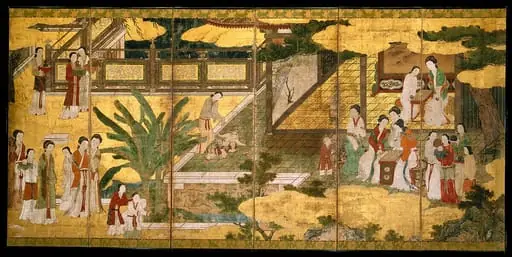 伝狩野永徳筆 唐美人唐子図屏風|Chinese Women and Children in a Palace Garden
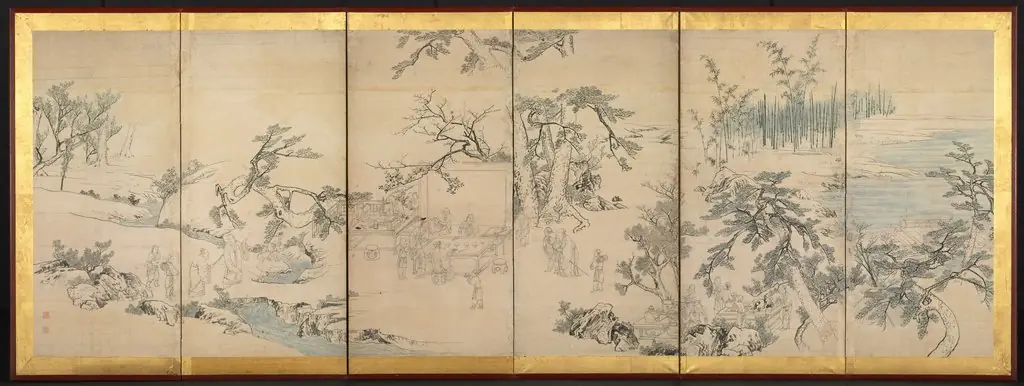 Literary Gathering in the Orchid Pavilion
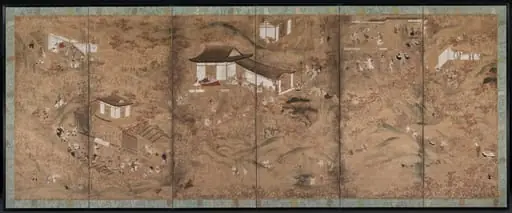 Autumn in the Mountains
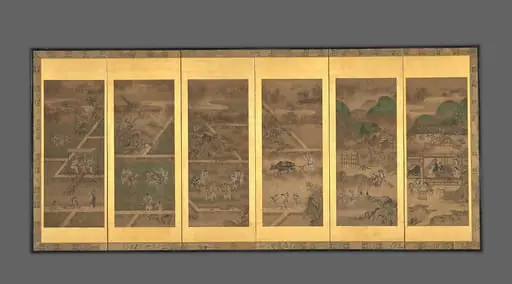 農耕作月次図屏風|Farmers' Lives in the Twelve Months
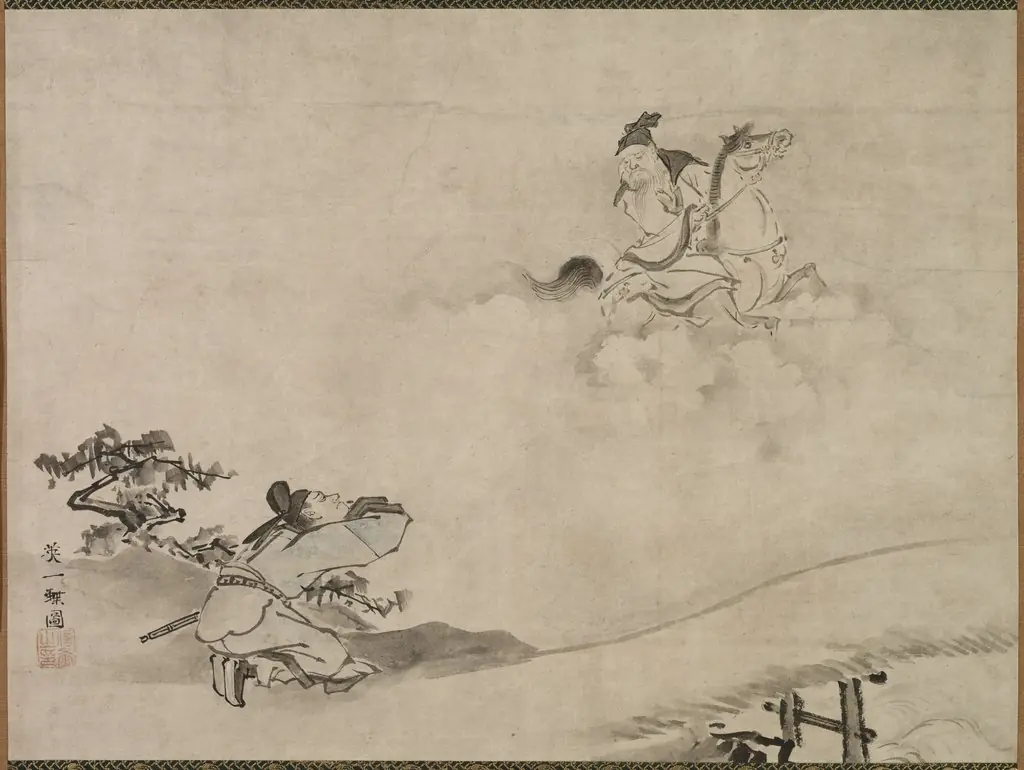
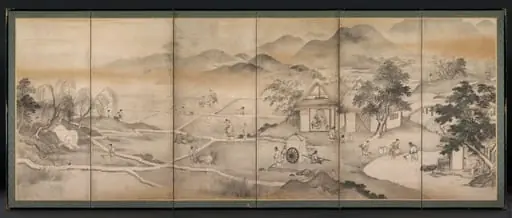 Emperor Yao Visiting Yu Chonghua
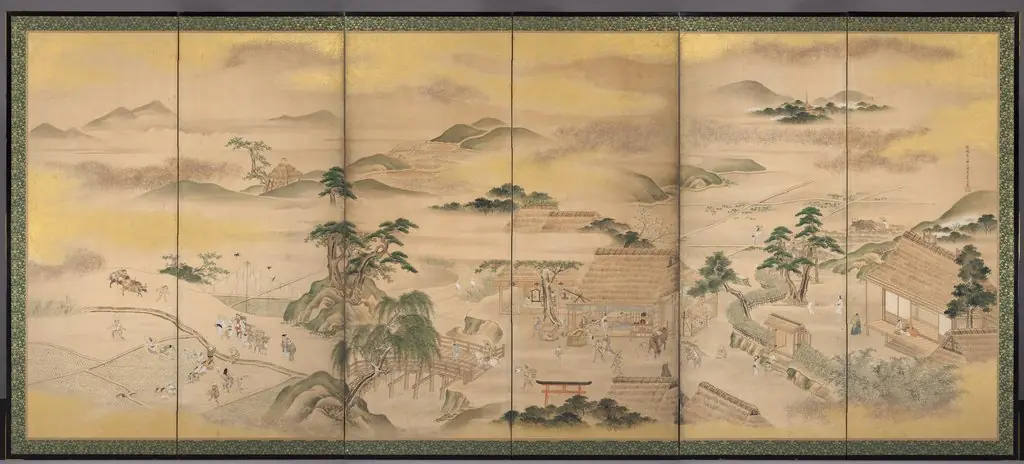 Spring and Autumn Farming (Spring)
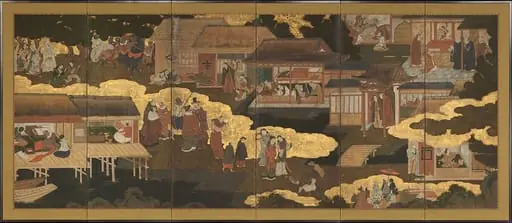 南蛮屏風|Arrival of the Europeans
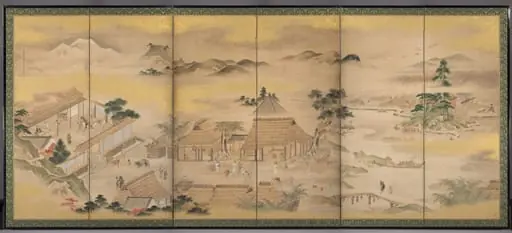 Spring and Autumn Farming (Autumn)
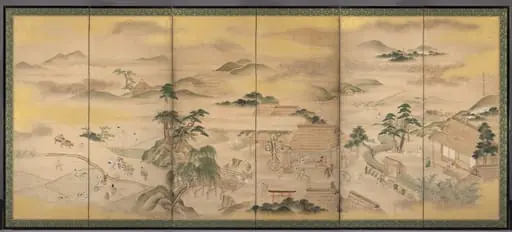 Spring and Autumn Farming (Spring)
 Spring and Autumn Farming (Autumn)
 Landscape