Artwork
Lamentation
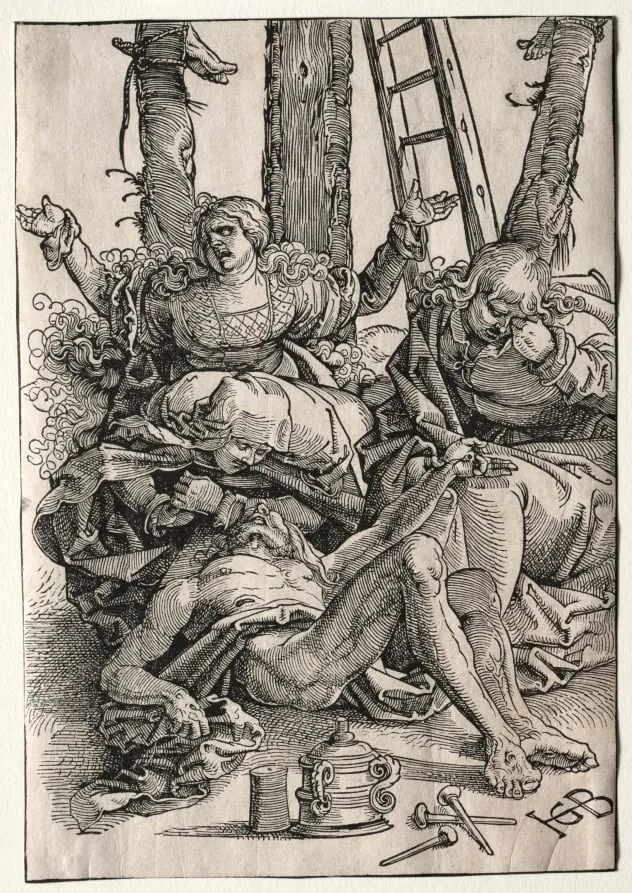
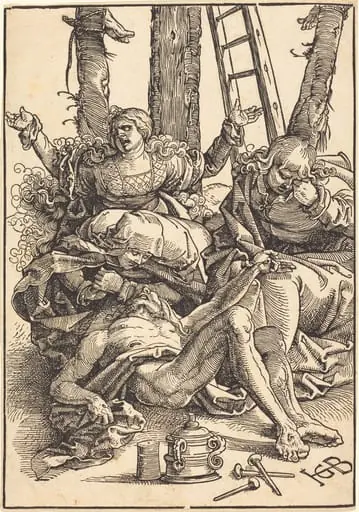
Lamentation is a print by the Renaissance artist Hans Baldung Grien. It dates from 1516 and is held in the collection of the Cleveland Museum of Art.
About this work
Overview
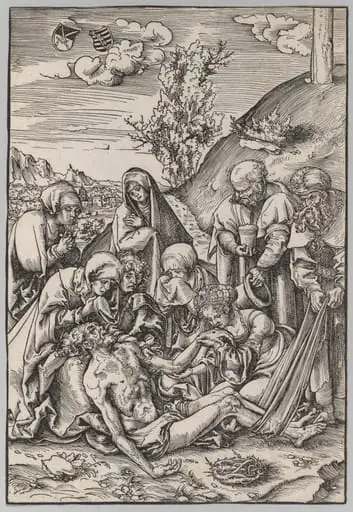
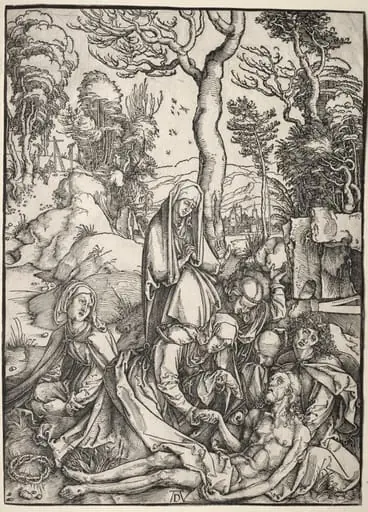
Baldung’s Lamentation is a woodcut that captures the moment after Christ’s crucifixion, with mourners clustered tightly around his lifeless body. The composition’s tight framing and abrupt upper edge create a sense of confinement, heightening emotional intensity. Unlike conventional depictions, the scene is viewed from a low angle, drawing the viewer into the immediate space of grief.
Subject & Meaning
Mary Magdalene’s wildly flowing hair and outstretched arms amplify the emotional turbulence.
The figures surround Christ’s body in postures of anguish, their faces contorted in sorrow. Mary Magdalene’s wildly flowing hair and outstretched arms amplify the emotional turbulence. The inclusion of the instruments of the Passion—nails, crown of thorns—placed near the viewer’s space, transforms the scene from distant narrative to visceral experience, emphasizing human loss over divine transcendence.
Technique & Style
Baldung employs sharp, angular lines and exaggerated foreshortening to compress the figures into a shallow, crowded space. The woodcut medium allows for bold contrasts and rhythmic repetition, particularly in the swirling curls of Mary Magdalene, which function as visual echoes of distress. The truncated top and tilted plane disrupt traditional spatial harmony, prioritizing emotional impact over pictorial balance.
History & Provenance
Created around 1515, this woodcut emerged during Baldung’s mature period in Strasbourg, a center of Reformation thought. It reflects his engagement with humanist themes and the growing interest in psychological depth in religious imagery. The print was widely circulated, contributing to the dissemination of emotionally charged devotional imagery beyond elite audiences.
Context
While contemporaries like Dürer favored serene compositions and subtle tonal transitions, Baldung rejected sfumato in favor of stark, expressive forms. His approach aligned with northern European tendencies toward emotional immediacy, contrasting with Italian ideals of harmony. The work responds to a cultural shift toward personal, embodied piety in the early Reformation era.
Legacy
Baldung’s Lamentation influenced later northern artists seeking to convey inner turmoil through distorted form and compressed space. Its radical perspective and emotional rawness prefigured Mannerist tendencies and provided a model for depicting grief without idealization. The print remains a key example of how printmaking could convey psychological depth with minimal means.
Artist & collection
Artist
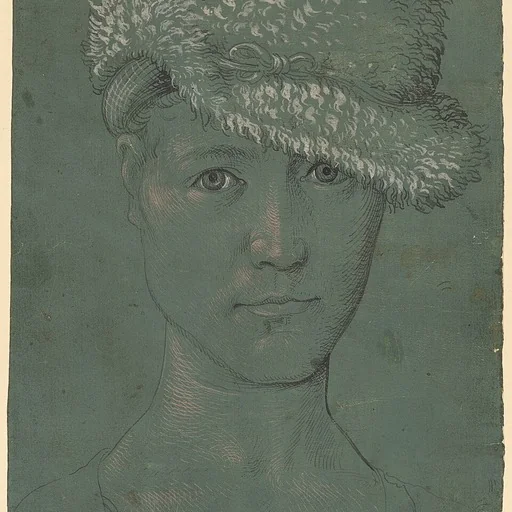
Hans Baldung (1484 or 1485 – September 1545), called Hans Baldung Grien, (being an early nickname, because of his predilection for the colour green), was a painter, printer, engraver, draftsman, and stained glass…

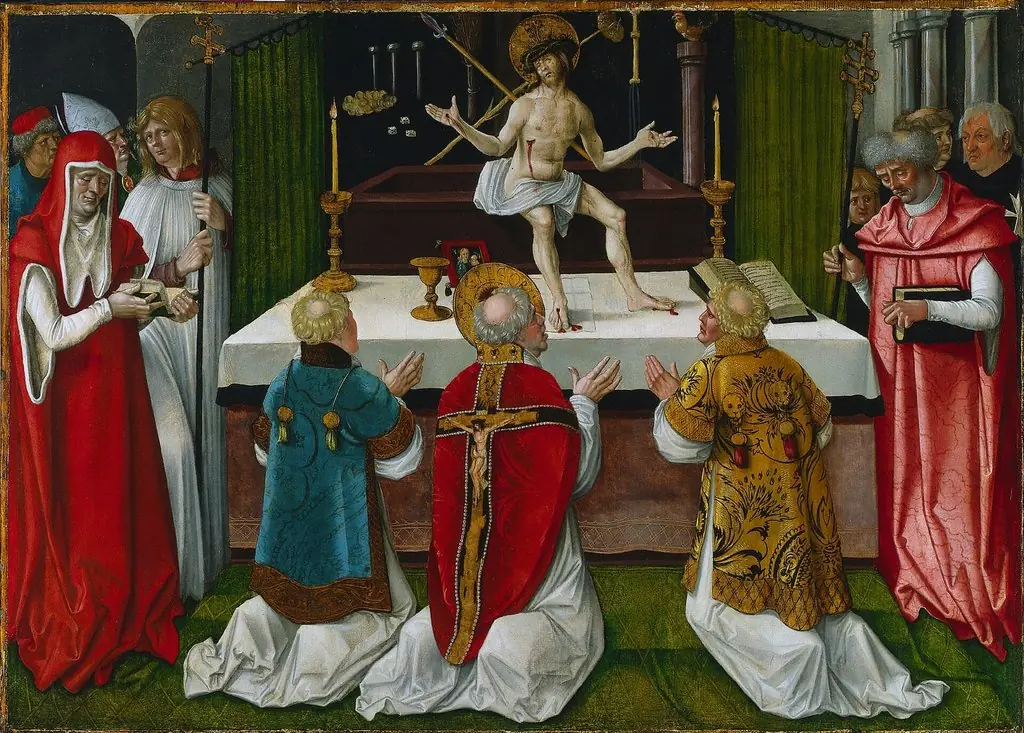
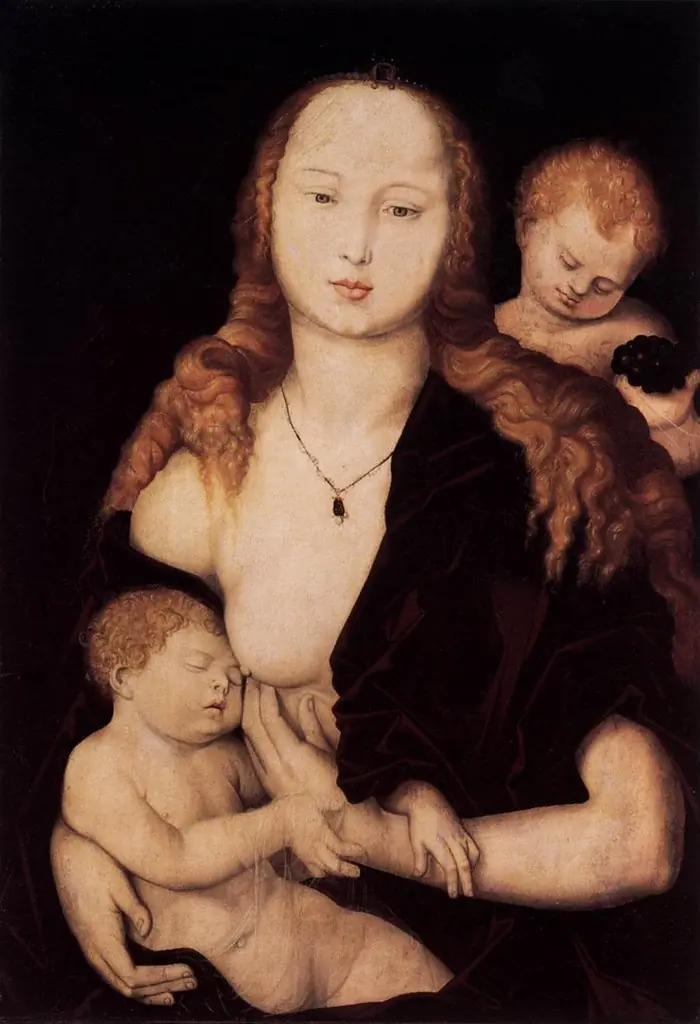
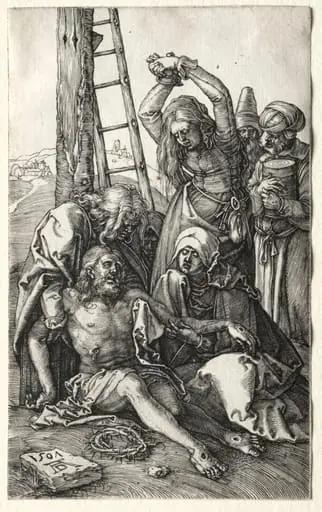 The Lamentation
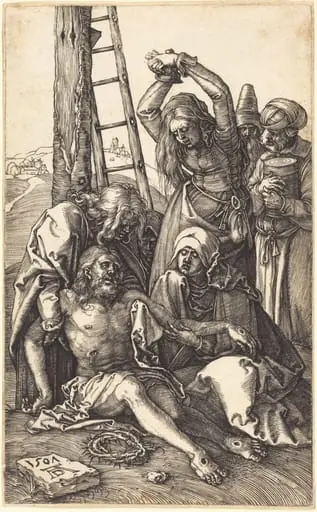 The Lamentation
 The Lamentation
 Lamentation for Christ
 Hercules Conquering Cacus ("Ercules")
 The Entombment
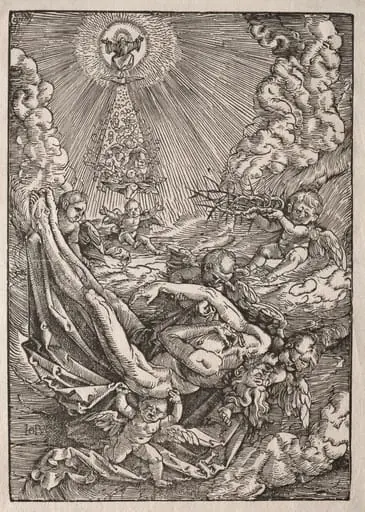 Christ Carried to Heaven by Angels
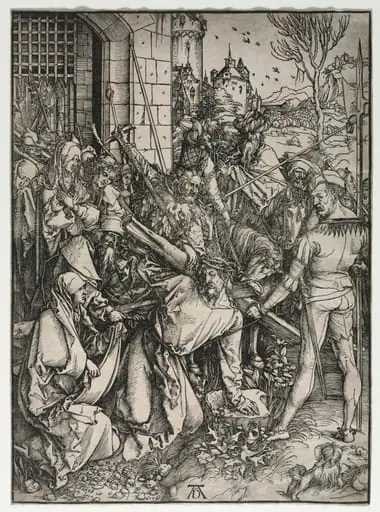 The Great Passion: Christ Bearing the Cross
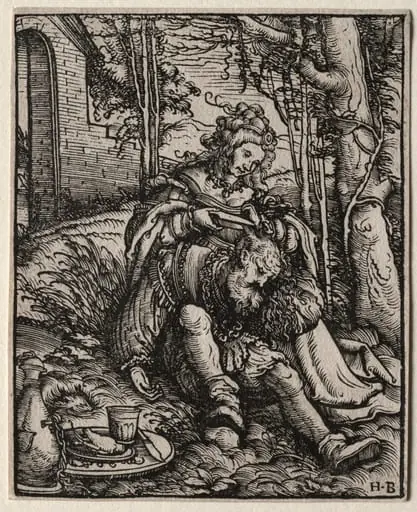 Samson and Delilah
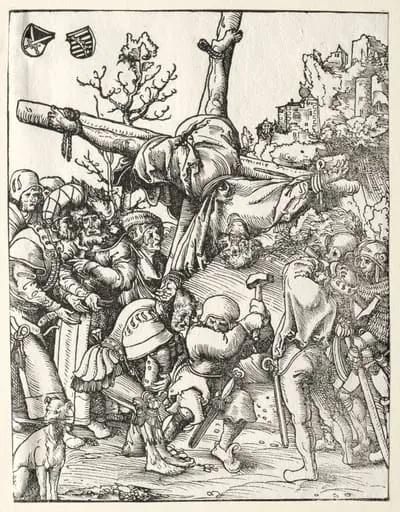 Martyrdom of St. Peter
 The Passion: The Lamentation
 The Great Passion: The Lamentation of Christ