Artwork
Samson and Delilah
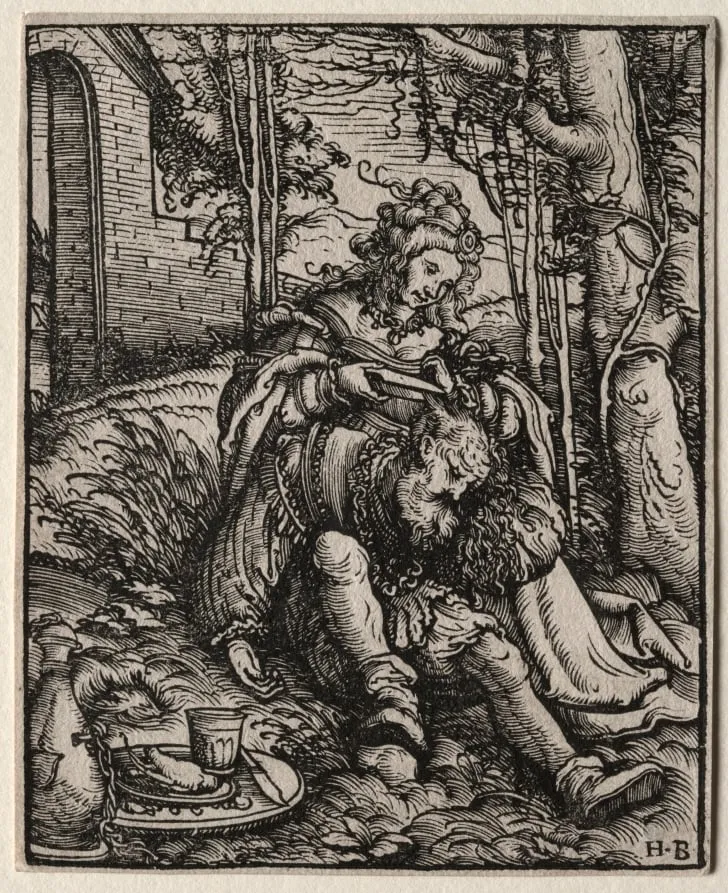
Samson and Delilah is a print by the Renaissance artist Hans Burgkmair the Elder. It dates from 1519 and is held in the collection of the Cleveland Museum of Art.
About this work
Overview
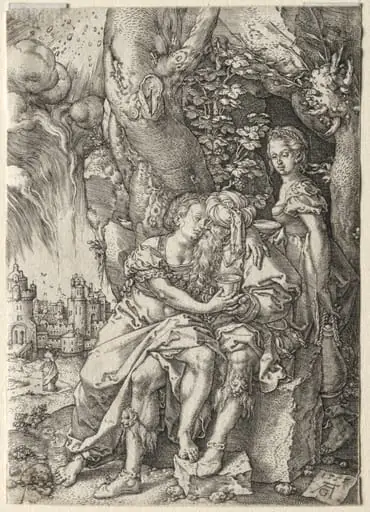
This woodcut depicts the biblical episode in which Samson, the Nazirite famed for his strength, is rendered vulnerable as Delilah trims his hair. The composition captures a quiet moment: Samson reclines on Delilah’s lap, eyes closed, while soldiers loom in the background and a wine vessel rests nearby, signalling the circumstances of his surrender.
Subject & Meaning
The image illustrates the pivotal instant before Samson’s power is lost, emphasizing betrayal over violence. Delilah’s act, prompted by Philistine bribery, symbolizes the perils of yielding to temptation and neglecting sacred vows, a theme that resonated in Protestant northern Europe as a moral warning against moral laxity.
Technique & Style
Executed as a print by Hans Brosamer, the work employs fine line work and delicate shading to create a soft illumination on the figures, lending the scene an almost serene atmosphere. The inclusion of a chalice and ewer mirrors similar compositional choices by contemporaries such as Hans Burgkmair, who used a single beaker to underscore the role of wine.
History & Provenance
Brosamer’s rendition belongs to the tradition of early 16th‑century Northern European prints that circulated widely among Protestant audiences. The print’s provenance traces through several private collections before entering a museum holding, reflecting its continued relevance as an illustrative example of Reformation‑era biblical interpretation.
Context
During the Reformation, the story of Samson and Delilah served as an allegory for the dangers of spiritual complacency. Artists in the Germanic lands frequently chose this narrative to convey didactic messages, aligning biblical drama with contemporary concerns about personal piety and the corrupting influence of worldly pleasures.
Artist & collection
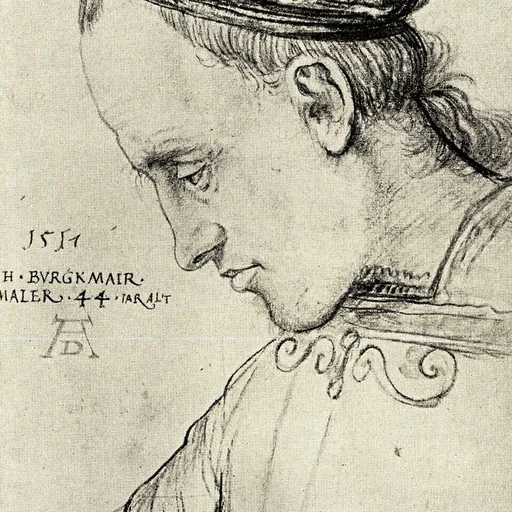
Artist
Hans Burgkmair the Elder (1473–1531) was a German artist, born in Augsburg.