Artwork
The Great Passion: Christ Bearing the Cross
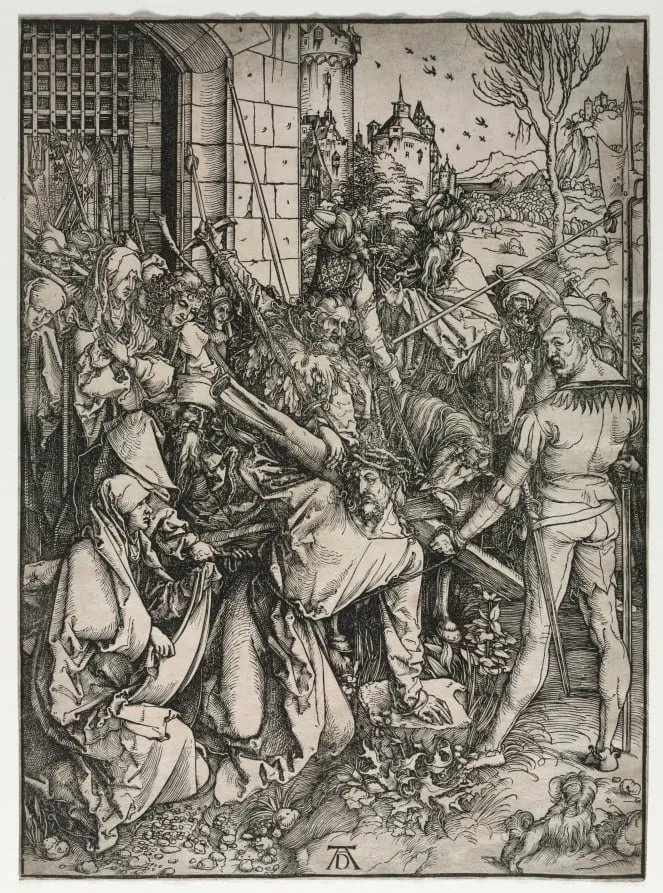
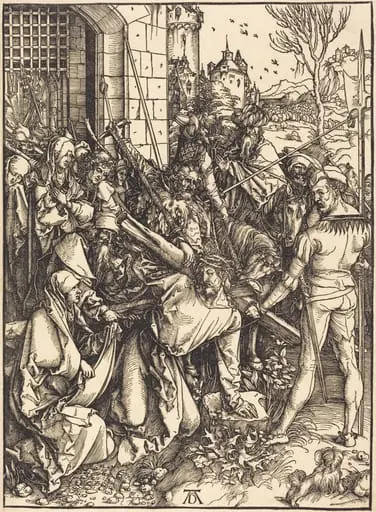
The Great Passion: Christ Bearing the Cross is a print by the Renaissance artist Albrecht Dürer. It dates from 1504 and is held in the collection of the Cleveland Museum of Art.
About this work
Overview
Dürer, a pivotal German artist of the early 16th century, elevated printmaking to new levels of complexity and emotional depth.
Created around 1504, *The Great Passion: Christ Bearing the Cross* is a woodcut by Albrecht Dürer, part of a larger series illustrating the suffering and death of Christ. Dürer, a pivotal German artist of the early 16th century, elevated printmaking to new levels of complexity and emotional depth. This work reflects his engagement with Italian Renaissance ideals, particularly in its spatial organization and anatomical precision, while retaining Northern European attention to detail.
Subject & Meaning
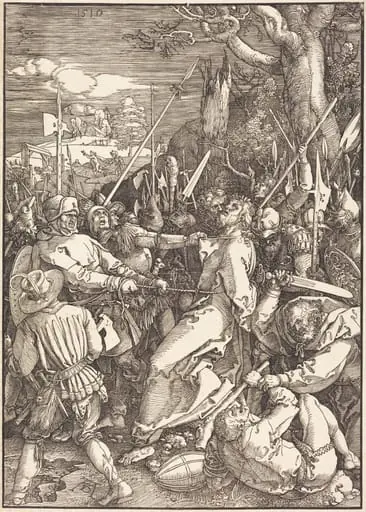
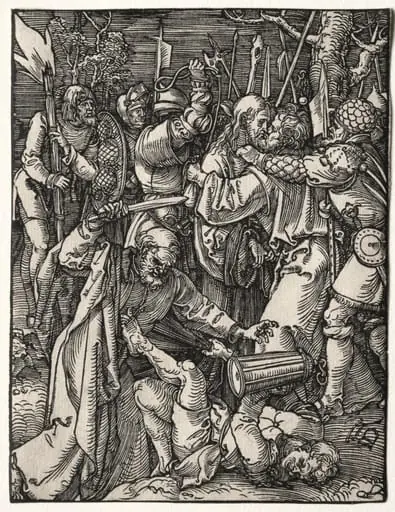
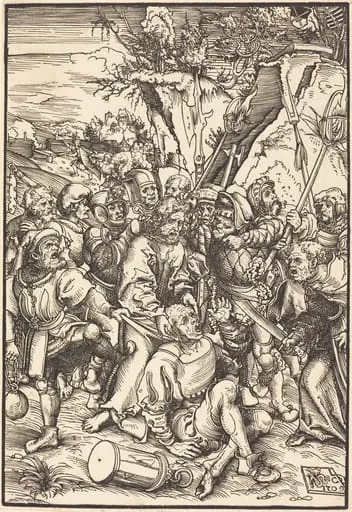
The scene captures Christ, burdened by the cross, surrounded by a turbulent crowd of soldiers and onlookers. His pale robe and crown of thorns mark him as the central figure amid chaos, emphasizing his isolation and endurance. The figures around him—some aggressive, others indifferent—reflect human complicity in suffering. The composition avoids overt sentimentality, instead inviting contemplation of sacrifice through quiet dignity and physical strain.
Technique & Style
Dürer employed fine, controlled lines in woodcut to render intricate textures: the rough grain of the cross, the folds of fabric, the metallic glint of weapons. Chiaroscuro is achieved through dense hatching and varying line weight, creating dramatic contrast and spatial depth. The background cityscape, rendered with architectural precision, anchors the scene in a recognizable world, enhancing the narrative’s immediacy without distracting from the central figure.
History & Provenance
The print was produced during Dürer’s most prolific period, shortly after his return from Italy, where he absorbed classical forms and humanist themes. It circulated widely across Europe, contributing to his international reputation. The Cleveland Museum of Art acquired the work as part of its significant collection of Northern Renaissance prints, preserving it as a key example of early modern print culture.
Context
Dürer’s Passion series emerged amid religious upheaval and growing lay interest in personal devotion. By translating biblical narratives into accessible, widely distributed prints, he bridged sacred imagery and public piety. His fusion of Northern detail with Italian compositional harmony responded to broader cultural currents, positioning printmaking as a vehicle for both artistic innovation and spiritual reflection.
Legacy
This woodcut helped redefine the potential of the medium, influencing generations of printmakers across Europe. Its restrained emotional power and technical rigor became benchmarks for narrative clarity in graphic art. Dürer’s approach to the Passion theme—neither overly theatrical nor merely illustrative—set a precedent for later depictions of religious suffering in both print and painting.
Artist & collection
Artist
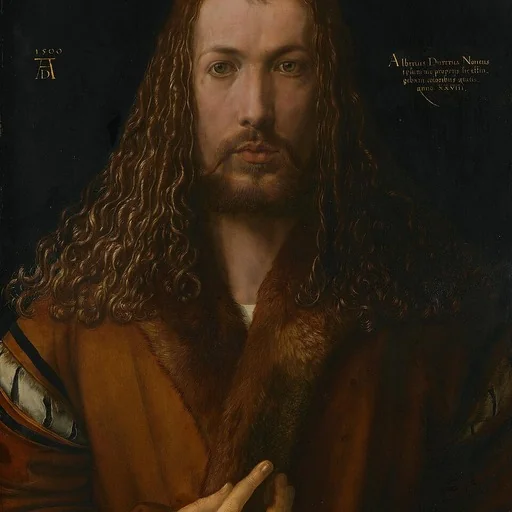
Albrecht Dürer spent his life in Nuremberg, a busy German city where artists traded prints like currency.

![Madonna and Child [obverse], by Albrecht Dürer](https://artifactworldgallery.com/img/albrecht-durer--madonna-and-child-obverse--d7b8ebf05d22ebe5-w320.webp)
![Lot and His Daughters [reverse], by Albrecht Dürer](https://artifactworldgallery.com/img/albrecht-durer--lot-and-his-daughters-reverse--b4ebf9b282faa17a-w320.webp)