Artwork
Treasures of the Sea
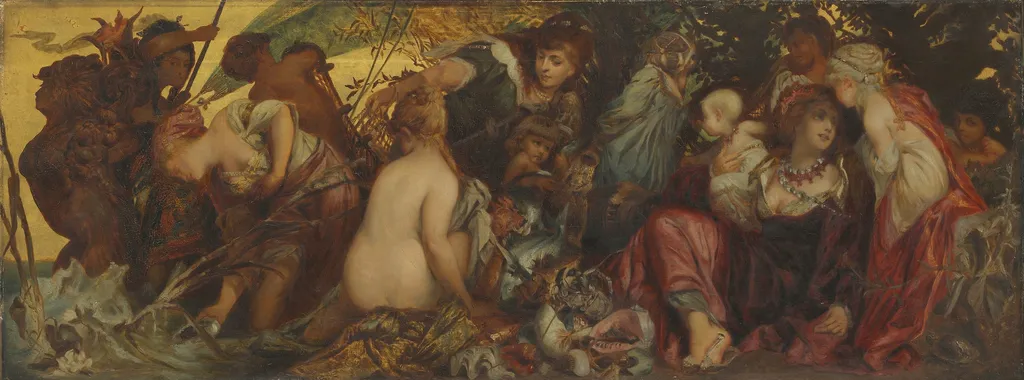
Treasures of the Sea is an oil painting by the Realist artist Hans Makart. It dates from 1872 and is held in the collection of the Art Institute of Chicago.
About this work
Overview
Though often grouped with Realism, its emphasis on idealized form and symbolic content aligns more closely with late 19th-century academic conventions.
Painted in 1872, *Treasures of the Sea* is an oil on canvas by Austrian artist Hans Makart. It belongs to the academic tradition of history painting, blending allegory with classical aesthetics. Though often grouped with Realism, its emphasis on idealized form and symbolic content aligns more closely with late 19th-century academic conventions. The work reflects Makart’s reputation for elaborate, theatrical compositions that appealed to elite audiences across Central Europe.
Subject & Meaning
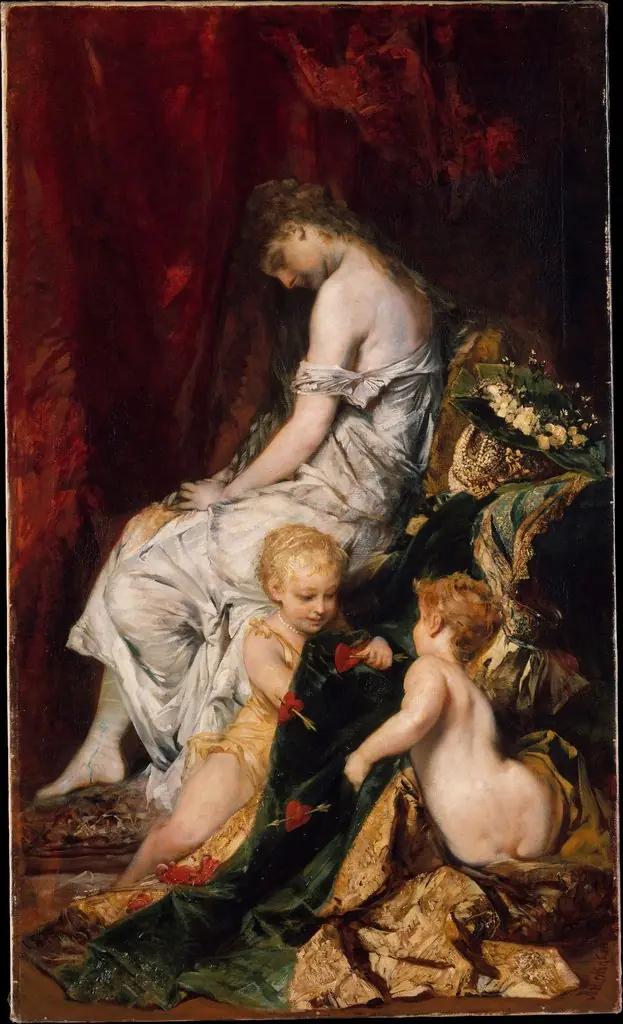
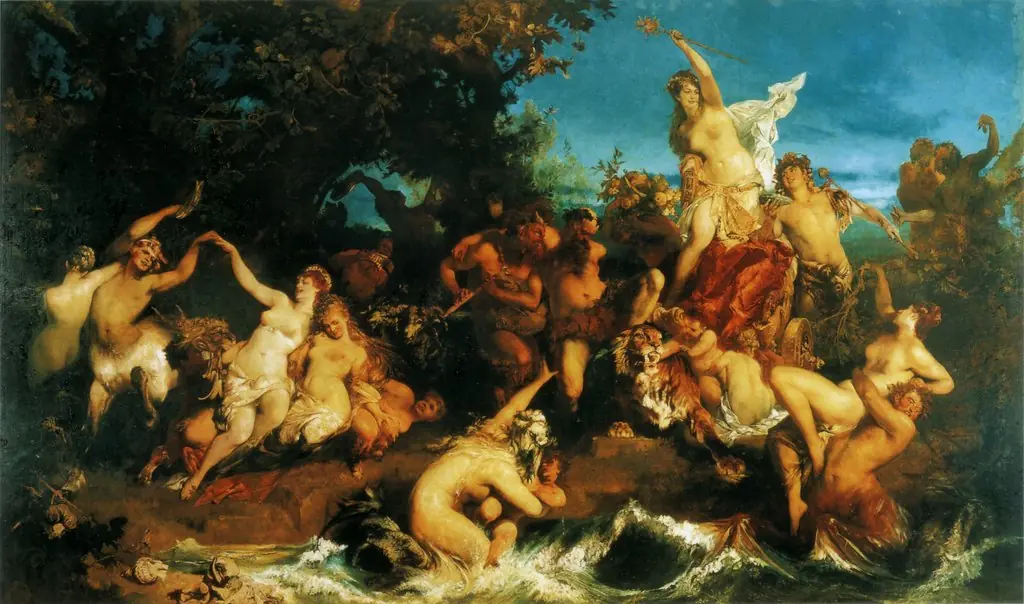
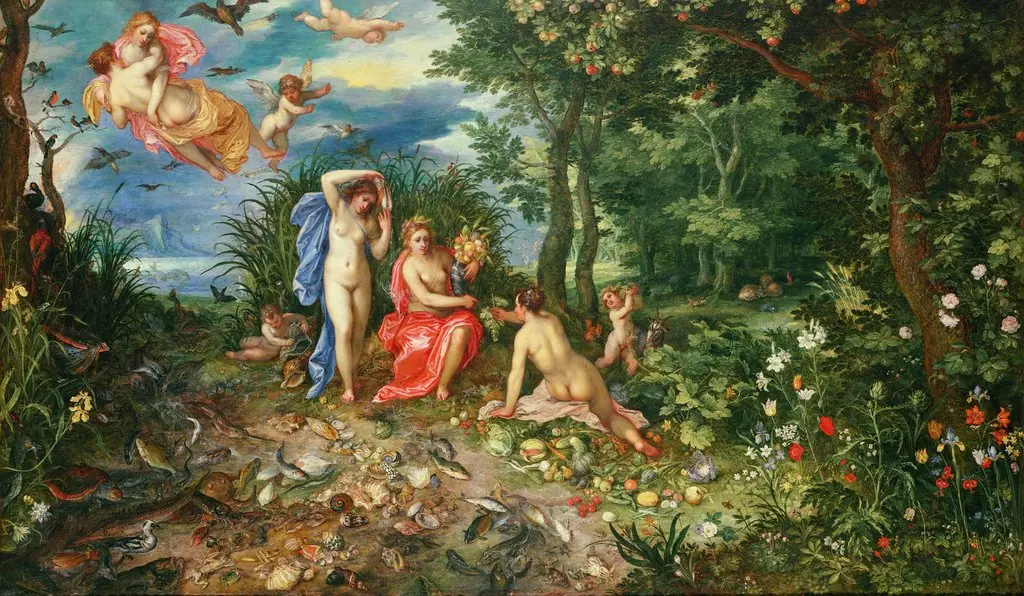
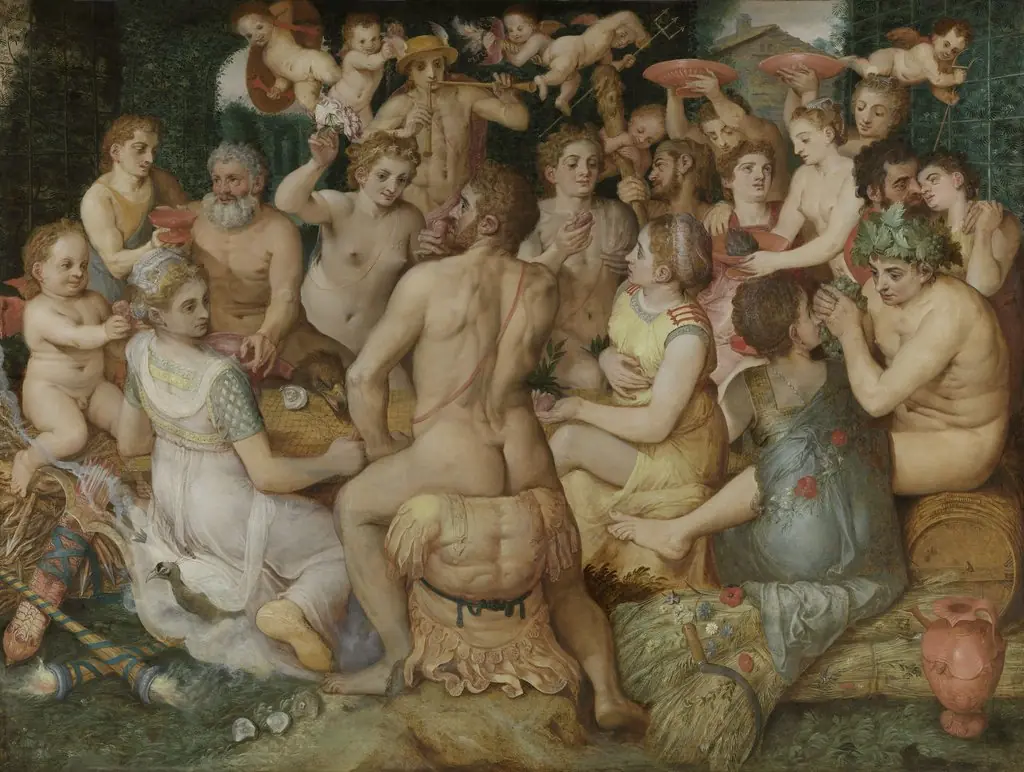
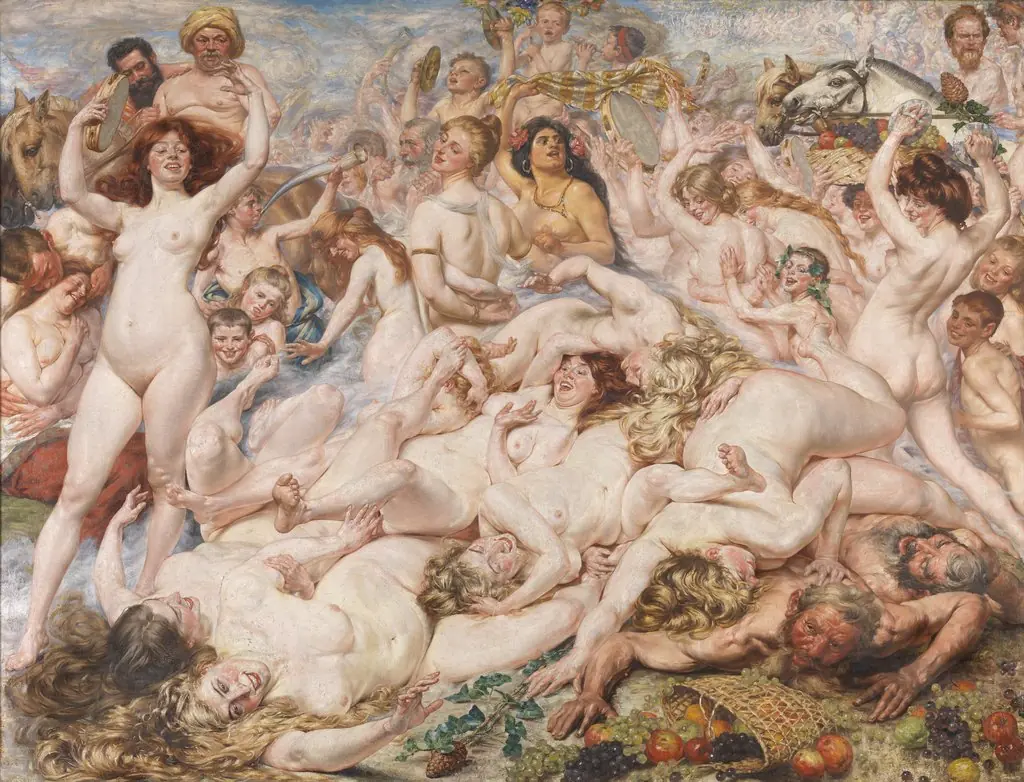
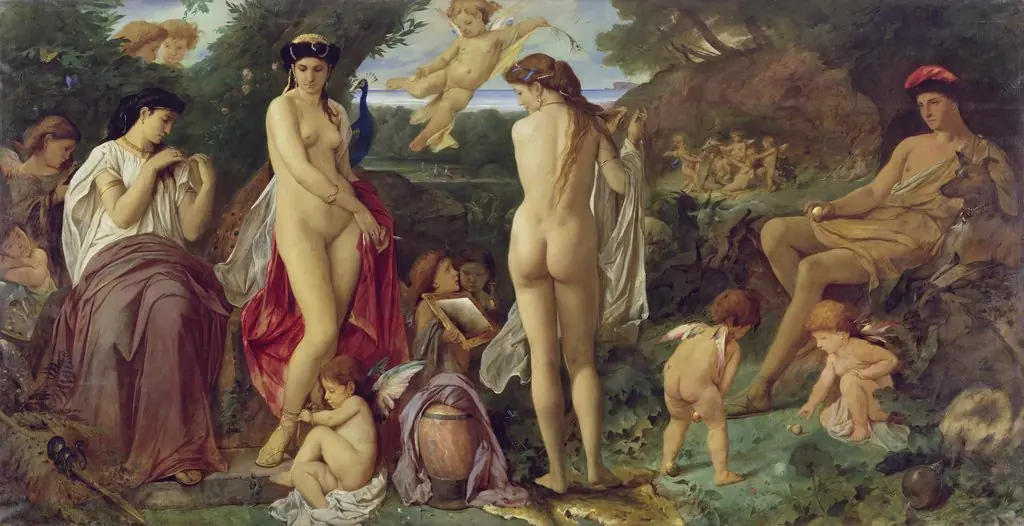
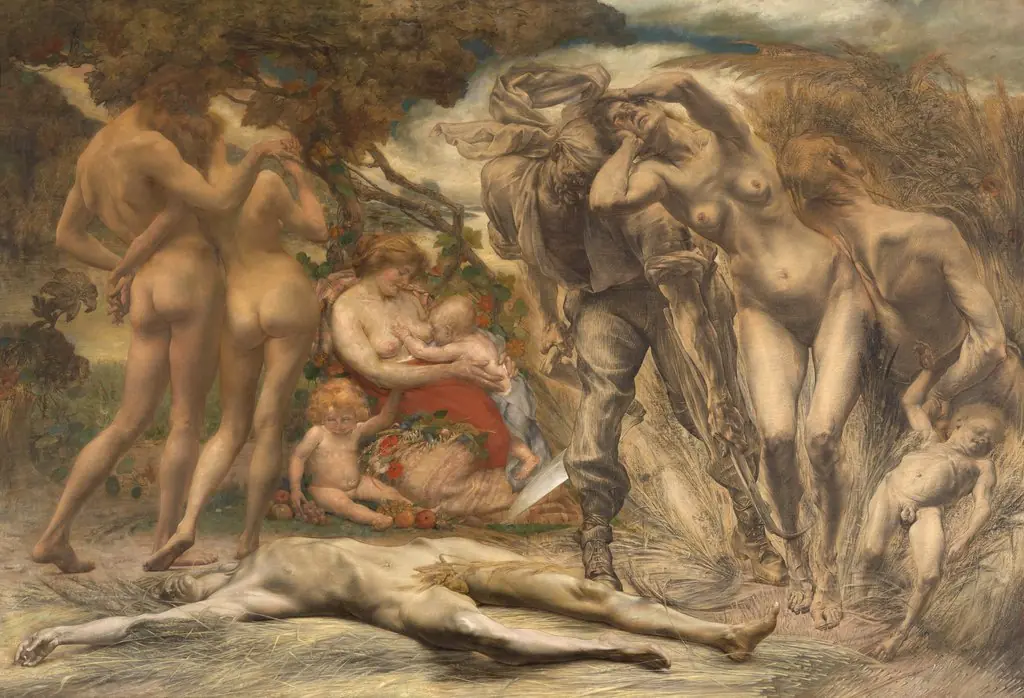
The painting presents an allegorical vision of maritime abundance, personified by a central female figure holding a shell, evoking Venus or a sea nymph. Surrounding her are figures in classical drapery—a man in red, a woman with a child—suggesting themes of fertility, protection, and natural bounty. Scattered objects like fish and fabric imply the sea’s gifts, while the serene composition invites contemplation rather than narrative action, reinforcing a mythic, timeless quality.
Technique & Style
Makart employs rich, layered oil paint to achieve luminous skin tones and textured fabrics. Chiaroscuro models the figures with subtle gradations, enhancing their three-dimensionality against a warm, golden background. The brushwork is refined but not overly detailed, favoring atmospheric harmony over precision. Color is used symbolically: white for purity, red for vitality, pink for tenderness, while the muted blues and greens of the backdrop suggest depth without literal representation.
History & Provenance
Commissioned during Makart’s peak influence, the painting was likely intended for a private collector or public institution in Vienna. It remained within European collections through the late 19th and early 20th centuries, reflecting the continued interest in academic allegory before modernism reshaped taste. Its current location and ownership history are documented in museum archives, though it has not been widely exhibited in recent decades.
Context
In the 1870s, Austrian academic art thrived under imperial patronage, favoring grand, morally elevated themes. Makart’s work stood at the intersection of historicism and spectacle, responding to a public appetite for visually sumptuous narratives. While Realism gained ground in France, Central Europe retained a preference for mythic allegory, making *Treasures of the Sea* a product of its cultural moment—elegant, symbolic, and deliberately removed from everyday life.
Legacy
Though overshadowed by later modernist movements, Makart’s paintings, including this one, influenced the visual language of fin-de-siècle decorative arts and theater design. His synthesis of classical form and emotional tone left a mark on artists like Klimt, who absorbed his use of ornament and symbolism. Today, the work is studied as an example of how academic painting negotiated myth, beauty, and cultural identity in a rapidly changing Europe.
Artist & collection
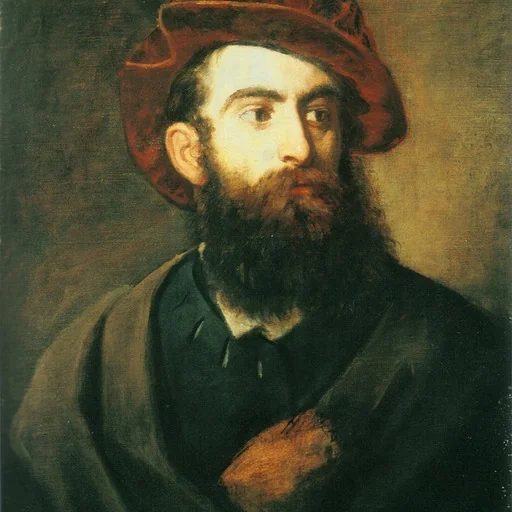
Artist
Hans Makart (28 May 1840 – 3 October 1884) was an Austrian academic history painter, designer and decorator.