Artwork
Diana and Actaeon
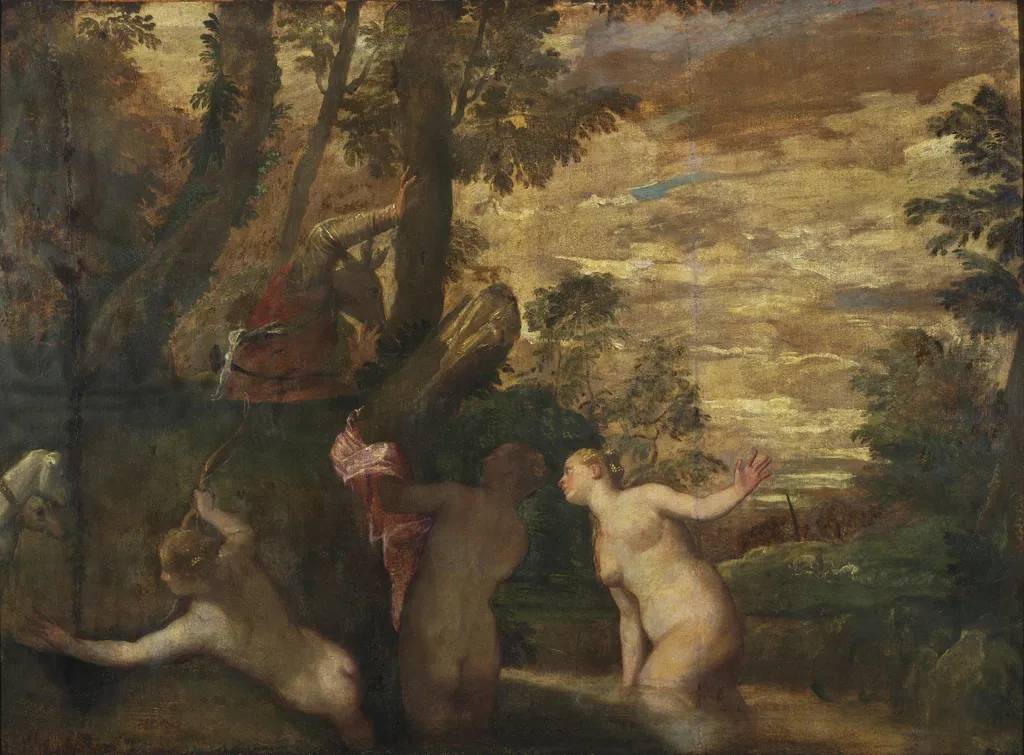
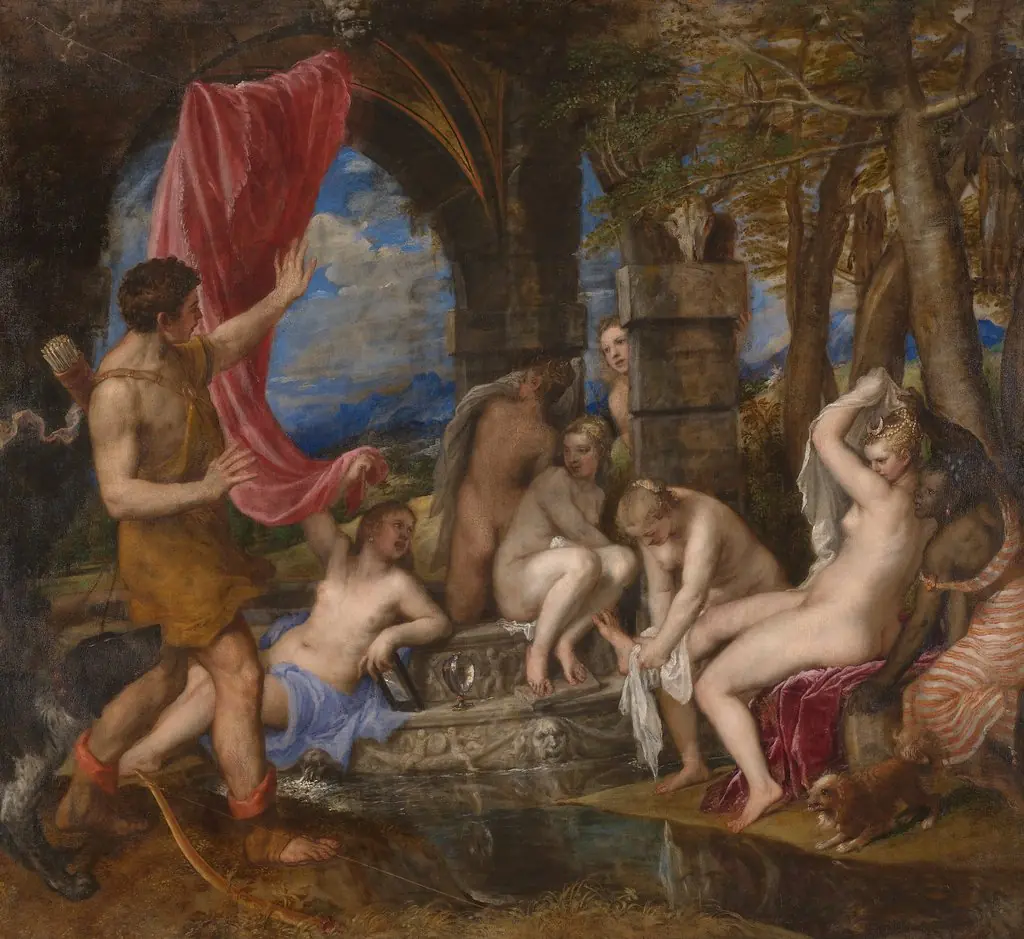
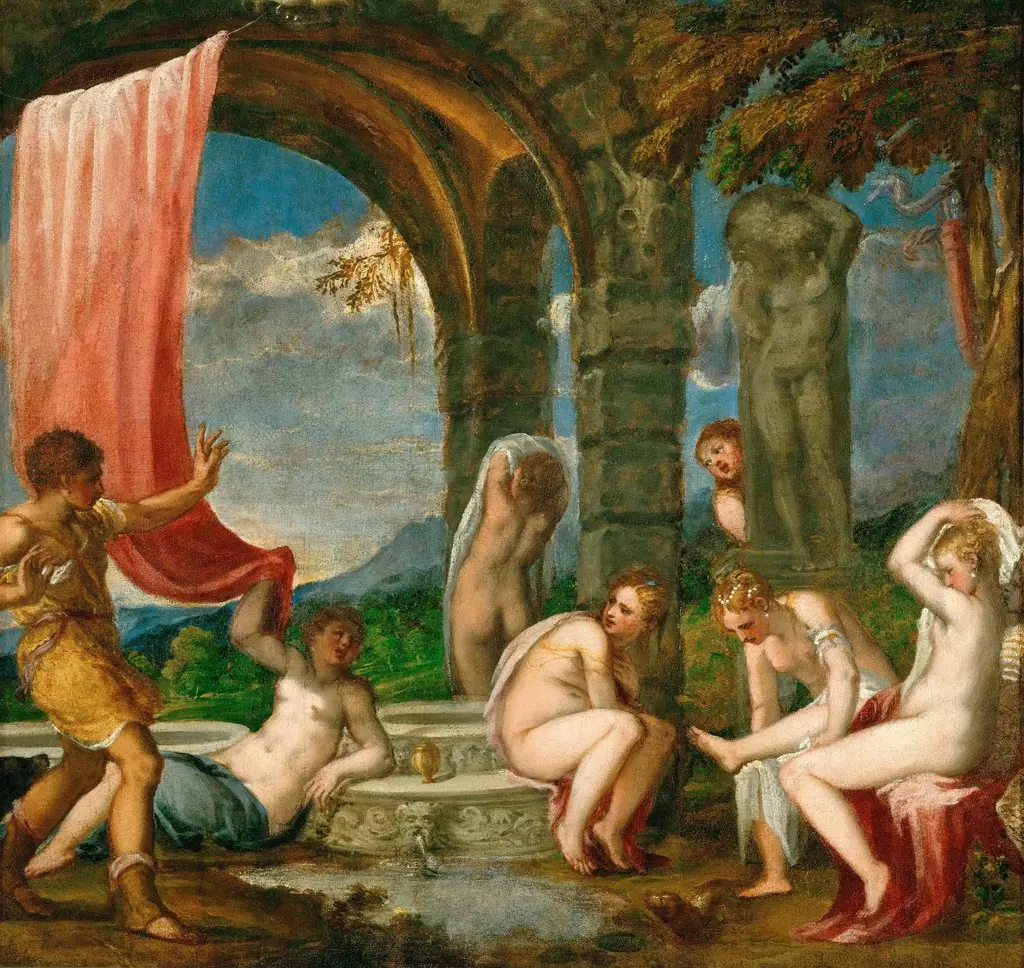
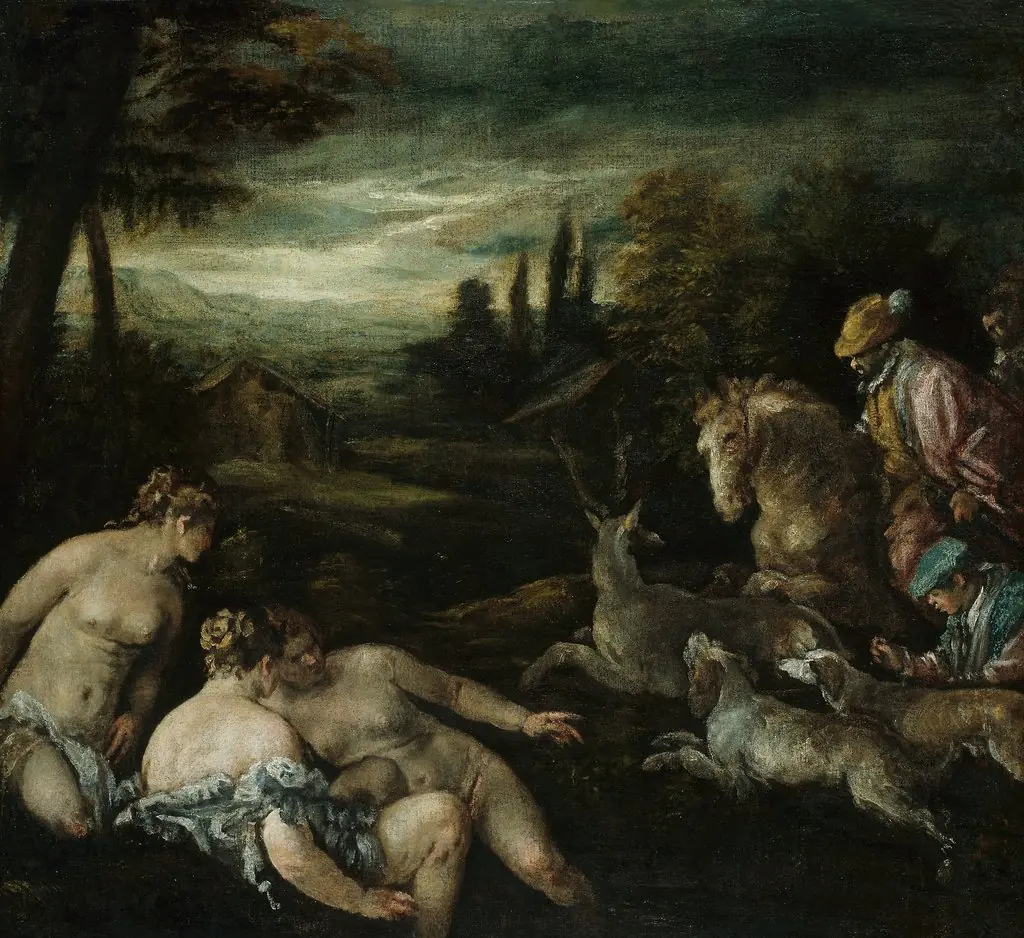
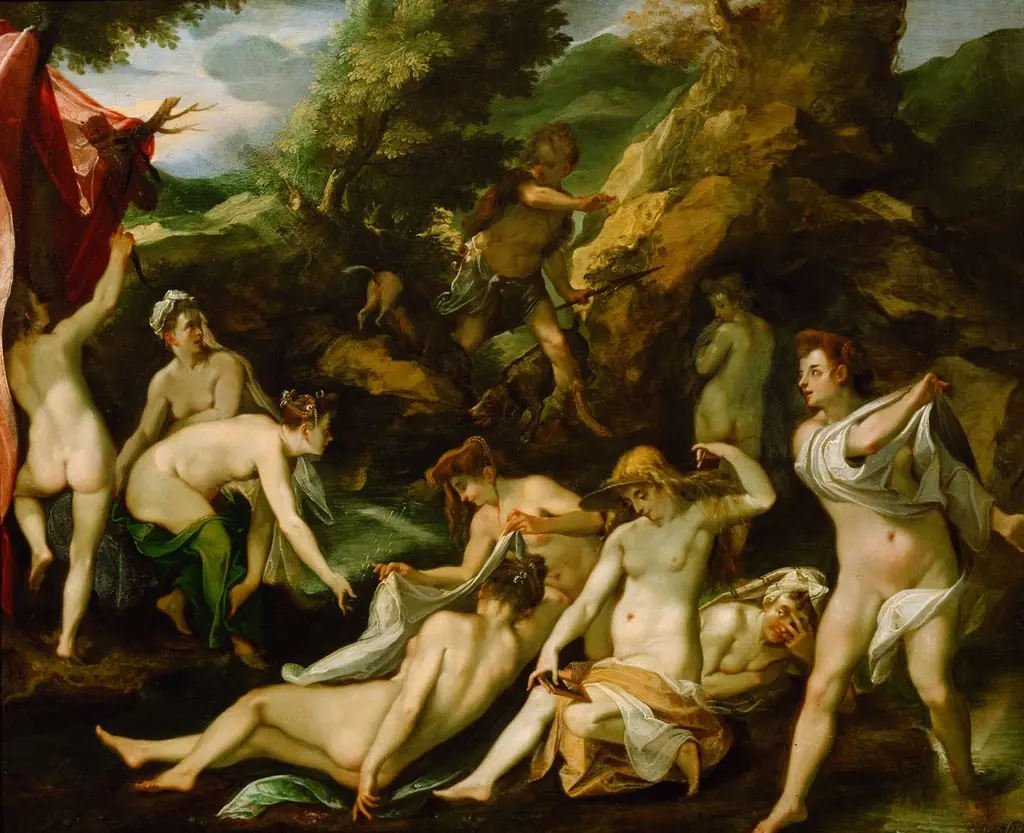
Diana and Actaeon is an oil painting by the Mannerist artist Paolo Veronese. It dates from 1560 and is held in the collection of the Philadelphia Museum of Art.
About this work
Overview
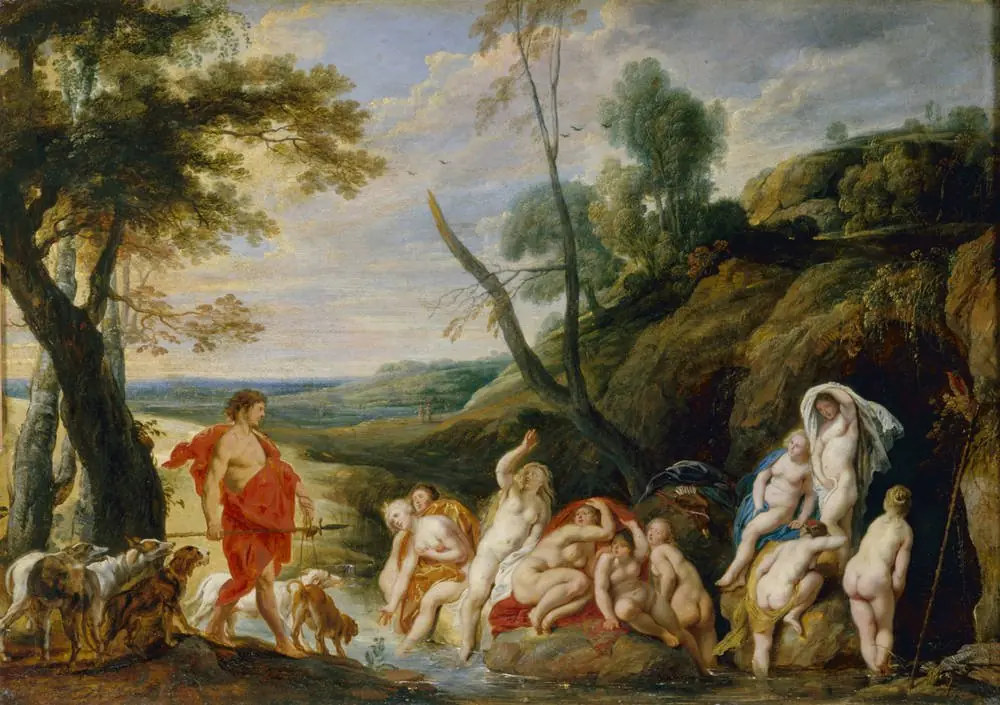
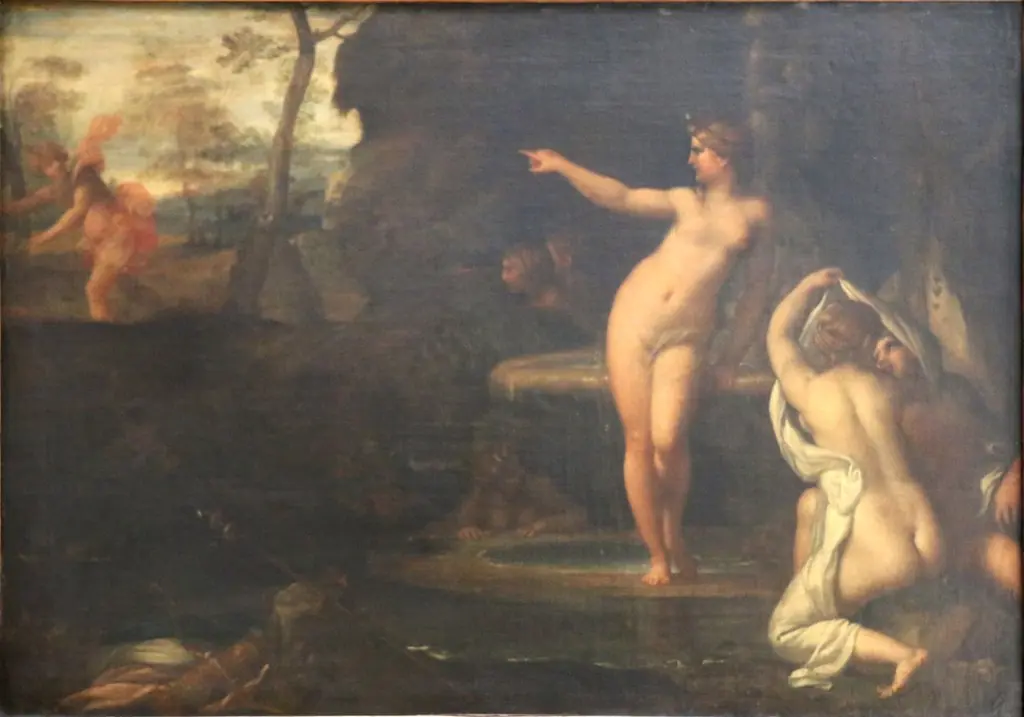
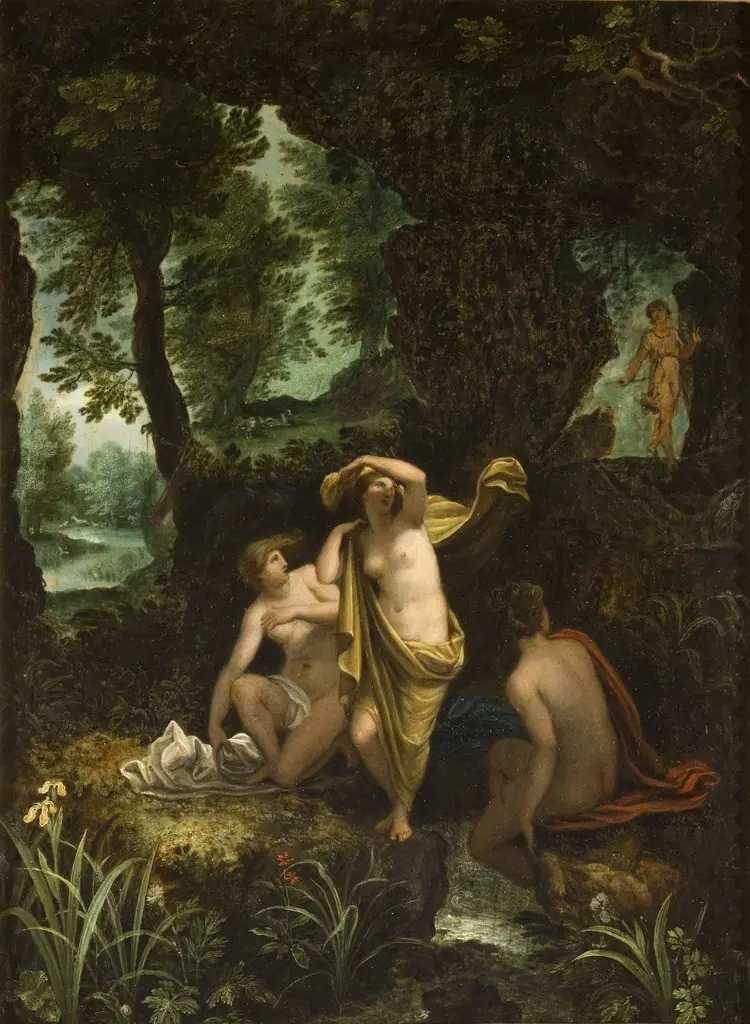
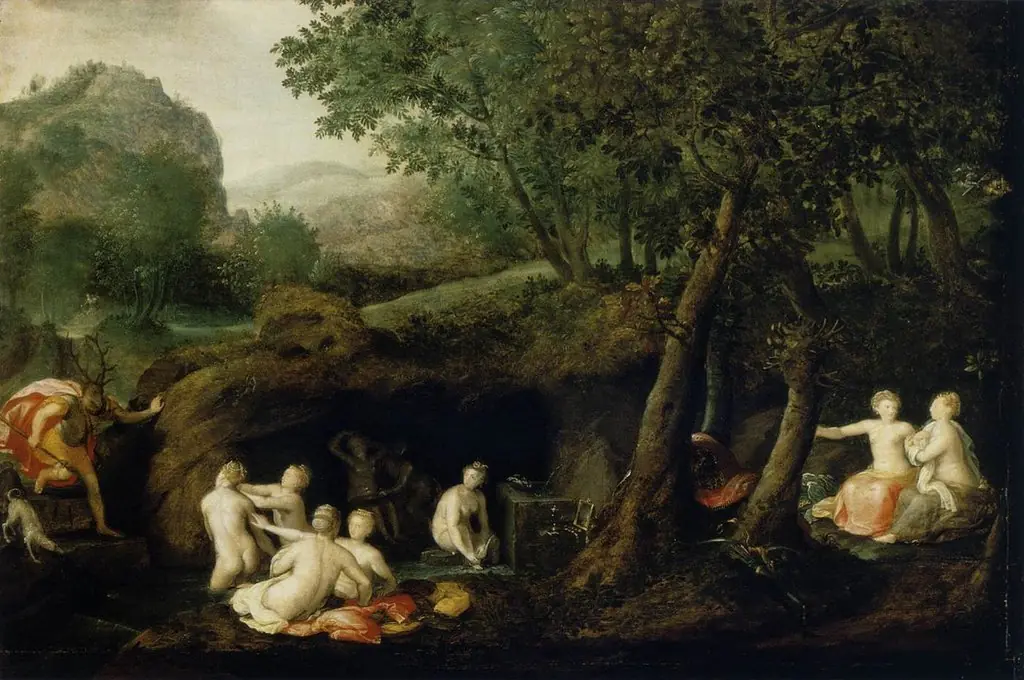
Paolo Veronese’s 1560 oil painting titled *Diana and Actaeon* presents a woodland tableau in which the goddess Diana is caught in a moment of surprise.
Paolo Veronese’s 1560 oil painting titled *Diana and Actaeon* presents a woodland tableau in which the goddess Diana is caught in a moment of surprise. The composition centers on a nude female figure with uplifted arms, flanked by a woman in a vivid red garment and a partially concealed armored hunter. Soft earth tones dominate the surrounding river and hills, creating a tranquil yet tense atmosphere.
Subject & Meaning
The work visualizes the classical myth in which the mortal hunter Actaeon inadvertently discovers the goddess Diana while she bathes. Diana’s exposed form and raised arms convey both vulnerability and divine authority, while the red‑clad companion and the hidden Actaeon suggest the impending consequences of the transgression. The scene captures the tension between mortal curiosity and divine chastity.
Technique & Style
Executed in oil on canvas, the painting reflects Veronese’s Mannerist sensibility through elongated figures and a sophisticated use of color contrast, notably the striking red dress against muted browns and greens. The artist employs delicate modeling to render flesh and foliage, while the atmospheric perspective in the distant hills adds depth to the forest setting.
History & Provenance
Created in the mid‑sixteenth century, the canvas entered the collection of the Philadelphia Museum of Art, where it remains on view. Its provenance traces back to Venetian workshops, aligning with Veronese’s prolific output of large‑scale mythological and religious subjects during the height of the Italian Mannerist movement.
Context
*Diana and Actaeon* belongs to a broader tradition of Renaissance artists interpreting Ovidian narratives. Veronese, renowned for grand historical compositions, applied his characteristic opulent palette to a mythic episode, integrating the theatricality of Venetian painting with the intellectual interests of humanist patrons who favored classical themes.
Own this work as a print
Artist & collection
Artist
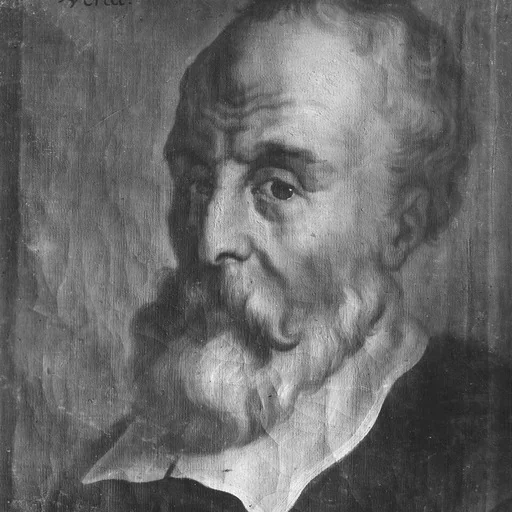
Paolo Caliari (1528 – 19 April 1588), known as Paolo Veronese ( VERR-ə-NAY-zay, -zee, US also -see; Italian: ), was an Italian Renaissance painter based in Venice, known for extremely large history paintings of…