Artwork
Werkossen
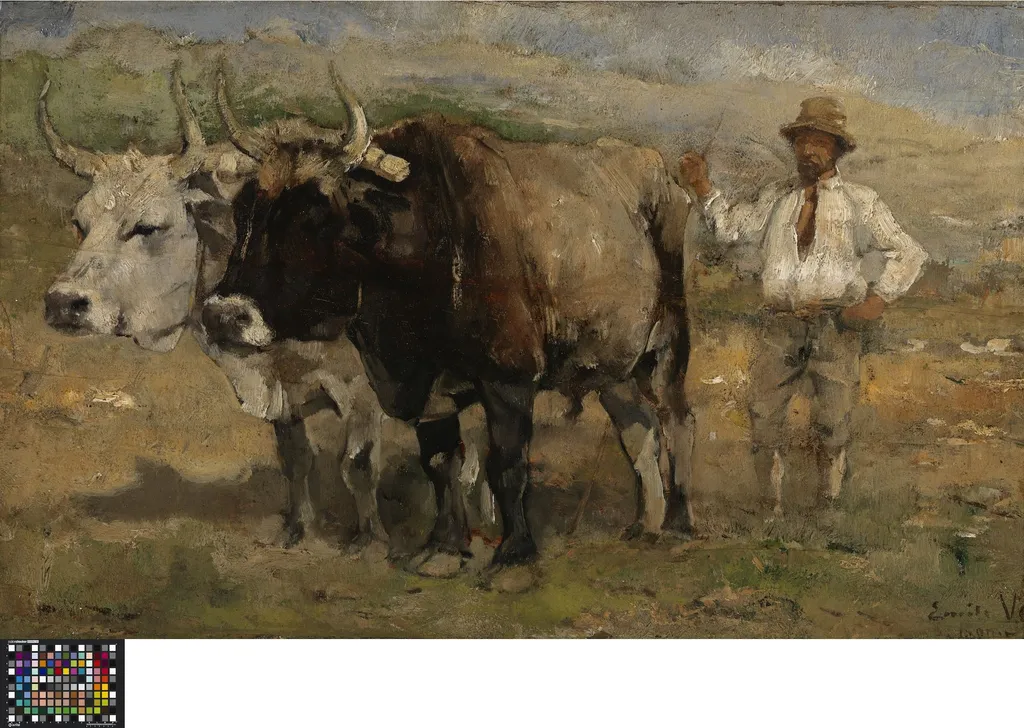
Werkossen is an oil painting by the Post-Impressionist artist Emile Verbrugge. It dates from 1893 and is held in the collection of the Groeningemuseum.
About this work
Overview
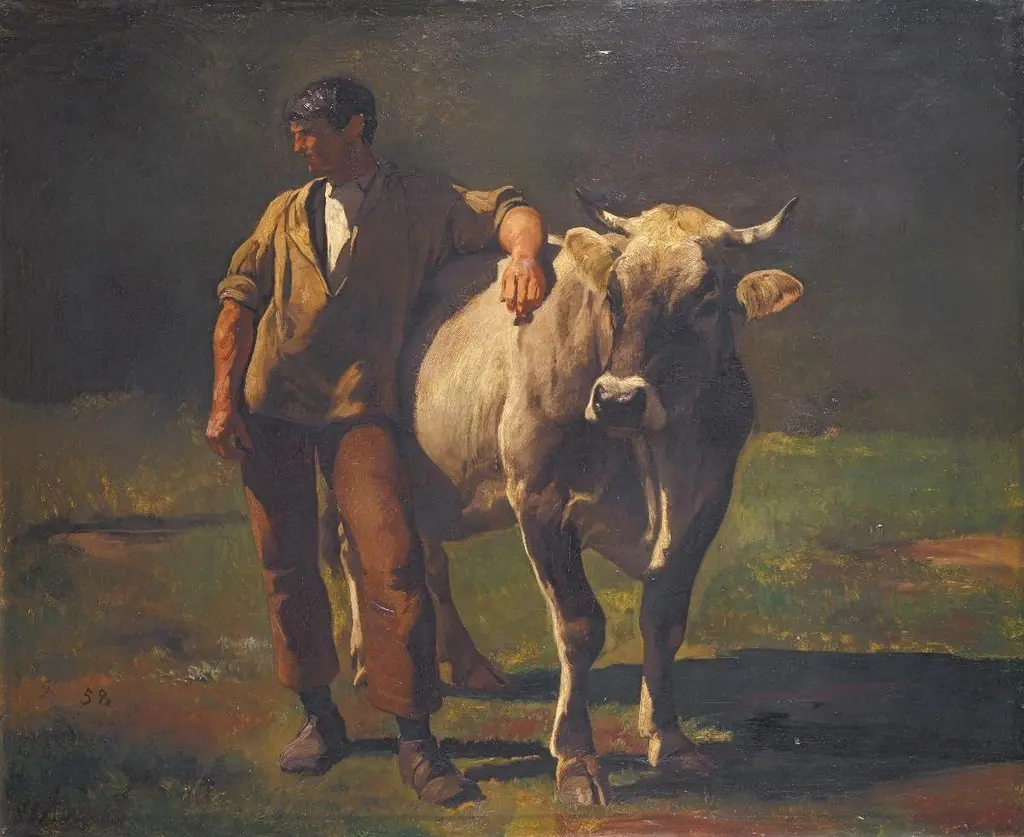
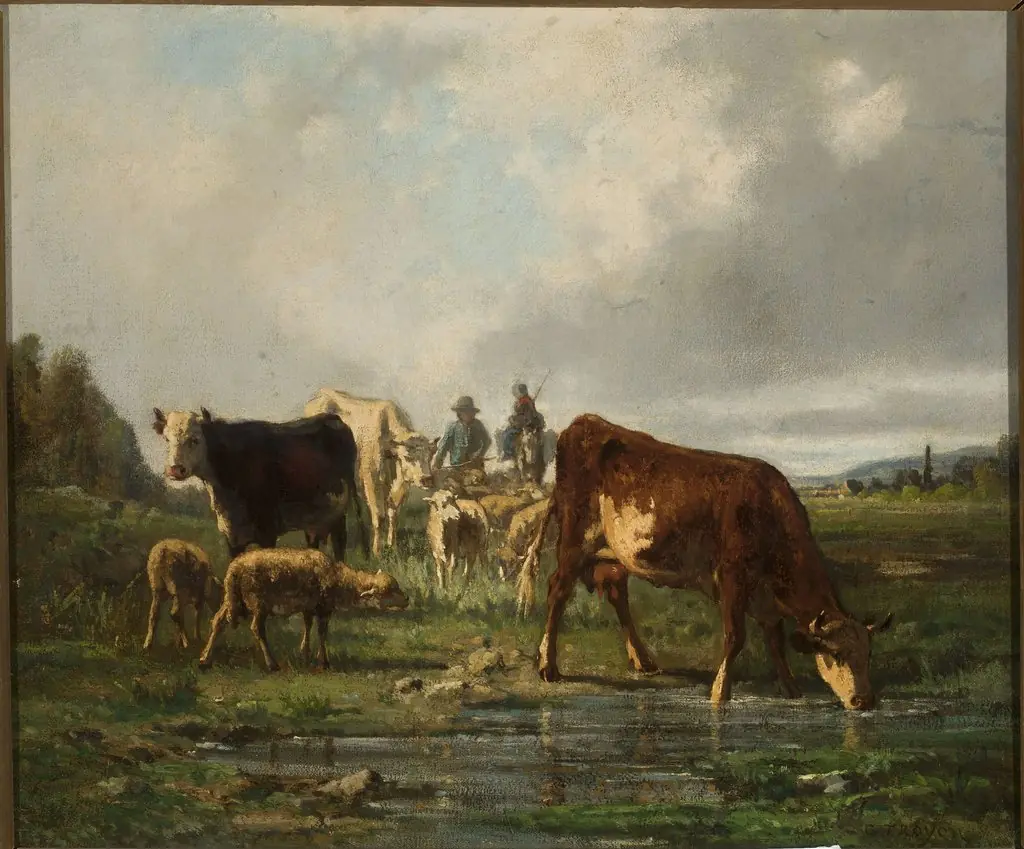
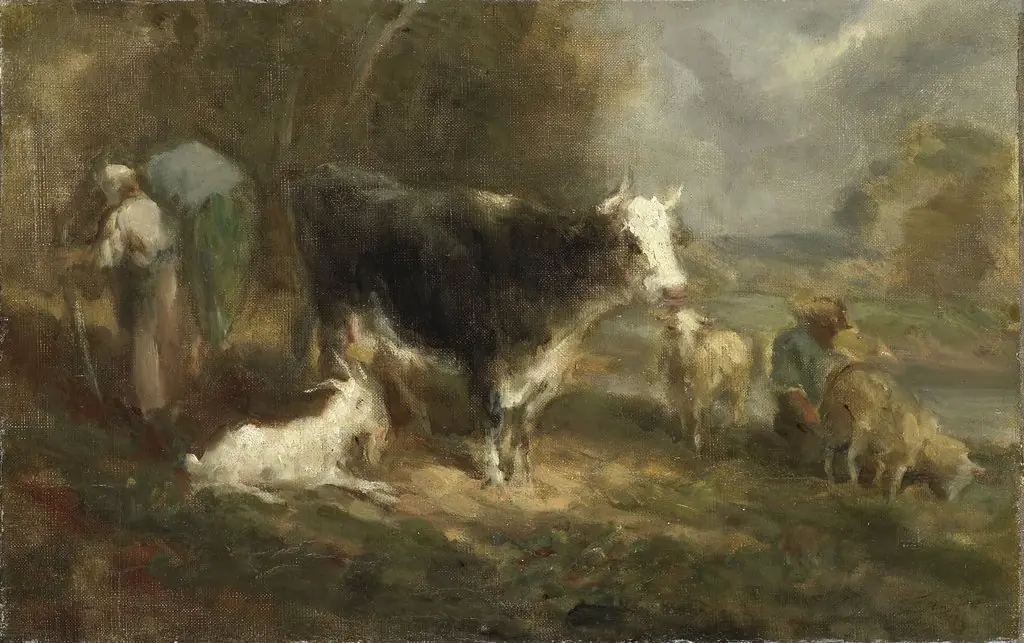
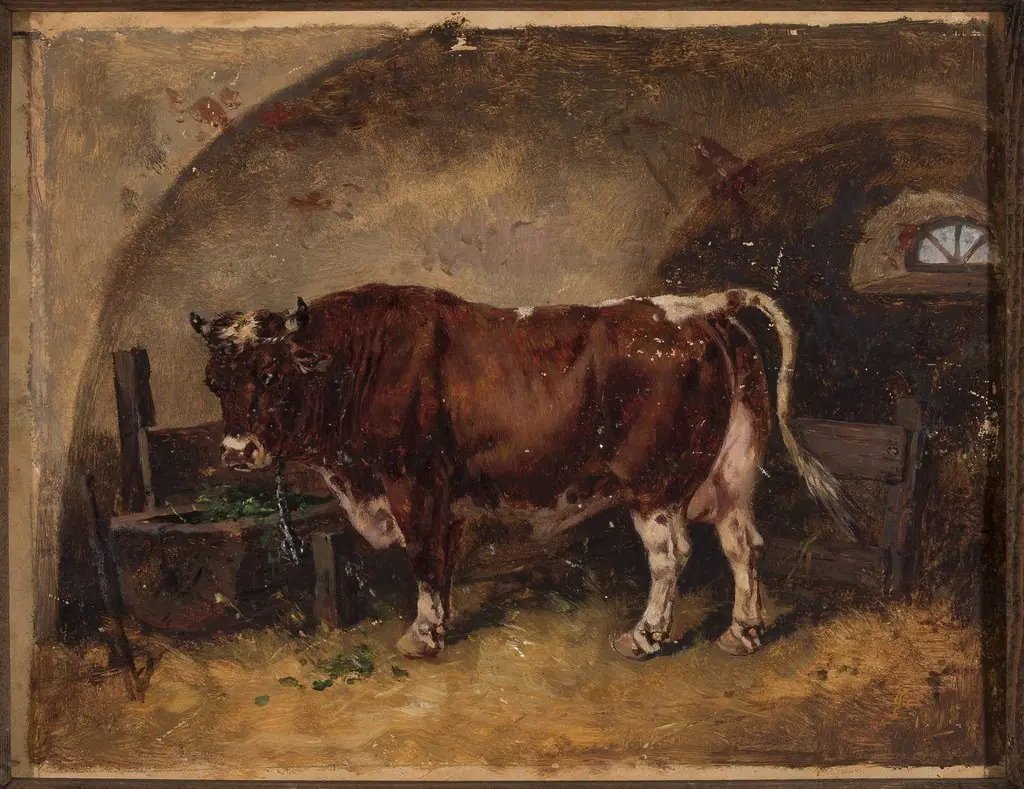
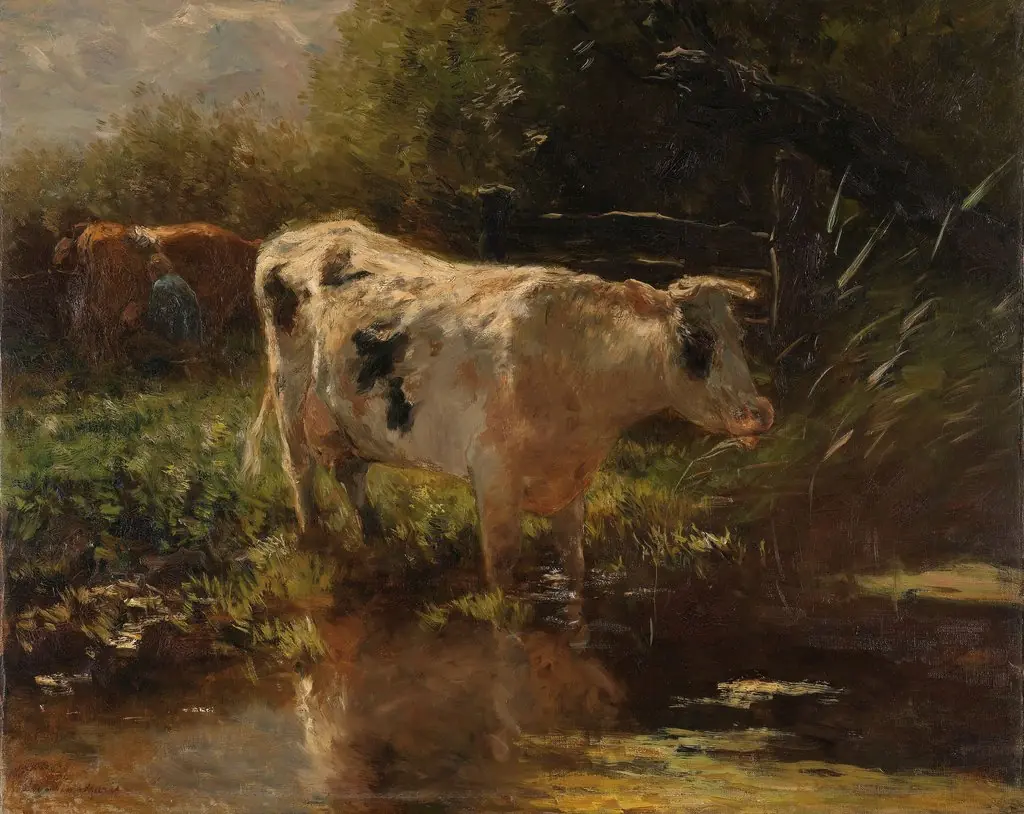
Emile Verbrugge’s 1893 oil painting, titled Werkossen, portrays a rural tableau in which a solitary figure stands beside two oxen within an open field. The composition is set against a gently rolling landscape under a clear blue sky, rendered in a palette of earthy hues that emphasize the natural setting.
Subject & Meaning
The central focus of the work is the interaction between the man, dressed in a white shirt and hat, and the pair of brown‑and‑white oxen. The figure’s stance, positioned to the right of the animals, suggests a role of guidance or control, hinting at agricultural labor such as plowing, and reflecting the everyday life of the countryside.
Technique & Style
Verbrugge employs oil on canvas to achieve a warm, muted tonal range, allowing the earthy colors to convey a sense of rustic intimacy. The handling of light and shadow creates subtle chiaroscuro, giving the figures a modest three‑dimensionality while maintaining a calm, naturalistic atmosphere.
History & Provenance
Created in 1893, Werkossen entered the collection of the Groeningemuseum, where it remains on display. The museum’s acquisition situates the painting within a broader representation of Flemish rural genre works from the late nineteenth century, illustrating Verbrugge’s contribution to that tradition.
Own this work as a print
Artist & collection