Artwork
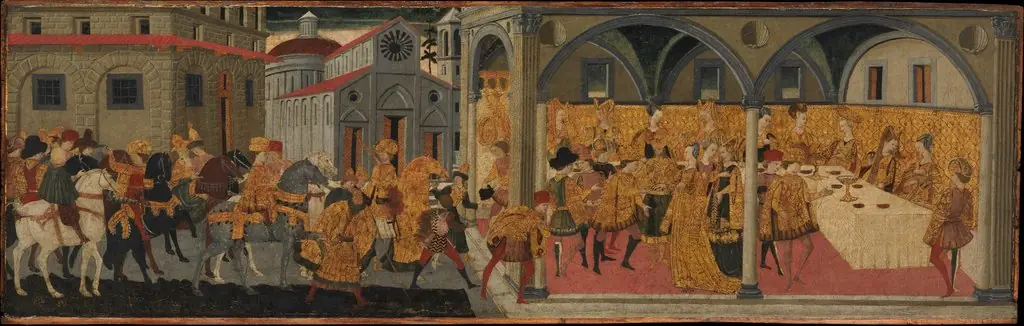
Esther and Ahasveros
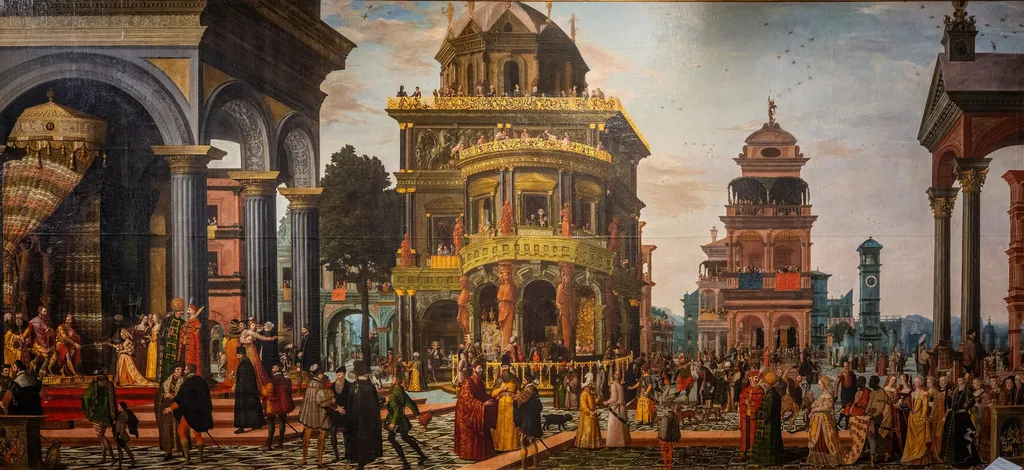
Esther and Ahasveros is an unspecified painting by the Early Baroque Italian artist Hans Schöpfer. It is held in the collection of the Ambras Castle.
About this work
Overview
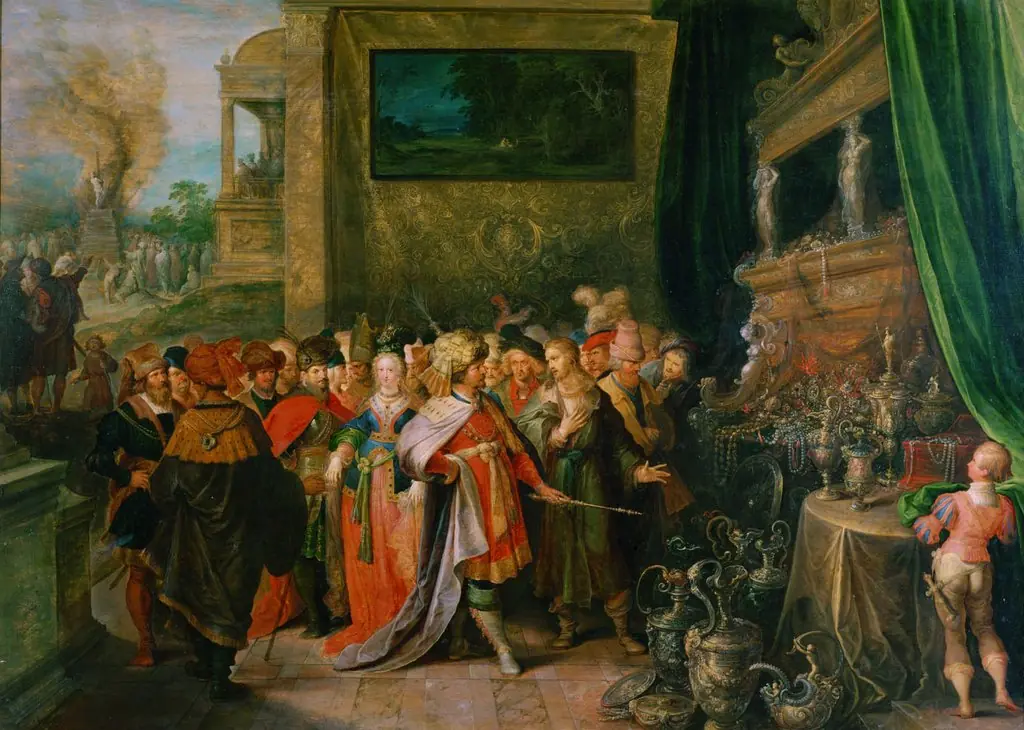
Created around 1600, this oil painting by Hans Schöpfer portrays the biblical figures Ahasuerus and Esther. The work is part of the collection at Ambras Castle in Innsbruck and exemplifies early‑Baroque religious narrative art. Its composition centers on an elaborate architectural setting that frames the gathering of courtly figures.
Subject & Meaning
The scene draws from the Book of Esther, showing the Persian king Ahasuerus alongside the queen Esther amid a ceremonial court. The presence of numerous attendants in sumptuous dress emphasizes the royal splendor and the pivotal moment of Esther’s appeal to the king, a theme of divine providence and political intrigue.
Technique & Style
Schöpfer employs a richly detailed palette, rendering the stone arches, balcony statues, and surrounding foliage with careful attention to texture. The figures are modeled with fine brushwork that captures the sheen of fabrics and the play of light across the marble architecture, while the sky and clouds provide a luminous backdrop typical of early 17th‑century German painting.
History & Provenance
The painting entered the Ambras Castle collection, a historic repository of Habsburg art, where it remains on display. Its attribution to Hans Schöpfer (the elder) is based on stylistic analysis and archival records linking the work to his output around the turn of the 17th century.
Context
Executed during a period when biblical narratives were frequently employed to reinforce moral and political messages, the work reflects contemporary interest in courtly drama and the role of female agency. The architectural setting mirrors the grandiose palaces of the era, linking the biblical story to the visual language of imperial authority.
Artist & collection

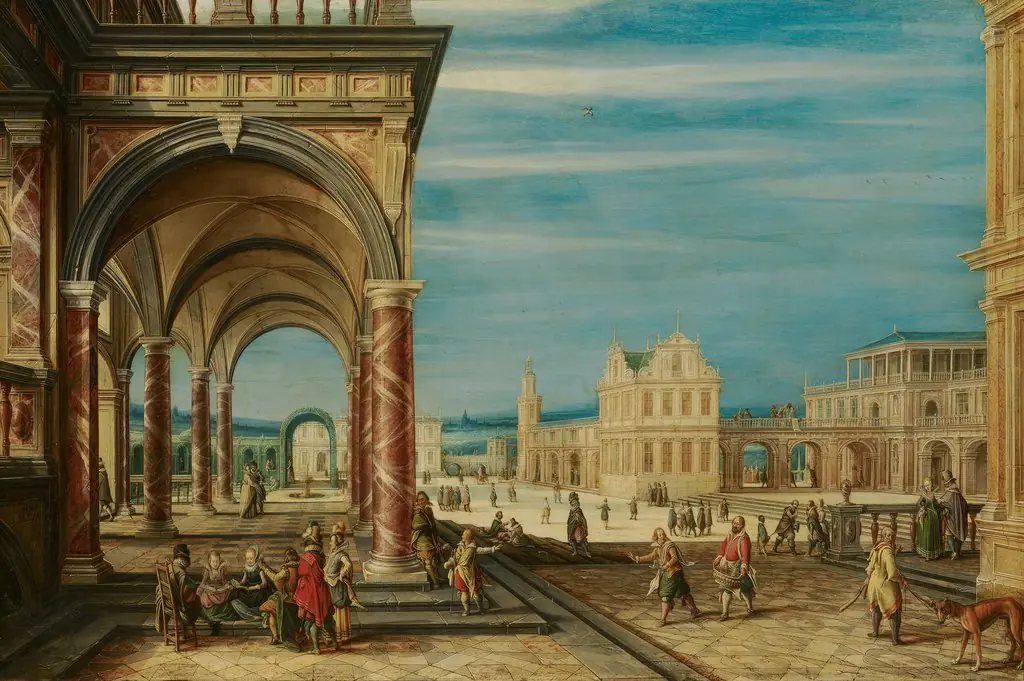 A Square with Imaginary Buildings
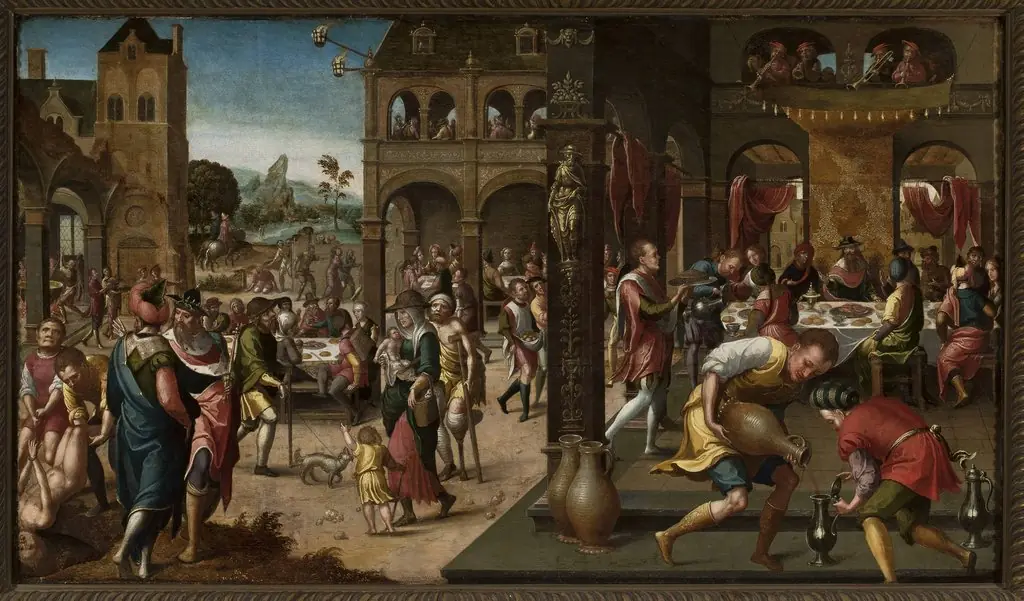 Parable of the great banquet
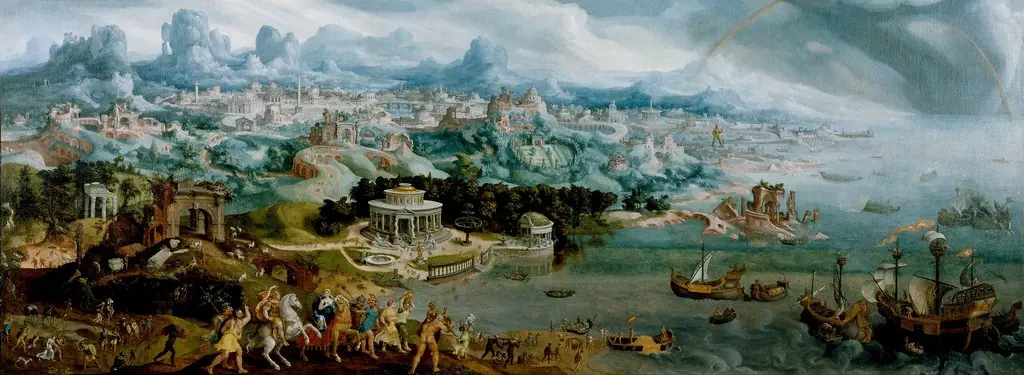 Panorama with the Abduction of Helen Amidst the Wonders of the Ancient World
 Croesus displays his treasures to Solon
 Postreise Erzherzog Ferdinands II. (1529-1595) nach Brüssel
 Banquet in the Park
 Cresus arătându-și bogățiile lui Solon
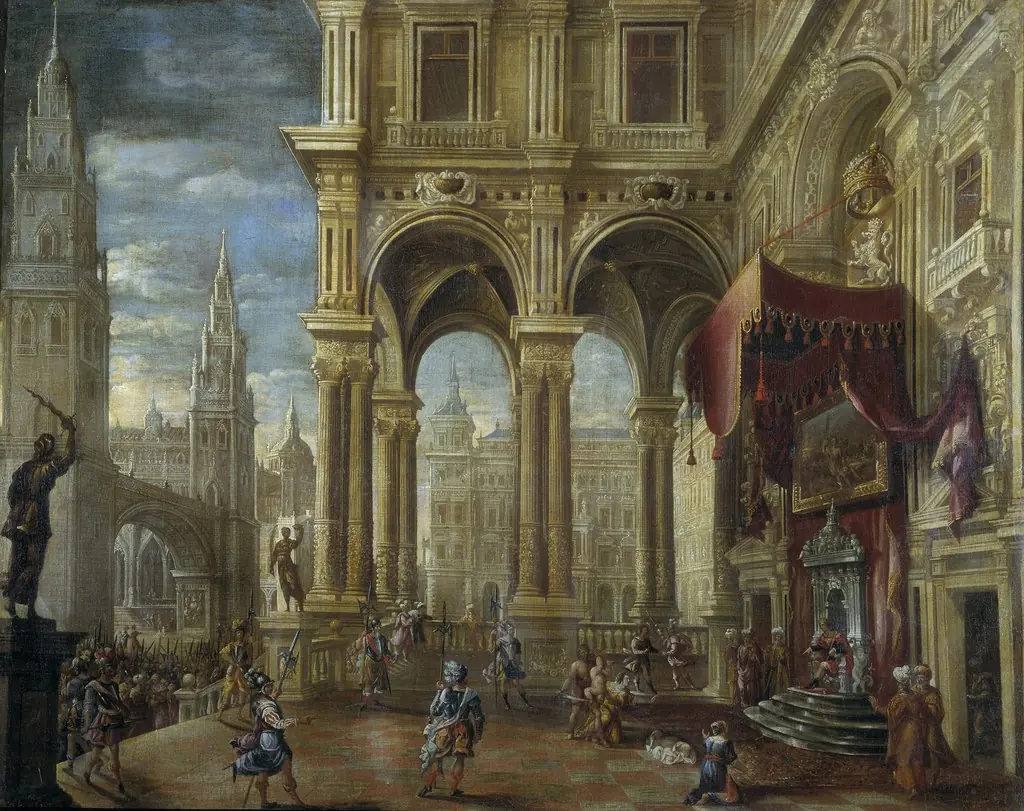 El juicio de Salomón
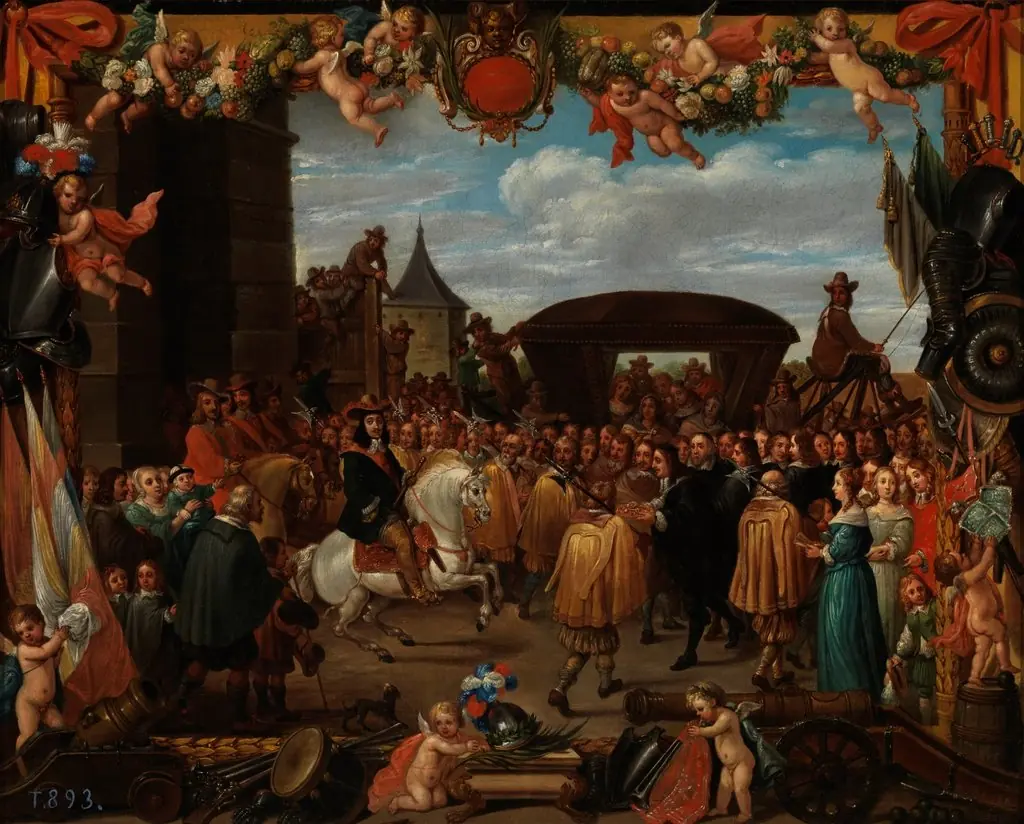 Entrada triunfal de don Juan José de Austria (?)
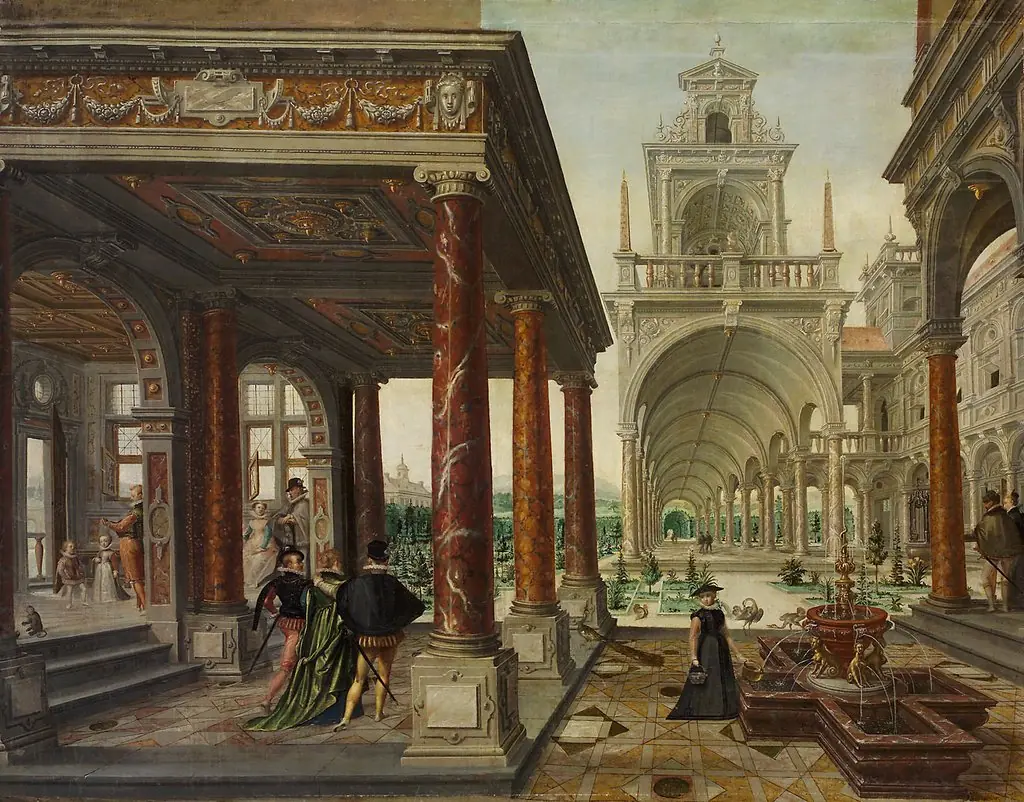 Love garden with elegant figures
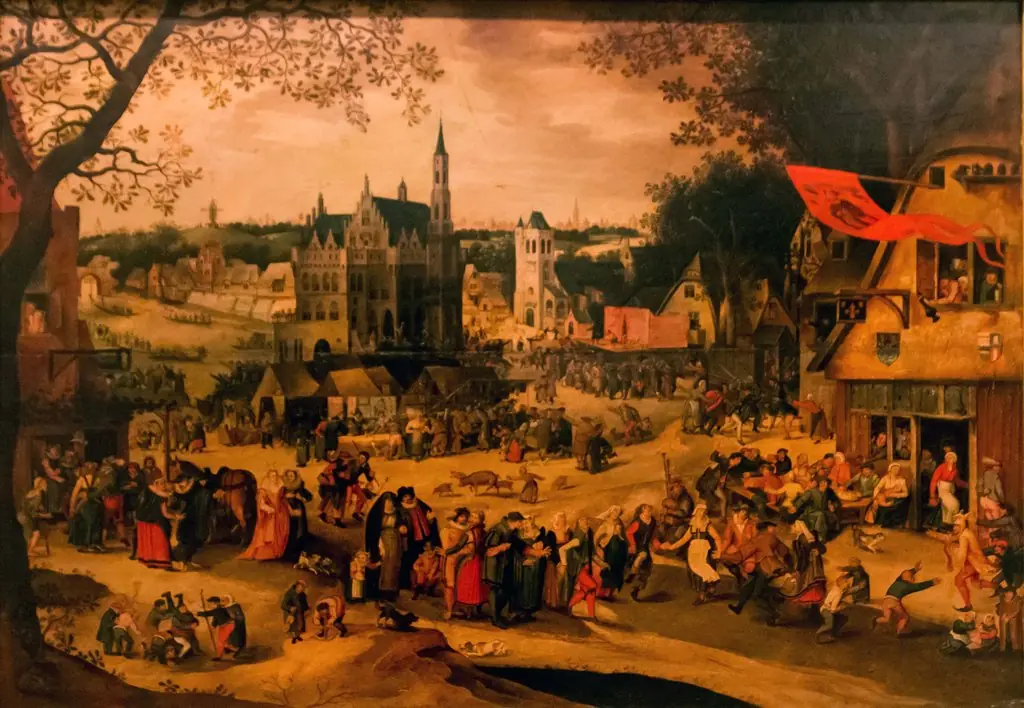 Quermesse de Audenaerde by David Vinckboons, Museu Nacional de Arte Antiga
 The Story of Esther