Artwork
Parable of the great banquet
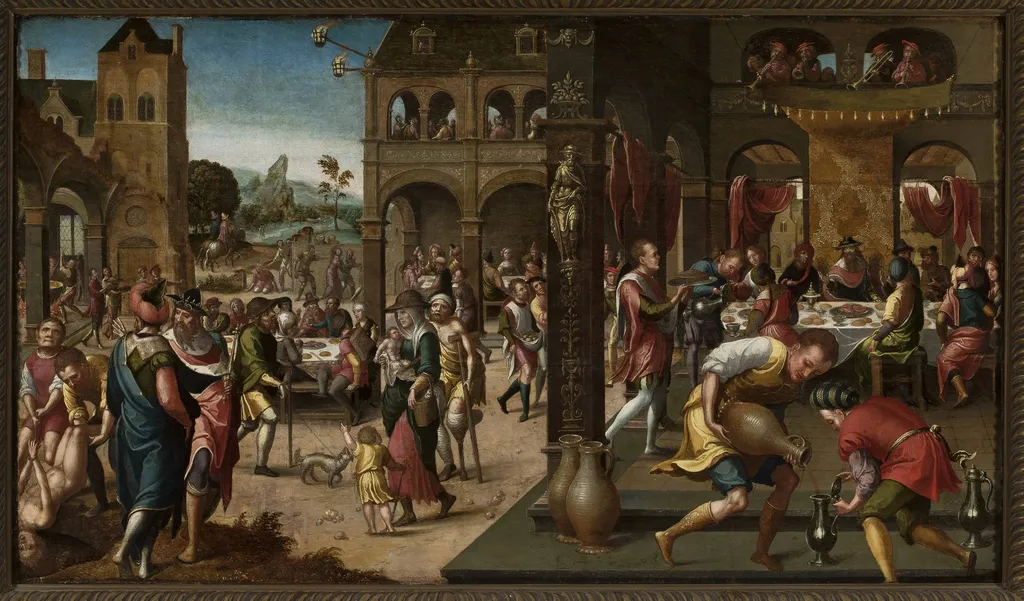
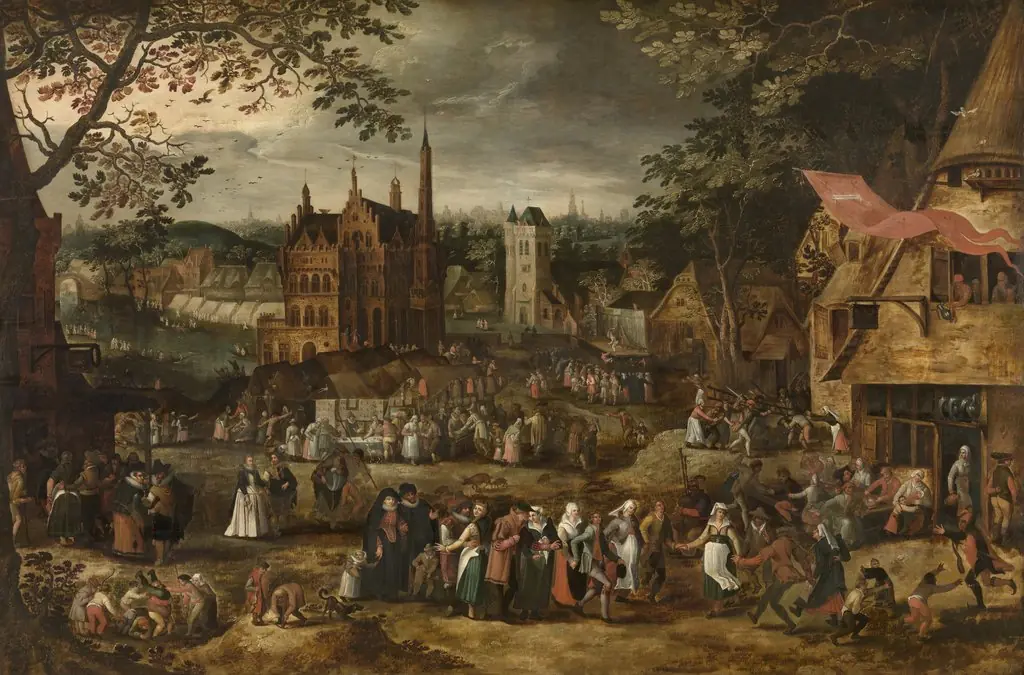
Parable of the great banquet is an oil painting by the Mannerist artist Unknown. It dates from 1550 and is held in the collection of the National Museum in Warsaw.
About this work
Overview
The muted palette of earth tones and the open arches in the background suggest a rural or provincial environment, reinforcing the narrative’s humble origins.
This oil painting depicts a scene from the Parable of the Great Banquet, capturing a moment of bustling activity in a domestic or aristocratic setting. Figures are arranged dynamically across the composition, with some seated at a long table, others moving through the space, and two men in the foreground handling large jugs. The muted palette of earth tones and the open arches in the background suggest a rural or provincial environment, reinforcing the narrative’s humble origins.
Subject & Meaning
The scene illustrates a biblical parable in which a host invites guests to a feast, only to be rejected; the invitation is then extended to the poor and marginalized. The painting’s crowded, energetic composition reflects the sudden influx of unexpected guests, emphasizing themes of inclusion and divine hospitality. The focus on ordinary people—rather than nobility—underscores the parable’s subversion of social hierarchies.
Technique & Style
The artist employs a restrained color scheme dominated by ochres, browns, and soft grays, creating a grounded, tactile atmosphere. Figures are rendered with loose, fluid brushwork that conveys motion and spontaneity. While chiaroscuro is present, it is subtle, used to define form rather than create dramatic contrast. The spatial depth is suggested through receding arches and a pale sky, anchoring the chaos in a believable environment.
History & Provenance
The painting’s early ownership is undocumented, but its style aligns with Northern European genre scenes from the late 16th or early 17th century. It likely originated in the Low Countries, where biblical narratives were commonly rendered in domestic settings. No record of its commission or early collectors survives, suggesting it was produced for the open market rather than a private patron.
Context
During the period of its creation, religious themes were frequently adapted into everyday scenes to resonate with a broader audience. Artists in the Low Countries often depicted biblical stories with contemporary clothing and architecture, making them relatable. This painting reflects that trend, using familiar domestic spaces to convey spiritual messages without overt symbolism or idealization.
Legacy
Though not widely exhibited or studied, the painting contributes to a broader tradition of narrative genre painting that merged religious instruction with keen observation of daily life. Its unembellished realism and focus on ordinary people influenced later artists who sought to portray moral stories through authentic human behavior rather than theatrical grandeur.
Artist & collection

 Domestic Scene
 Giacomo and Cardinal Marco, investing Andrea, Abbot of San Zeno, with his Benefice
 The Nymph of Fontainebleau
 Portrait of a Woman
 Madonna and Child with Saints in the Enclosed Garden
 Venus and Minerva
 Family Group of Four on Sofa
 Wall painting from Room H of the Villa of P. Fannius Synistor at Boscoreale
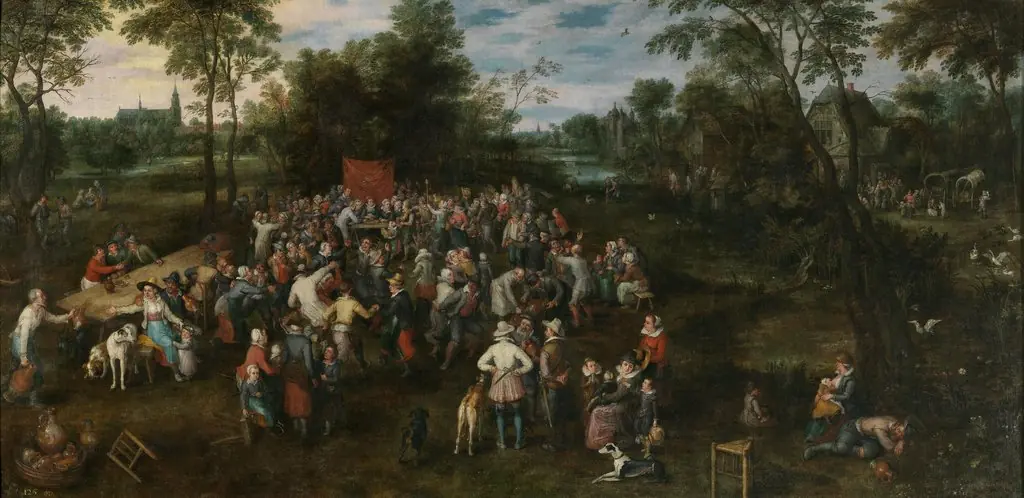 The Wedding Banquet
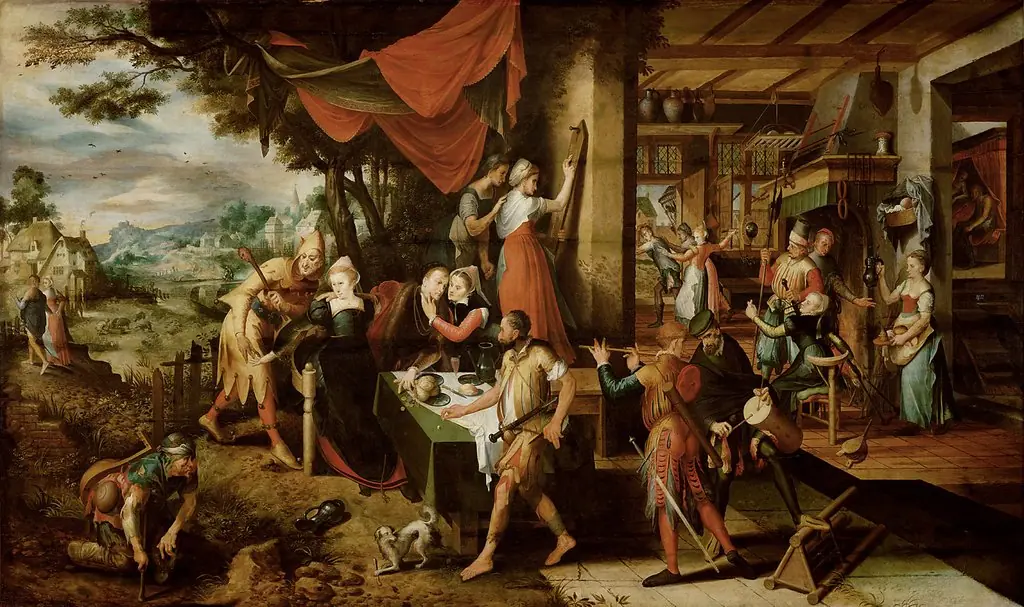 Return of the Prodigal Son
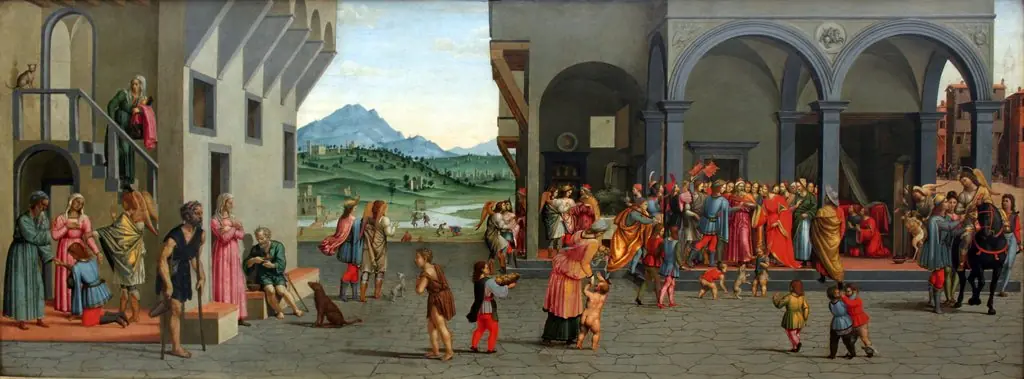 Representation from the Life of the Young Tobias I
 Postreise Erzherzog Ferdinands II. (1529-1595) nach Brüssel
 Christ Presented to the People
 Februar
 Joseph interpreting Pharaoh's dresm
 Moses Strikes the Rock
 The fight against death and time
 Earth
Earth Festive Gathering and Figures from a Commedia dell'Arte in a Gallery
 Village Fair