Artwork
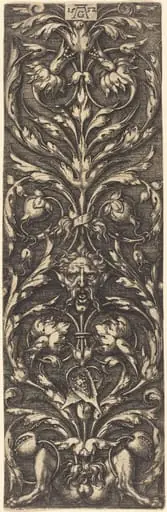
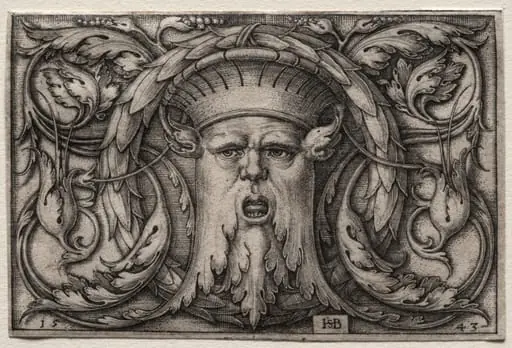
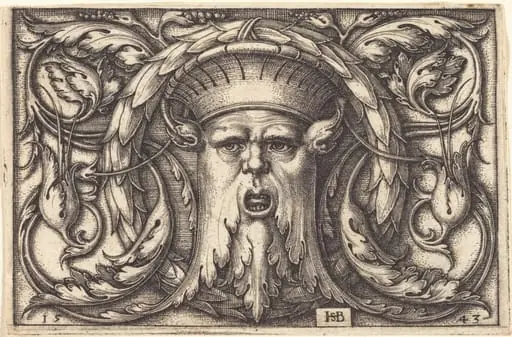
Ornament of Satyr's Head and Wreath
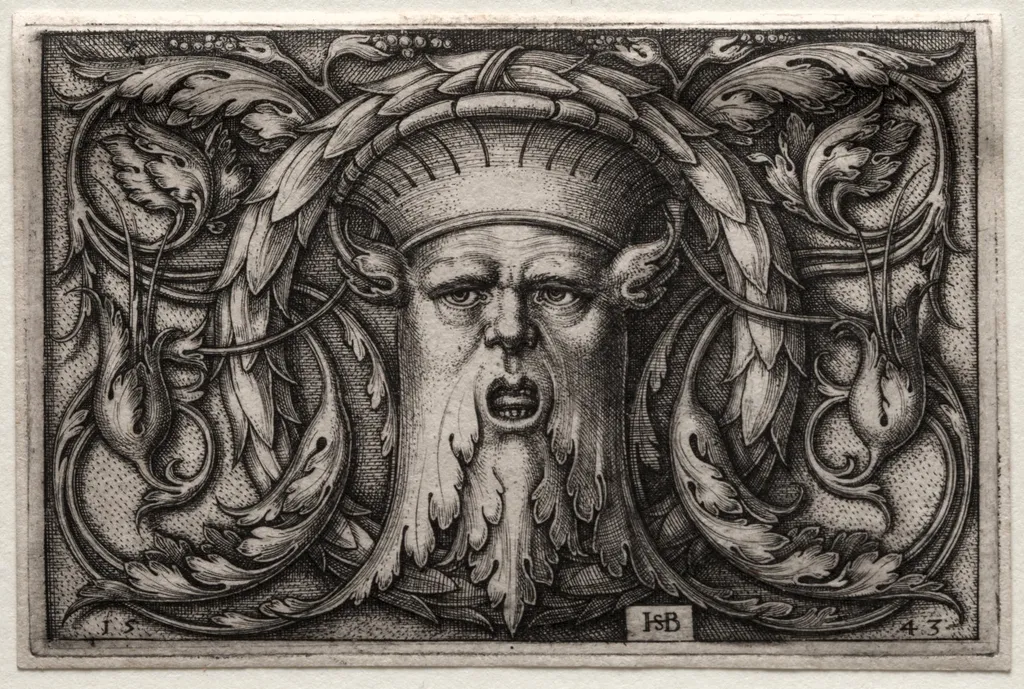
Ornament of Satyr's Head and Wreath is a print by the Renaissance artist Sebald Beham. It dates from 1543 and is held in the collection of the Cleveland Museum of Art.
About this work
Overview
Beham, a Nuremberg-born artist, was a leading figure among the Little Masters, known for their finely detailed small-scale prints.
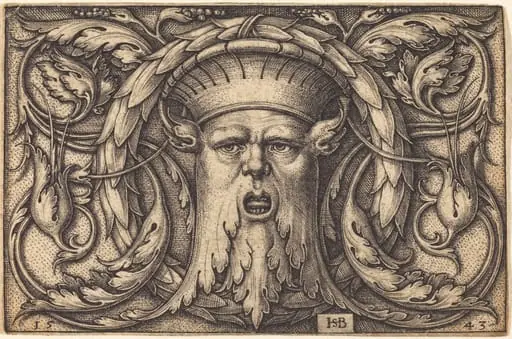
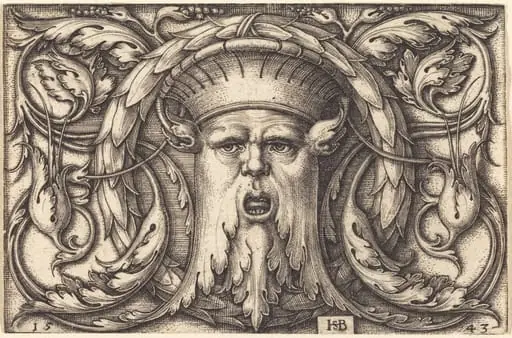
Created in 1543 by Hans Sebald Beham, this engraving depicts a satyr’s head encircled by a wreath of leaves. Beham, a Nuremberg-born artist, was a leading figure among the Little Masters, known for their finely detailed small-scale prints. This work exemplifies his skill in etching intricate natural forms with precision, reflecting the Northern Renaissance interest in mythological motifs and decorative design.
Subject & Meaning
The satyr, a creature from classical mythology associated with nature and revelry, is rendered with a wild, open-mouthed expression and thick beard. The leafy crown suggests both ritual and seasonal cycles, possibly referencing ancient fertility rites or the pastoral traditions of Greco-Roman art. The intense gaze and dynamic framing convey a sense of primal energy, aligning with Renaissance fascination with myth as a vehicle for human and natural forces.
Technique & Style
Beham employed fine-line engraving to achieve sharp contrasts between light and shadow, emphasizing the satyr’s facial features against a dense, textured background. The swirling vines are rendered with controlled, rhythmic strokes, creating a sense of movement. The dark, rough edges frame the lighter, more refined face, enhancing its three-dimensionality—a hallmark of Beham’s approach to miniature composition and tonal modeling.
History & Provenance
The print entered the collection of The Cleveland Museum of Art as part of its broader holdings in Northern Renaissance prints. Beham produced hundreds of engravings and woodcuts during his career, many intended for decorative use or book illustration. This piece, dated 1543, aligns with his mature period in Frankfurt, where he continued refining his technique after leaving Nuremberg due to religious and political tensions.
Context
In mid-16th century Germany, artists like Beham responded to the legacy of Albrecht Dürer by focusing on small, intricate works for private collectors. Mythological subjects such as satyrs were popular in decorative arts, often used in frames, textiles, or metalwork. This print reflects the era’s blend of classical revival and Northern European craftsmanship, serving both aesthetic and symbolic functions in domestic and intellectual circles.
Legacy
Beham’s engravings influenced later generations of printmakers through their technical refinement and compact compositions. Though not widely exhibited in his time, his works became valued for their detail and expressive economy. Today, this print stands as an example of how Renaissance artists reinterpreted ancient myth through intimate, handcrafted forms, bridging classical tradition with Northern artistic sensibilities.
Artist & collection
Artist
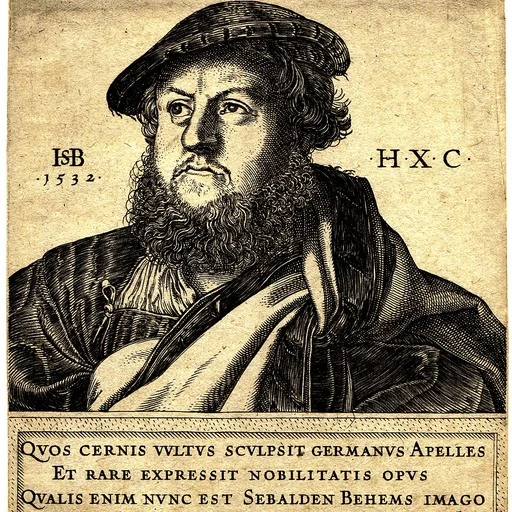
Sebald Beham (1500–1550) was a German painter and printmaker, mainly known for his very small engravings.