Artwork
Venus and Cupid
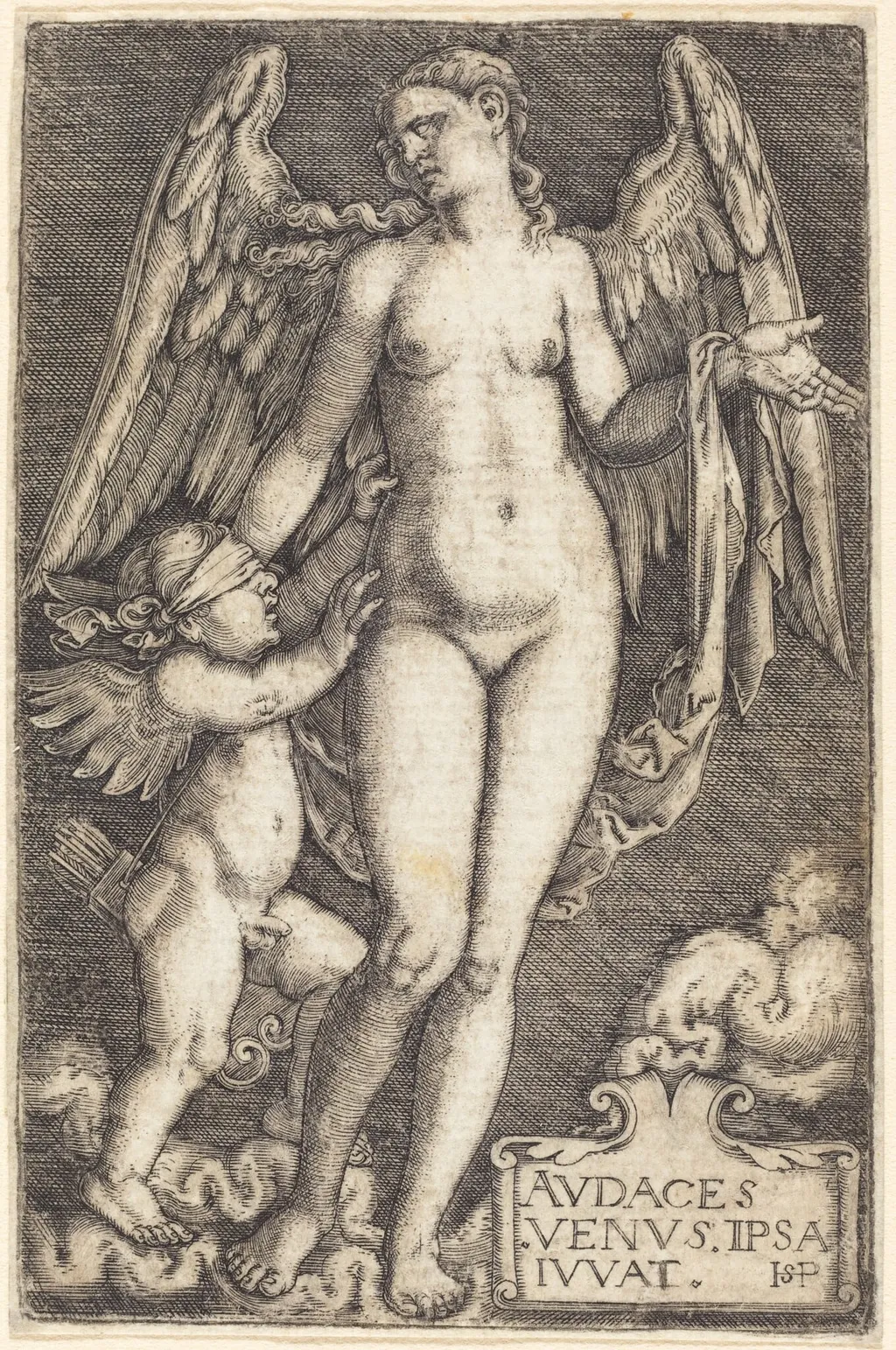
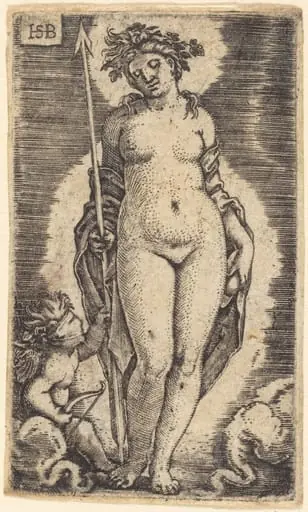
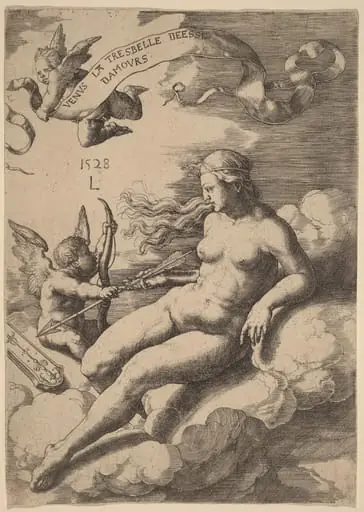
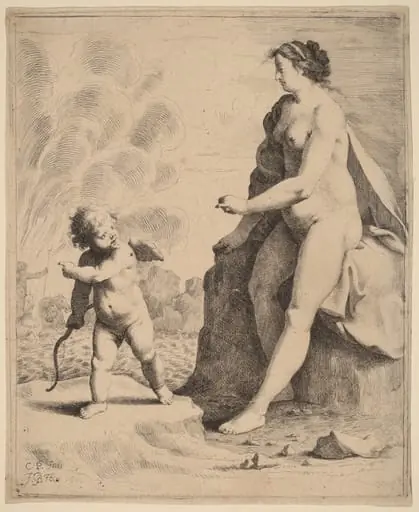
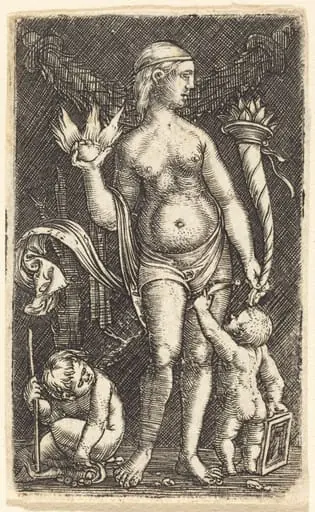
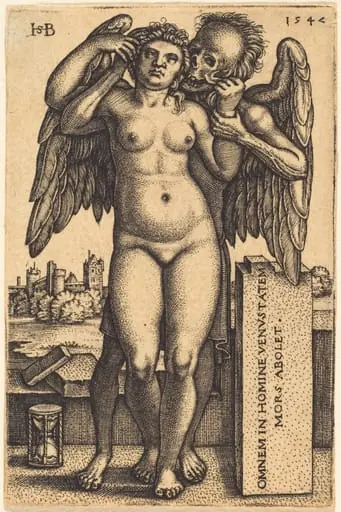
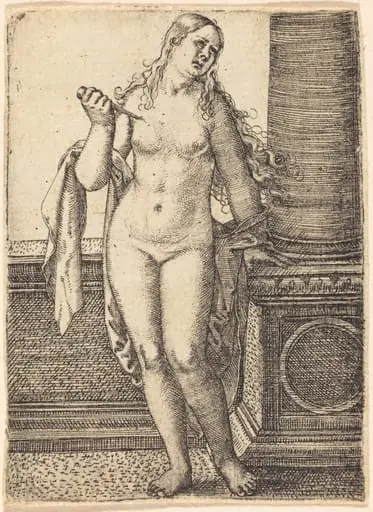
Venus and Cupid is an ink print by the Renaissance artist Sebald Beham. It dates from 1528 and is held in the collection of the National Gallery of Art.
About this work
Overview
Sebald Beham, a German printmaker of the early 1500s, produced the engraving *Venus and Cupid* around 1528. Executed on a modestly sized copper plate, the work exemplifies the meticulous approach of the so‑called Little Masters, a group noted for their finely detailed, compact prints.
Subject & Meaning
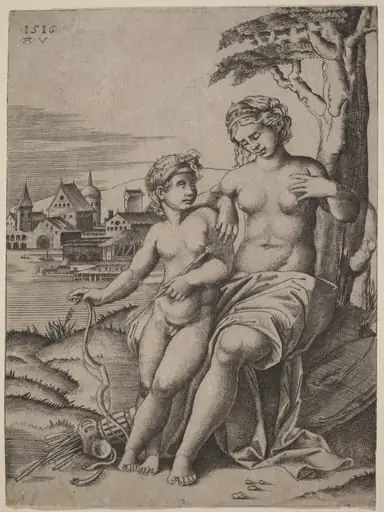
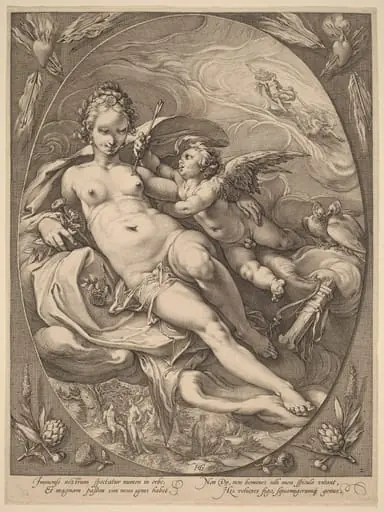
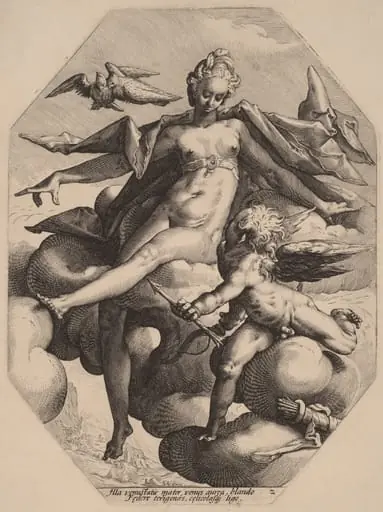
The image presents the Roman goddess Venus holding a diminutive bow, while her son Cupid stands nearby, poised with his own tiny bow. The pairing draws directly from classical mythology, emphasizing themes of love and desire through the intimate interaction of the two figures.
Technique & Style
Beham achieved tonal variation by employing dense cross‑hatching, a network of fine parallel lines that build up shadows on the skin and drapery. The smooth contours of the bodies are rendered with delicate strokes, creating a subtle modelling effect that becomes apparent only under close inspection.
History & Provenance
Created for the burgeoning market of private collectors, the print was likely sold as a single sheet rather than as part of a bound volume. After Beham’s relocation from Nuremberg to Frankfurt, his works circulated widely among connoisseurs of German printmaking, contributing to the diffusion of Dürer’s legacy.
Context
The engraving reflects the broader German tradition of the early sixteenth century, where artists adapted classical subjects to suit the tastes of a domestic audience. Beham’s output, alongside that of his contemporaries, helped establish a niche for small‑scale, highly finished prints that combined scholarly content with decorative appeal.
Artist & collection
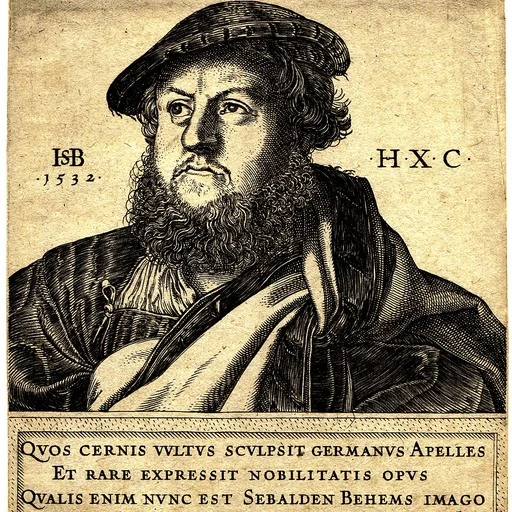
Artist
Sebald Beham (1500–1550) was a German painter and printmaker, mainly known for his very small engravings.