Artwork
Johannes de Doper met het Lam Gods, linkerpaneel van een drieluik (dicht)
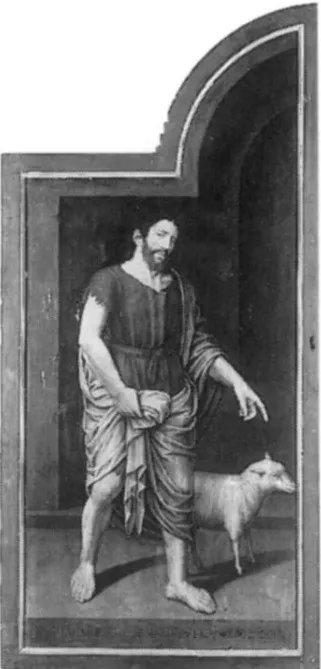
Johannes de Doper met het Lam Gods, linkerpaneel van een drieluik (dicht) is an oil painting by the Northern Renaissance artist Hans van Coninxloo. It dates from 1557 and is held in the collection of the Rijksmuseum.
About this work
Overview
Created in 1557 by the Flemish painter Hans van Coninxloo, this oil on canvas forms the left wing of a closed triptych. The work presents a solitary figure of John the Baptist standing in a dark interior, his gaze directed toward a small white lamb he holds by a leash. The composition is modest in scale and currently belongs to the collection of the Rijksmuseum in Amsterdam.
Subject & Meaning
The painting portrays the biblical scene of John the Baptist with the Lamb of God, a motif that underscores the connection between the prophet’s call for repentance and the sacrificial symbolism of Christ. The figure’s austere attire and barefoot stance emphasize humility, while the lamb, rendered in pristine white, signifies innocence and the forthcoming redemption.
Technique & Style
Coninxloo employs a stark chiaroscuro, allowing a narrow band of light to illuminate the saint’s face and the animal against an otherwise unadorned darkness. The limited palette of earth tones and the subtle gradations of shadow create a sense of depth and focus, directing the viewer’s attention to the interaction between the two central elements.
History & Provenance
The panel was originally part of a three‑panel altarpiece, intended for private devotion. After remaining in its closed state for centuries, the work entered the Rijksmuseum’s holdings in the early twentieth century, where it has been displayed as an example of mid‑sixteenth‑century Northern religious painting.
Context
Hans van Coninxloo worked within the tradition of Netherlandish religious art, where intimate, contemplative scenes were favored for personal worship. The painting reflects the Counter‑Reformation emphasis on clear, didactic imagery, using a single, emotionally resonant figure to convey theological concepts without elaborate narrative settings.
Artist & collection