Artwork
Palace Gardens with Poor Lazarus in the foreground
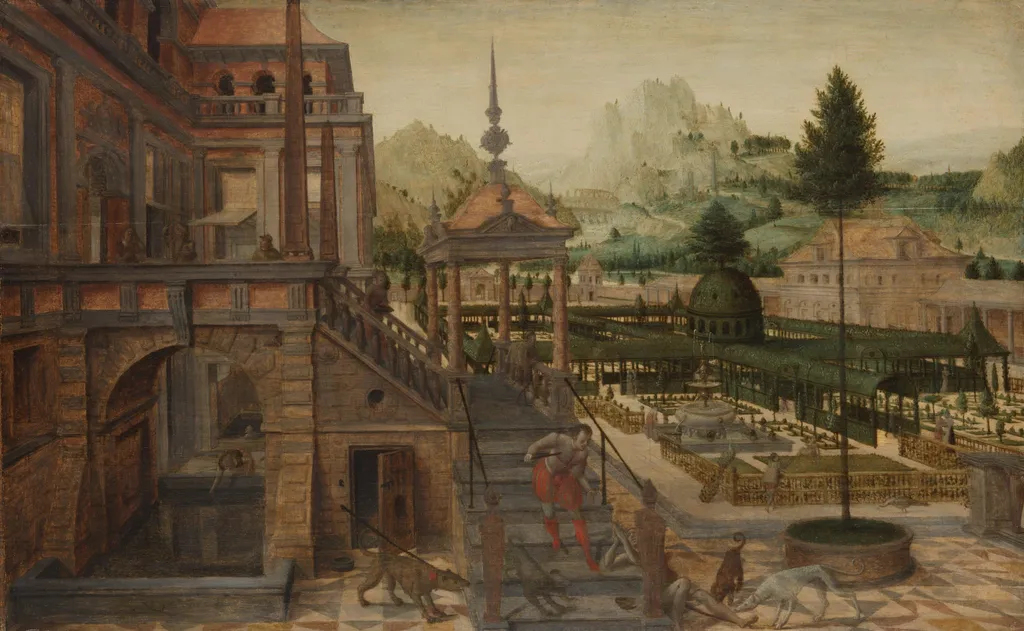
Palace Gardens with Poor Lazarus in the foreground is an unspecified painting by the Northern Renaissance artist Hans Vredeman de Vries. It dates from 1578 and is held in the collection of the Rijksmuseum. This painting presents a quiet yet striking juxtaposition between opulence and suffering.
About this work
Overview
At the foreground, a destitute man lies near the entrance of a grand palace, his body marked by sores, while dogs lick his wounds.
This painting presents a quiet yet striking juxtaposition between opulence and suffering. At the foreground, a destitute man lies near the entrance of a grand palace, his body marked by sores, while dogs lick his wounds. Behind him, figures move along the palace steps, and beyond, an ornamental garden with a pavilion, fountain, and peacocks extends, emphasizing the divide between the privileged and the abandoned.
Subject & Meaning
The figure of Lazarus references the biblical parable of the poor man who suffers in silence while the rich live in comfort. His placement at the palace threshold, ignored by those above, underscores themes of social neglect and moral indifference. The dogs, often symbols of low status, become unintended caretakers, heightening the irony of human apathy toward suffering.
Technique & Style
The artist renders the palace and garden with precise detail, using soft light to highlight architectural elements and the glossy plumage of peacocks. In contrast, Lazarus is painted with muted tones and rough textures, drawing attention to his vulnerability. The composition directs the viewer’s eye from the foreground suffering to the distant luxury, reinforcing the narrative through spatial hierarchy.
History & Provenance
The painting originates from the Dutch Golden Age, likely created in the early 17th century. It entered the collection of the Rijksmuseum in the 19th century, where it has remained as part of its holdings of moralizing genre scenes. Its attribution and exact date remain subjects of scholarly discussion, though its style aligns with contemporaneous works depicting biblical themes in domestic settings.
Context
During the Dutch Republic, religious narratives were often embedded in everyday scenes to convey ethical lessons. This painting reflects a cultural interest in moral contrasts, influenced by Protestant teachings that emphasized humility and charity. The inclusion of peacocks and formal gardens, symbols of wealth and vanity, served as visual warnings against materialism.
Legacy
The work contributes to a broader tradition in Northern European art that visualized biblical parables within contemporary settings. Its unembellished portrayal of poverty, devoid of overt sentimentality, influenced later realist depictions of social inequality. Today, it remains a quiet but potent reminder of how art can frame moral questions through observation rather than preaching.
Own this work as a print
Artist & collection
Artist
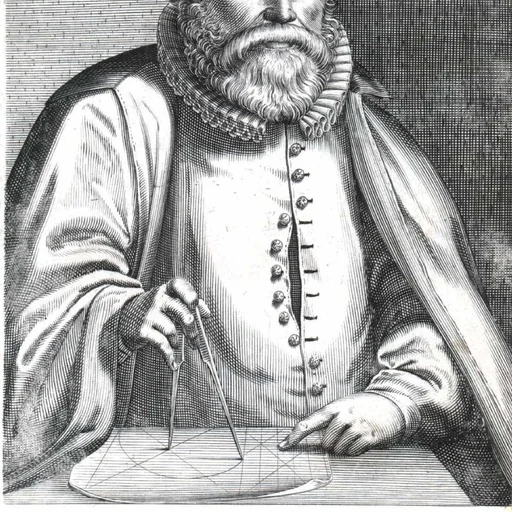
Hans Vredeman de Vries (1527 – c. 1607) was a Dutch Renaissance architect, painter, and engineer. Vredeman de Vries is known for his publication in 1583 on garden design and his books with many examples on ornaments…

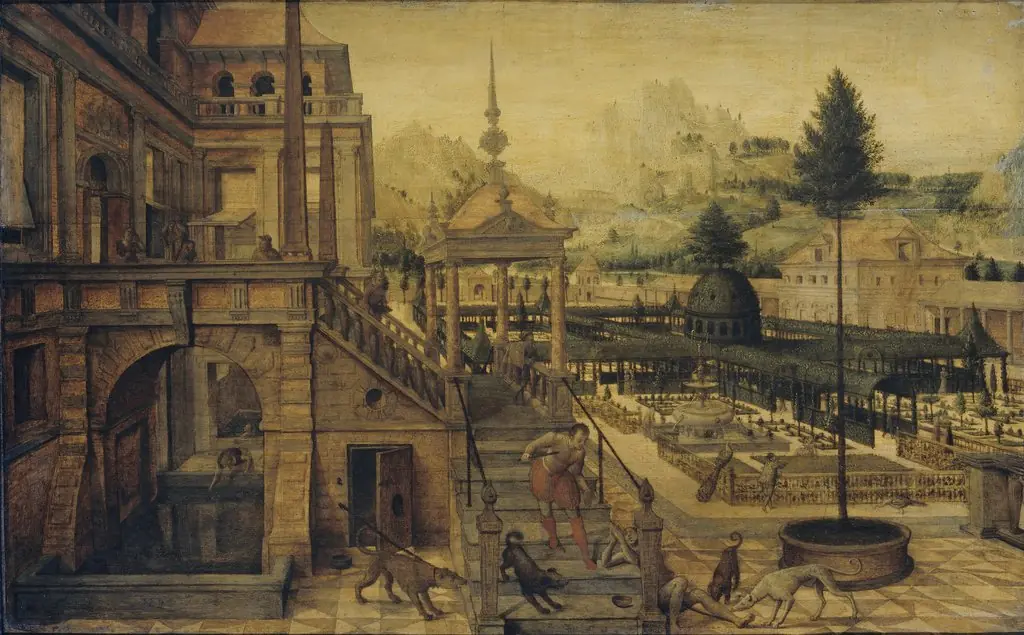 Palace Gardens with Poor Lazarus in the foreground
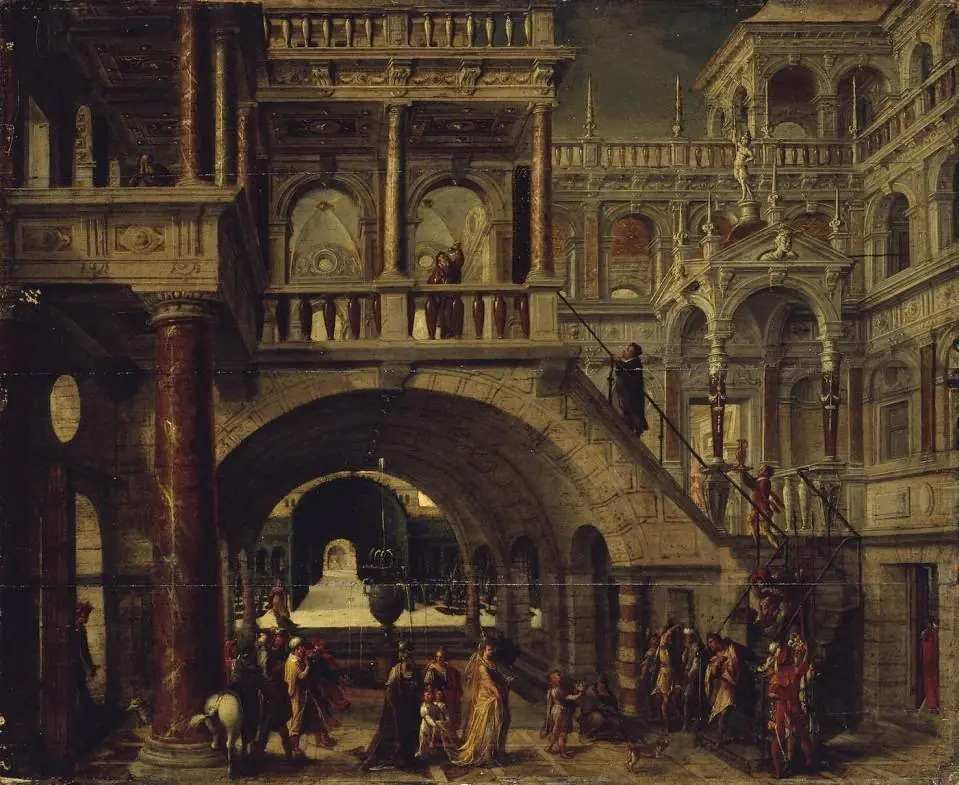 Architectural Landscape
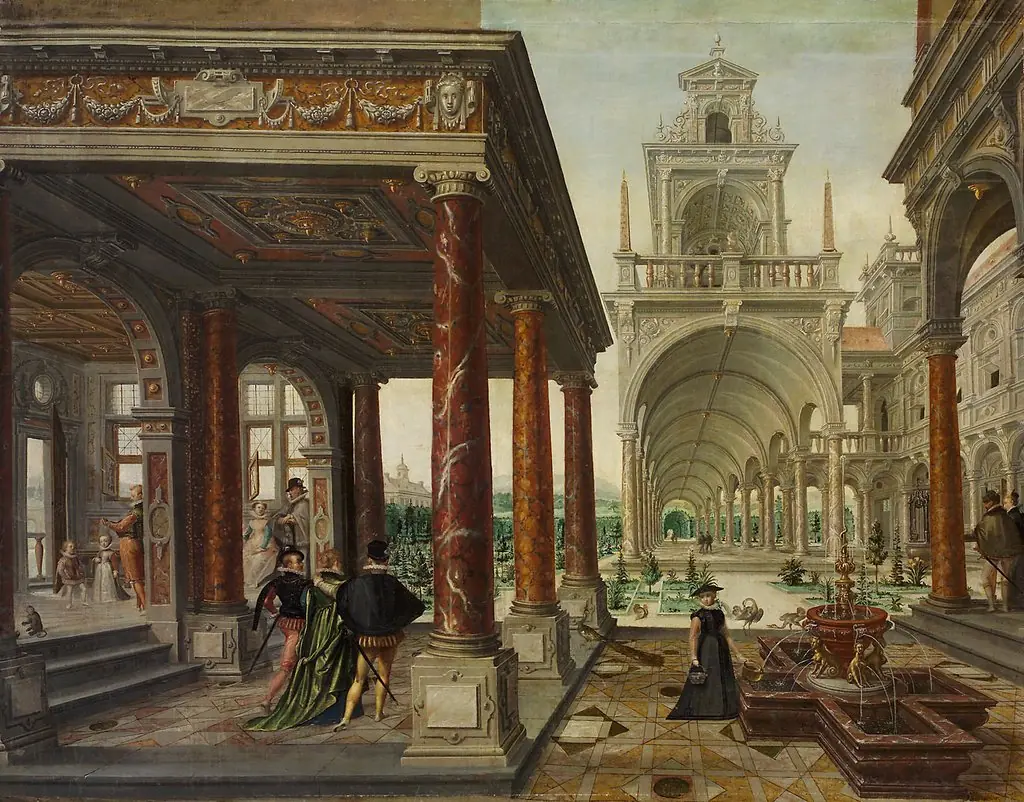 Love garden with elegant figures
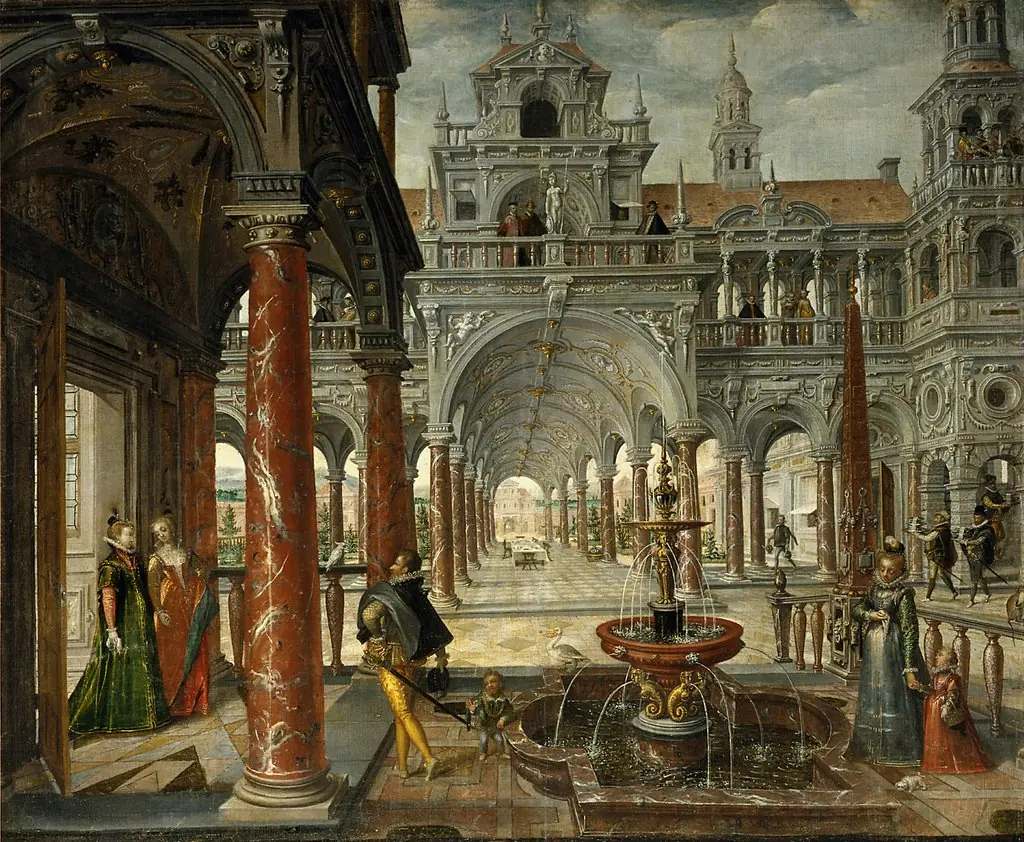 Palace Architecture with Distinguished Visitors
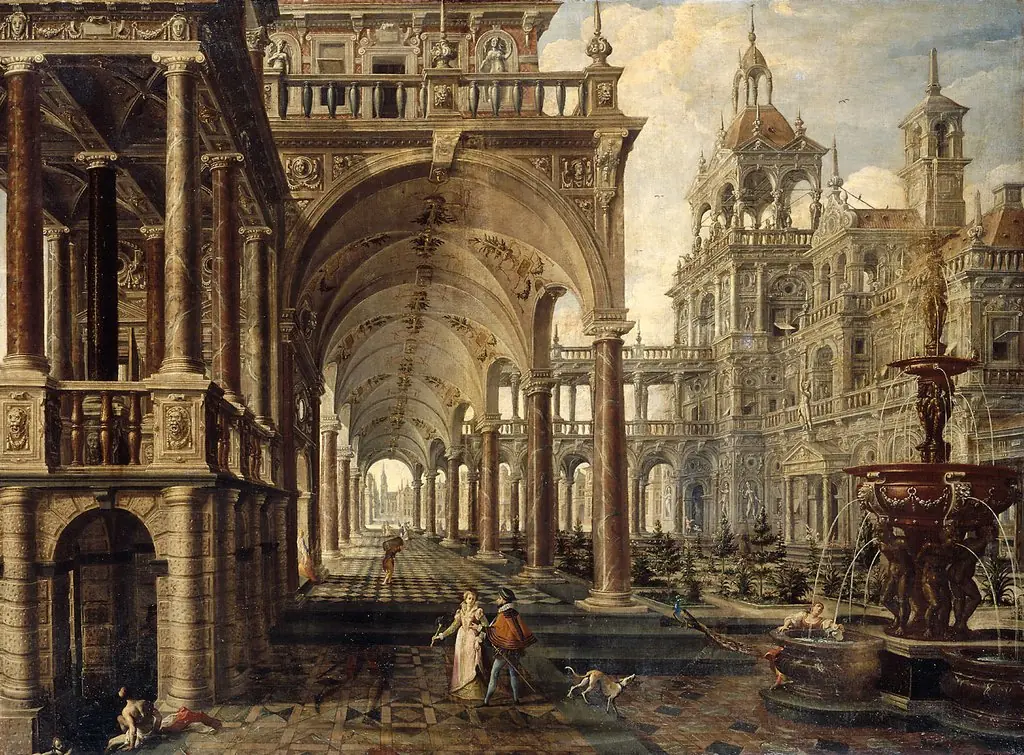 Palastarchitektur mit Badenden
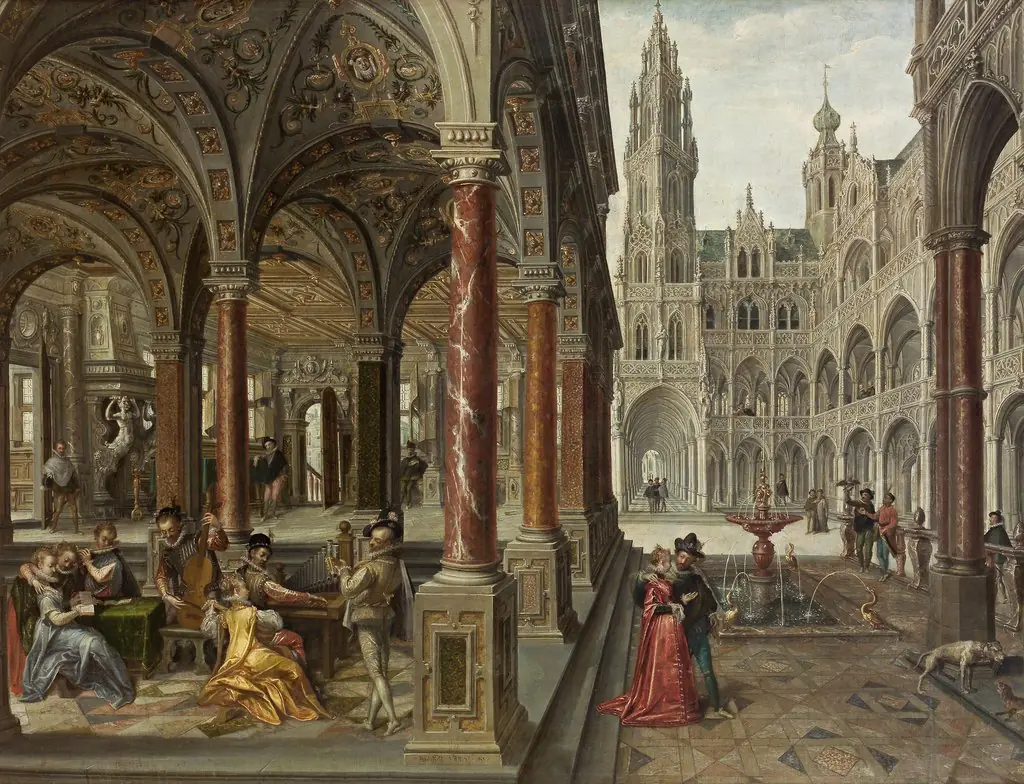 Palace architecture with musicians
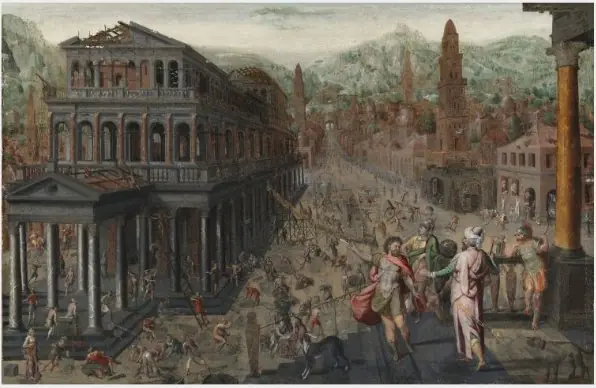 The Restoration of the Temple at Jerusalem
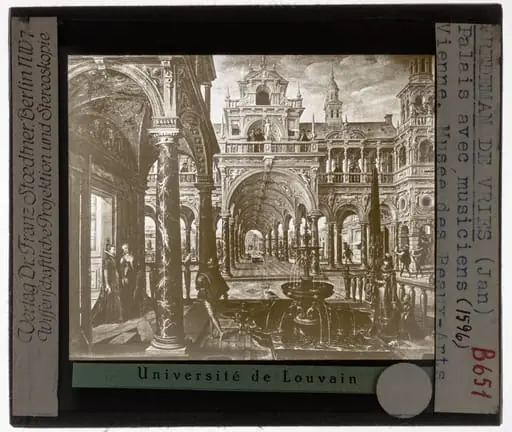 Hans Vredeman de Vries. Paleis met muzikanten
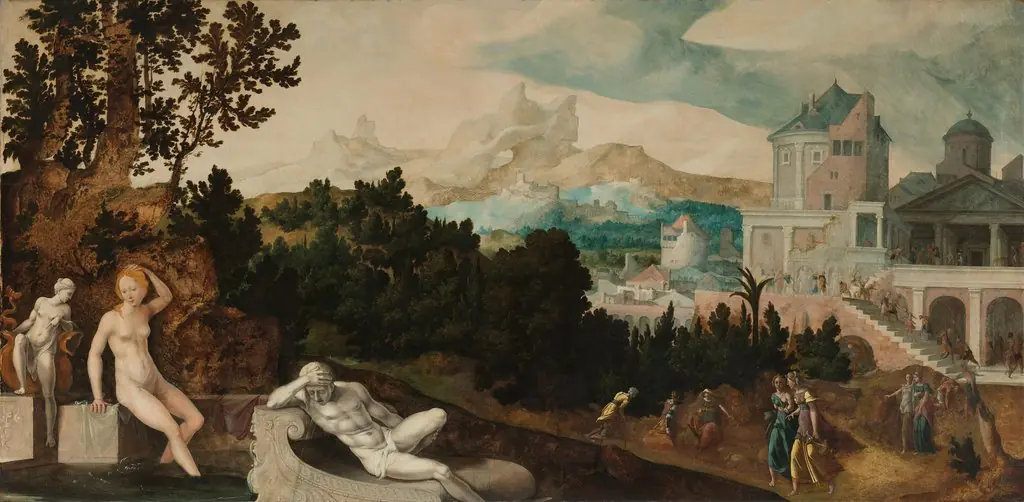 Landscape with Bathsheba
 Scenes from a Legend
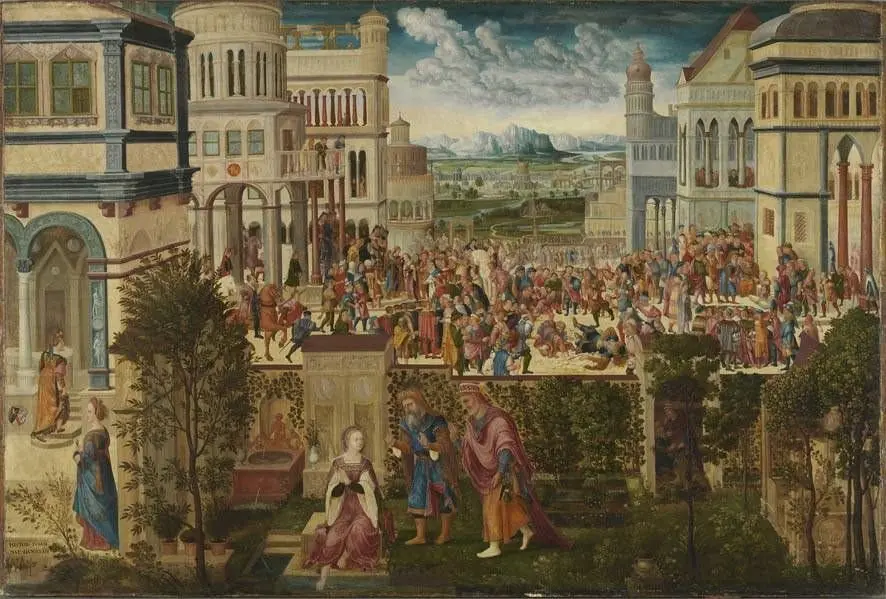 Historienzyklus: Geschichte der Susanna
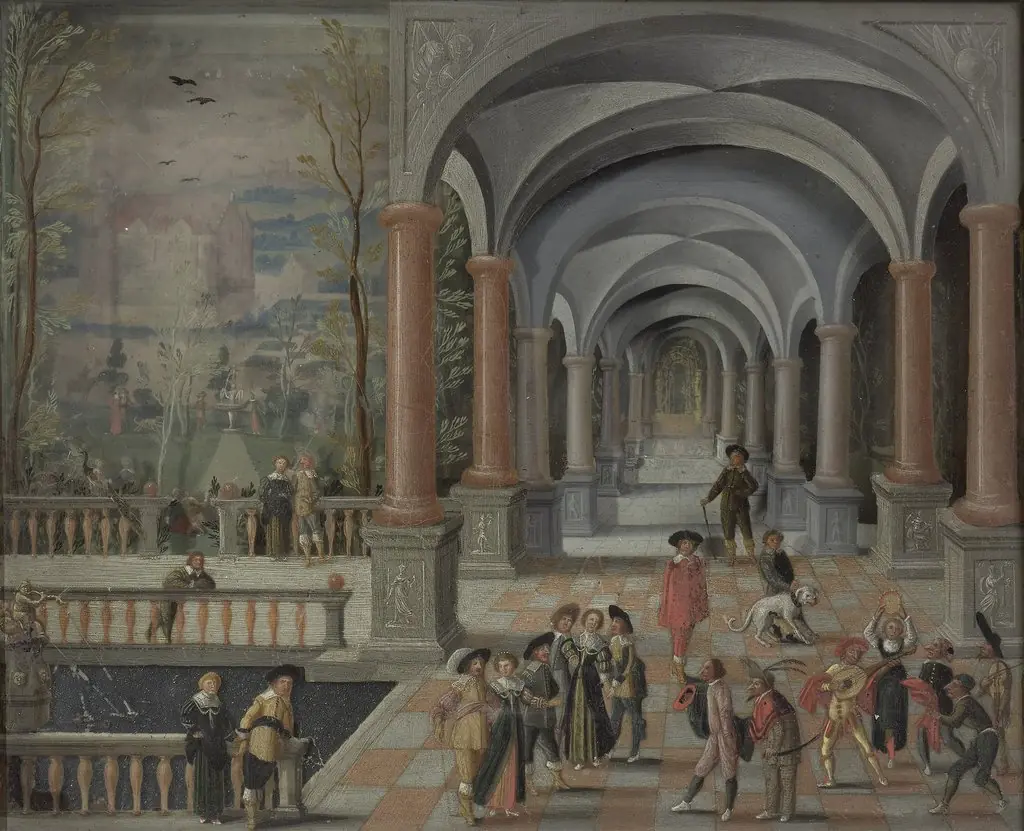 Festive Gathering and Figures from a Commedia dell'Arte in a Gallery
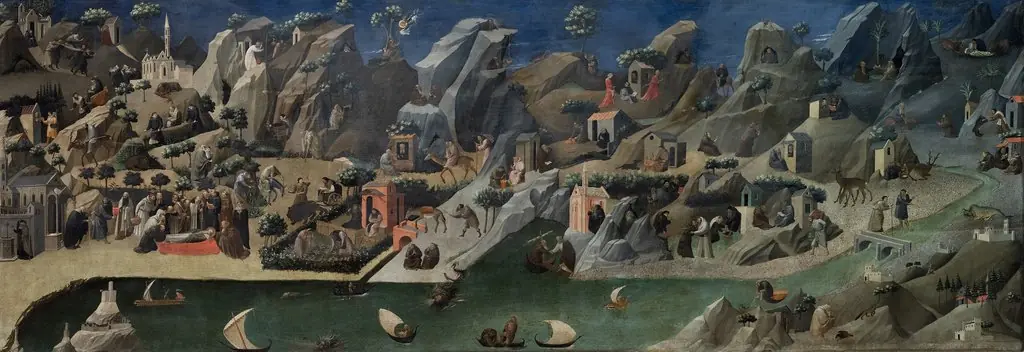 Thebaid
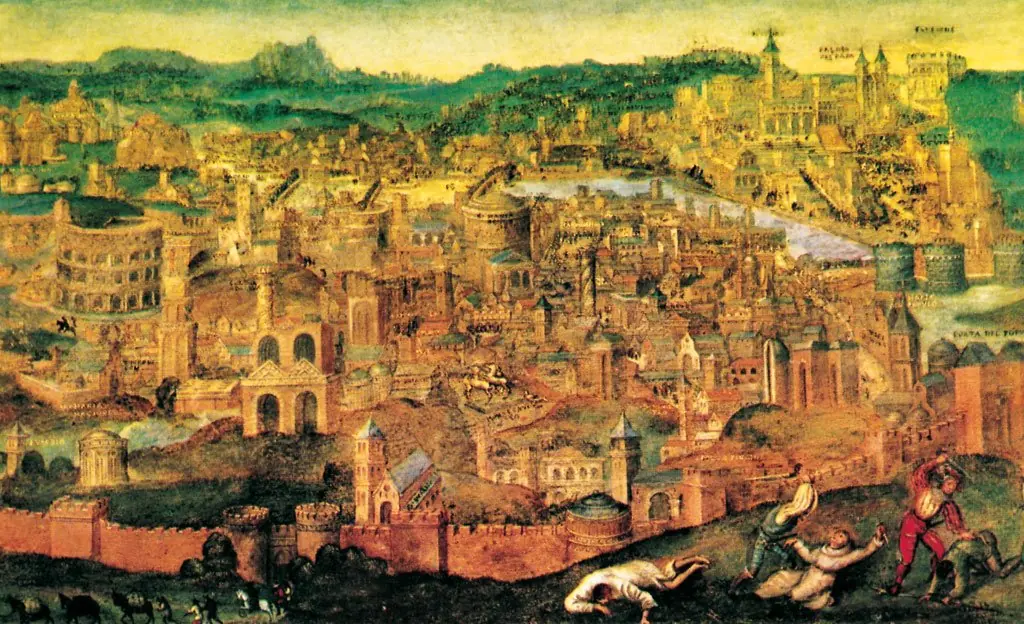 The sack of Rome in 1527
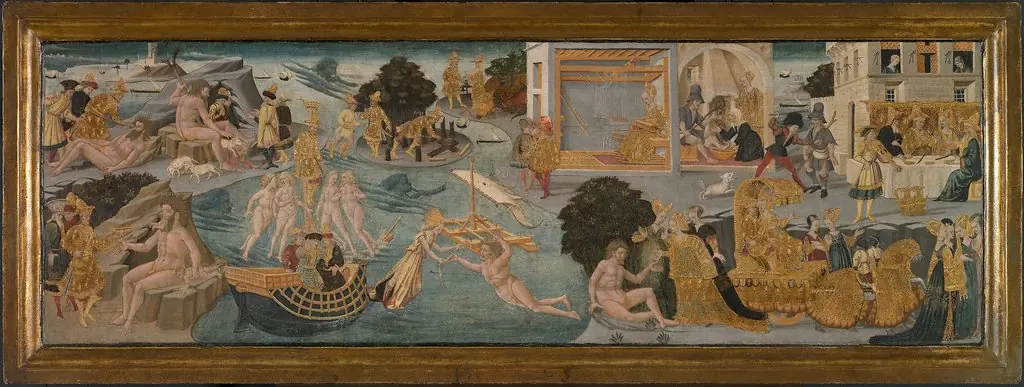 The Adventures of Ulysses
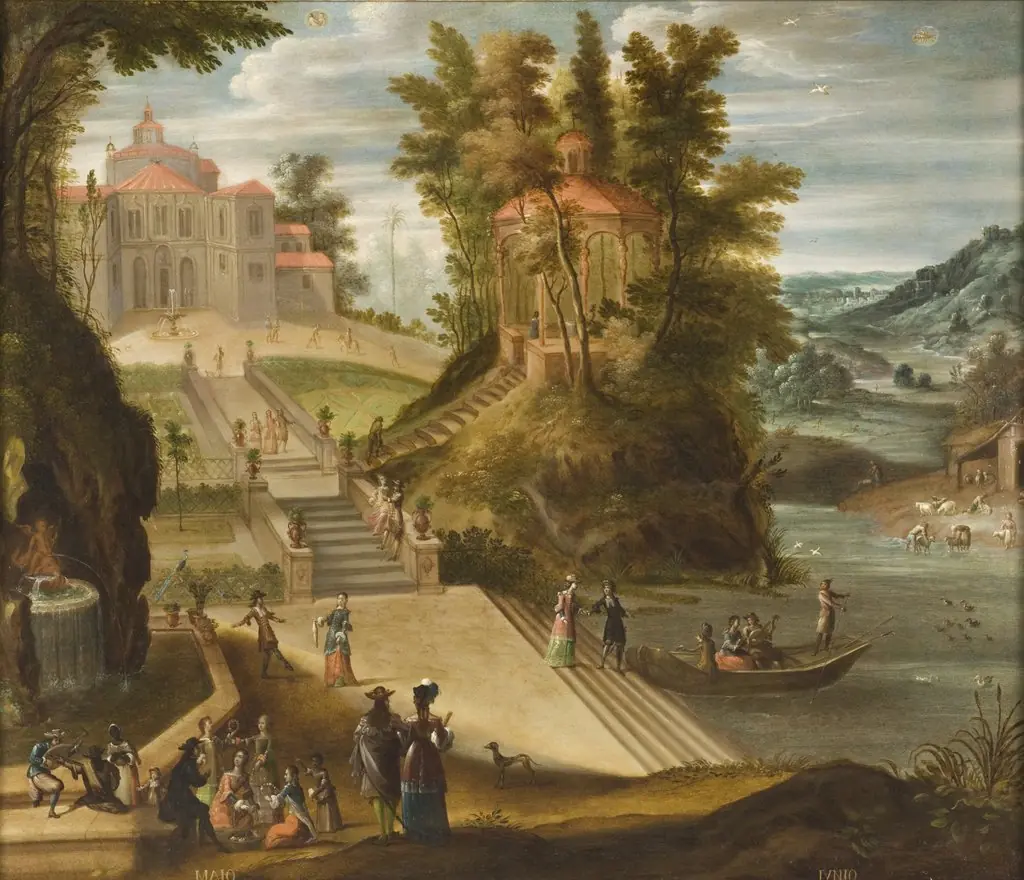 The Twelve Months of the Year (Los doce meses del año)
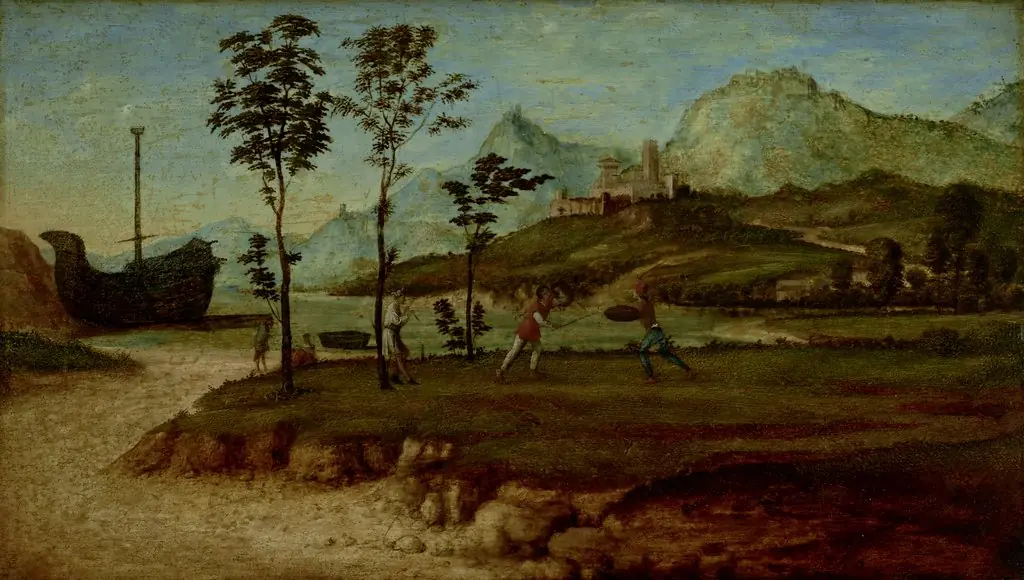 Coastal Landscape with two Men Fighting
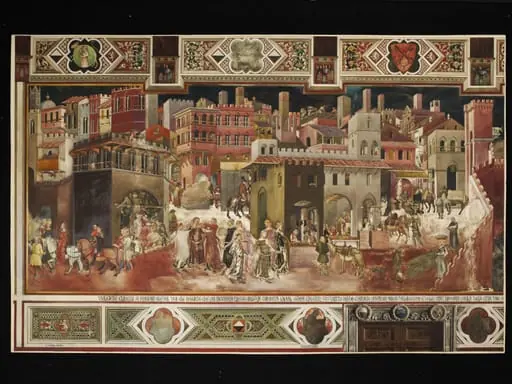 Good Government in the Palazzo Pubblico in Siena