Artwork
Fra Mariager Fjord
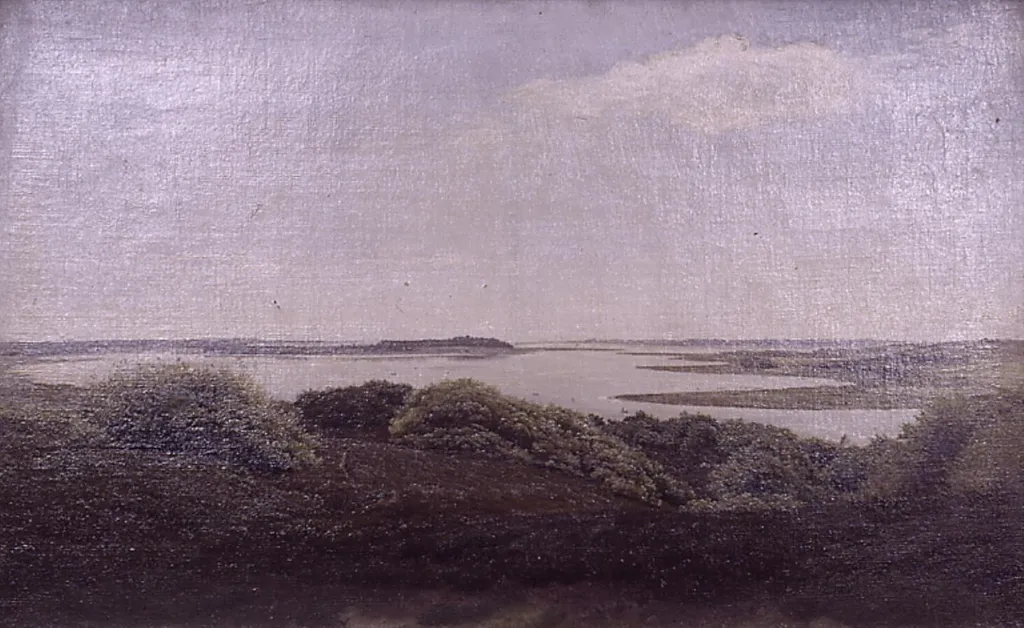
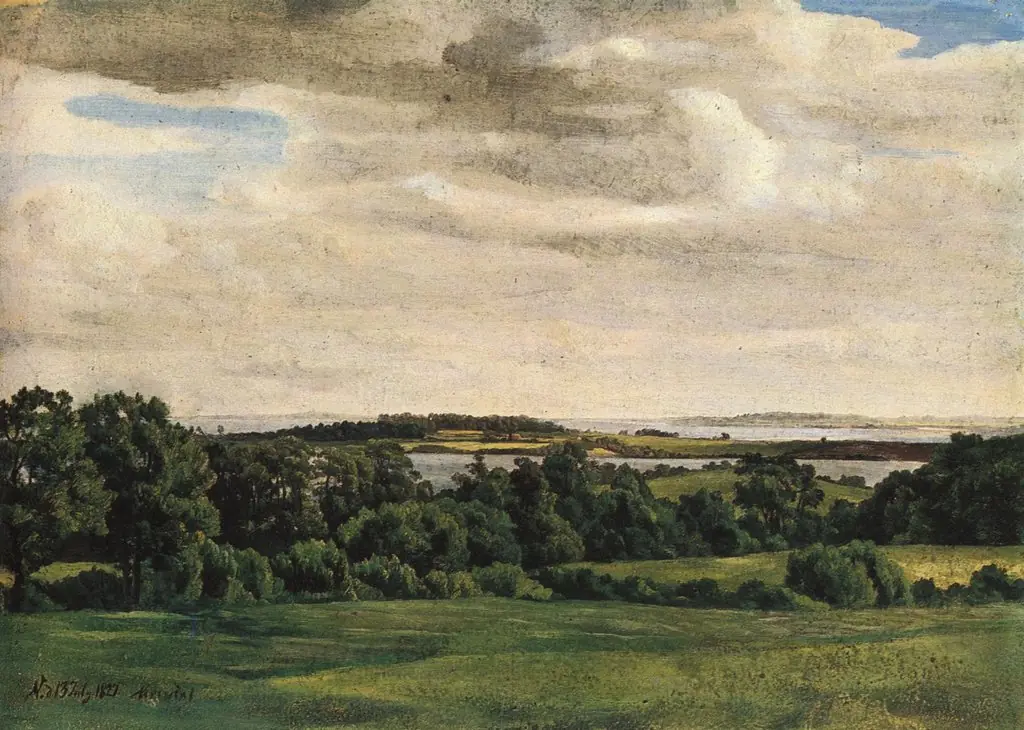
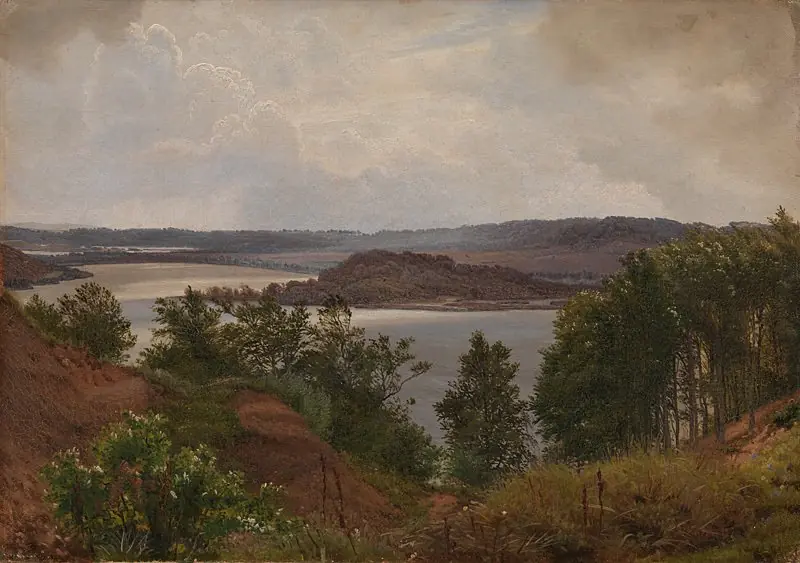
Fra Mariager Fjord is an oil painting by the Realist artist Harald Foss. It dates from 1867 and is held in the collection of the Statens Museum for Kunst.
About this work
Overview
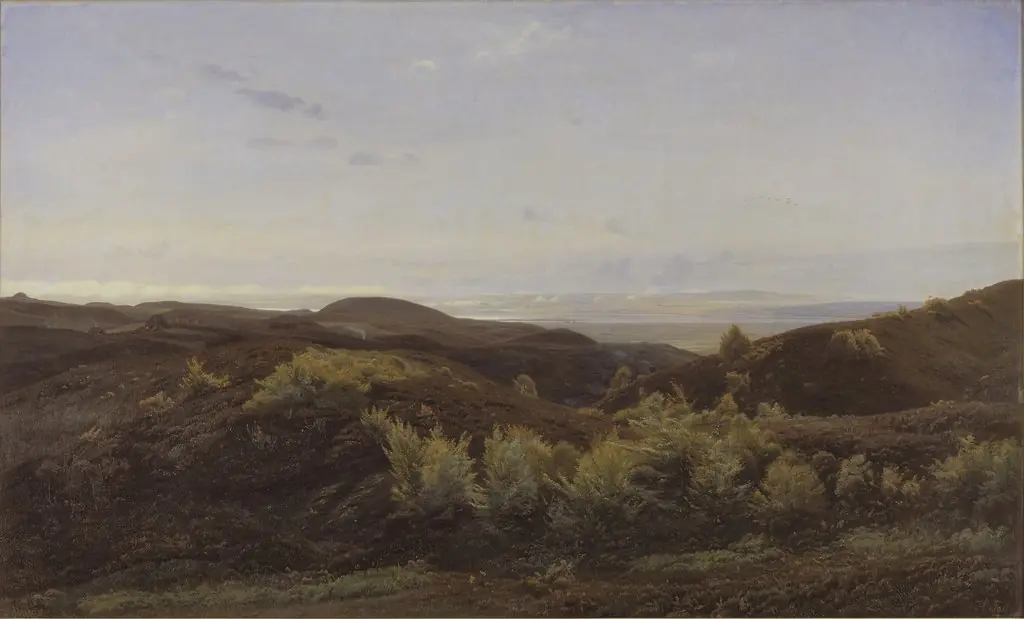
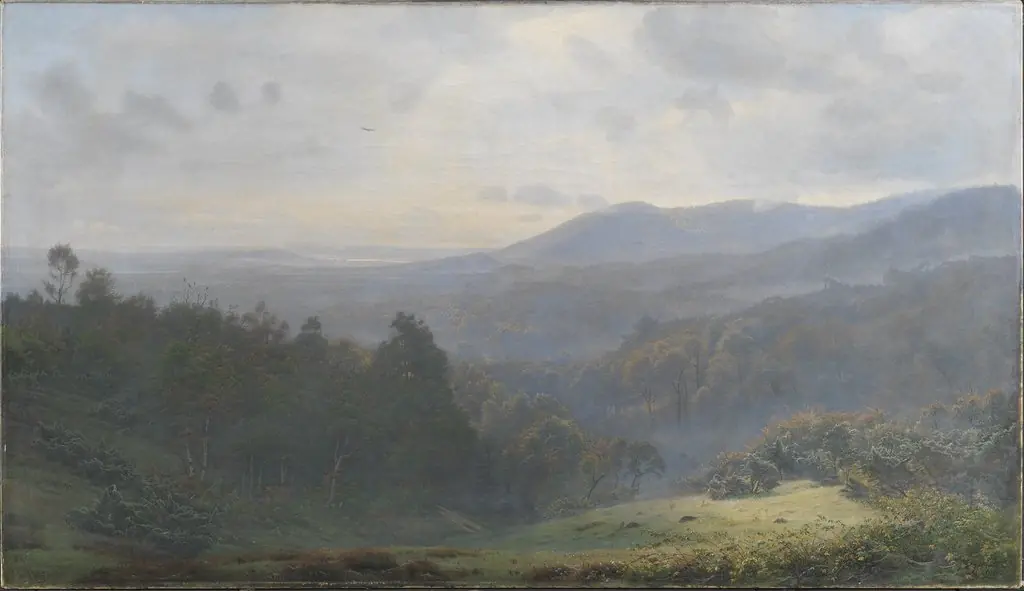
Harald Foss painted Fra Mariager Fjord in 1867 using oil on canvas. The work is part of the collection at Statens Museum for Kunst in Copenhagen. It depicts a quiet coastal landscape along the Mariager Fjord in Denmark, capturing a moment of stillness between land and water under an overcast sky.
Subject & Meaning
The painting presents a tranquil fjord scene with dense shrubbery along the shoreline and still, reflective water extending toward the horizon. No figures or vessels interrupt the quietude; the focus lies in the subtle interplay of natural elements. The atmosphere suggests contemplation, emphasizing the calm rhythm of the Danish coastline rather than narrative or drama.
Technique & Style
Foss employed soft, blended brushwork to render the hazy sky and gently rippling water. Light is diffused evenly across the scene, avoiding strong contrasts. The texture of foliage is suggested with loose strokes, while the water’s surface holds faint reflections that guide the eye toward the distant horizon, reinforcing spatial depth without dramatic chiaroscuro.
History & Provenance
Completed in 1867, the painting entered the collection of Statens Museum for Kunst shortly after its creation. It reflects the period’s growing interest in Danish landscape painting as a means of national identity. Its continuous presence in the museum’s holdings underscores its role in documenting 19th-century Danish artistic priorities.
Context
Foss worked during a time when Danish artists turned to local scenery as subject matter, moving away from idealized foreign landscapes. Fra Mariager Fjord aligns with the broader trend of naturalism in Scandinavian art, where everyday coastal views were rendered with quiet precision, reflecting both regional pride and a shift toward observational realism.
Legacy
The painting remains a representative example of mid-19th-century Danish landscape art. While not widely exhibited outside Denmark, it contributes to the understanding of how local environments were visually codified during a formative era in the nation’s artistic development. Its enduring presence in the national collection affirms its historical significance.
Artist & collection