Artwork
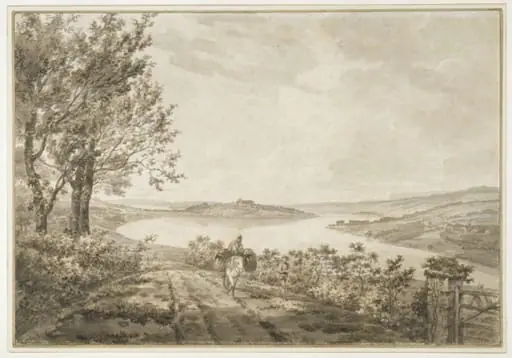
Lough Key, from Rockingham, Co. Roscommon
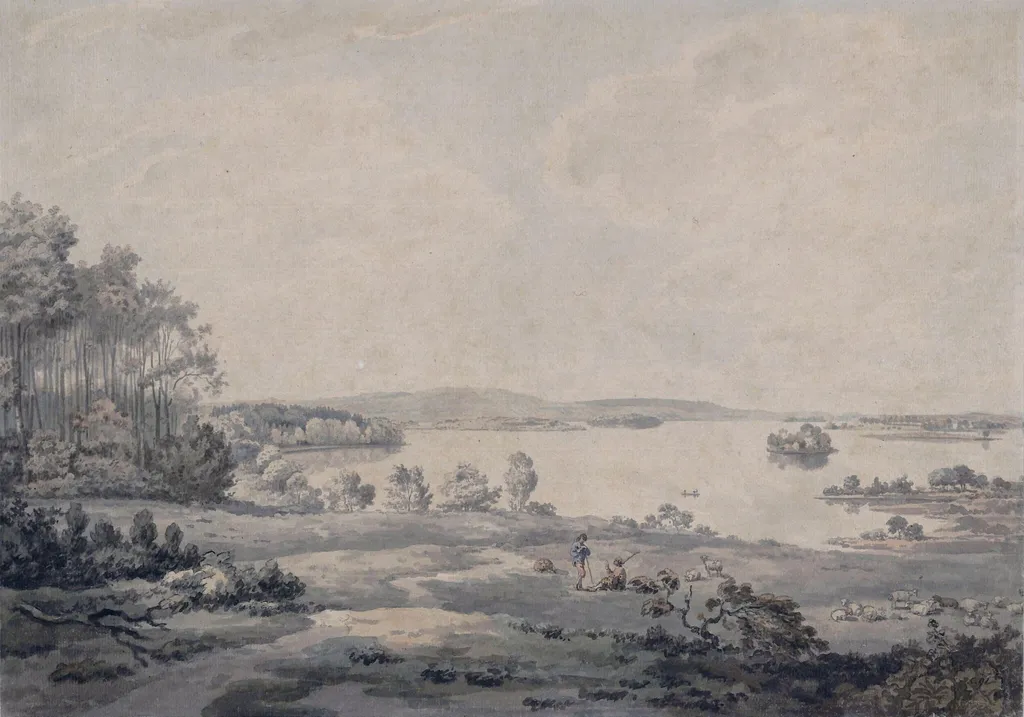
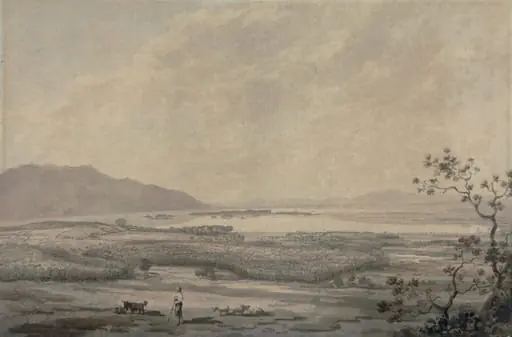
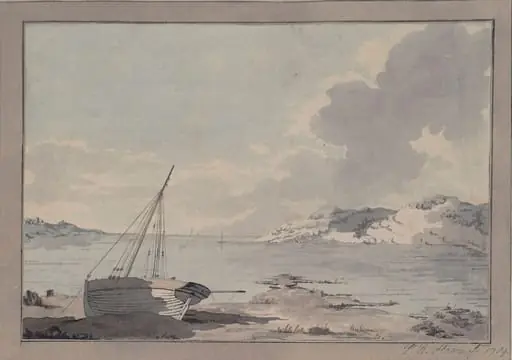
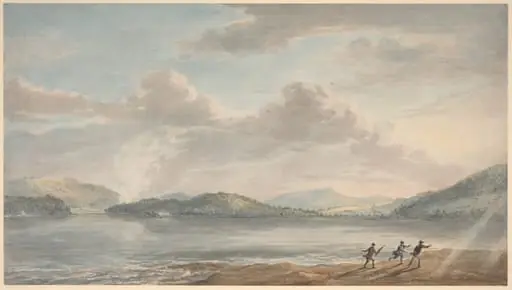
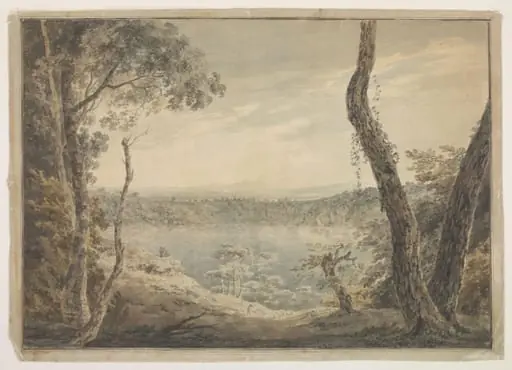
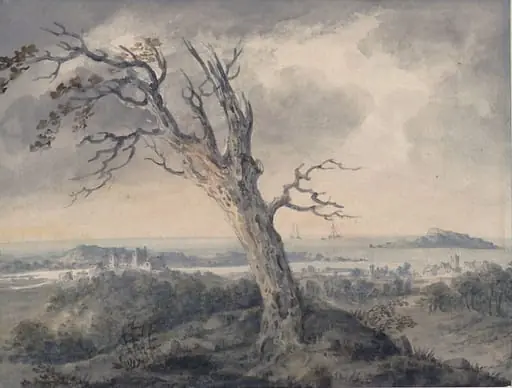
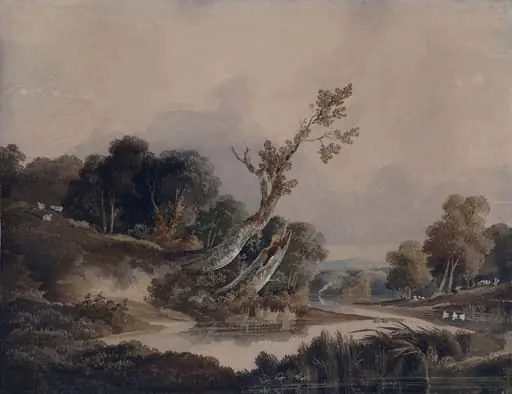
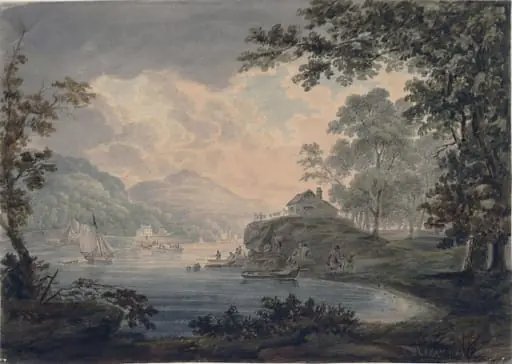
Lough Key, from Rockingham, Co. Roscommon is a watercolor work on paper by the Rococo painting artist William Pars. It dates from 1771 and is held in the collection of the Victoria and Albert Museum. This watercolour captures a tranquil landscape of Lough Key as seen from Rockingham in County Roscommon.
About this work
Overview
Rendered in delicate washes, the composition emphasizes atmosphere over detail, with soft edges and subdued hues that evoke a quiet, contemplative mood.
This watercolour captures a tranquil landscape of Lough Key as seen from Rockingham in County Roscommon. Rendered in delicate washes, the composition emphasizes atmosphere over detail, with soft edges and subdued hues that evoke a quiet, contemplative mood. The absence of sharp definition and the prevalence of pale grays and muted greens suggest a sensitivity to light and weather typical of early 19th-century Irish landscape studies.
Subject & Meaning
The scene centers on a solitary figure near the water’s edge, holding a long staff, while sheep graze in the foreground marsh. The figure, neither prominent nor engaged in overt action, contributes to the sense of stillness and isolation. The landscape itself—still, expansive, and unpopulated beyond these elements—suggests a quiet communion between human presence and the natural world, without narrative or drama.
Technique & Style
The artist employed thin, layered watercolor washes to achieve a hazy, atmospheric effect. Forms are suggested rather than defined, with trees rendered as soft silhouettes and hills dissolving into the distance. The palette is restrained, dominated by gray, pale green, and washed blue, reinforcing the sense of mist and quiet light. Brushwork is gentle, avoiding bold lines or textural contrast.
History & Provenance
The work originates from the Rockingham estate in County Roscommon, a property historically associated with the King family, who were known patrons of local artists. While the artist’s identity remains unconfirmed, the piece aligns with regional watercolor traditions of the early 1800s, likely created as a personal record or modest commission rather than for public exhibition.
Context
Produced during a period when Irish landscapes were increasingly documented by amateur and professional artists, this work reflects a growing interest in local scenery beyond grand or dramatic vistas. Its subdued tone contrasts with the more theatrical landscapes of the Romantic movement, instead favoring intimate observation and quiet realism rooted in everyday rural life.
Legacy
Though not widely exhibited or published, the painting contributes to a body of modest Irish watercolors that document the visual character of the Irish countryside in the early 19th century. Its quiet aesthetic anticipates later tendencies toward lyrical landscape painting, valued more for its emotional resonance than its technical ambition.
Artist & collection
Artist
William Pars (28 February 1742 – 1782) was an English watercolour portrait and landscape painter, draughtsman, and illustrator.