Artwork
Beth-Shemesh
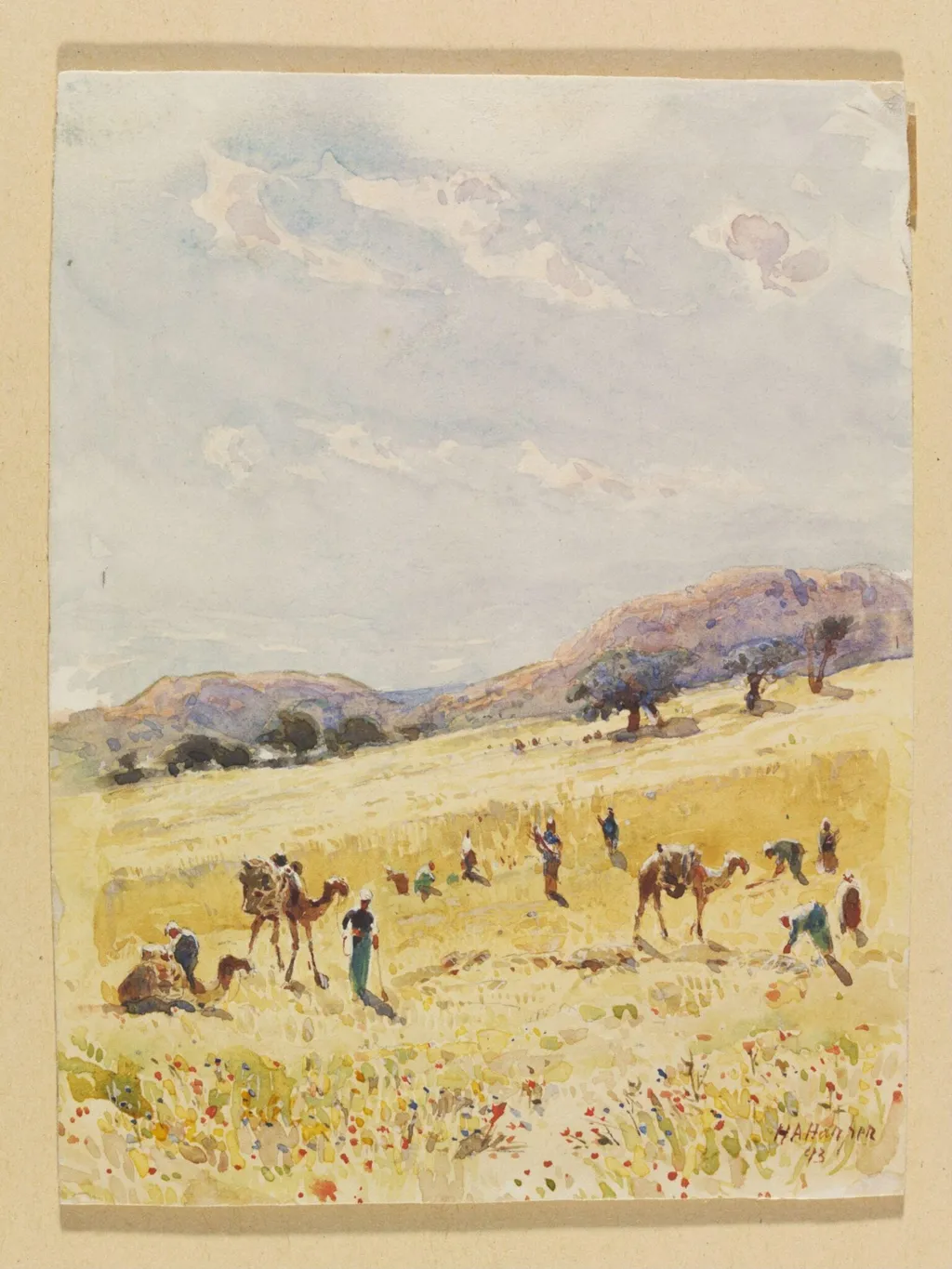
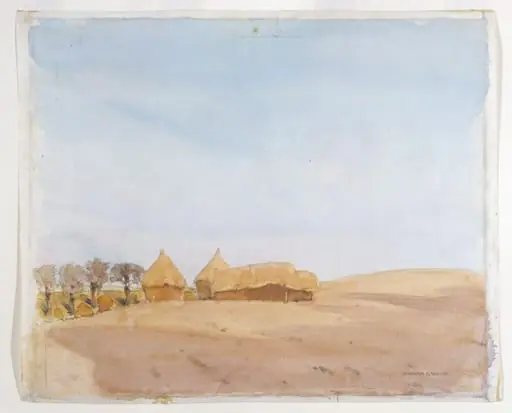
Beth-Shemesh is a watercolor work on paper by the Impressionist artist Henry Andrew Harper. It dates from 1893 and is held in the collection of the Victoria and Albert Museum.
About this work
Overview
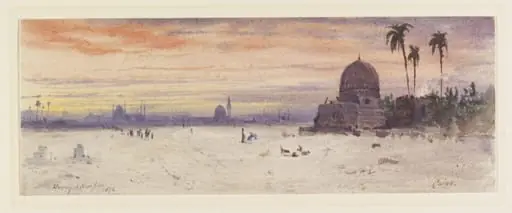
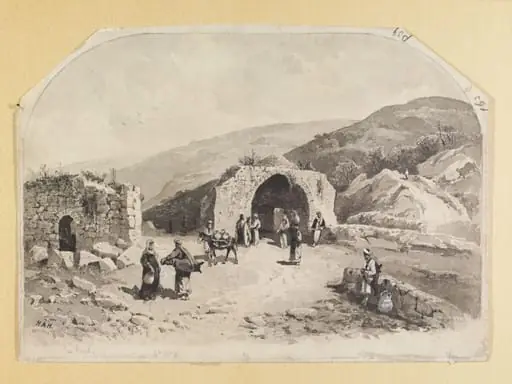
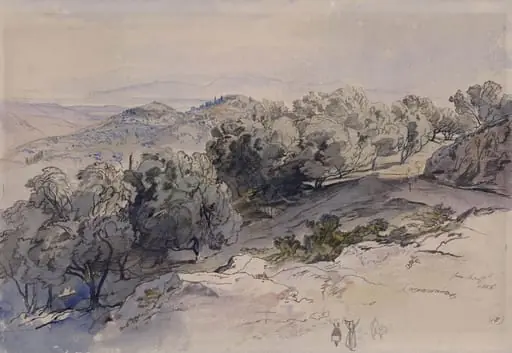
Henry Andrew Harper’s watercolour titled *Beth‑Shemesh* dates from 1893. Executed in a light, quickly applied manner, the picture depicts an arid landscape bathed in bright sunlight, punctuated by a few figures and camels moving across a predominantly yellow‑tan ground strewn with spots of green and red vegetation. Distant hills and sparse trees frame a pale sky dotted with clouds.
Subject & Meaning
The scene presents a modest caravan crossing a desert locale, suggesting a moment of travel or trade in a historically biblical region. The sparse human presence and the presence of camels emphasize the harshness of the environment while also hinting at the endurance of daily life amid a stark, sun‑lit terrain.
Technique & Style
Harper employs loose, rapid brushwork typical of late‑nineteenth‑century Impressionist practice, allowing washes of colour to suggest form rather than define it precisely. The watercolour medium lends a translucency that captures the heat‑shimmer of the desert, while the sketch‑like application conveys immediacy and movement.
History & Provenance
After its creation in 1893, the work entered the private market and was purchased by collector W. T. Spencer in May 1972 for a modest sum of five pounds. The acquisition reflects a later‑twentieth‑century interest in Harper’s lesser‑known watercolours and their representation of Middle‑Eastern subjects.
Own this work as a print
Artist & collection
Artist
Henry Andrew Harper painted watercolours of the Holy Land in the 1890s. He documented specific towns and sites in delicate brushstrokes, including Beth-Shemesh and Cairo in 1893 and 1892. His work focuses on places like…