Artwork
Glowing Evening
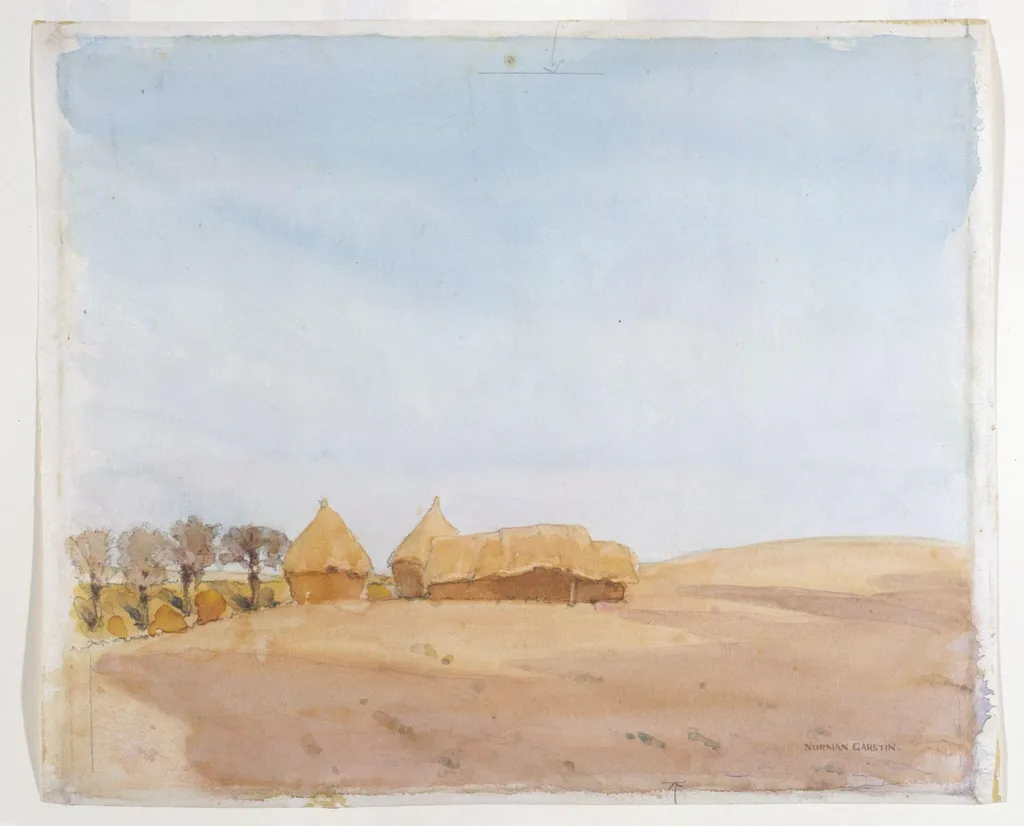
Glowing Evening is a watercolor work on paper by the Impressionist artist Norman Garstin. It dates from 1875 and is held in the collection of the Victoria and Albert Museum.
About this work
Overview
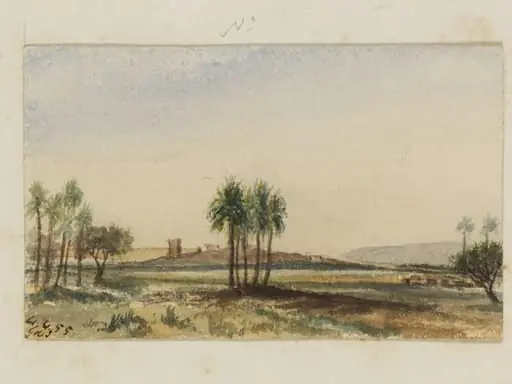
Norman Garstin’s watercolour, titled Glowing Evening, was completed in 1875. The work portrays a tranquil rural landscape at twilight, featuring three modest thatched cottages perched on a gentle slope, a few skeletal trees, and a field rendered in muted pinks and yellows. The artist’s signature is visible in the lower corner, confirming authorship.
Subject & Meaning
The composition captures a moment of day’s end, when the fading light bathes the thatched roofs in a warm glow. The sparse vegetation and open field suggest a quiet, agrarian setting, emphasizing the harmony between human dwellings and the surrounding countryside. The subdued palette conveys a sense of calm and transition.
Technique & Style
Garstin employs loose, rapid brushstrokes characteristic of watercolour, allowing portions of the scene to appear slightly out of focus. This approach conveys the fleeting quality of twilight illumination. Warm, gentle hues dominate, while the contrast between dark tree silhouettes and a pale sky enhances the atmospheric effect.
History & Provenance
Created in the mid‑1870s, Glowing Evening reflects Garstin’s interest in rural Irish subjects during his early career. The work remains signed by the artist, though specific details of its ownership history are not documented in the available records.
Artist & collection
Artist
Norman Garstin (28 August 1847 – 22 June 1926) was an Irish artist, teacher, art critic and journalist associated with the Newlyn School of painters.


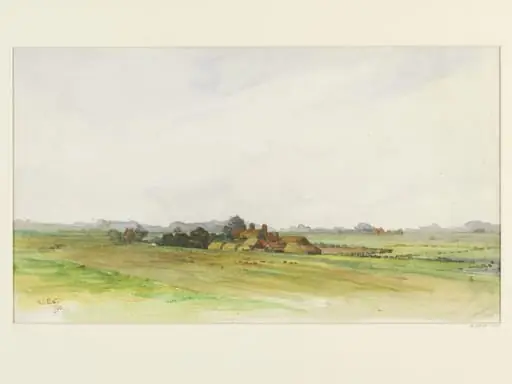 Landscape with Farm and Fields in Flat Country
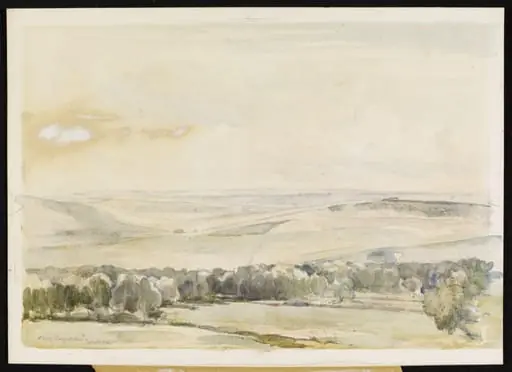 The Downs from Friston
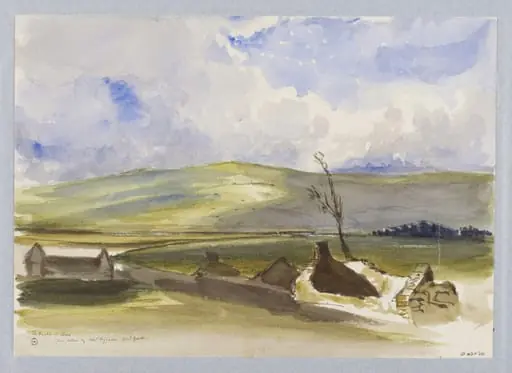 Sketches made during the Campaign of 1854-55 in the Crimea, Circassia and Constantinople
 Peisaj panoramic
 Madams Farm, West Sussex
 Farmhouse behind Trees
 The Pond, Ditchling
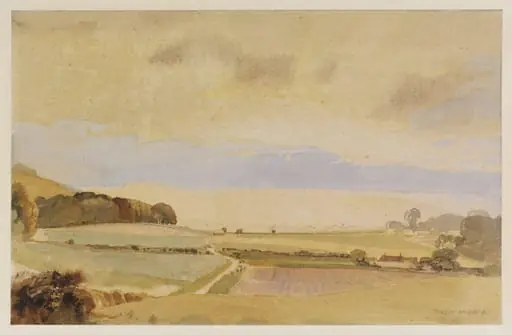 The Southdown, Underhill Road; Wolstonbury, showing Danny Farm
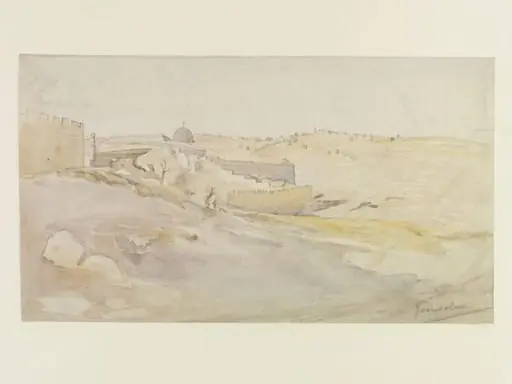 Jerusalem
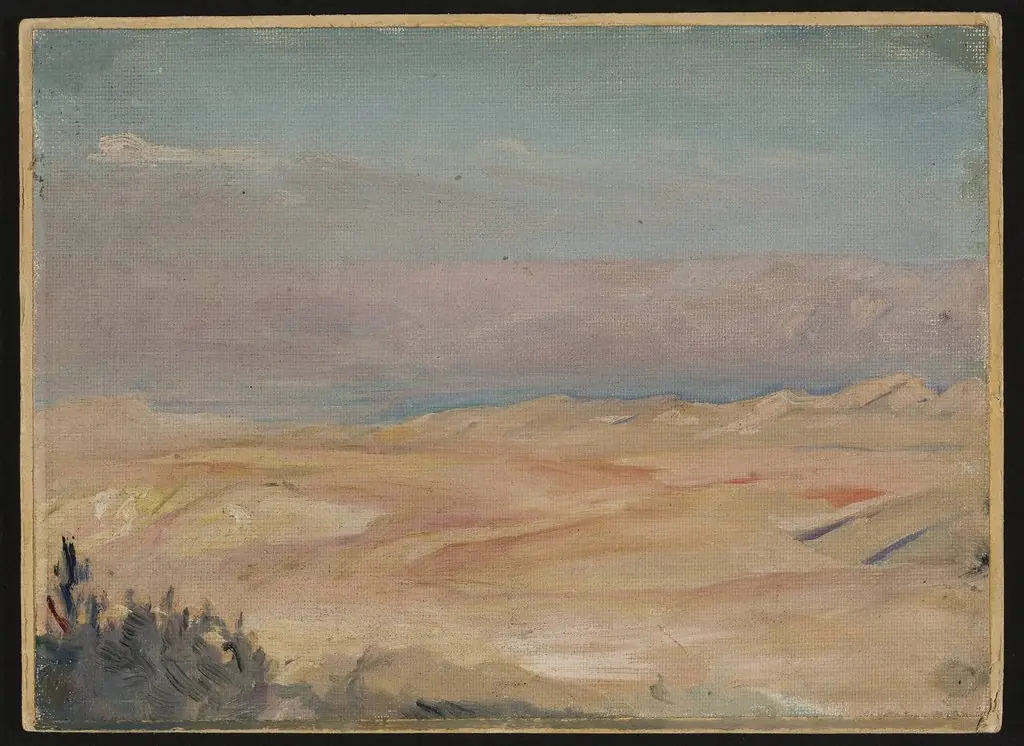 View from the Mount of Olives. From the journey to Palestine
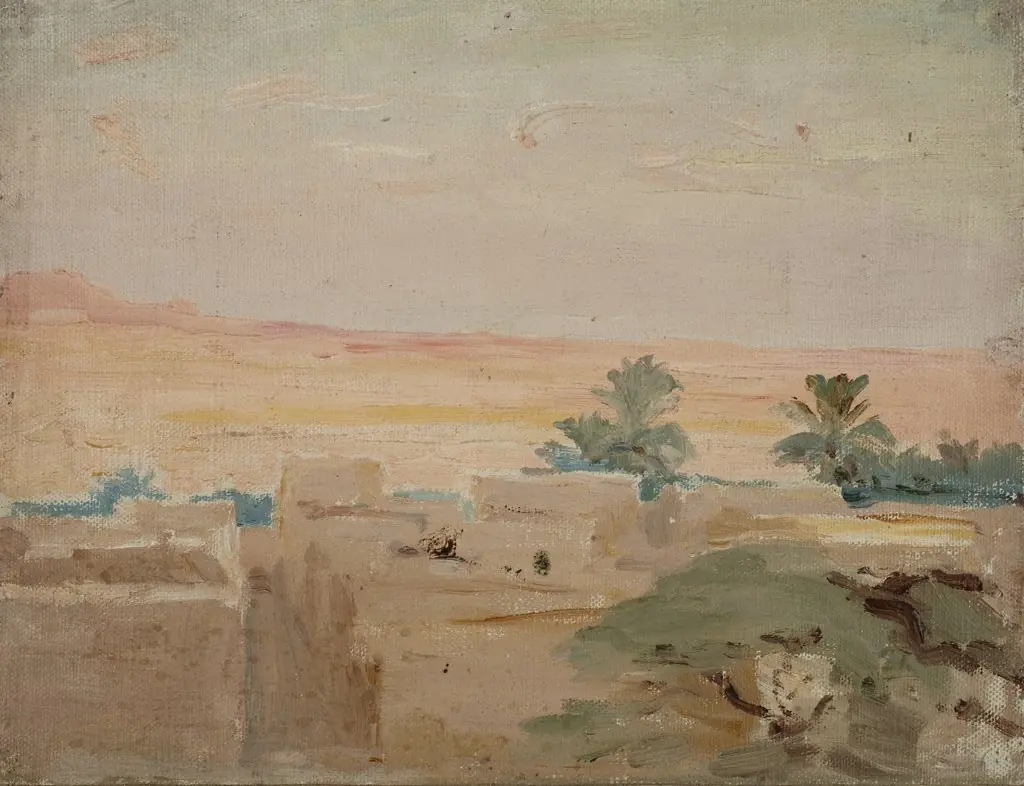 Biskra – Desert (Evening)
 `Temple of Denderah. Distant view from bank of River. Upper Egypt'