Artwork
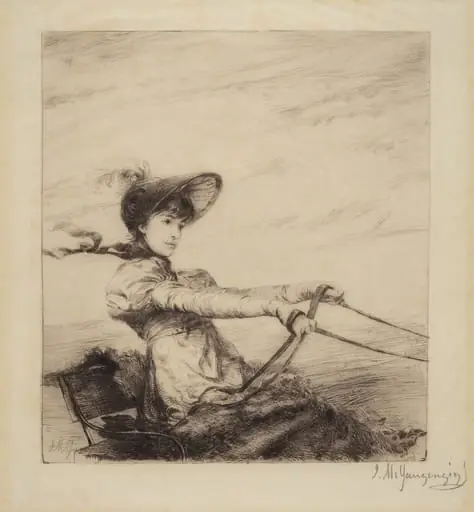
Untitled (Woman in a Carriage)
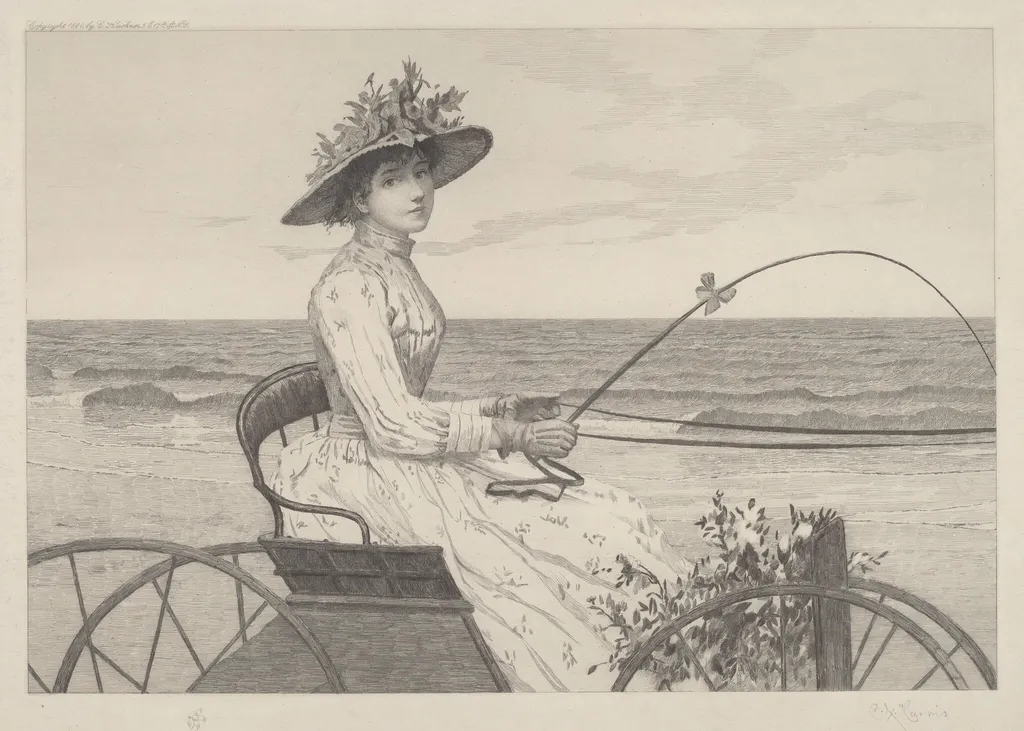
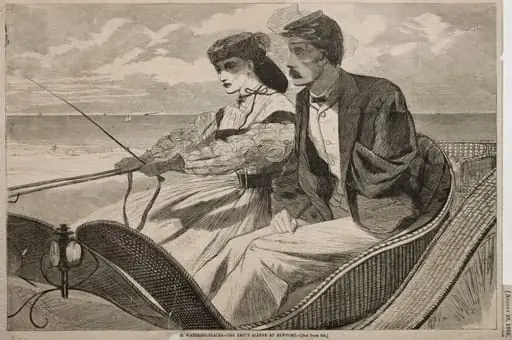
Untitled (Woman in a Carriage) is an ink print by the Impressionist artist Charles X. Harris. It dates from 1890 and is held in the collection of the National Gallery of Art. Created in 1890, this etching by Charles X.
About this work
Overview
Created in 1890, this etching by Charles X. Harris depicts a solitary woman seated in a wooden carriage. The work belongs to the printmaking tradition, using acid to incise fine lines into a metal plate, which is then inked and pressed to produce the image. Its quiet composition and restrained detail reflect the technical precision characteristic of late 19th-century etching practices.
Subject & Meaning
The figure, a woman in a light dress and wide-brimmed hat adorned with foliage, holds a fishing rod with a small lure. Her stillness and the empty expanse of ocean behind her suggest contemplation or solitude. The scene avoids narrative drama, instead offering a moment of quiet leisure, possibly evoking the genteel pastimes of coastal life in the Gilded Age.
Technique & Style
Harris employed fine, controlled etching lines to render textures: the weave of the woman’s dress, the grain of the carriage wood, and the subtle ripple of distant waves. The absence of tonal shading emphasizes linear clarity, a hallmark of etching. The composition is sparse, with the horizon line low, drawing attention to the figure’s isolation against the sea.
History & Provenance
The work is dated to 1890, placing it within Harris’s active period as a printmaker. No public record of its early ownership or exhibition history is widely documented. It remains a lesser-known piece within his oeuvre, likely produced for private circulation rather than public display, consistent with many etchings of the era.
Context
In the late 1800s, etching experienced a revival among American artists seeking intimate, handcrafted imagery distinct from mass-produced illustrations. Harris’s subject—a woman engaged in a quiet coastal activity—aligns with contemporary interest in domestic and leisurely scenes, particularly among middle- and upper-class women in seaside resorts.
Legacy
Though not widely exhibited or collected, this etching exemplifies the quiet, observational mode favored by many American printmakers of the period. Its preservation offers insight into the aesthetic values of a time when printmaking was valued for its craftsmanship and subtlety, rather than spectacle.
Artist & collection