Artwork
The Hilltop
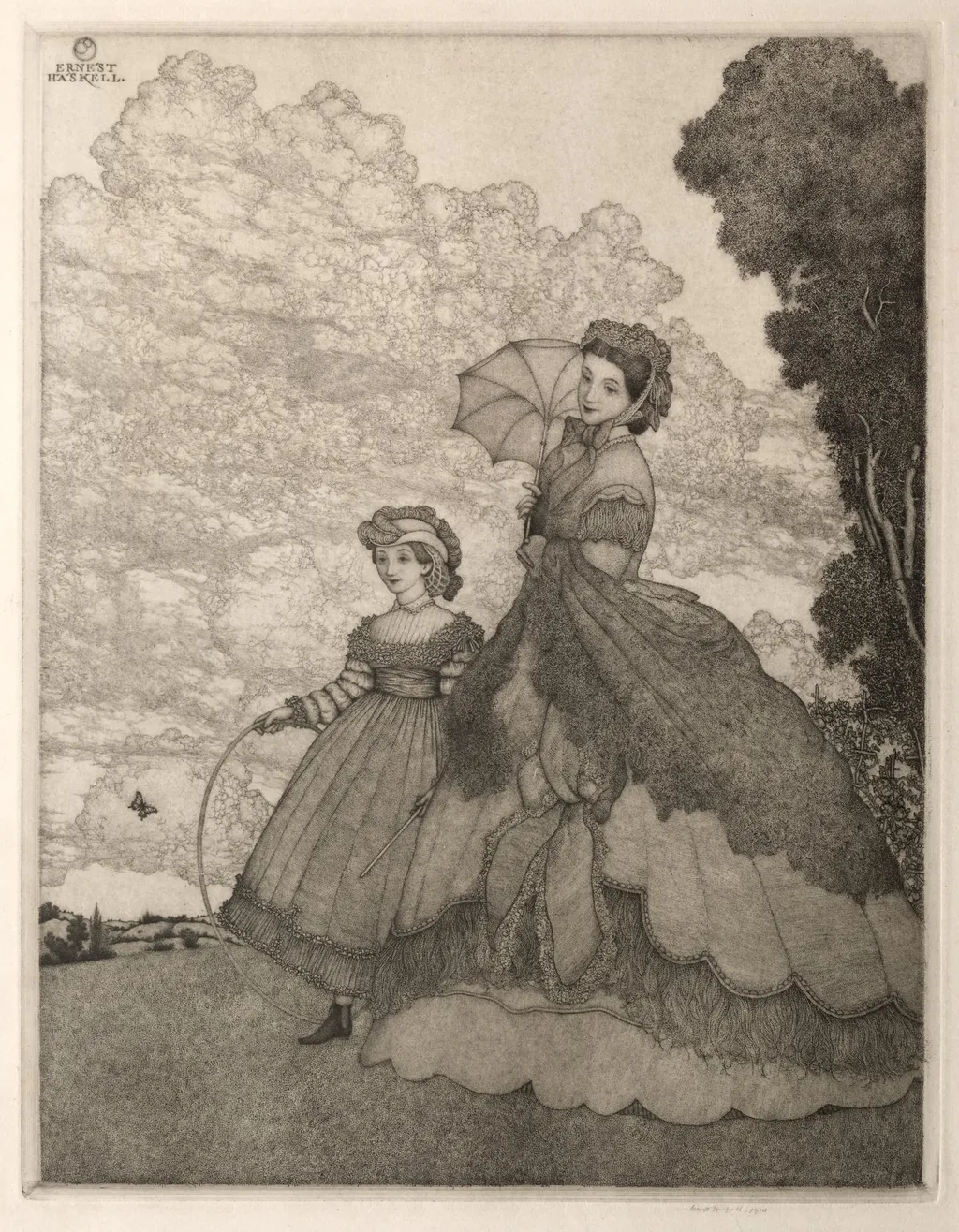
The Hilltop is a print by Ernest Haskell. It dates from 1910 and is held in the collection of the Cleveland Museum of Art.
About this work
The woman on the right holds a closed umbrella and wears a long, flowing dress with a wide skirt.
This print shows two women standing on a grassy hill. The woman on the right holds a closed umbrella and wears a long, flowing dress with a wide skirt. The woman on the left holds a hoop, also dressed in a long gown with a simpler hat. Behind them, fluffy clouds fill the sky, and a tree stands to the right.
The artist’s name, Ernest Haskell, is signed in the top-left corner. The print’s soft shading gives it a dreamy, almost floating look.
Check out Ernest Haskell (American, 1876–1925) to see more of his work.
Overview
Created around 1910 by American artist Ernest Haskell, The Hilltop is a print that captures a quiet moment on a gentle slope. Executed in a delicate tonal style, the work presents two figures in period dress, framed by a soft sky and a solitary tree. Its subtle gradations of gray and white evoke a sense of stillness, characteristic of Haskell’s approach to printmaking during this period. The piece resides in The Cleveland Museum of Art’s collection.
Subject & Meaning
Two women stand side by side on a grassy rise, each dressed in long gowns that suggest early 20th-century fashion. One holds a closed umbrella, the other a hoop—objects that hint at leisure or childhood play. Their postures are calm, unengaged with each other, reinforcing a mood of solitary contemplation. The scene avoids narrative clarity, instead inviting reflection on quiet, everyday moments suspended in time.
Technique & Style
Haskell employed a soft, atmospheric technique using ink or watercolor washes to achieve a hazy, luminous effect. The figures and landscape are rendered with minimal line work, relying instead on layered tones to suggest form and depth. The sky, filled with wispy clouds, dissolves into the horizon, blurring boundaries between earth and air. This approach reflects an interest in tonal harmony over sharp definition.
History & Provenance
The print was produced during Haskell’s active years as a printmaker and illustrator, between 1900 and 1925. It entered The Cleveland Museum of Art’s collection through documented acquisition, though specific details of its early ownership are not widely recorded. Haskell’s prints from this era were often circulated in limited editions, and this work remains one of the more intact examples of his graphic output.
Context
In the early 1900s, American artists increasingly turned to intimate, lyrical subjects in printmaking, moving away from grand historical themes. Haskell’s work aligns with this trend, reflecting a broader interest in mood and atmosphere. His imagery resonates with contemporaries like Mary Cassatt and James McNeill Whistler, who also explored quiet domestic and outdoor scenes with refined tonal control.
Legacy
Though not widely known today, Haskell’s prints are recognized for their sensitivity to light and texture. The Hilltop exemplifies his contribution to American tonal printmaking, a style that prioritized emotional resonance over detail. His works remain in institutional collections, offering insight into the quieter currents of early 20th-century American art beyond the dominant movements of the time.
Artist & collection

Artist
Ernest Haskell was an American artist and illustrator, internationally famous in his lifetime and remembered for his etchings, as well as engravings, pen-and-ink drawings, lithographs and watercolors.

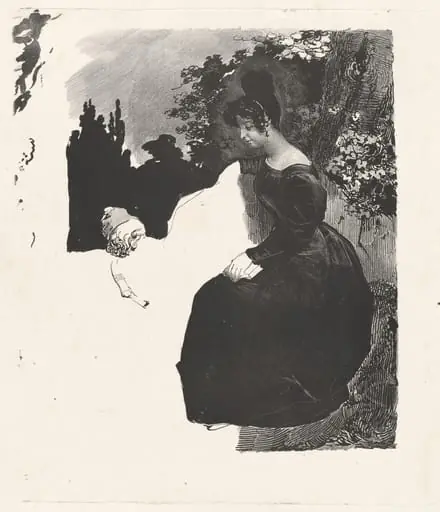 Young Woman Sitting near a Tree
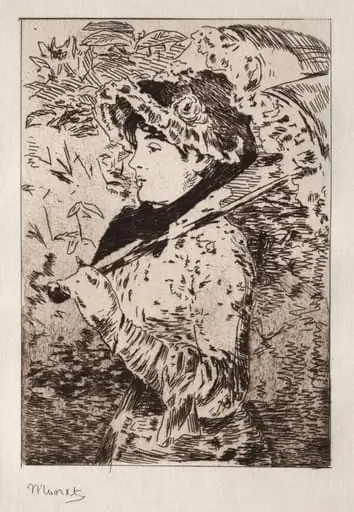 Jeanne: Spring
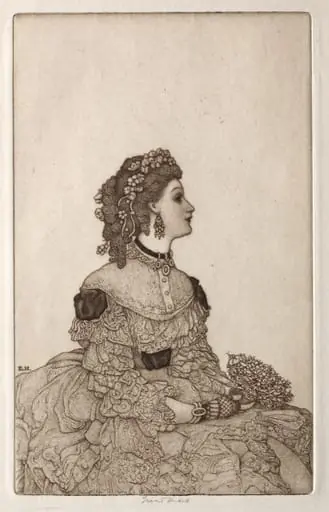 Amelia
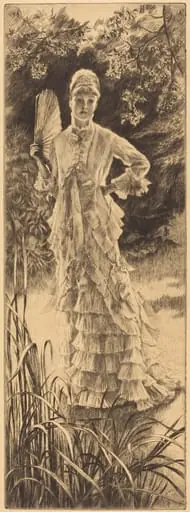 Spring (Printemps)
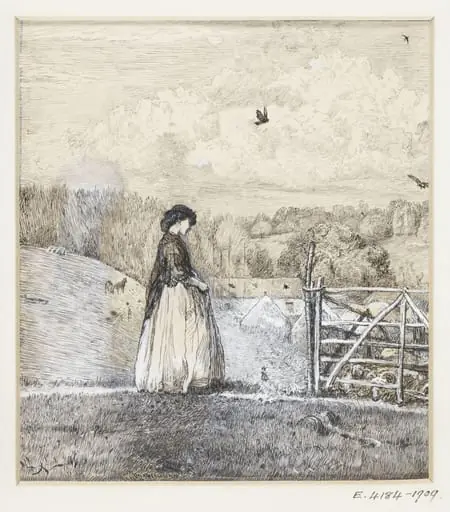 Untitled
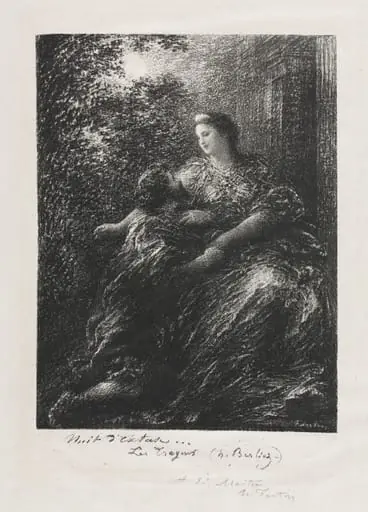 Duet of the Trojans
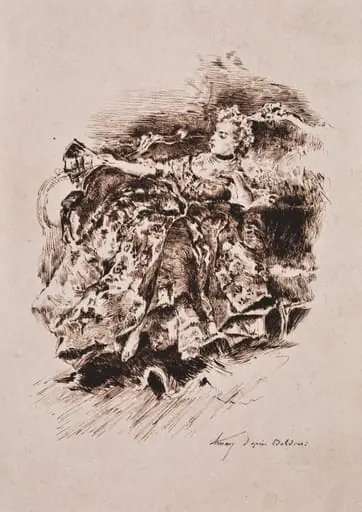 Marchiză (copie după Boldini)
 Woman Holding a Fan
 Lender Dancing the Bolero in "Chilperic" (Lender dansant le pas du boléro dans "Chilpéric")
 Woman Seated
 Untitled (Young Girl With Hat, In Chair, Reading)
 The Hatpin (Berthe Morisot's Daughter and Her Cousin), 1st plate