Artwork
On the Beach - Two are Company, Three are None
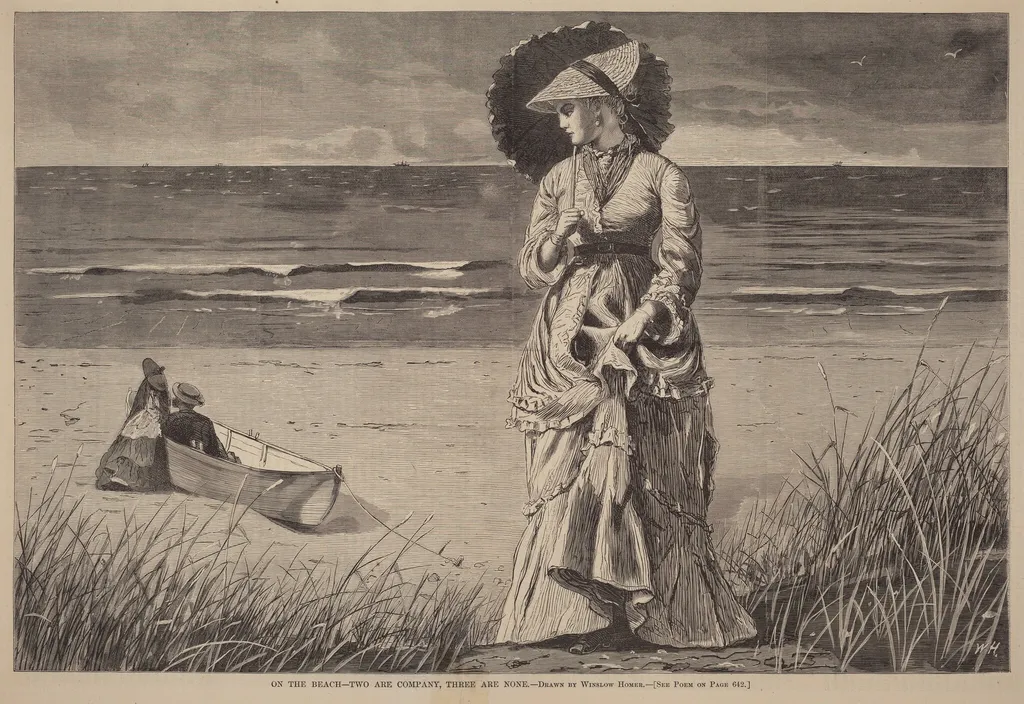
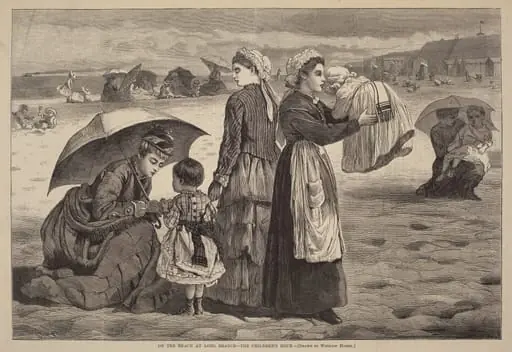
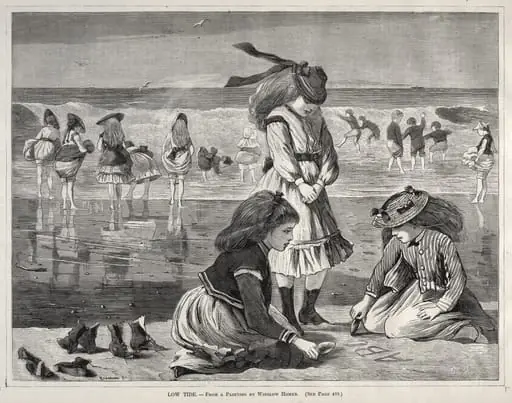
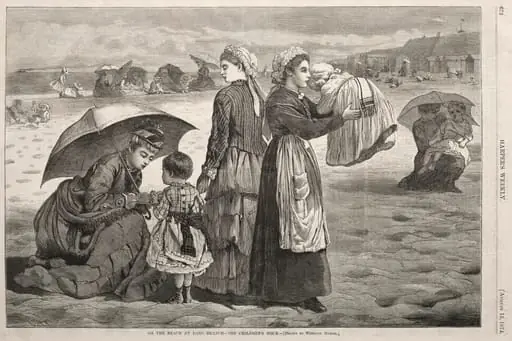
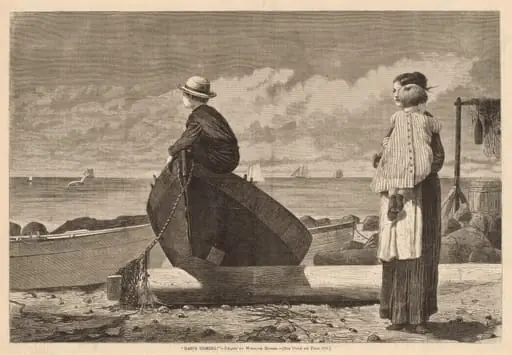
On the Beach - Two are Company, Three are None is an ink print by the Impressionist artist American 19th Century. It dates from 1872 and is held in the collection of the National Gallery of Art. On the Beach – Two are Company, Three are None is a wood‑engraved print executed on newsprint.
About this work
Overview
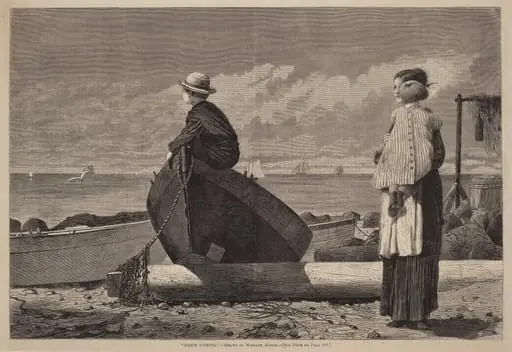
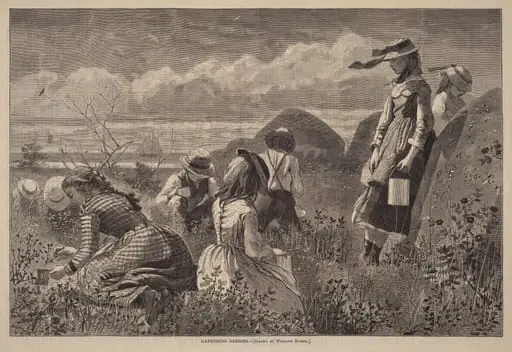
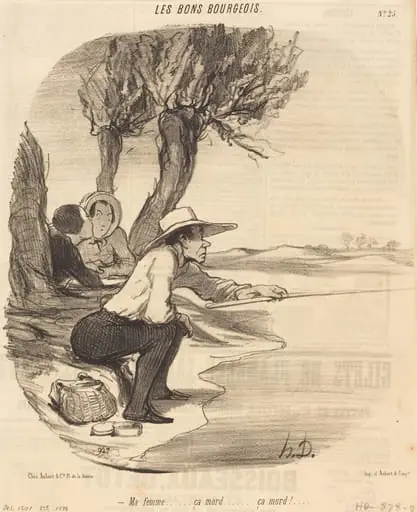
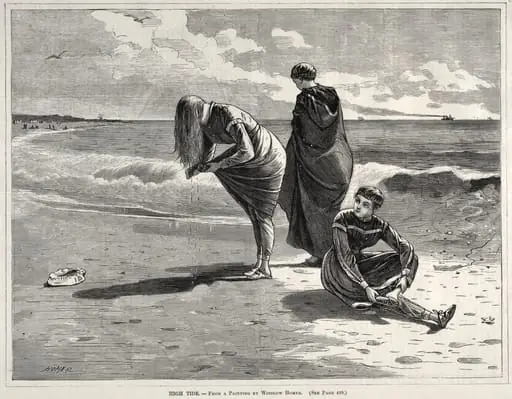
On the Beach – Two are Company, Three are None is a wood‑engraved print executed on newsprint. The image presents a solitary woman in an elaborate dress and wide‑brimmed hat, standing on a shoreline while holding a fan. Behind her, a calm sea extends toward the horizon, a small boat with two figures approaches the shore, and tall grasses frame the foreground.
Subject & Meaning
The central figure appears withdrawn, her formal attire contrasting with the open, natural setting. The title’s reference to the proverb about companionship suggests an exploration of solitude versus social presence: the lone woman is juxtaposed with the distant pair in the boat, inviting reflection on isolation, observation, and the quiet interior life of the observer.
Technique & Style
The use of newsprint as a substrate adds a muted tonal quality that emphasizes the starkness of the composition.
The work employs traditional wood‑engraving, a relief process that allows for fine linear detail. The artist achieves a nuanced play of light and shadow through crisp, intersecting lines, rendering the texture of fabric, the movement of grass, and the surface of water with a realistic yet graphic clarity. The use of newsprint as a substrate adds a muted tonal quality that emphasizes the starkness of the composition.
Context
Created within the modern print tradition, the piece aligns with a broader interest in everyday scenes rendered with meticulous craftsmanship. By choosing a beach—a liminal space between land and sea—the artist situates the figure in a setting that traditionally symbolizes transition, while the precise engraving technique underscores a commitment to the tactile qualities of printmaking.
Artist & collection

Artist
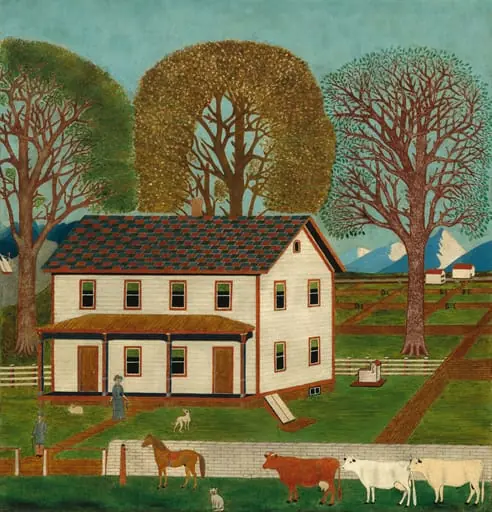
This artist painted everyday American life in the 1800s. Look at *Farmhouse in Mahantango Valley*—a quiet, sunlit scene of rural Pennsylvania. *Boy and Girl* shows two children standing close, their faces turned toward…