Artwork
Handsome Morning -- A Dakota
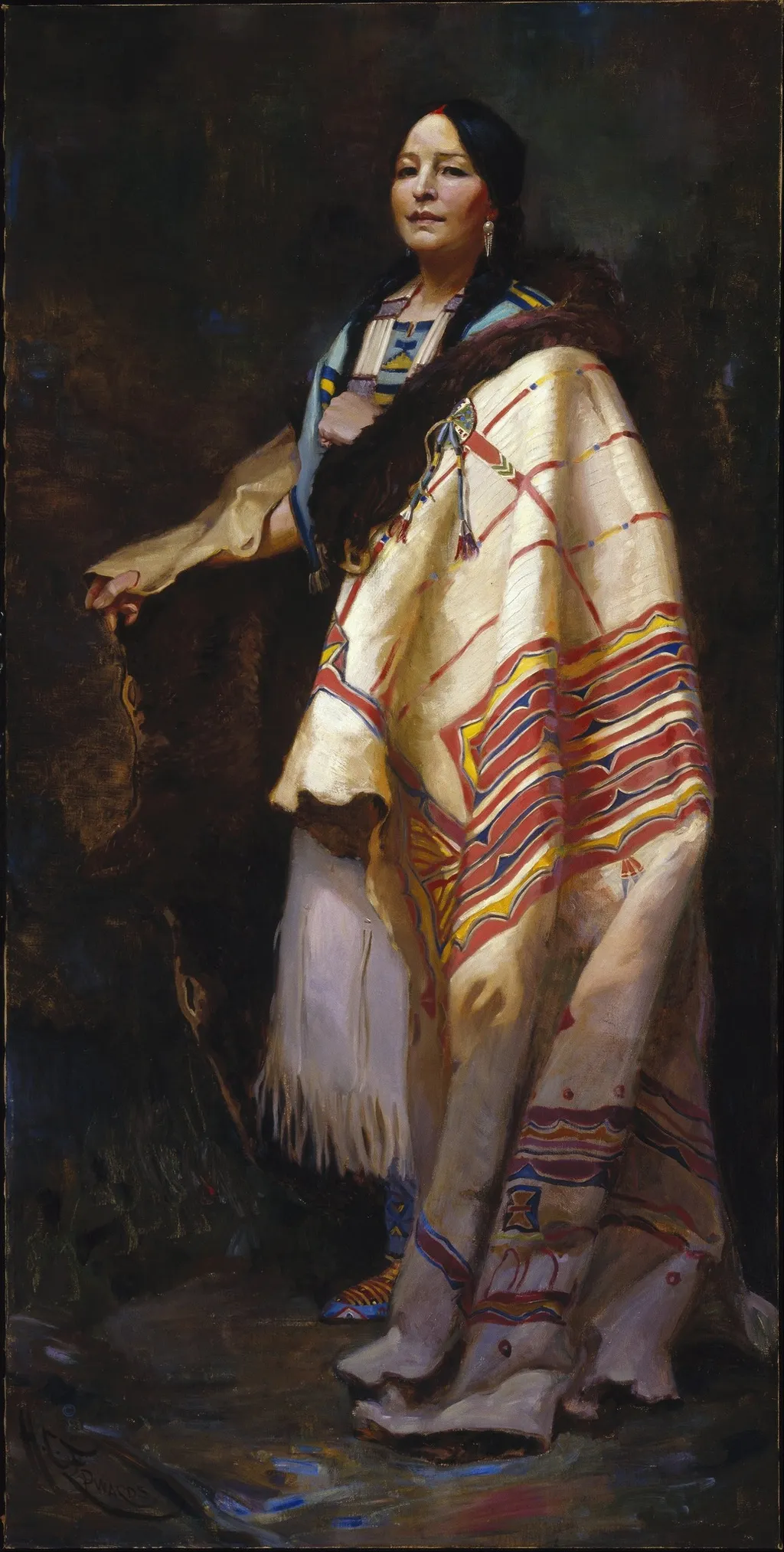
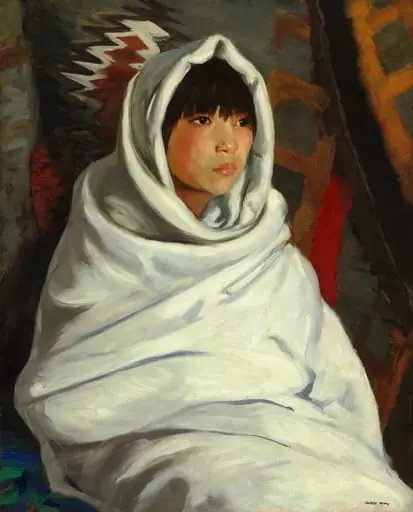
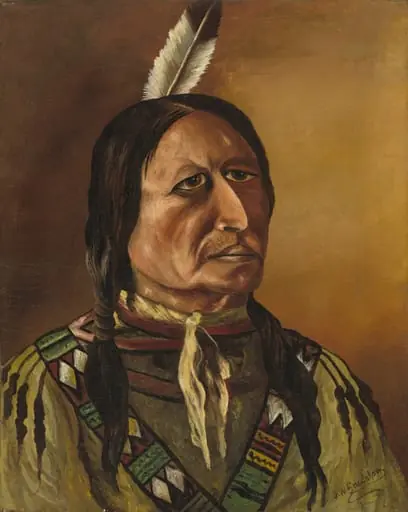
Handsome Morning -- A Dakota is an oil painting by the American Impressionist artist Harry C. Edwards. It dates from 1921 and is held in the collection of the Brooklyn Museum. Painted in 1921 by Harry C.
About this work
Overview
The work belongs to the collection of the Brooklyn Museum and exemplifies early 20th-century American portraiture focused on Indigenous subjects.
Painted in 1921 by Harry C. Edwards, Handsome Morning — A Dakota is an oil portrait of a Dakota woman rendered against a muted, undefined background. The work belongs to the collection of the Brooklyn Museum and exemplifies early 20th-century American portraiture focused on Indigenous subjects. Its composition isolates the figure to emphasize presence over narrative, inviting quiet observation rather than storytelling.
Subject & Meaning
The subject is a Dakota woman depicted in traditional dress: a striped white shawl, dark fur trim around the shoulders, and long, center-parted hair. Dangling earrings and a still, leftward gaze suggest introspection. The painting avoids stereotypical tropes of the era, presenting her with dignity and individuality. Her extended right arm, relaxed yet deliberate, adds a subtle sense of motion within stillness, reinforcing a contemplative mood.
Technique & Style
Edwards employs chiaroscuro to model the figure with soft gradations of light and shadow, giving volume to the shawl, fur, and facial features. The background remains intentionally vague, eliminating contextual distractions. Brushwork is controlled and smooth, favoring realism over texture. The palette is restrained, with warm tones in the skin and fabric contrasting against the deep, neutral backdrop to heighten the subject’s presence.
History & Provenance
Created in 1921, the painting entered the Brooklyn Museum’s collection shortly after its completion. Edwards, known for portraits and genre scenes, produced this work during a period when ethnographic representation in American art was shifting from romanticized depictions toward more individualized portrayals. Its acquisition by the museum reflects early institutional interest in Native American subjects, though not always with contextual depth.
Context
In the early 1920s, many American artists depicted Indigenous people as symbols of a vanishing culture. Edwards’ portrait diverges slightly by focusing on personal stillness rather than cultural spectacle. While still framed within a colonial gaze, the absence of props, landscape, or narrative cues suggests an attempt at psychological intimacy, even if limited by the era’s conventions of representation.
Legacy
The painting remains a quiet example of early 20th-century portraiture that, while not overtly political, offers a restrained alternative to the exoticizing imagery common at the time. It contributes to the Brooklyn Museum’s broader collection of Native American representations and continues to prompt discussion about the ethics and aesthetics of non-Native artists portraying Indigenous subjects.
Artist & collection