Artwork
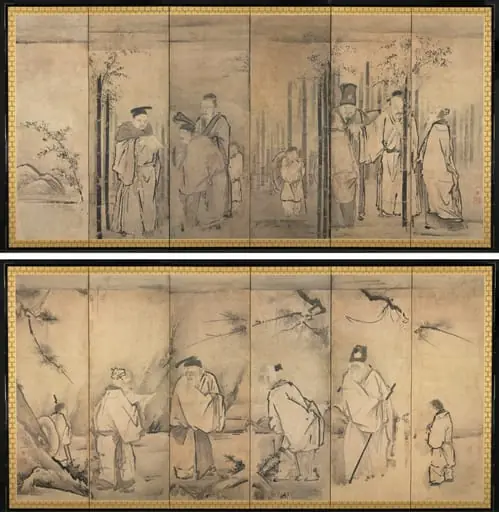
群仙図屏風|Immortals
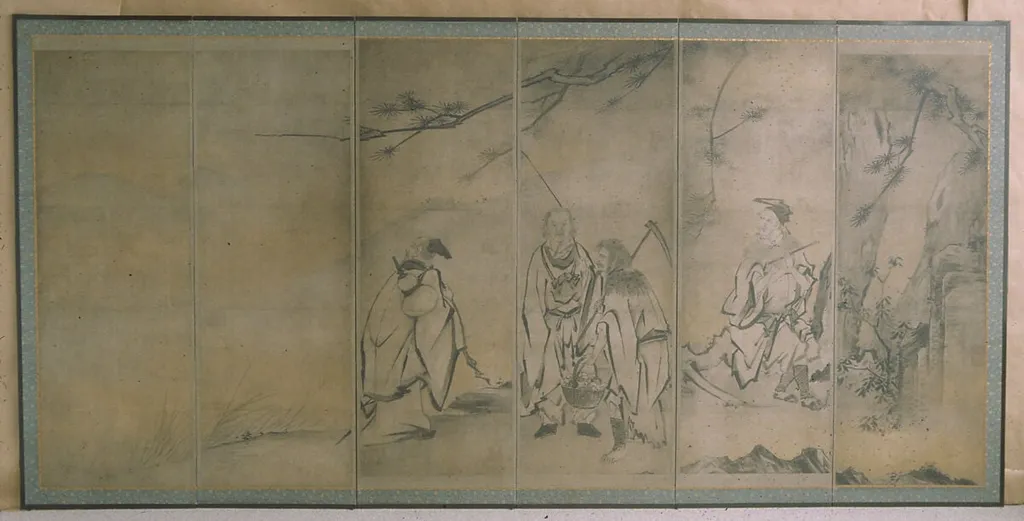
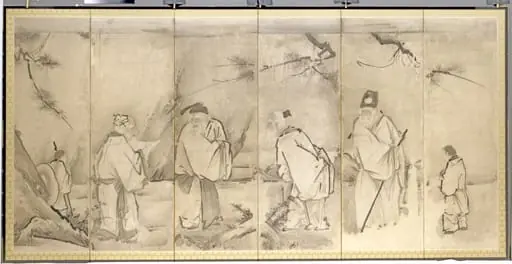
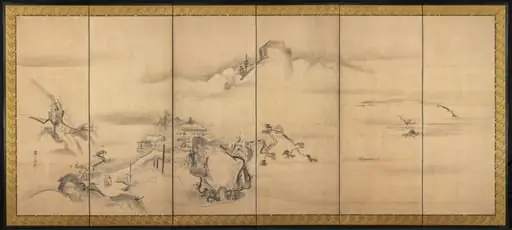
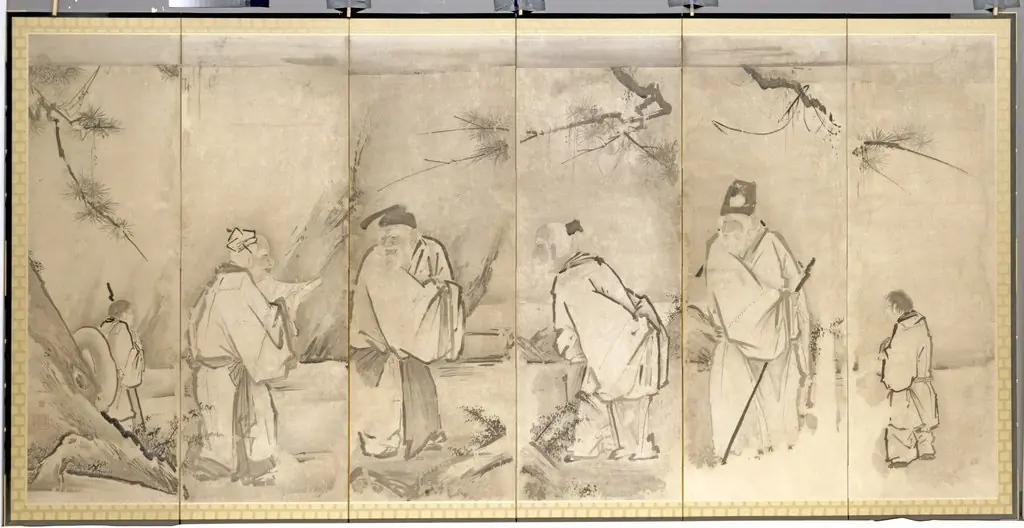
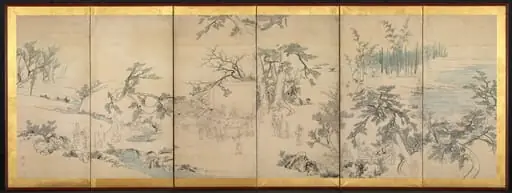
群仙図屏風|Immortals is an ink painting by the Baroque artist Hasegawa Sakon 長谷川左近. It dates from 1630 and is held in the collection of the Metropolitan Museum of Art.
About this work
Overview
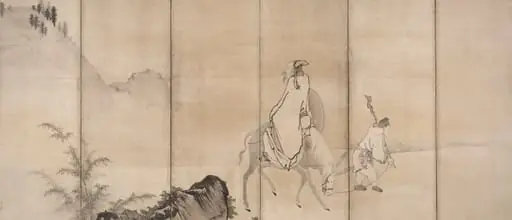
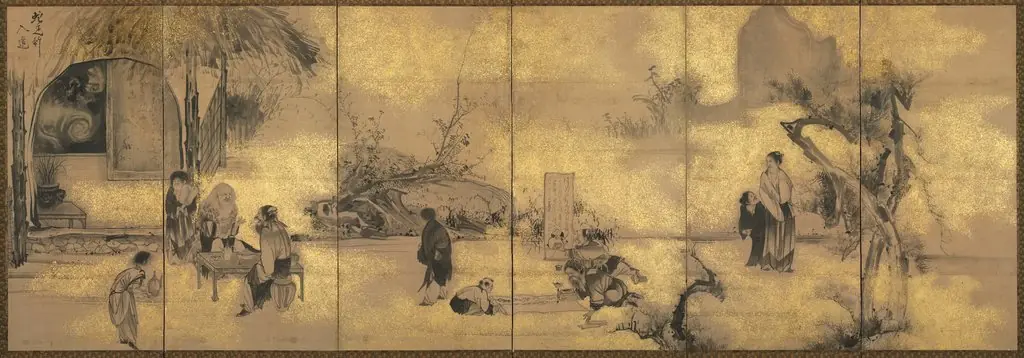
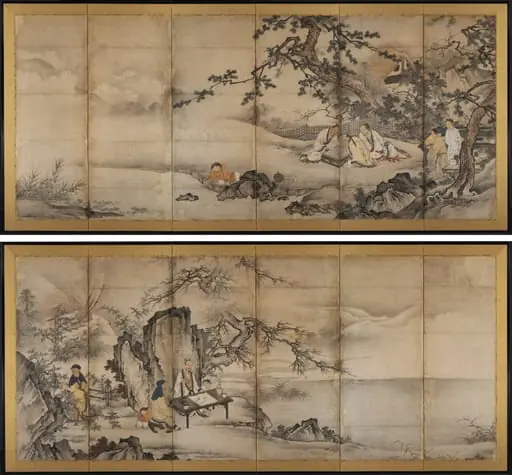
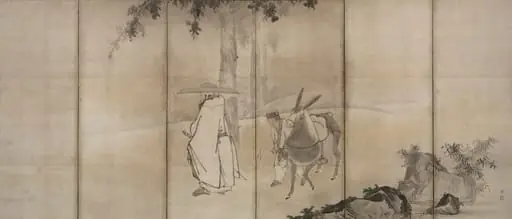
Created in 1630 by the Edo‑period painter Hasegawa Sakon, the six‑panel folding screen entitled Immortals (群仙図屏風) is part of the Metropolitan Museum of Art’s collection. Executed in ink on paper with gold‑ink borders, the work measures roughly the size of a traditional byōbu and presents a serene mythological tableau rendered in delicate monochrome tones.
Subject & Meaning
The central register features three ethereal figures, one clutching a basket and another equipped with a bow and arrow, suggesting a narrative drawn from Chinese or Japanese immortal lore. A solitary figure reclines on a rock beneath a tree on the right, while the left panel offers sparse foliage, together evoking a tranquil landscape inhabited by celestial beings.
Technique & Style
Sakon employs fine, controlled brushwork and subtle shading to model the figures against a light brown ground. The ink lines are rendered with meticulous precision, while gold ink outlines the screen’s borders, providing a restrained decorative element that enhances the composition’s calm atmosphere without overwhelming the monochrome palette.
History & Provenance
The screen was produced during the early Tokugawa period, a time when folding screens served both functional and decorative purposes in elite interiors. It entered the Metropolitan Museum of Art’s holdings through a 20th‑century acquisition, where it remains on view as an example of Japanese narrative painting and screen craftsmanship.
Artist & collection