Artwork
Blankenbergh
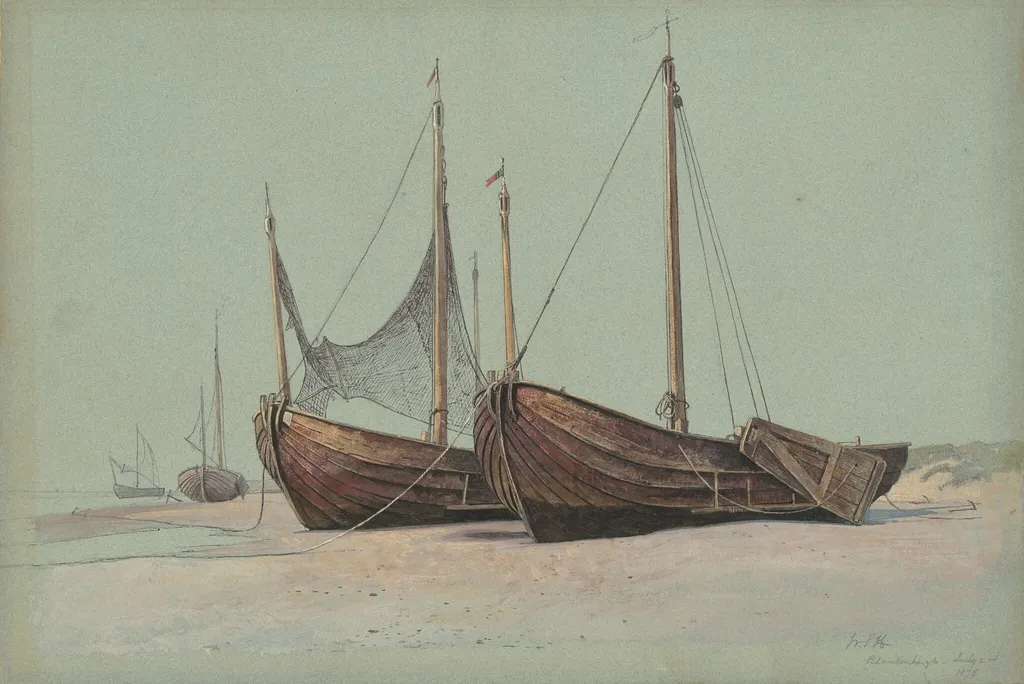
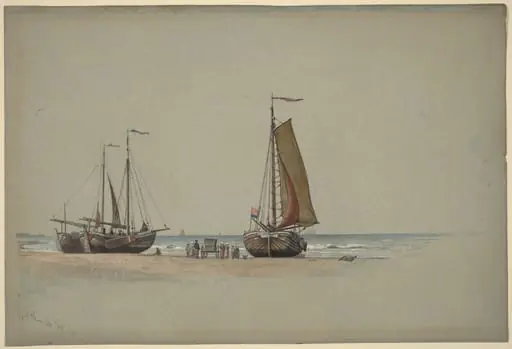
Blankenbergh is a gouache drawing by the Impressionist artist William Stanley Haseltine. It dates from 1876 and is held in the collection of the National Gallery of Art.
About this work
Overview
William Stanley Haseltine’s 1876 work titled Blankenbergh is a drawing executed in gouache over a graphite underdrawing on blue wove paper that has been adhered to a board. The composition presents a tranquil coastal scene, rendered in a modest palette that emphasizes the quiet atmosphere of the shoreline.
Subject & Meaning
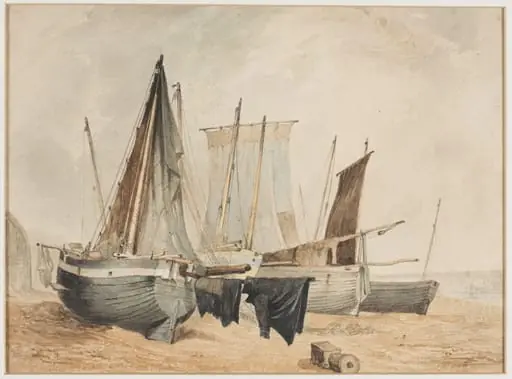
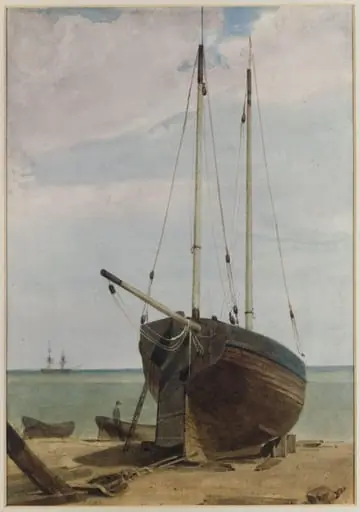
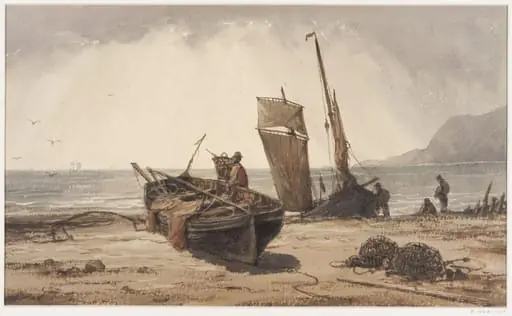
The picture depicts two small wooden vessels beached on a sandy shore, their masts upright and draped with ropes and fishing nets. Beyond them, a few additional boats float on gentle water, while a faint landmass recedes in the distance, suggesting a modest, everyday maritime setting.
Technique & Style
Haseltine applied gouache—a water‑based, opaque pigment—over a graphite sketch, allowing the underlying drawing to inform the final surface. Soft, muted hues and delicate brushwork convey a sense of stillness, while careful rendering of wood grain and rope texture adds a subtle realism to the otherwise simplified forms.
Context
Created during the late nineteenth century, the work reflects the period’s interest in marine subjects and the use of gouache for quick, portable studies. Haseltine, known for his landscape and marine scenes, employed this medium to capture fleeting light and atmosphere, aligning with contemporary trends toward atmospheric observation in drawing.
Artist & collection