Artwork
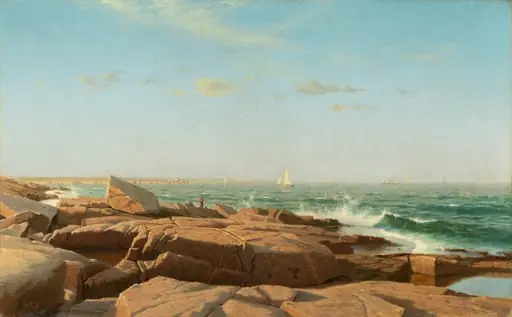
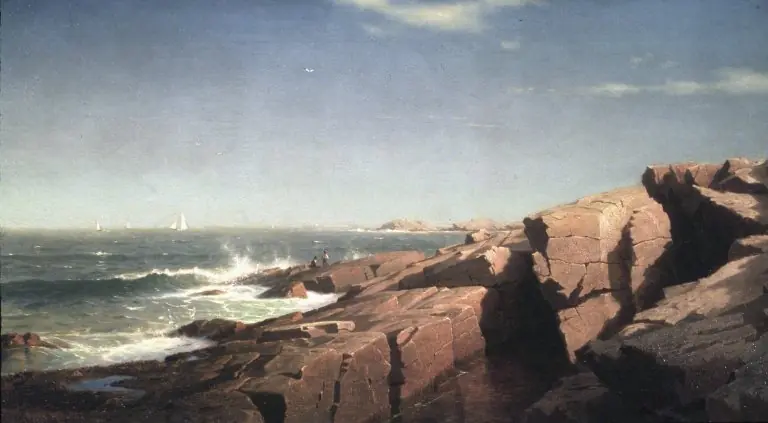
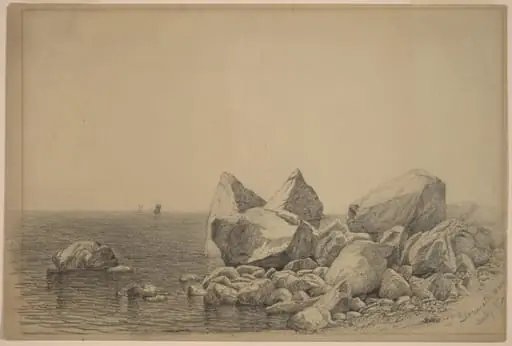
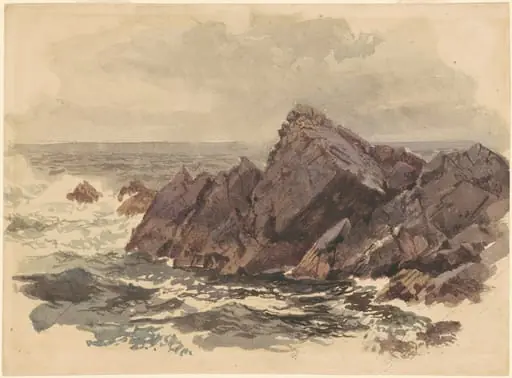
Shag Rocks, Nahant, Massachusetts
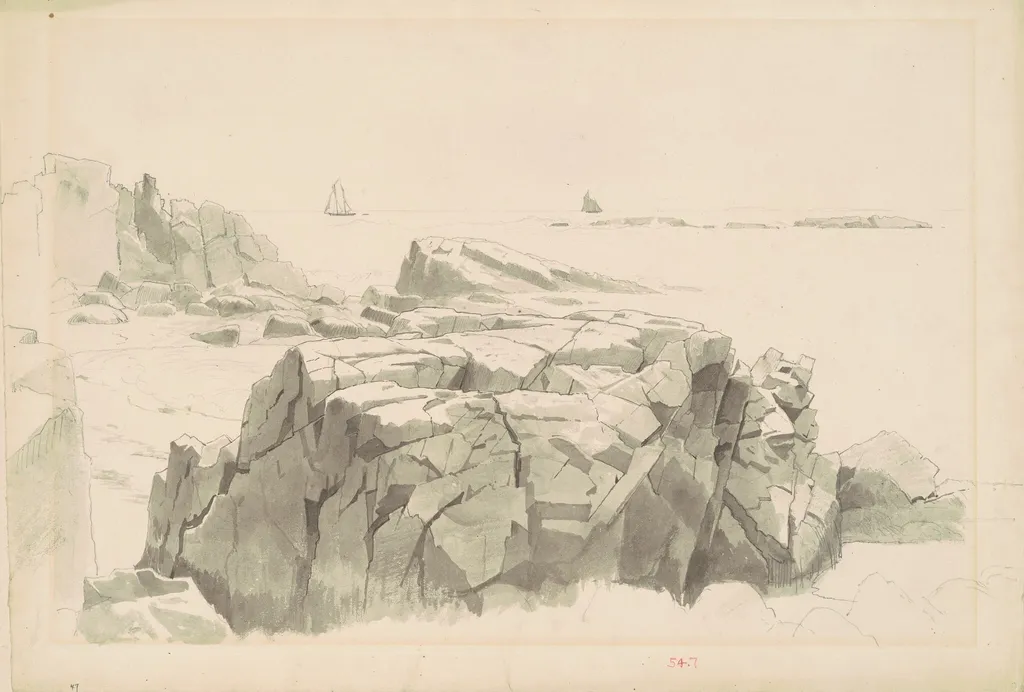
Shag Rocks, Nahant, Massachusetts is a graphite drawing by the Impressionist artist William Stanley Haseltine. It dates from 1862 and is held in the collection of the National Gallery of Art.
About this work
This blend of styles is interesting because it shows how artists were experimenting with different approaches during this time.
This painting is called Shag Rocks, Nahant, Massachusetts.
It was made between 1860 and 1865.
The artist used graphite and gray wash on paper to create it.
The painting is held at the National Gallery of Art, Washington.
The artist, William Stanley Haseltine, worked in a style that blended Impressionism and Realism.
This blend of styles is interesting because it shows how artists were experimenting with different approaches during this time.
You can learn more about this style by looking into Impressionism.
Overview
Created between 1860 and 1865, Shag Rocks, Nahant, Massachusetts is a graphite and gray wash drawing on wove paper, later mounted to board. The work is attributed to William Stanley Haseltine and is part of the National Gallery of Art’s collection in Washington, D.C. It captures a coastal scene with restrained tonal precision, reflecting the artist’s interest in natural forms and atmospheric effects.
Subject & Meaning
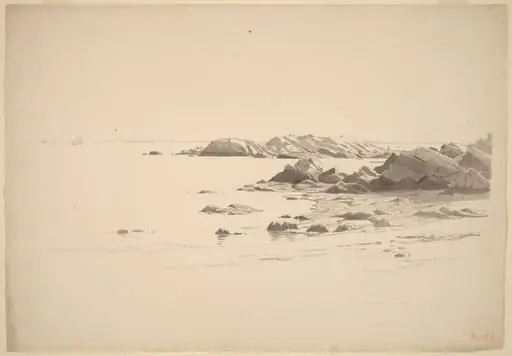
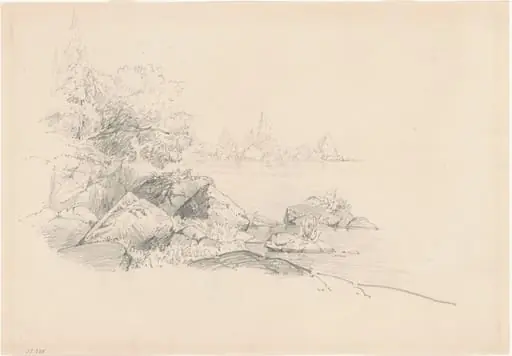
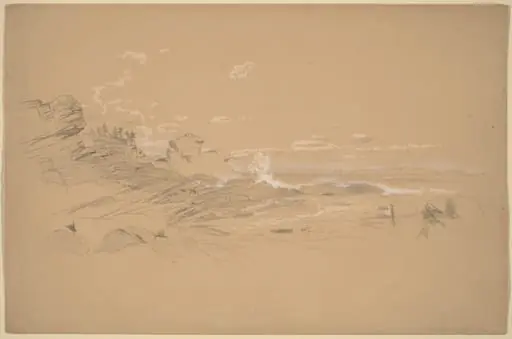
The drawing depicts a cluster of rocky islets off the coast of Nahant, Massachusetts, rendered with quiet intensity. Haseltine focuses on the rugged geometry of the rocks and the subtle interplay of light and shadow across their surfaces. There is no human presence, emphasizing the solitude and enduring character of the New England shoreline.
Technique & Style
Haseltine employed graphite for fine linear definition and gray wash to modulate tone, creating depth without color. The technique balances precise observation with a soft, atmospheric quality, bridging the detailed realism of Hudson River School traditions with the looser, light-sensitive handling associated with emerging Impressionist tendencies.
History & Provenance
The drawing was completed during a period when Haseltine was actively sketching coastal New England landscapes. It entered the National Gallery of Art’s collection through established acquisition channels, likely as part of broader efforts to document 19th-century American topographical art. Its preservation on board suggests early efforts to stabilize fragile paper supports.
Context
In the early 1860s, American artists were redefining landscape representation, moving beyond grand narratives toward intimate, observational studies. Haseltine’s work reflects this shift, aligning with contemporaries who valued direct engagement with nature. His approach, though not fully Impressionist, anticipated the movement’s emphasis on transient light and texture.
Legacy
Shag Rocks, Nahant, Massachusetts exemplifies a transitional phase in American drawing, where scientific observation met aesthetic sensitivity. While Haseltine is less widely known than his peers, this work contributes to understanding how 19th-century artists negotiated realism and impressionism, influencing later generations focused on landscape as a site of quiet contemplation.
Own this work as a print
Artist & collection