Artwork
A Long Island Windmill
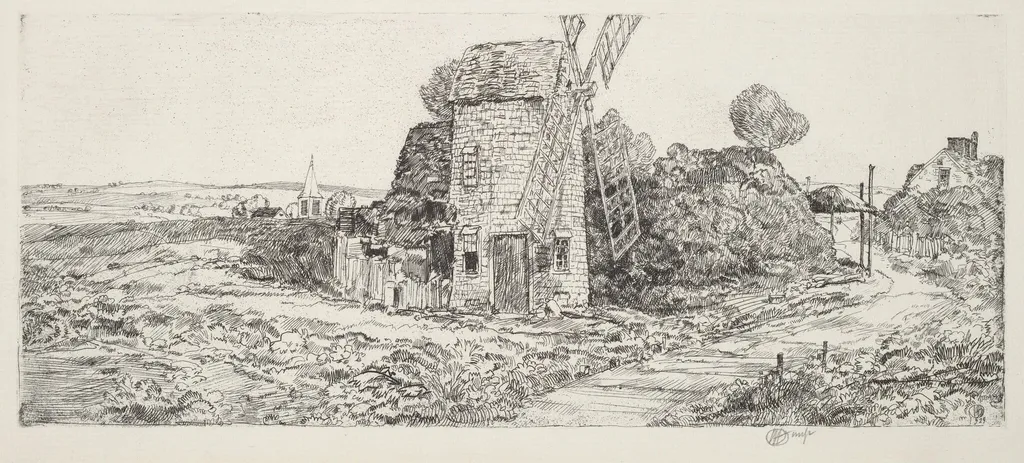
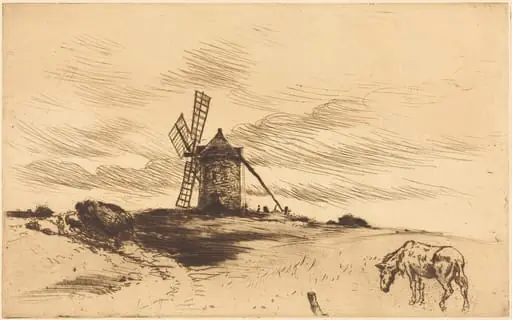
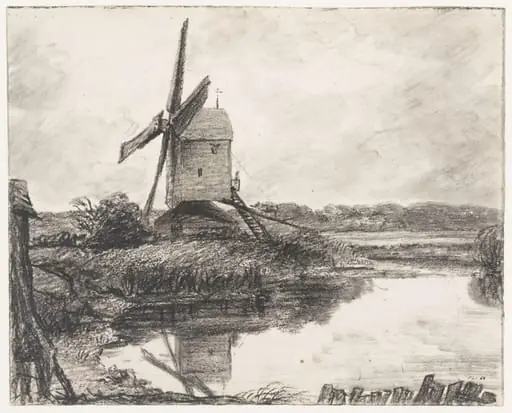
A Long Island Windmill is an ink print by Childe Hassam. It dates from 1929 and is held in the collection of the National Gallery of Art.
About this work
Overview
A Long Island Windmill is a 1929 etching by American Impressionist Frederick Childe Hassam, rendered in black on wove paper. It stands as one of thousands of works by the artist, who was pivotal in introducing Impressionism to the United States.
Subject & Meaning
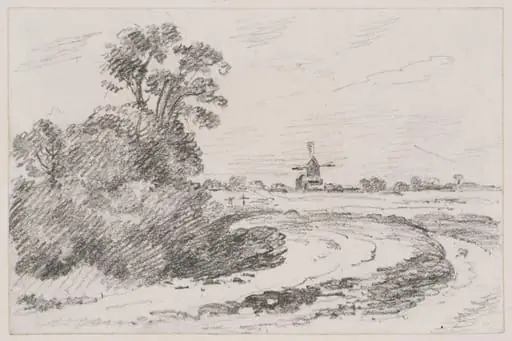
The etching centers on a solitary windmill in a rural landscape, a subject reflecting Hassam's affinity for coastal and rural themes. The windmill, often a symbol of rustic life, is depicted in a natural setting, emphasizing its integration with the surrounding environment.
Technique & Style
Hassam employs bold lines and nuanced shading to achieve depth and texture. The windmill is defined by dark, sturdy outlines, contrasting with the softer, muted tones of the rolling hills and fields in the background, exemplifying Impressionist attention to light and shadow.
History & Provenance
Created in 1929, the etching is part of Hassam's later work. While specific provenance details are not provided, it aligns with his prolific output in various mediums, contributing to his role in popularizing Impressionism in America.
Context
A Long Island Windmill reflects early 20th-century American Impressionist interests in capturing everyday landscapes. It shares thematic ground with works by contemporaries like Mary Cassatt and John Henry Twachtman, though Hassam's focus on outdoor scenes sets it apart.
Legacy
As part of Hassam's extensive oeuvre, A Long Island Windmill contributes to the broader legacy of American Impressionism, highlighting the movement's emphasis on light, natural settings, and the beauty of mundane subjects.
Artist & collection
Artist
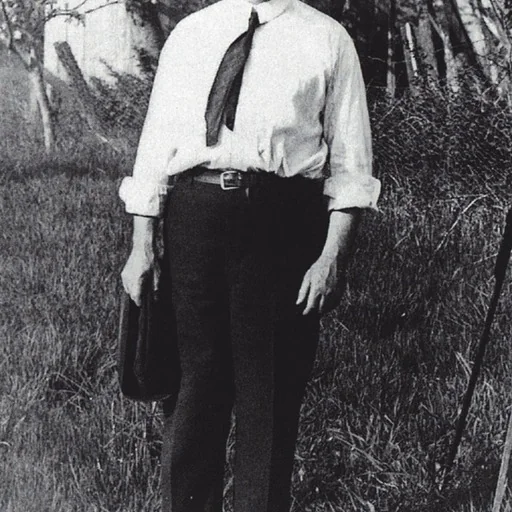
Frederick Childe Hassam was an American Impressionist painter, noted for his urban and coastal scenes.