Artwork
The Mill at Saint Jacut (Le moulin de Saint Jacut)
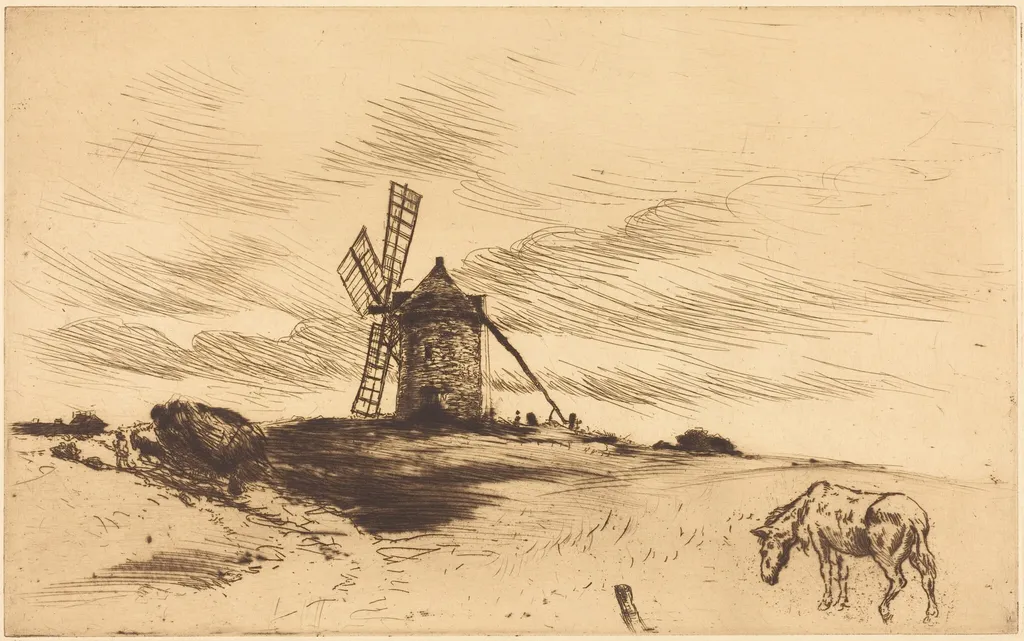
The Mill at Saint Jacut (Le moulin de Saint Jacut) is an ink print by the Impressionist artist Norbert Goeneutte. It dates from 1874 and is held in the collection of the National Gallery of Art.
About this work
Overview
Created in 1874 by French artist Norbert Goeneutte, *The Mill at Saint Jacut* is an etching and drypoint print that captures a coastal windmill at low tide.
Created in 1874 by French artist Norbert Goeneutte, *The Mill at Saint Jacut* is an etching and drypoint print that captures a coastal windmill at low tide. Goeneutte, known for his work in printmaking and illustration, employed two distinct engraving techniques to render the scene with varied line quality. The print reflects his interest in landscape and everyday rural settings, aligned with broader trends in 19th-century French graphic art.
Subject & Meaning
The scene depicts a solitary windmill on the shore of Saint Jacut, its sails motionless against a still, reflective tide. No figures are present, and the absence of human activity lends the image a quiet, contemplative tone. The mill, a functional structure tied to local life, becomes a silent witness to the rhythm of nature, suggesting themes of stillness and endurance rather than narrative or religious symbolism.
Technique & Style
Goeneutte combined etching, which produces clean, incised lines, with drypoint, a method that scrapes the plate to create soft, fuzzy burrs. The contrast between sharp shadows in the sand and the blurred texture of the sky and water reveals deliberate tactile variation. The pressure of the drypoint needle is evident in the dense, velvety darks, giving the print a physical immediacy that distinguishes it from more polished contemporaries.
History & Provenance
The print emerged during a period of active printmaking revival in France, when artists like Goeneutte explored etching as an independent medium. While specific ownership records are sparse, the work is documented within his oeuvre alongside illustrations for Émile Zola’s *La Terre*. It was likely circulated among collectors and artists familiar with the Parisian print scene of the 1870s.
Context
In the 1870s, French artists increasingly turned to printmaking to capture fleeting moments and atmospheric effects, often outside academic traditions. Goeneutte’s focus on coastal landscapes aligned with broader interests in naturalism and regional life. His use of drypoint echoed techniques favored by contemporaries like Pissarro, though his approach emphasized mood over topographical precision.
Legacy
*The Mill at Saint Jacut* remains a quiet example of Goeneutte’s contribution to French printmaking. Though not widely exhibited today, it illustrates how lesser-known artists adapted etching and drypoint to convey subtle emotional landscapes. Its technical nuance offers insight into the diversity of approaches within a medium often overshadowed by painting.
Artist & collection
Artist
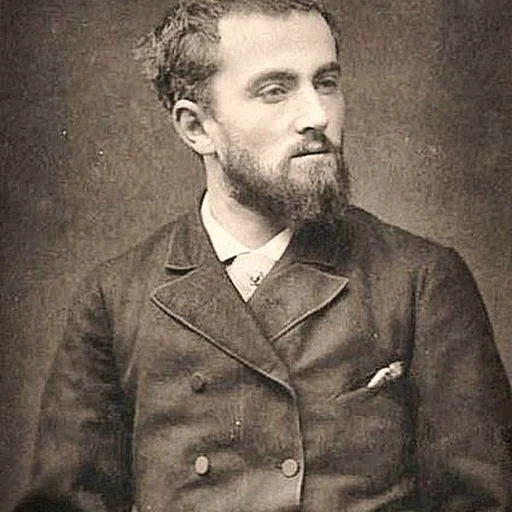
Norbert Goeneutte (23 July 1854 – 9 October 1894) was a French painter, etcher and illustrator; notably for the novel La Terre by Émile Zola.

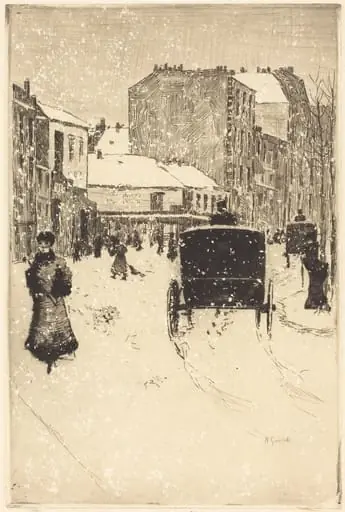 Boulevard Clichy in the Snow (Le boulevard Clichy par un temps de neige)
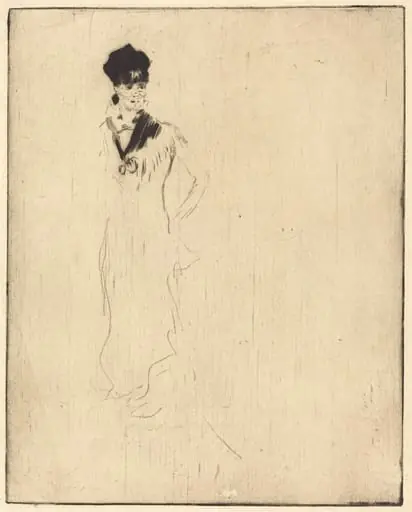 Sketch of a Young Lady in Violet (Esquisse de jeune femme a la violette)
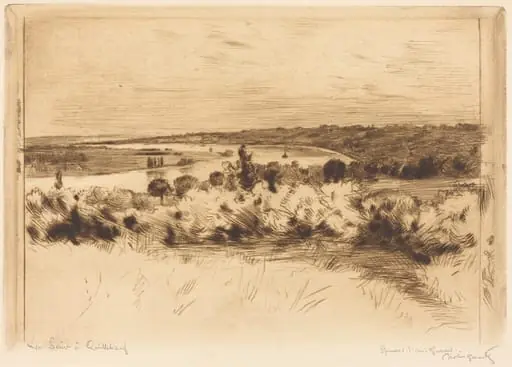 The Seine at Quilleboeuf (La Seine a Quilleboeuf)
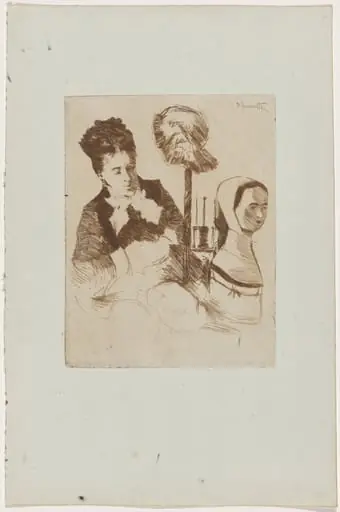 La modiste
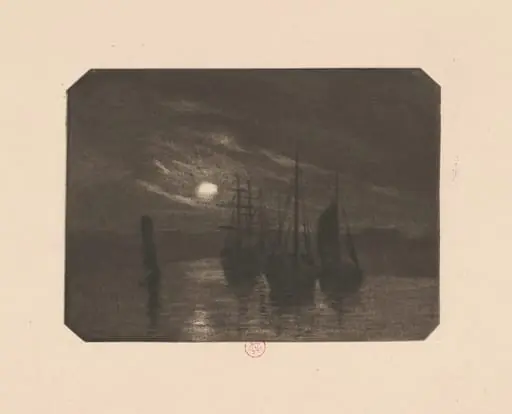 A Moonlit Harbor
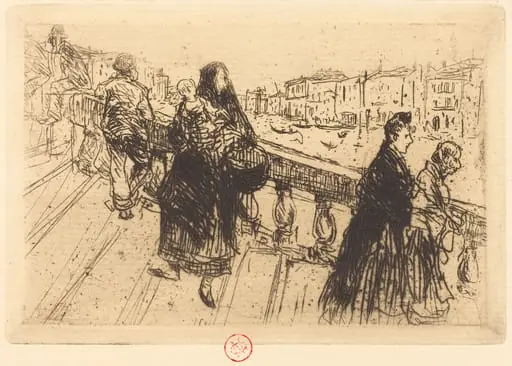 Rialto
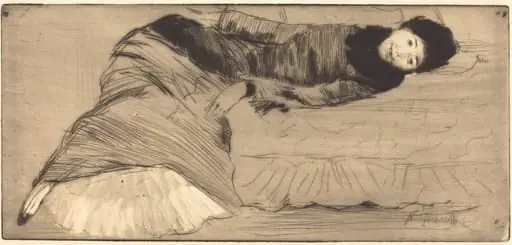 Smiling Woman Reclining on a Sofa (Femme souriant etendue sur un canape)
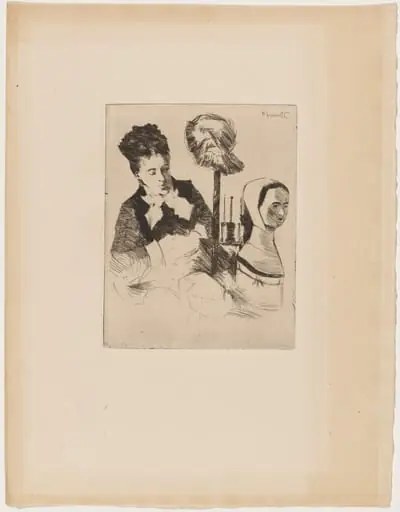 La modiste
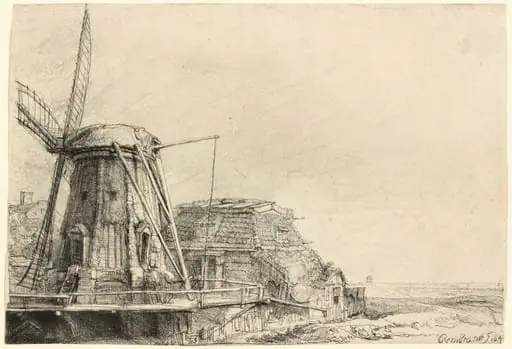 The Windmill
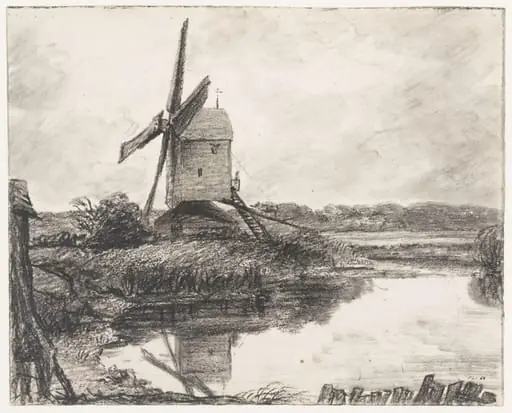 A mill on the banks of the River Stour
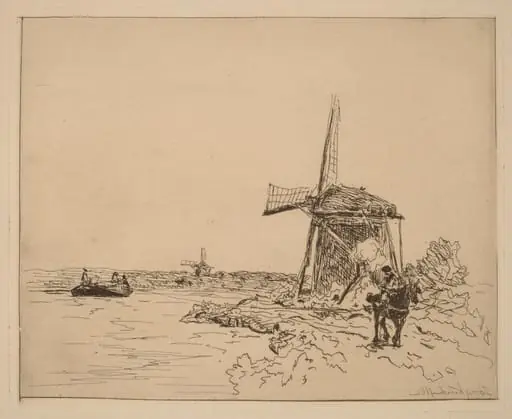 The Towpath (Le Chemin de Halage)
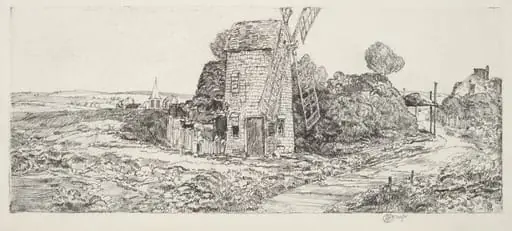 A Long Island Windmill
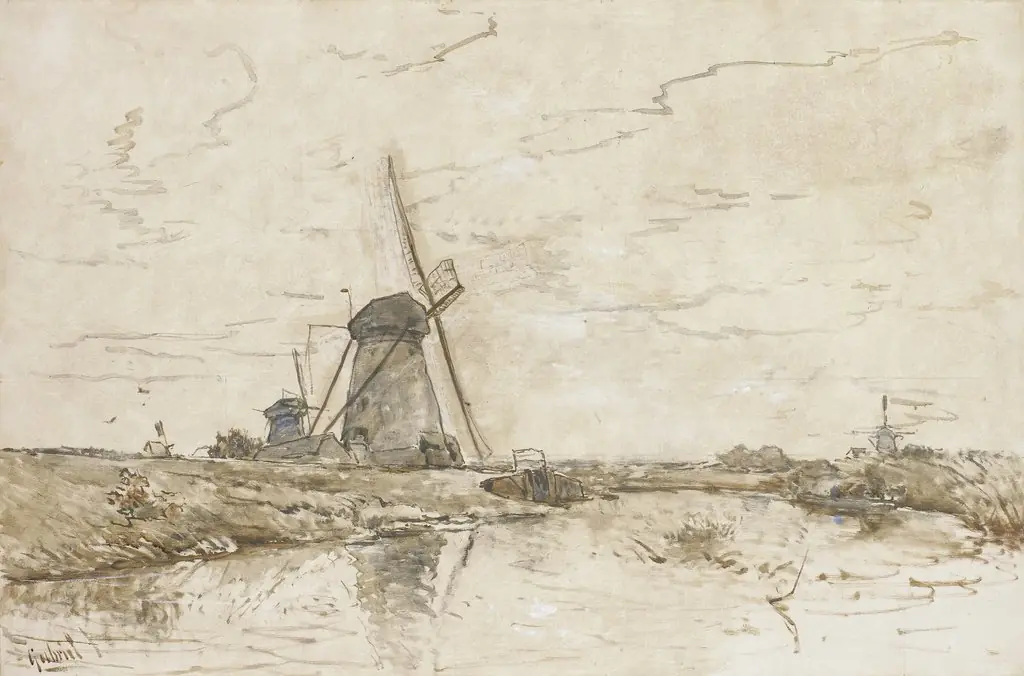 Landscape with windmills
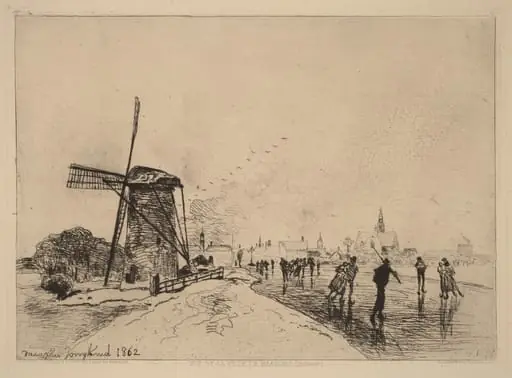 View of the Village of Maaslins (Vue de la ville de Maaslins (Hollande))
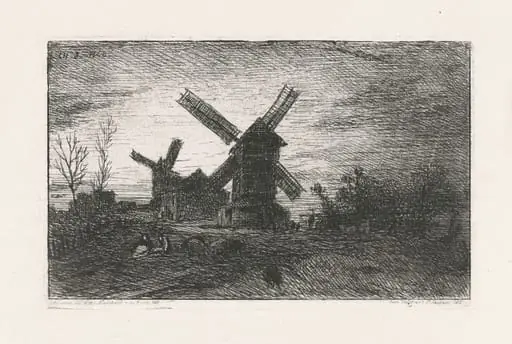 Two Windmills at Montmartre
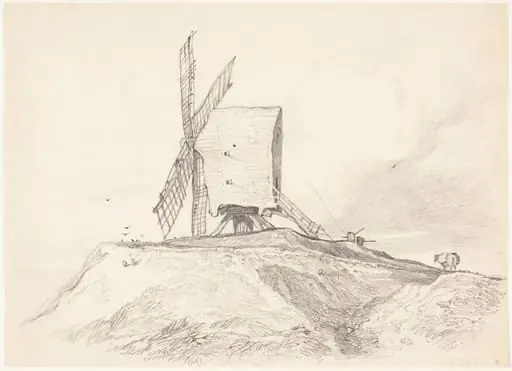 Eye Mill in Suffolk
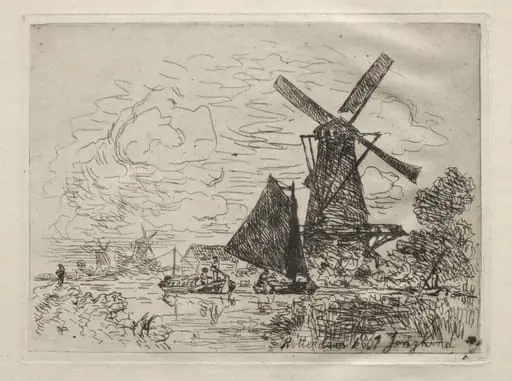 Windmills in Holland
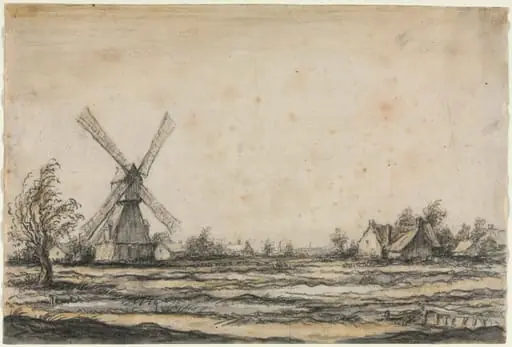 Landscape with a Windmill near a Farmstead
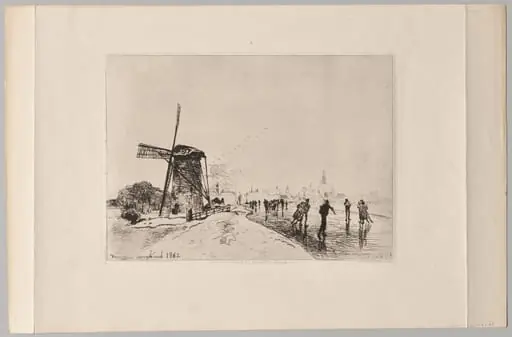 Vue de la Ville de Maaslins
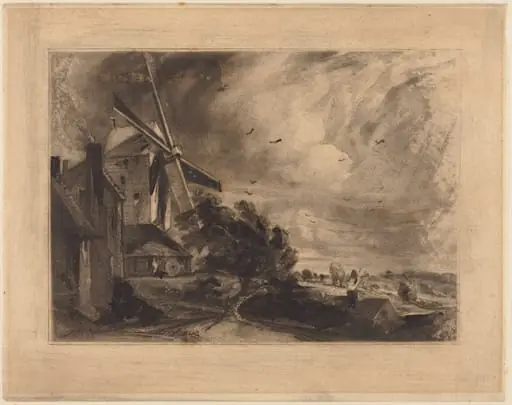 A Mill