Artwork
The family windmill at Bergholt Heath
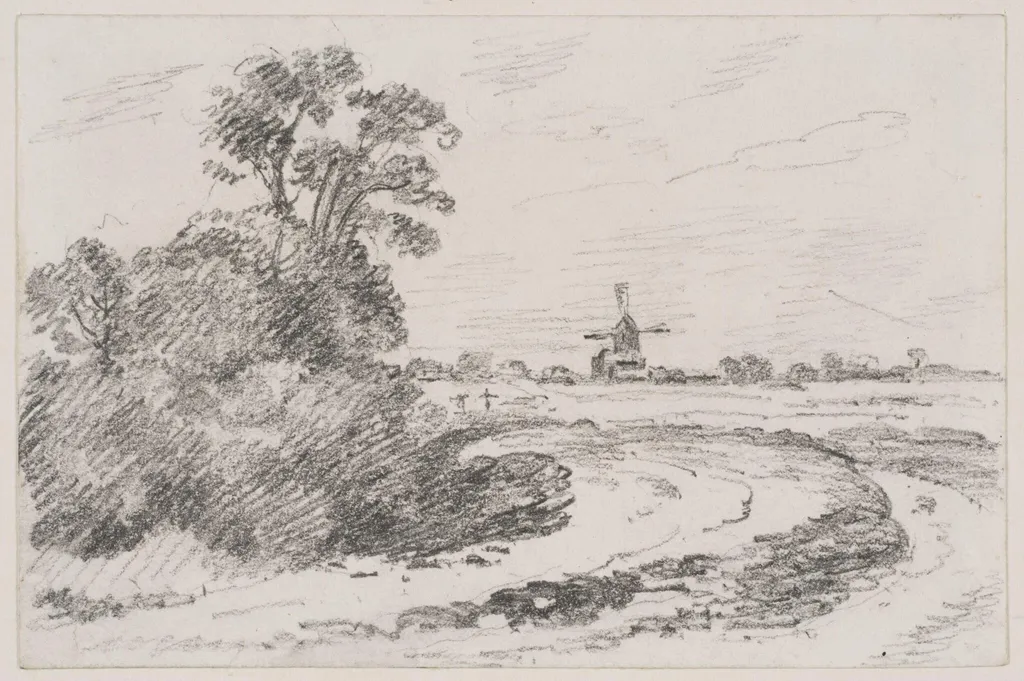
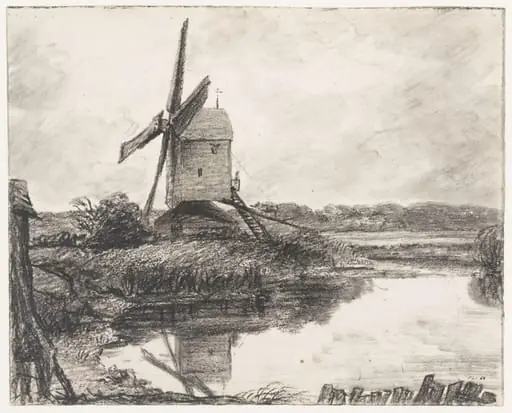
The family windmill at Bergholt Heath is a drawing by the Romanticist artist John Fisher. It dates from 1814 and is held in the collection of the Victoria and Albert Museum. This drawing, created around 1814, is a faithful transcription of John Constable’s earlier sketch of East Bergholt Common.
About this work
This is a Romantic landscape drawing from around 1814. It shows a windmill on Bergholt Heath. The artist, John Fisher, copied a sketch by John Constable dated a few months earlier.
Fisher was a bishop who admired Constable’s work. Artists often swapped drawings to practice or study. Fisher copied this one during a visit to East Bergholt.
Look up technique: cross-hatching.
Overview
This drawing, created around 1814, is a faithful transcription of John Constable’s earlier sketch of East Bergholt Common.
This drawing, created around 1814, is a faithful transcription of John Constable’s earlier sketch of East Bergholt Common. Executed in pencil with careful cross-hatching, it reflects the practice of artistic study through replication. The work was made by John Fisher, Bishop of Salisbury, who was both a close friend and patron of Constable. Fisher often borrowed Constable’s sketches to refine his own draftsmanship during visits to East Bergholt.
Subject & Meaning
The scene depicts a solitary windmill standing on Bergholt Heath, a familiar landmark near Constable’s childhood home. The quiet, unidealized landscape carries no overt narrative, but its careful rendering suggests a personal connection to the place. For Fisher, copying the view may have been an act of admiration and quiet contemplation, aligning his artistic engagement with Constable’s intimate portrayal of rural England.
Technique & Style
The drawing employs fine pencil lines and layered cross-hatching to suggest texture and depth, particularly in the sky and the windmill’s wooden structure. The technique mirrors Constable’s observational approach, emphasizing tonal variation over outline. Fisher’s hand is precise but restrained, avoiding embellishment. The style reflects a scholarly discipline common among amateur artists of the period who studied through direct transcription.
History & Provenance
John Fisher, appointed Bishop of Salisbury in 1807, maintained a longstanding friendship with Constable, frequently borrowing his drawings. This copy was likely made during one of Fisher’s visits to East Bergholt in late 1814, shortly after Constable completed the original sketch on October 6 of that year. The drawing remained within Fisher’s circle, preserving a tangible link between the bishop and the artist.
Context
In early 19th-century England, amateur artists often copied works by professionals as a means of learning. Fisher’s practice aligns with this tradition, where drawing was both intellectual pursuit and personal devotion. Constable’s sketches, valued for their immediacy, were circulated among friends as models of truthful observation, reinforcing a network of artistic exchange beyond formal academies.
Legacy
This drawing endures as evidence of the personal and artistic bonds between Constable and his patrons. It illustrates how even non-professional artists contributed to the dissemination and appreciation of emerging landscape sensibilities. Though not an original composition, it holds value as a document of artistic mentorship and the quiet, everyday practice of looking closely at the natural world.
Own this work as a print
Artist & collection
Artist
John Fisher sketched quiet country scenes around 1814. His pencil drawing shows “The family windmill at Bergholt Heath,” a low brick mill standing alone in open fields. The image catches a moment of stillness—no grand…

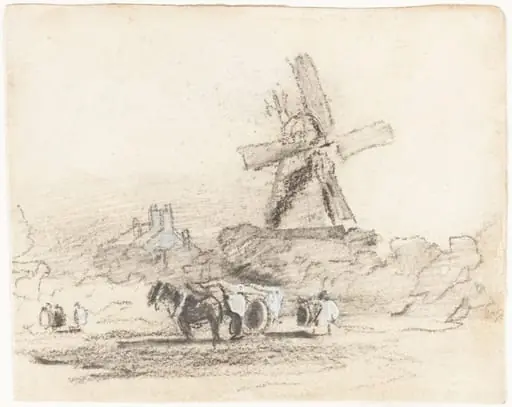 A Cart with Two Horses near a Windmill
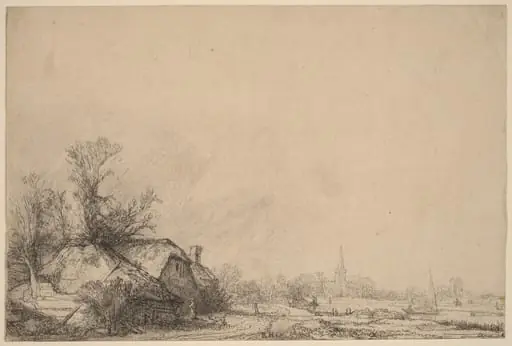 Cottage beside a Canal
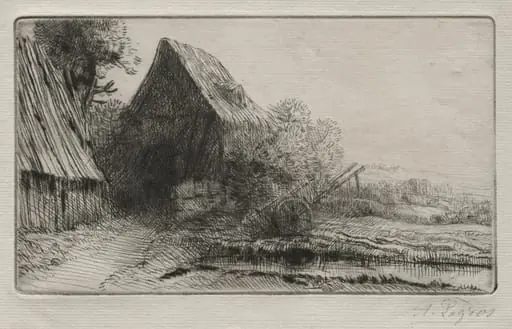 Le Maison du charron
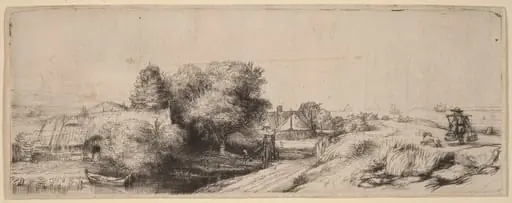 Landscape with a Milkman
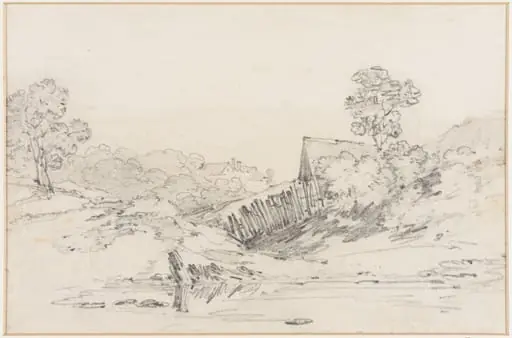 Cottage and landscape at Chirk, North Wales
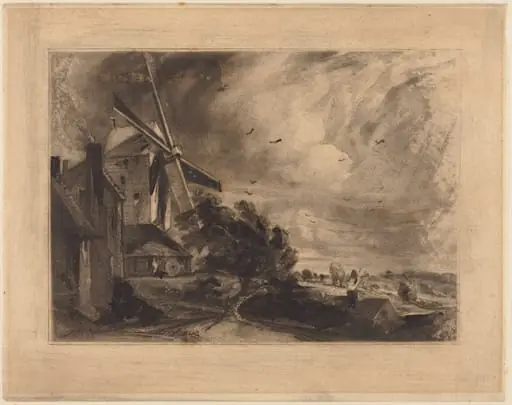 A Mill
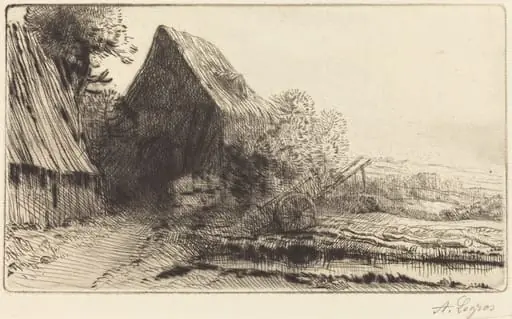 Wheelwright's Home (La maison du charron)
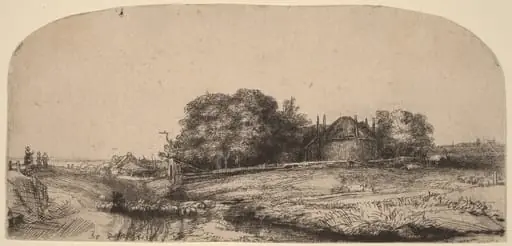 Landscape with a Hay Barn and a Flock of Sheep
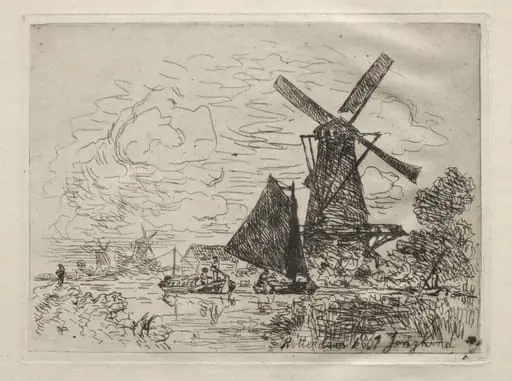 Windmills in Holland
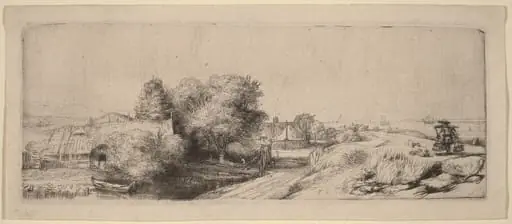 Landscape with a Milkman
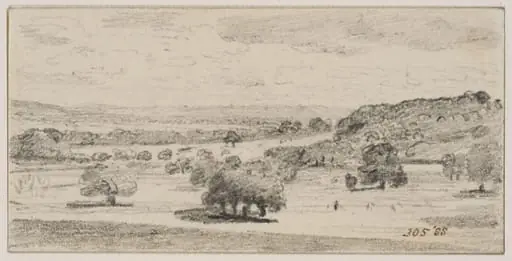 Wimbledon Park
 A mill on the banks of the River Stour