Artwork
Big Ben
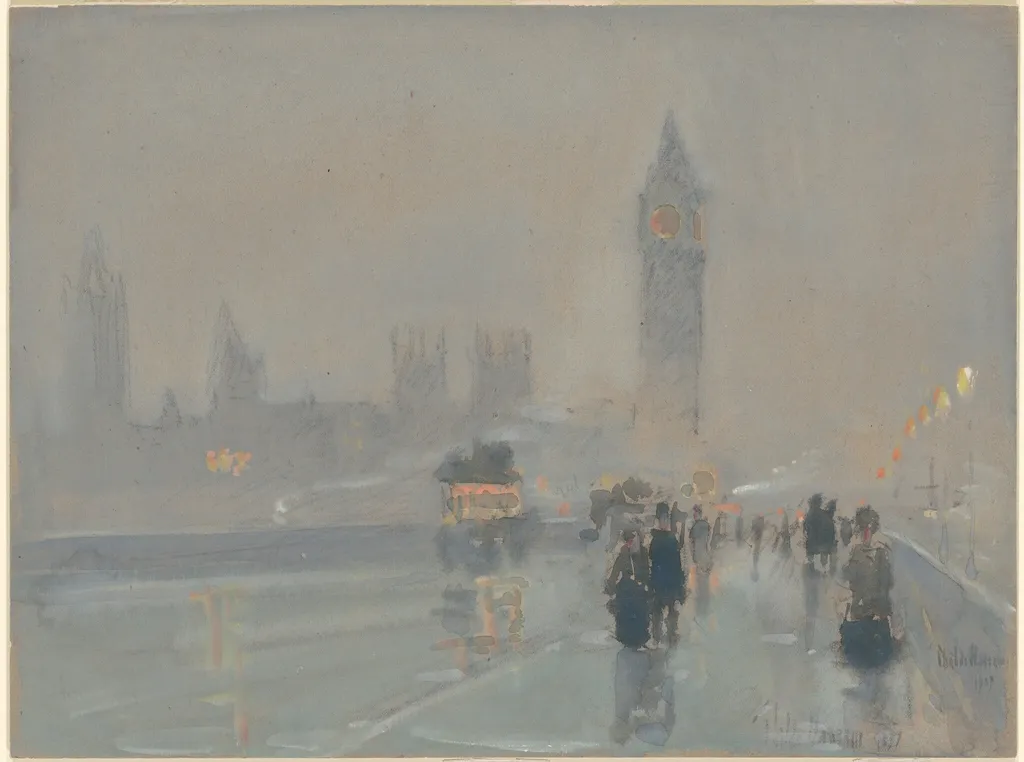
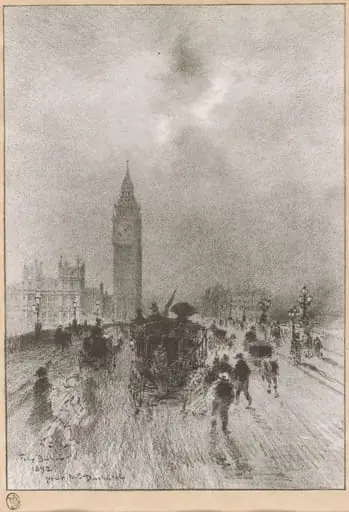
Big Ben is a gouache drawing by the Impressionist artist Childe Hassam. It dates from 1897 and is held in the collection of the National Gallery of Art.
About this work
Childe Hassam shows Big Ben as a pale gray tower rising through mist. Wet streets below glow orange from gas lamps. Brushstrokes blur the city into a dream.
Hassam painted here twice, once in 1897 and again in 1907. The later version softens the scene, letting the fog swallow edges. He loved London’s damp light.
Next look up: Hassam, Childe.
Overview
Childe Hassam created two versions of 'Big Ben' using gouache, watercolor, and charcoal on paper mounted to board. Both depict a view of London’s landmark tower seen from above, framed by mist and wet urban surfaces. The works emphasize atmospheric effects over architectural precision, with light and weather shaping the composition more than detail.
Subject & Meaning
The painting centers on Big Ben as a faint, gray silhouette rising through fog, not as a monument but as a quiet anchor in a hazy cityscape. Below, the glow of gas lamps reflects on rain-slicked streets, suggesting nocturnal movement without showing figures. The scene conveys solitude within urban density, where architecture dissolves into ambient light.
Technique & Style
Hassam layered watercolor and gouache over charcoal underdrawing to build soft, translucent tones. Brushwork is loose and fluid, blurring building edges and merging sky with mist. The wet pavement’s orange and yellow reflections are applied with deliberate, smudged strokes, enhancing the sense of dampness and diffused illumination characteristic of his London studies.
History & Provenance
Hassam painted the first version in 1897 during a visit to London, and revisited the subject in 1907. The later iteration is more subdued, with forms dissolving further into the mist. Both works reflect his sustained interest in capturing the city’s unique atmospheric conditions, particularly the way moisture softened light and form.
Context
Hassam was drawn to London’s frequent fog and dampness, which aligned with his fascination with light effects seen in French Impressionism. Unlike traditional topographical views, his approach prioritized mood over accuracy, situating his work within a broader trend among American artists who sought emotional resonance in urban landscapes.
Legacy
These drawings exemplify Hassam’s shift from detailed realism toward atmospheric abstraction. While not widely exhibited in his lifetime, they reveal his quiet mastery of tone and texture, influencing later American painters interested in urban mood rather than monumentality.
Own this work as a print
Artist & collection
Artist
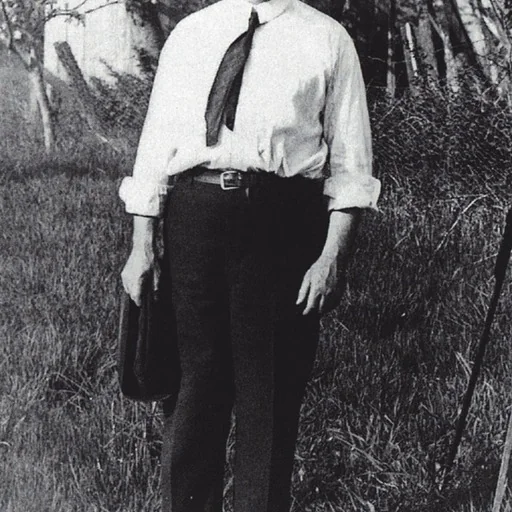
Frederick Childe Hassam was an American Impressionist painter, noted for his urban and coastal scenes.

 The Victoria Clock Tower London
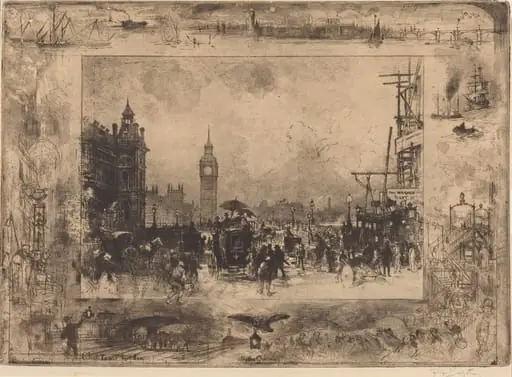 Westminster Bridge
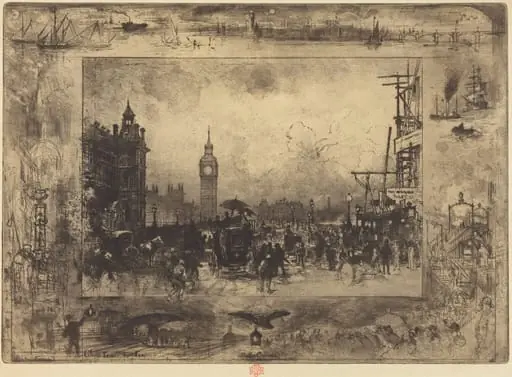 Westminster Bridge
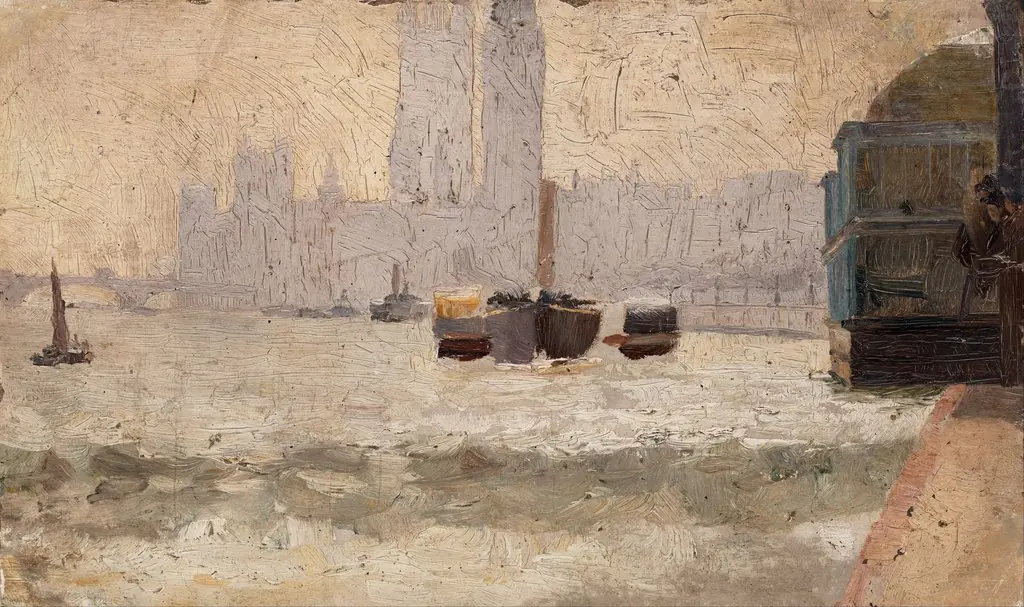 Fog, Thames Embankment
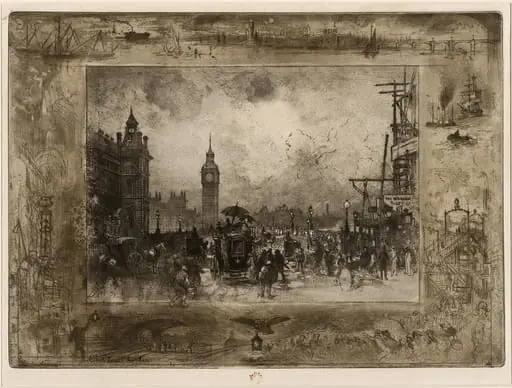 Westminster Bridge
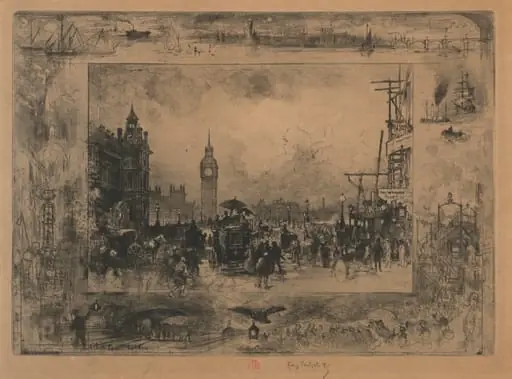 Westminster Bridge, or Westminster Tower
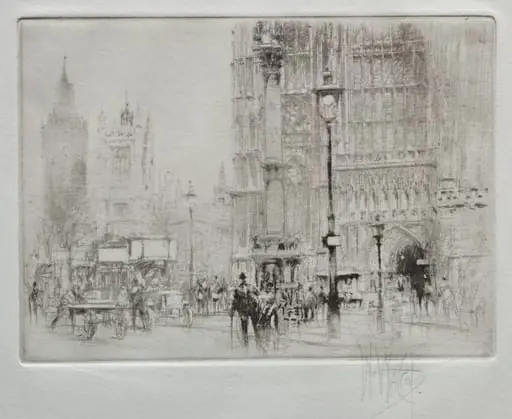 Westminster Abbey
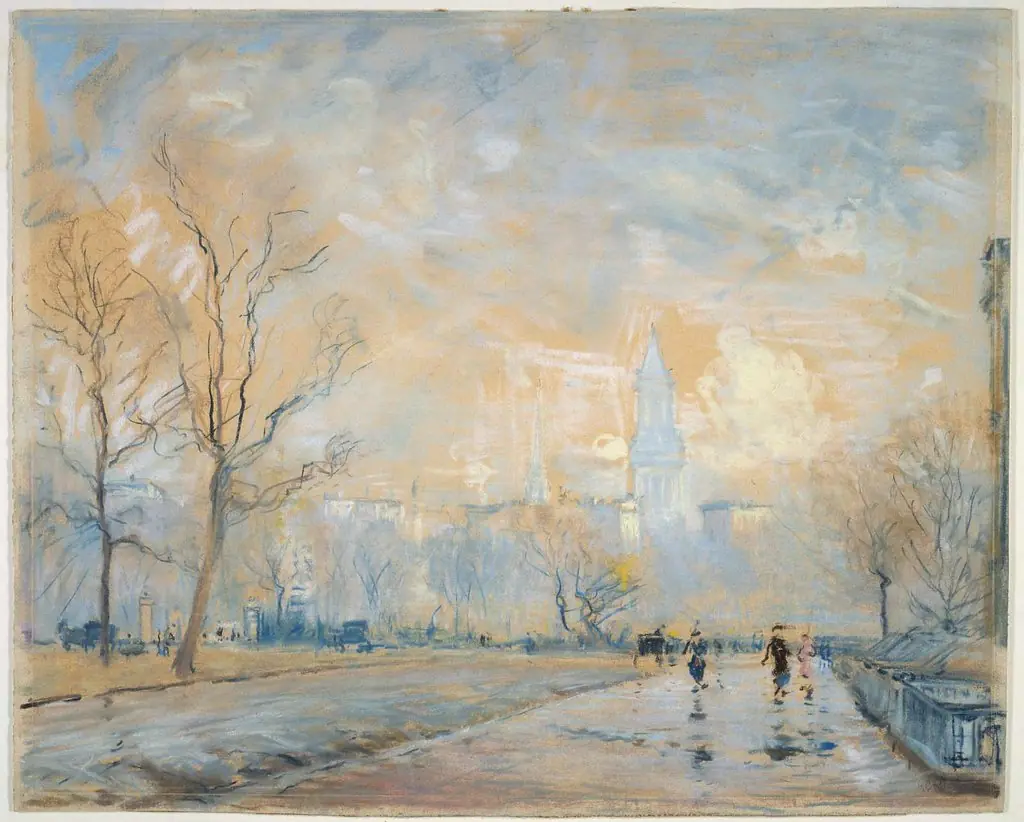 Custom House Tower from the Public Garden, Boston
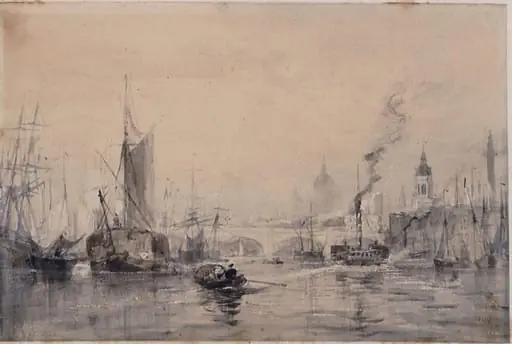 London Bridge with Boats
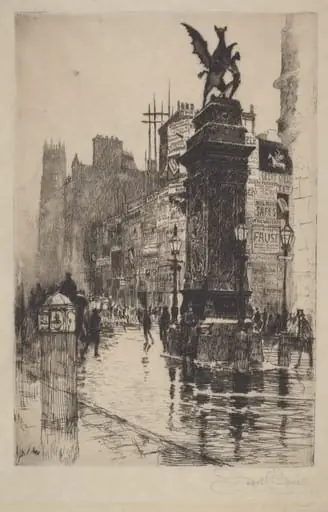 Temple Bar
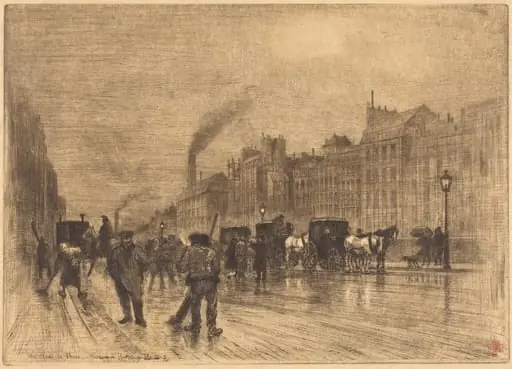 Matinée d'Hiver sur les Quais
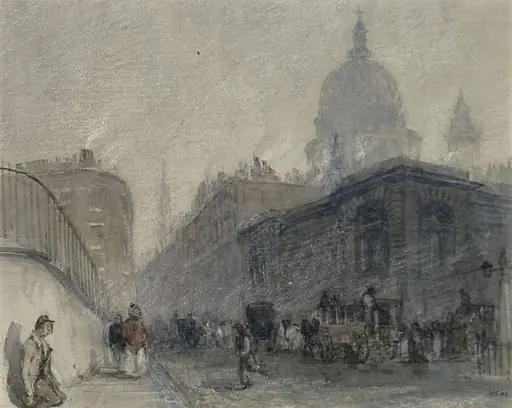 Solitude: View of Newgate Street, looking east, showing the old prison and St. Paul's