Artwork
Camouflage
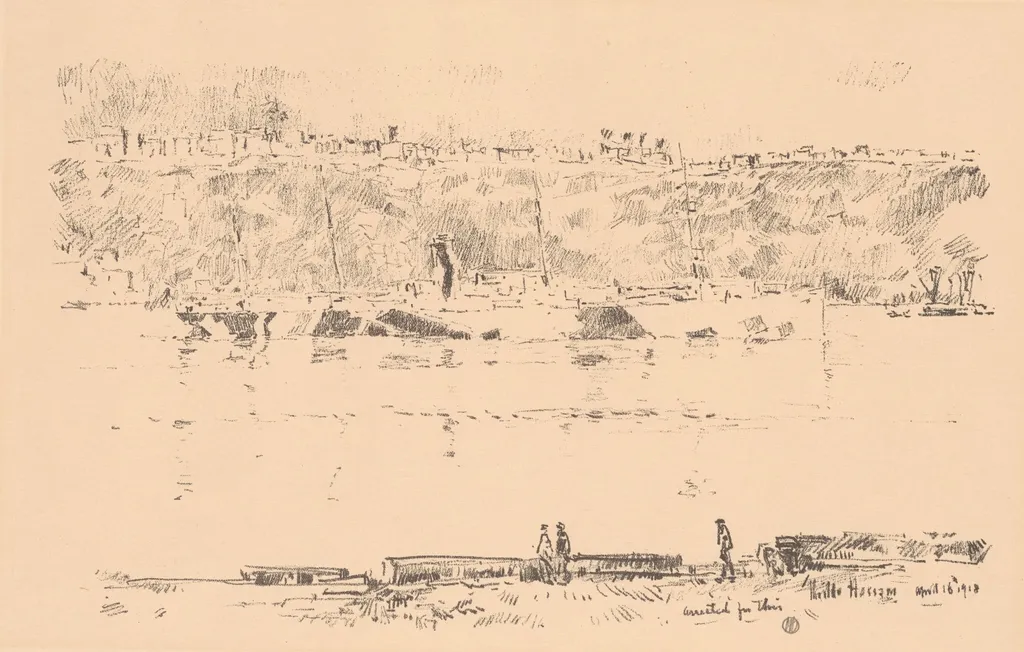
Camouflage is an ink print by Childe Hassam. It dates from 1918 and is held in the collection of the National Gallery of Art.
About this work
Overview
Created in 1918, Childe Hassam’s lithograph titled *Camouflage* presents a quiet riverside tableau rendered entirely in black ink on a light‑tan wove paper. The composition is confined to a single tonal range, emphasizing form and atmosphere over color, and invites the viewer into a moment of stillness along the water’s edge.
Subject & Meaning
The image depicts a calm stretch of river flanked by modest architecture and figures whose reflections ripple gently across the surface. By stripping the scene to monochrome, Hassam foregrounds the interplay of light and shadow, suggesting a contemplative mood that underscores the ordinary beauty of an everyday landscape.
Technique & Style
Executed as a lithograph, the work relies on the artist’s direct drawing onto a stone or metal plate, producing crisp, linear marks that translate into the printed image. Hassam’s handling of the medium yields swift, gestural strokes reminiscent of his Impressionist leanings, while the limited palette reinforces a sense of serenity.
Context
The piece belongs to a period when Hassam, like many American artists, explored printmaking as a means of disseminating his vision. The monochrome approach aligns with contemporary trends toward simplification and abstraction, reflecting broader artistic experiments with form and perception during the late 1910s.
Artist & collection
Artist
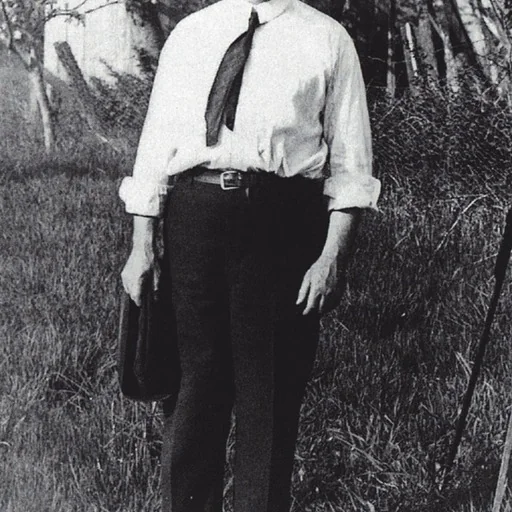
Frederick Childe Hassam was an American Impressionist painter, noted for his urban and coastal scenes.

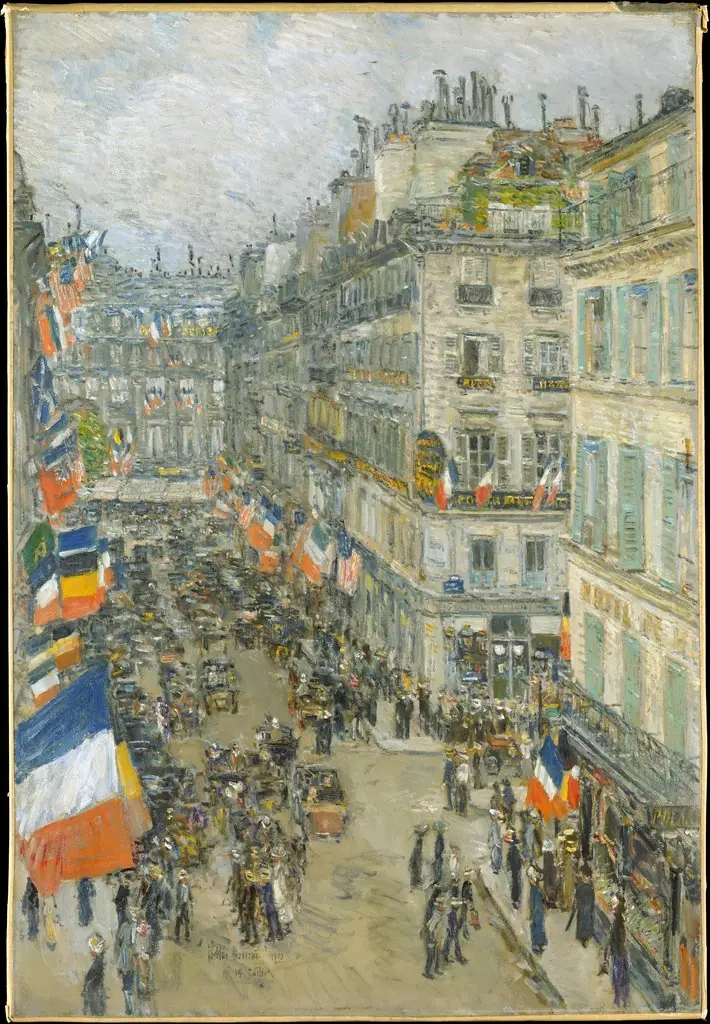
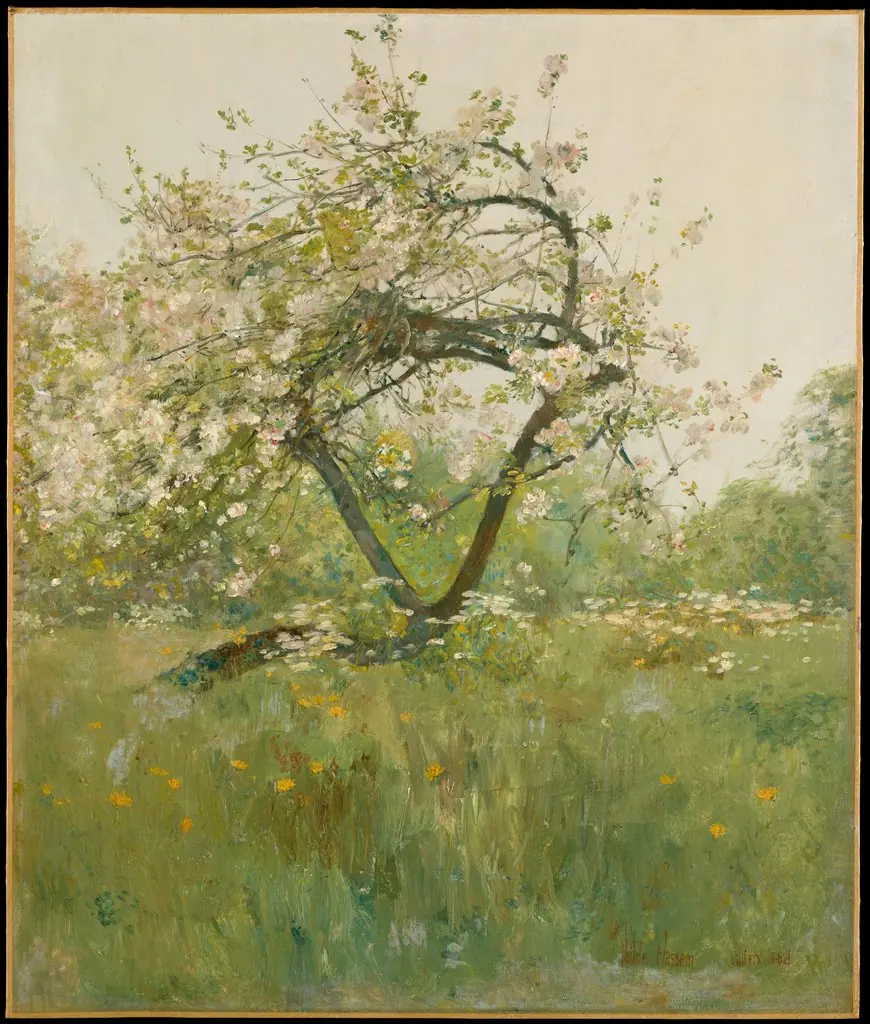
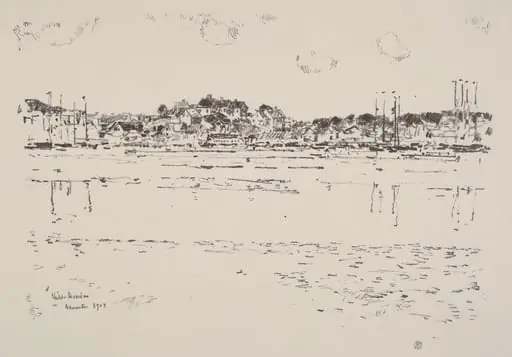 Inner Harbor
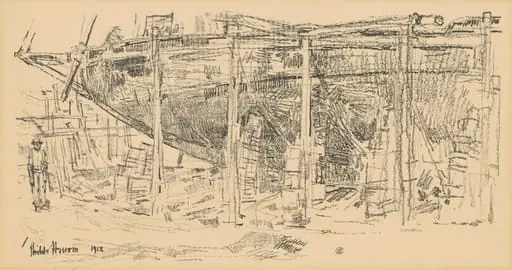 On the Ways
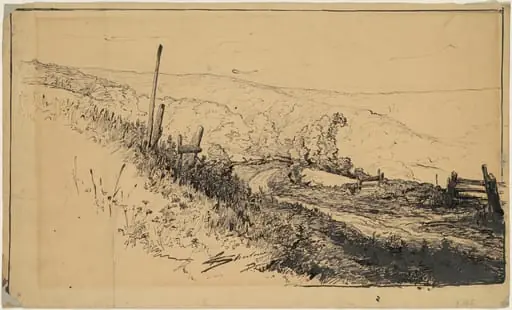 A Road in the Hills Near Dordrecht
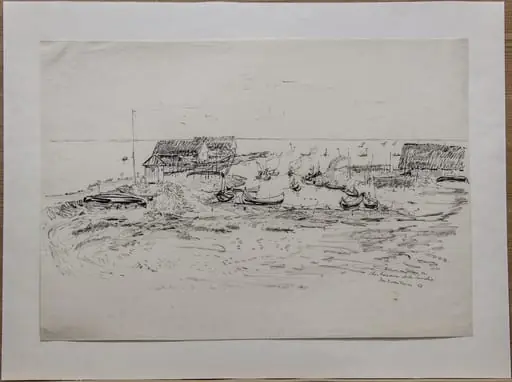 Bărci cu pânze la cherhanaua de la Sarichioi
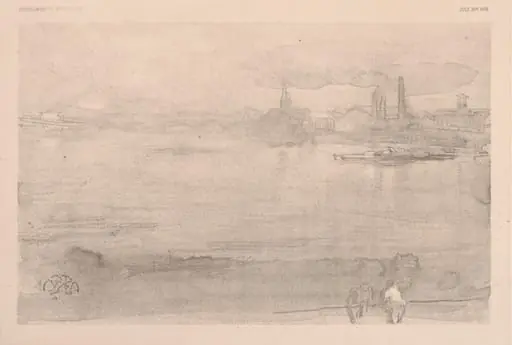 Early Morning: The Thames at Battersea
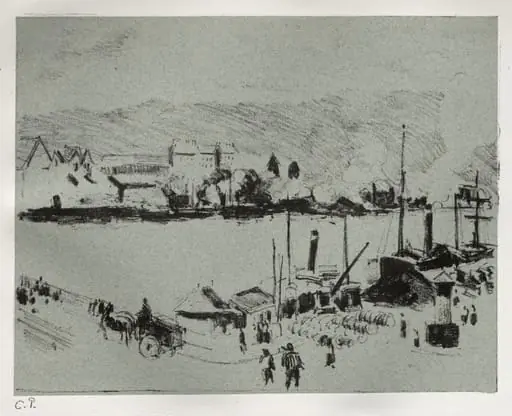 Quai Boieldieu in Rouen
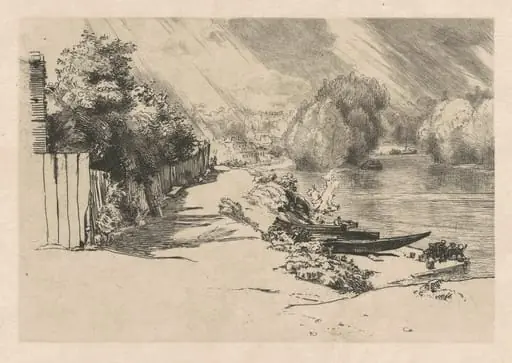 The Seine at Bas-Meudon
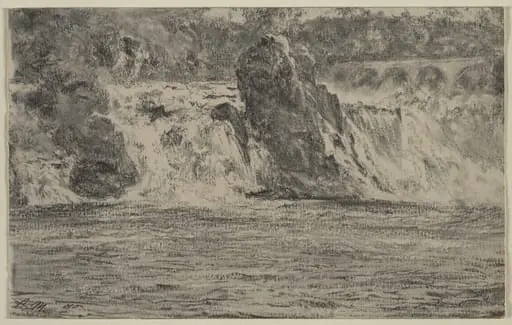 Falls of the Rhine at Schaffhausen (Rheinfall von Schaffhausen)
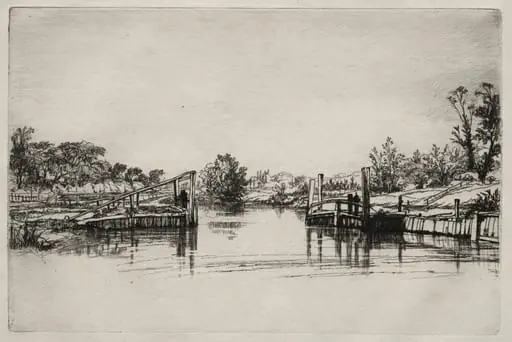 Egham Lock
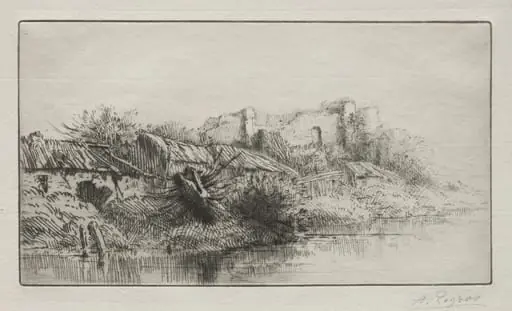 The Abandoned Village
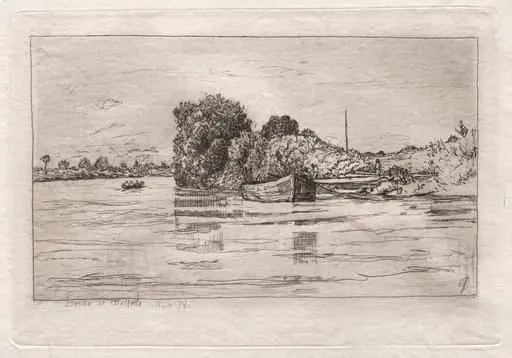 Danube at Walhalla
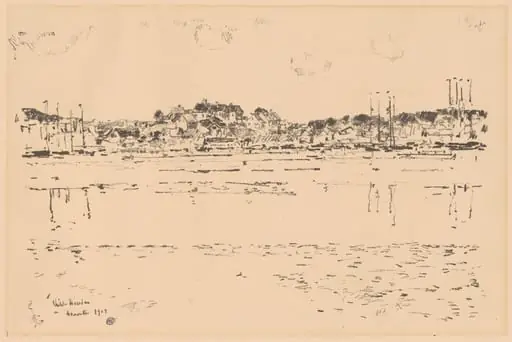 Inner Harbor