Artwork
Floor of the Stock Exchange
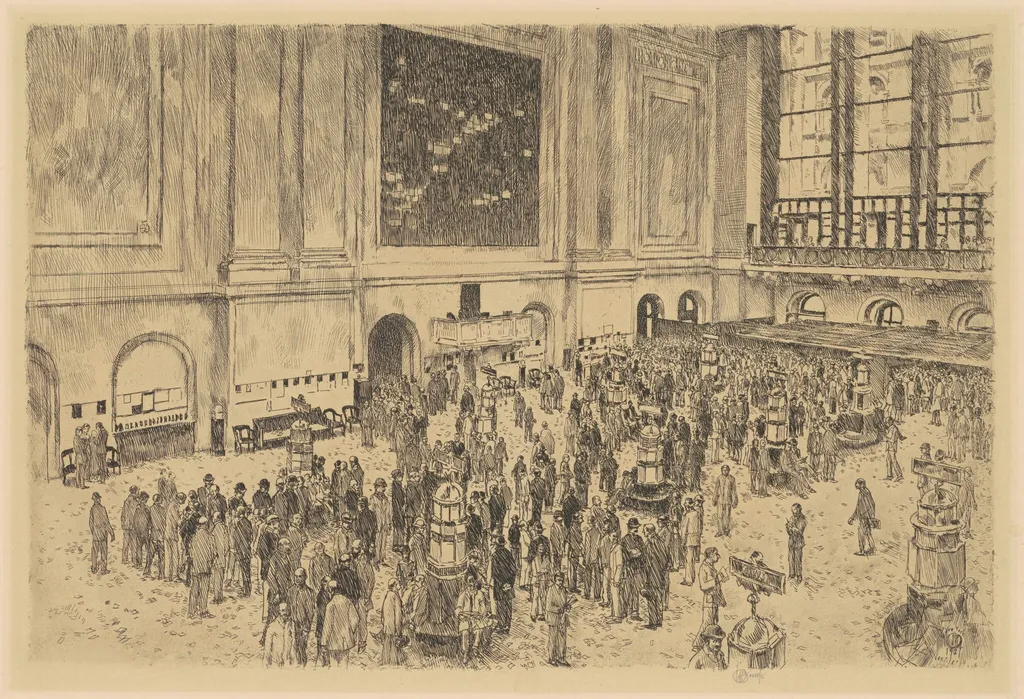
Floor of the Stock Exchange is an ink print by Childe Hassam. It dates from 1927 and is held in the collection of the National Gallery of Art.
About this work
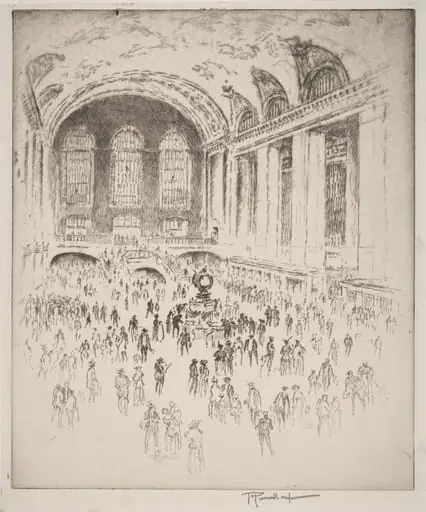
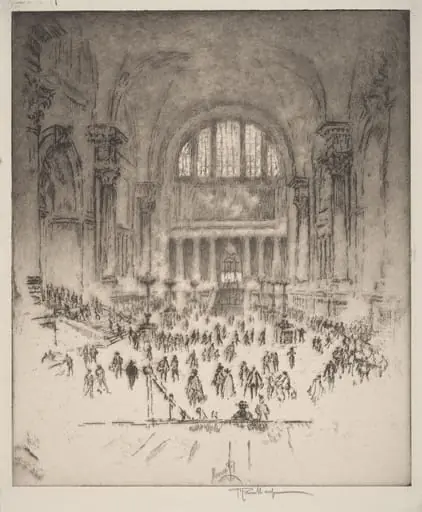
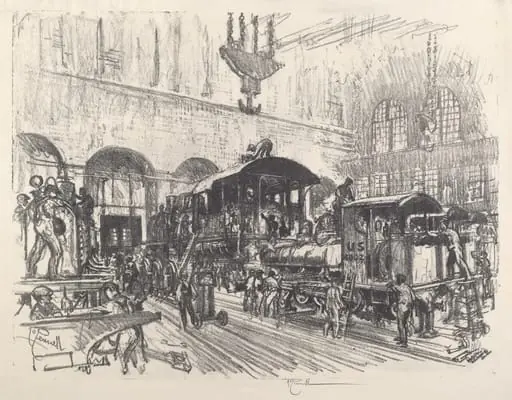
This etching shows a busy stock exchange floor in 1927. Light pours through tall arched windows. Traders crowd around tall machines. Hassam’s lines are razor sharp.
Look how the drypoint scratches catch shadows. The deeper the line, the darker the shadow. It makes the scene feel alive.
See how this compares to Whistler’s etchings. They share that same crisp, quiet drama.
Overview
Childe Hassam’s 1927 etching captures the interior of a New York Stock Exchange trading floor, rendered in fine black lines on wove paper.
Childe Hassam’s 1927 etching captures the interior of a New York Stock Exchange trading floor, rendered in fine black lines on wove paper. The composition emphasizes verticality through towering windows and architectural arches, while dense clusters of figures and machinery convey the energy of financial activity. Hassam’s precision in line and tone creates a sense of movement within a structured space.
Subject & Meaning
The scene portrays traders gathered around mechanical ticker machines, their postures suggesting urgency and concentration. The architecture frames human labor as both monumental and routine. No single figure dominates; instead, the collective motion reflects the impersonal rhythm of market activity, where individual presence is subsumed by institutional flow.
Technique & Style
Hassam employed drypoint etching to achieve sharp, incised lines that hold ink deeply, producing rich shadows where the burr retains pigment. The contrast between fine, controlled strokes and the textured grain of scratched surfaces enhances spatial depth. Light filters through high windows, casting defined gradients that model form without softening edges.
History & Provenance
Created in 1927, the print emerged during a period of intense financial speculation in the United States, just before the market crash. Hassam, primarily known for Impressionist paintings, turned to printmaking to explore urban themes with greater structural clarity. The work was likely produced for private collectors and institutional collections focused on American graphic art.
Context
The etching aligns with early 20th-century American interest in documenting industrial and financial spaces as cultural landmarks. Hassam’s approach echoes James McNeill Whistler’s tonal discipline and architectural focus, though his subject is more overtly social. Unlike European counterparts, American artists of this era often treated commerce as a legitimate subject for fine art.
Legacy
The print stands as a rare example of Hassam’s engagement with printmaking and urban realism. It contributes to a broader visual record of American financial life before the Great Depression. Its technical rigor and restrained emotion distinguish it from more romanticized depictions of Wall Street, offering a quiet, observational record of institutional rhythm.
Artist & collection
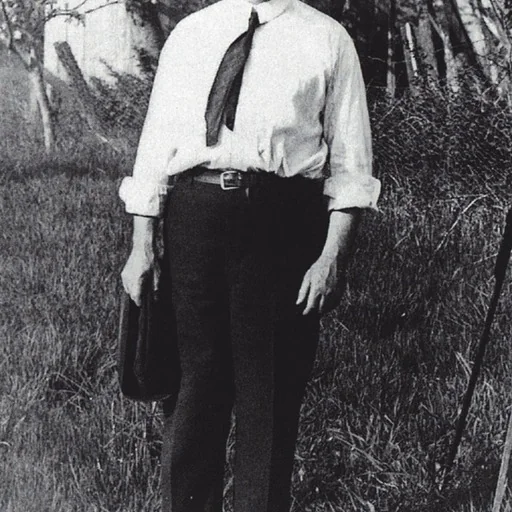
Artist
Frederick Childe Hassam was an American Impressionist painter, noted for his urban and coastal scenes.