Artwork
Lower Broadway
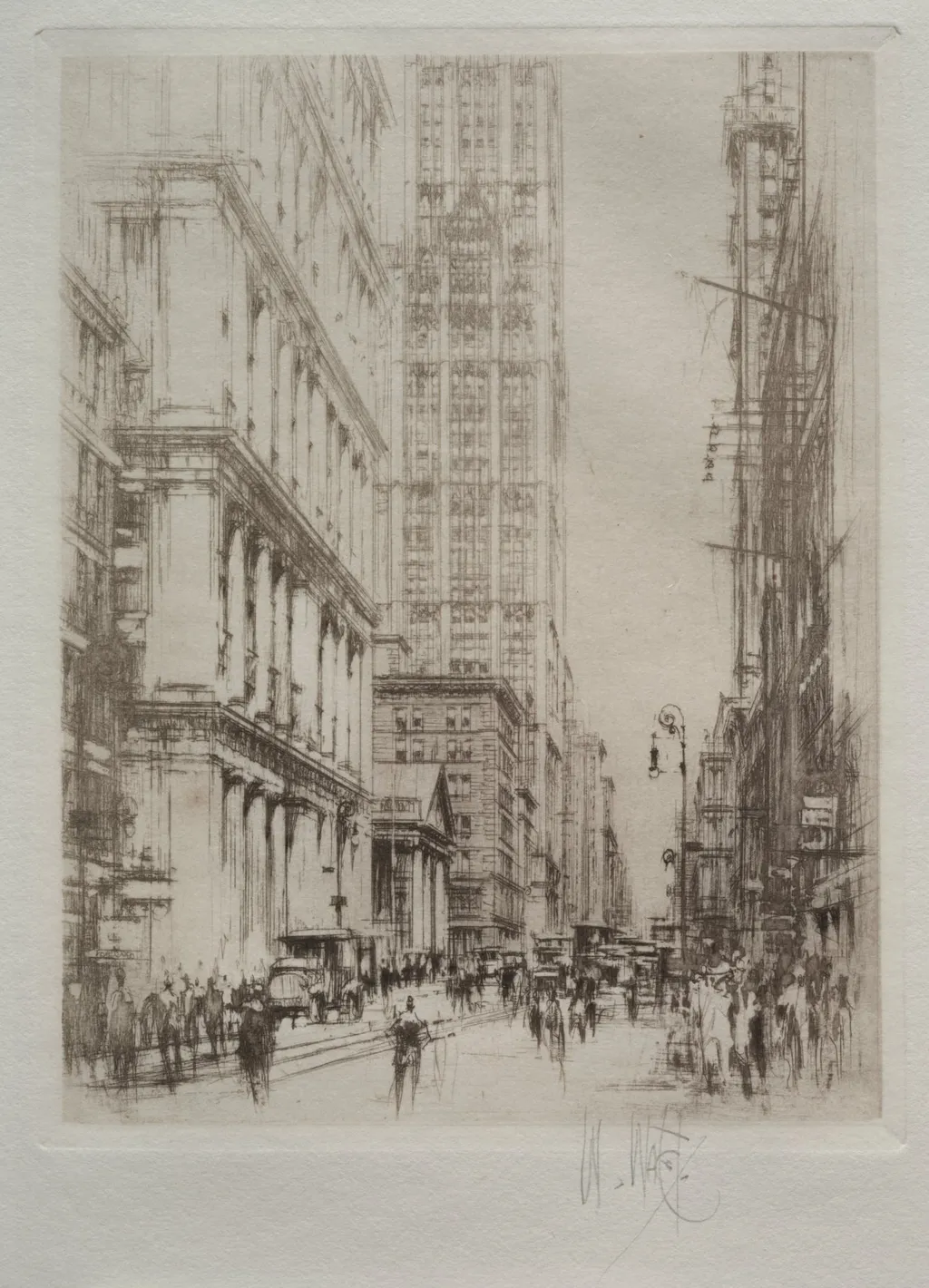
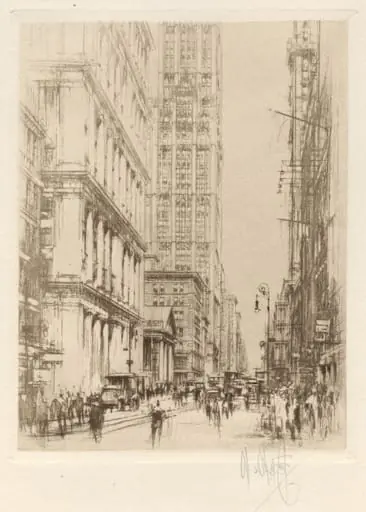
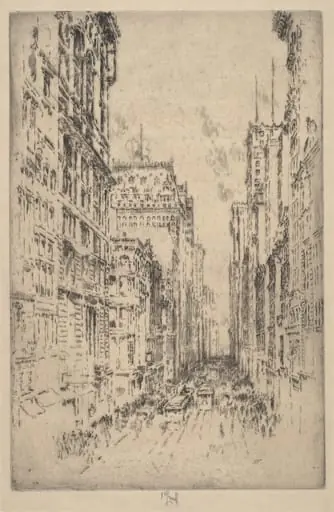
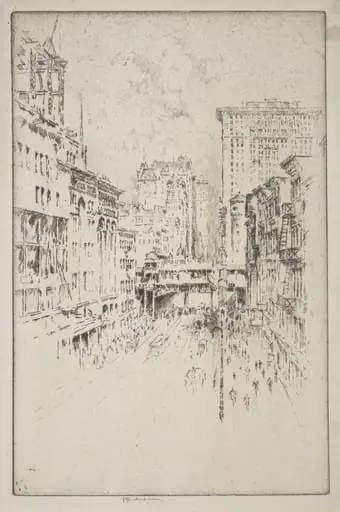
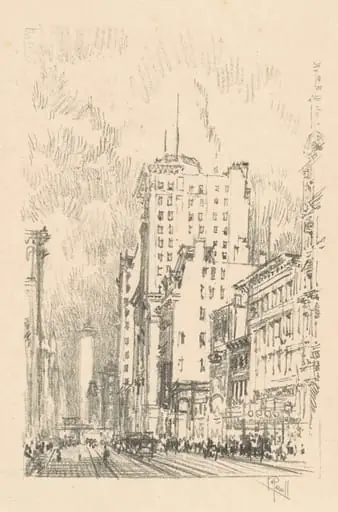
Lower Broadway is a print by William Walcot. It dates from 1923 and is held in the collection of the Cleveland Museum of Art.
About this work
Overview
Created in 1923 by William Walcot, Lower Broadway is a lithograph capturing the bustling urban environment of New York City. The work is part of the permanent collection at The Cleveland Museum of Art. Rendered with rapid, expressive lines, it conveys the rhythm and density of early 20th-century city life, emphasizing motion and architectural scale over precise detail.
Subject & Meaning
The scene depicts Lower Broadway at peak activity, with horse-drawn vehicles and pedestrians navigating a narrow corridor between towering commercial buildings. The composition suggests the tension between human movement and the imposing urban fabric. Walcot’s focus on crowded streets reflects a fascination with modernity’s pace, not as a celebration but as an observation of urban chaos.
Technique & Style
Walcot employed loose, gestural linework to evoke the fleeting nature of city life. The architecture is rendered with simplified yet suggestive detail—columns and facades implied rather than fully defined. The contrast between the dense, sketchy figures and the solid, vertical forms of the buildings creates a dynamic visual rhythm, prioritizing atmosphere over realism.
History & Provenance
The print was produced during Walcot’s active period in New York, where he documented urban scenes with a keen eye for architectural and social change. It entered the Cleveland Museum of Art’s collection in the 20th century, likely through acquisition or donation, and has remained part of its graphic arts holdings since.
Context
In the early 1920s, New York was undergoing rapid transformation, with electric streetcars and early automobiles beginning to replace horse-drawn transport. Walcot’s depiction captures a transitional moment, preserving the last phase of the city’s equestrian era before full mechanization. His work aligns with contemporary interest in urban documentation among artists and photographers.
Legacy
Walcot’s Lower Broadway stands as a quiet record of a shifting urban landscape. Though not widely exhibited today, it contributes to a broader body of early 20th-century American prints that sought to capture the essence of city life through expressive line and composition, influencing later generations of urban observers in print media.
Own this work as a print
Artist & collection

Artist
William Walcot RE was a Russian-Scottish architect, graphic artist and etcher, notable as a architect of refined Art Nouveau in Moscow, Russia.

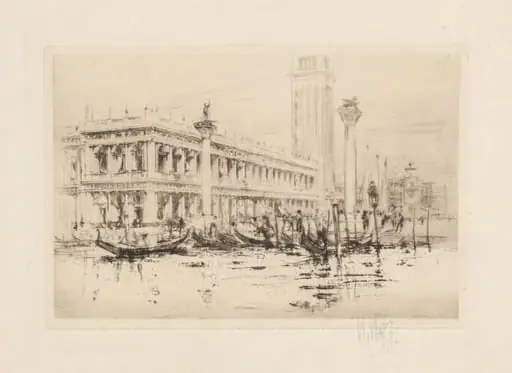 The Venice Set: The Library of St. Mark’s
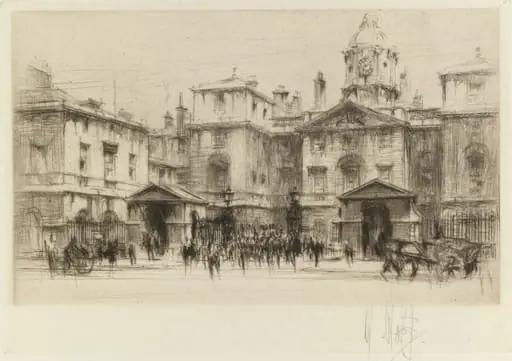 London Set: Horseguards
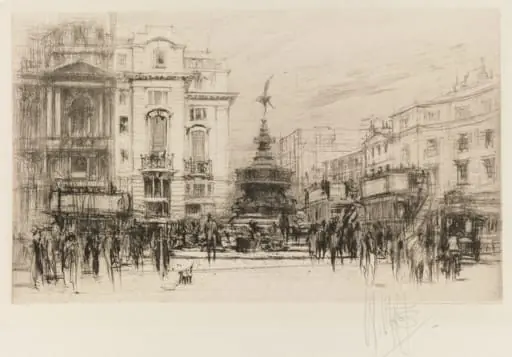 London Set: Piccadilly Circus (with Criterion Theatre)
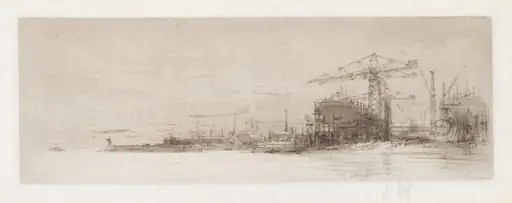 The Clyde from the series The Arteries of Great Britain
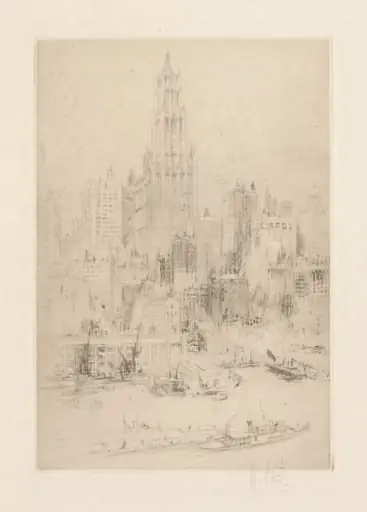 Downtown Manhattan from the East River, with the Woolworth Building
 Herodias
 Herodias: Page 13, The tetrarch was awaited by several Galileans, the master of scribes, the chief of the land steward, the manager of the salt mines, and a Jew from Babylon commanding his troops on horse
 Forty-second Street NY