Artwork
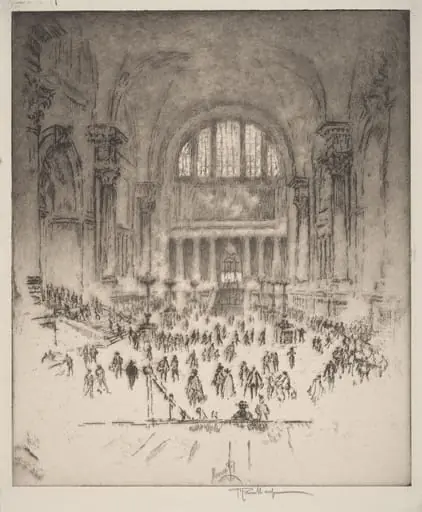
Concourse, Grand Central, New York
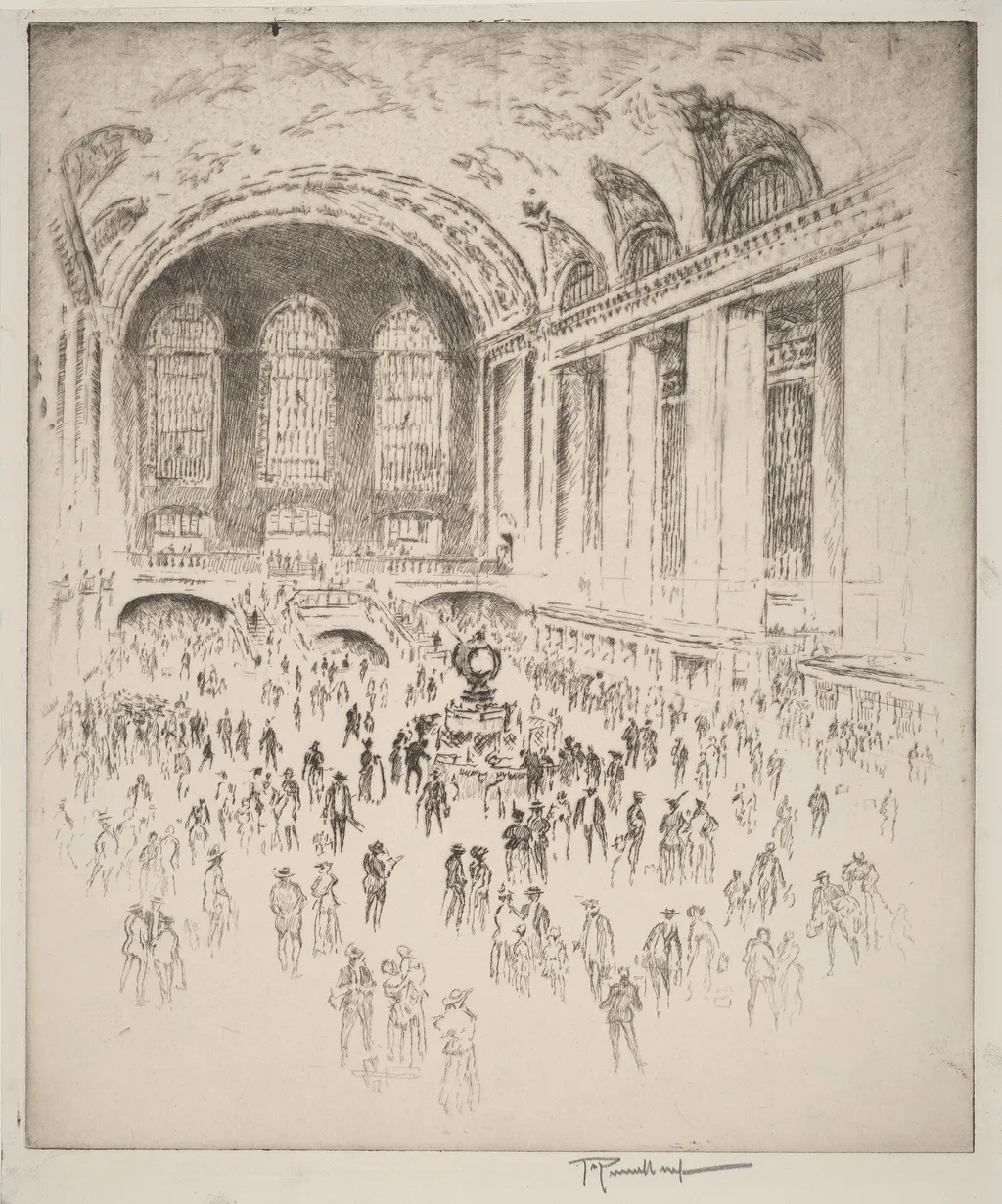
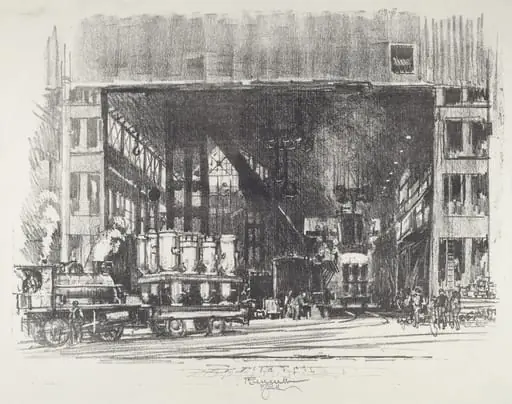
Concourse, Grand Central, New York is an ink print by Joseph Pennell. It dates from 1919 and is held in the collection of the National Gallery of Art.
About this work
Overview
Pennell, known for his urban and industrial subjects, employed the etching technique to render the terminal’s vast interior with precision and movement.
Created in 1919, *Concourse, Grand Central, New York* is an etching by American artist Joseph Pennell, capturing the dynamic energy of Grand Central Terminal’s main hall. Pennell, known for his urban and industrial subjects, employed the etching technique to render the terminal’s vast interior with precision and movement. The work reflects his lifelong interest in modern architecture and the rhythms of city life, rendered through a dense network of fine, expressive lines.
Subject & Meaning
The scene depicts the terminal’s crowded concourse during daylight, with travelers moving in all directions beneath its soaring arched ceiling. Pennell avoids individual portraiture, instead emphasizing the collective motion of the crowd—bags in hand, conversations in flux, figures dissolving into the flow of transit. The composition conveys the terminal not as a static monument, but as a living artery of urban activity, where architecture frames human movement.
Technique & Style
Pennell used etching to achieve a rapid, sketch-like quality, with fine, incised lines building form through density rather than shading. The ceiling’s arches and towering columns are suggested with rhythmic, parallel strokes, while the crowd is rendered in overlapping, energetic marks that imply motion without detail. Light enters from the far windows, casting soft contrasts that guide the eye through the composition, reinforcing the sense of depth and scale.
History & Provenance
Pennell produced this work shortly after returning to the United States following years in Europe, where he had studied under Thomas Eakins and been influenced by Whistler’s tonal aesthetics. The etching was made during a period of renewed American interest in civic architecture, and it reflects Pennell’s commitment to documenting modern infrastructure. It entered public collections soon after its creation, recognized for its acute observation of urban life.
Context
In 1919, Grand Central Terminal had recently opened, symbolizing the height of American rail travel and engineering ambition. Pennell’s etching aligns with a broader trend among artists and illustrators who turned to industrial and civic subjects as emblems of modernity. Unlike romanticized depictions of transit, his work embraces the chaotic vitality of everyday use, positioning the terminal as a stage for anonymous, collective experience.
Legacy
The etching remains a significant example of early 20th-century American printmaking, valued for its unembellished portrayal of urban transit. Pennell’s approach influenced later artists documenting public spaces through linear economy and atmospheric density. While not widely exhibited today, the work endures in institutional collections as a quiet record of how architecture and movement intersect in the modern city.
Artist & collection
Artist
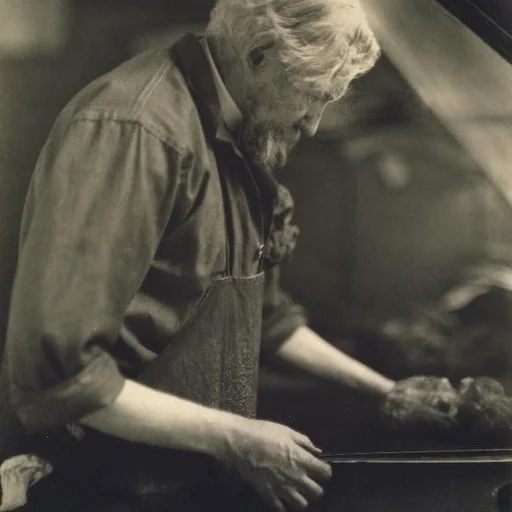
Joseph Pennell (July 4, 1857 – April 23, 1926) was an American draftsman, etcher, lithographer, and illustrator for books and magazines.