Artwork
Walt Whitman's Birthplace
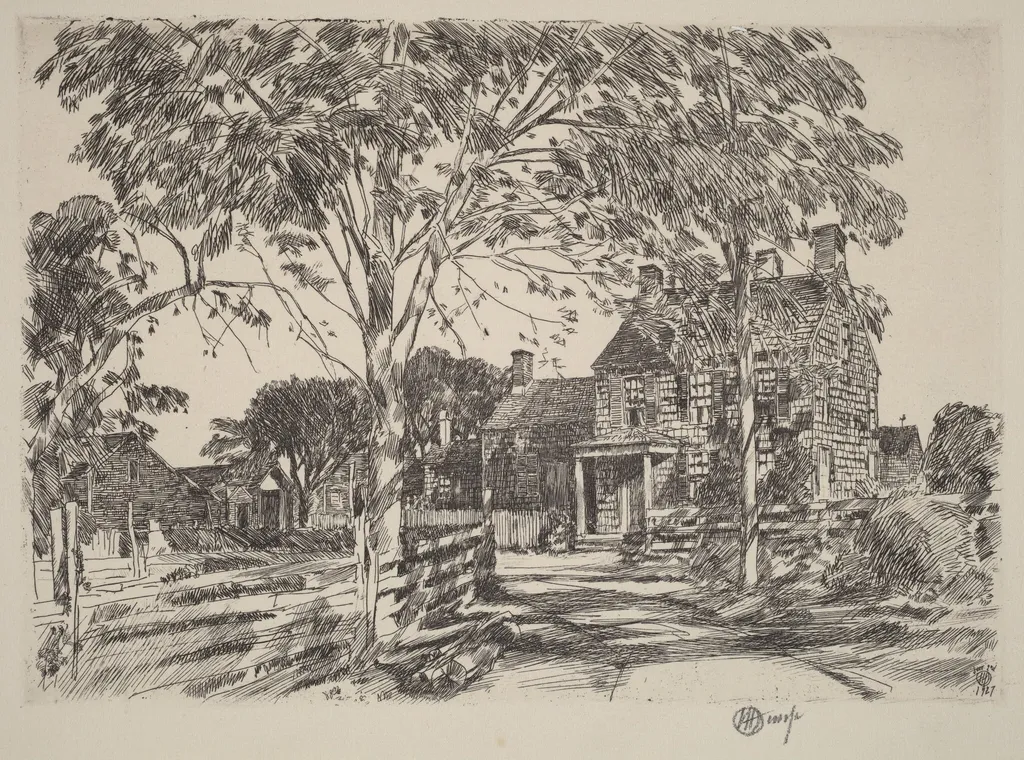
Walt Whitman's Birthplace is an ink print by Childe Hassam. It dates from 1927 and is held in the collection of the National Gallery of Art.
About this work
Overview
Executed in black ink on paper, the work belongs to Hassam’s later period, when he turned toward personal and historical subjects.
Childe Hassam created this 1927 etching as a quiet tribute to the childhood home of poet Walt Whitman. Executed in black ink on paper, the work belongs to Hassam’s later period, when he turned toward personal and historical subjects. Though best known for urban and coastal Impressionist scenes, this piece reflects a more introspective mode, using the precision of etching to evoke atmosphere rather than detail.
Subject & Meaning
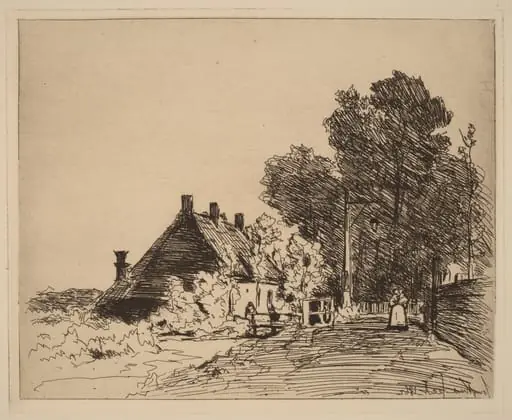
The subject is the modest farmhouse in West Hills, Long Island, where Walt Whitman was born in 1819. Hassam depicts the structure nestled near the water’s edge, surrounded by untended grass and a hazy sky. The image does not celebrate grandeur but instead suggests contemplation — a link between place and poetic legacy. The absence of figures reinforces a sense of solitude and memory.
Technique & Style
Hassam employed fine, controlled lines typical of etching to suggest texture and light without heavy shading. The sky and grass are rendered with delicate, meandering strokes, creating a soft, diffused quality. The house, rendered in crisp negative space, stands out against the muted tones. The composition avoids sharp focus, favoring a lyrical ambiguity that aligns with Whitman’s poetic sensibility.
History & Provenance
Hassam made this print during a period of renewed interest in American literary figures. He visited Whitman’s birthplace in 1927, likely inspired by the poet’s enduring cultural presence. The etching was produced in a limited run and entered major collections soon after, including the National Gallery of Art, where it remains part of the permanent holdings of American prints.
Context
In the 1920s, American artists increasingly looked to national heritage for subject matter. Hassam, though associated with Impressionism, turned inward as he aged, engaging with historical sites tied to cultural identity. This etching reflects a broader trend among artists of the time to honor literary figures through landscape, blending personal reverence with regional memory.
Legacy
The etching endures as a subtle bridge between visual art and American literature. It does not illustrate Whitman’s poetry directly but evokes the quiet environment that shaped his early life. Hassam’s restrained technique invites viewers to reflect rather than observe, ensuring the work’s resonance beyond its immediate historical moment.
Own this work as a print
Artist & collection
Artist
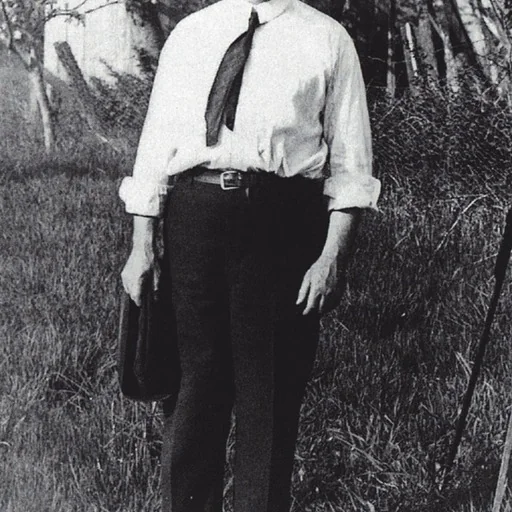
Frederick Childe Hassam was an American Impressionist painter, noted for his urban and coastal scenes.

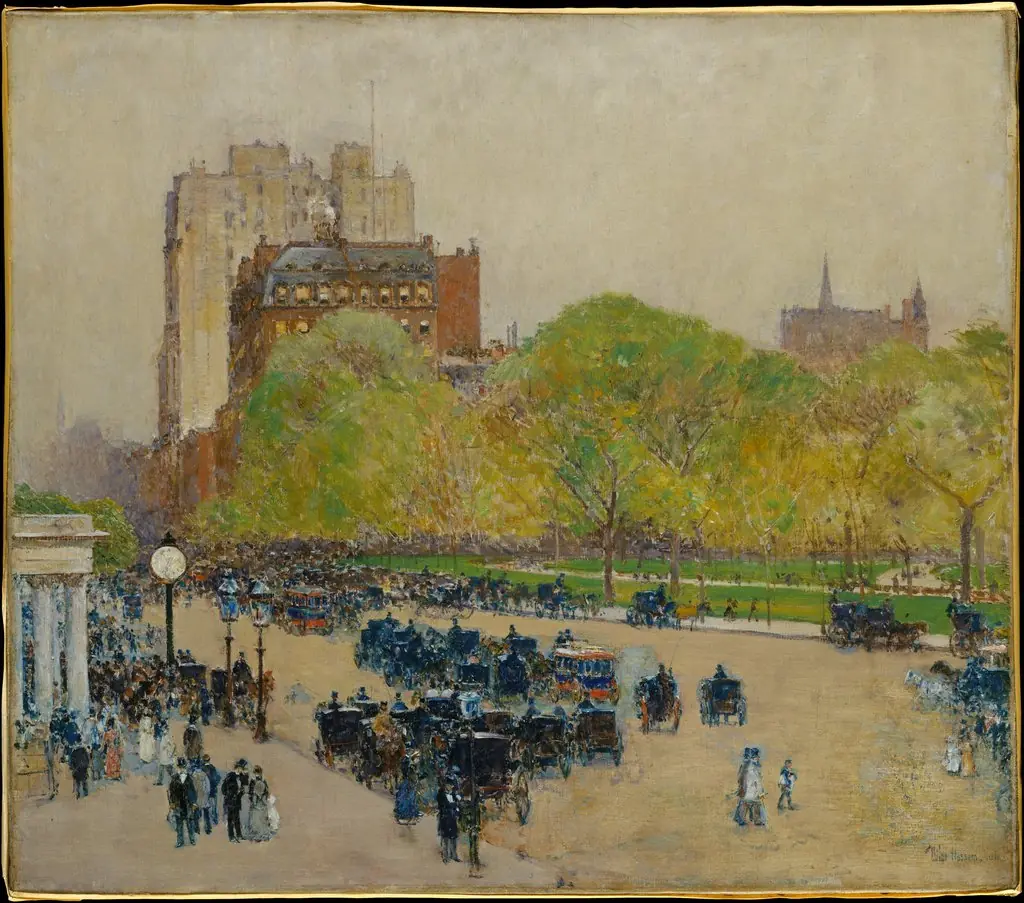
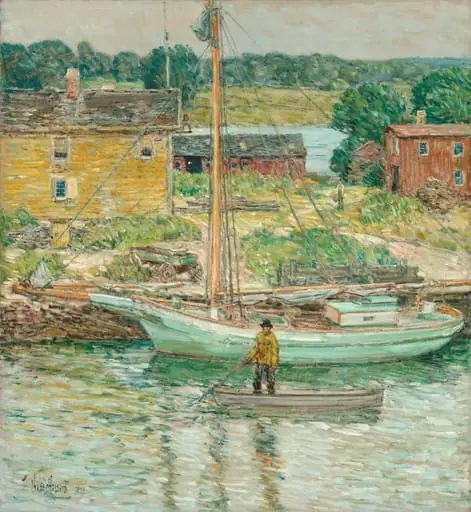
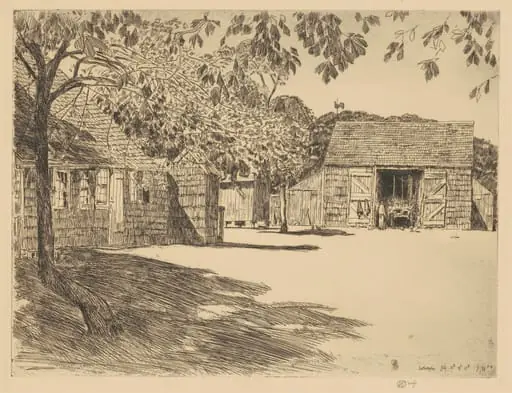 The Old Mulford Farm
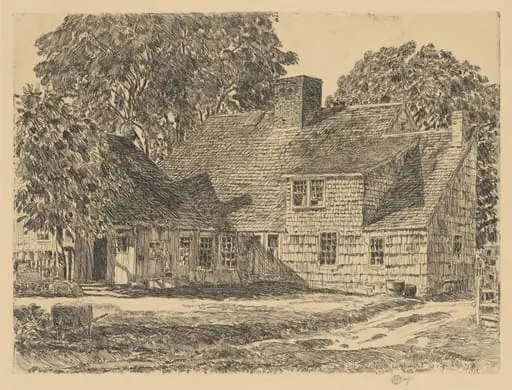 Old Dominy House
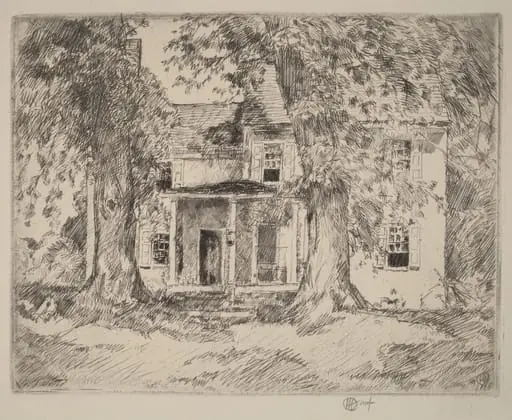 Washington's Headquarters near Valley Forge
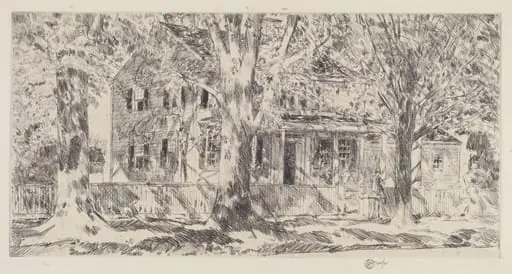 House on the Main Street, Easthampton
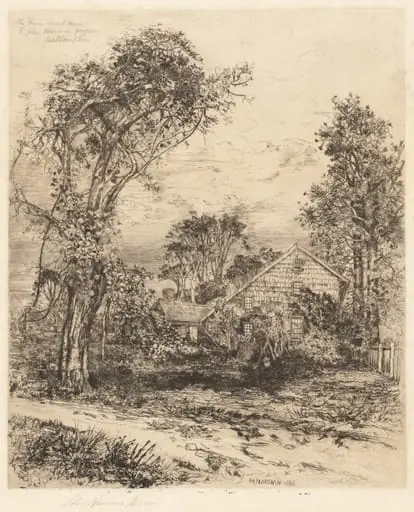 Home, Sweet Home
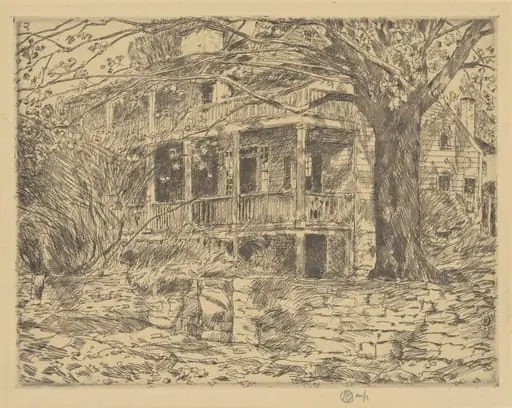 The Old House, Cos Cob
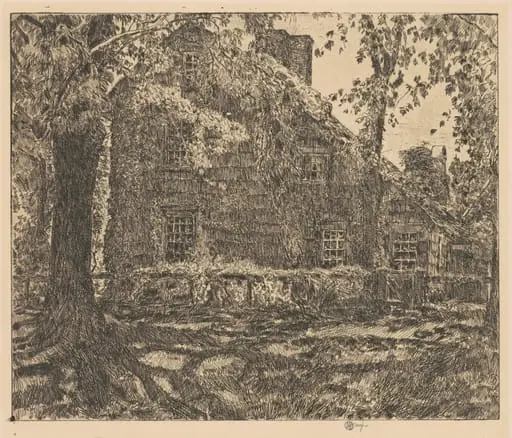 The "Home Sweet Home" Cottage, Easthampton
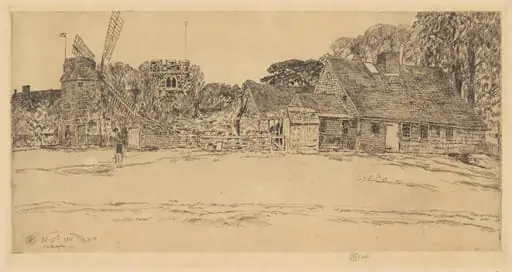 The Heart of Easthampton
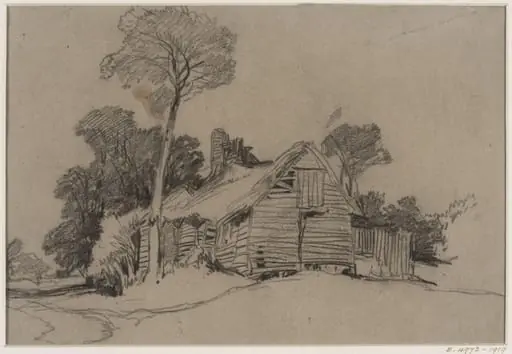 The Ness, Shaldon, Devon
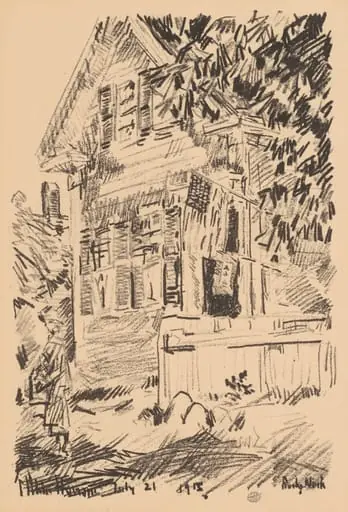 The Service Flag
 The Nurse (La Nourrice)
 Lindsay Row, Chelsea