Artwork
The Ness, Shaldon, Devon
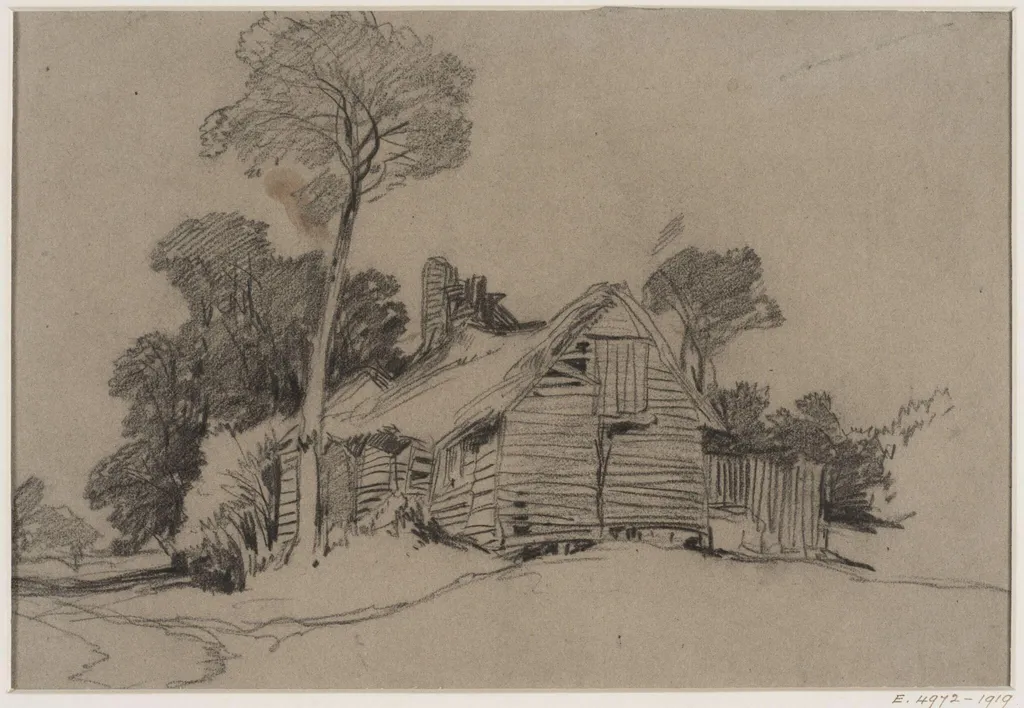
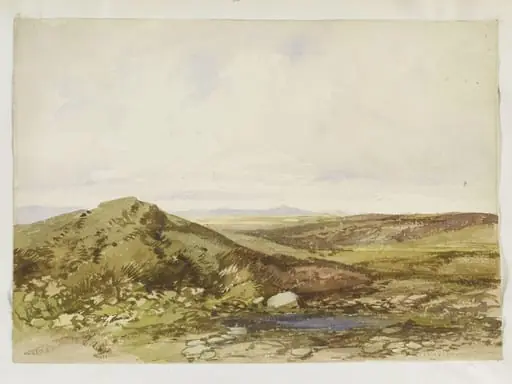
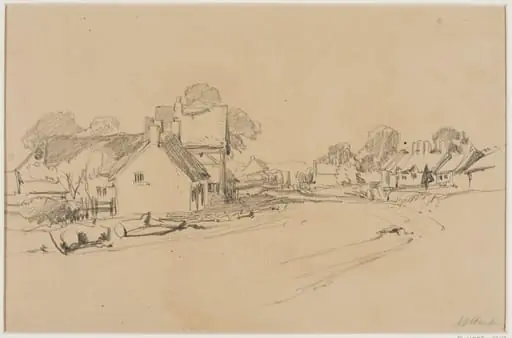
The Ness, Shaldon, Devon is a drawing by the Impressionist artist James Duffield Harding. It dates from 14 and is held in the collection of the Victoria and Albert Museum.
About this work
Overview
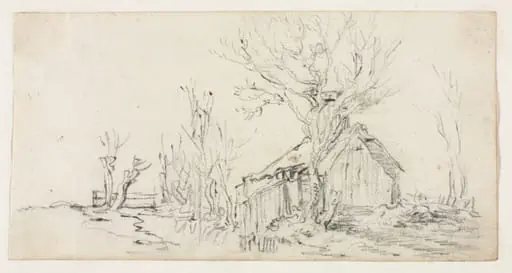
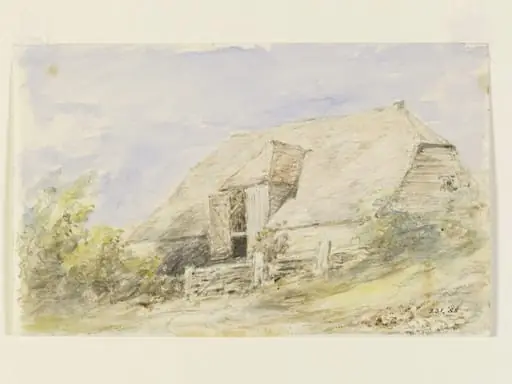
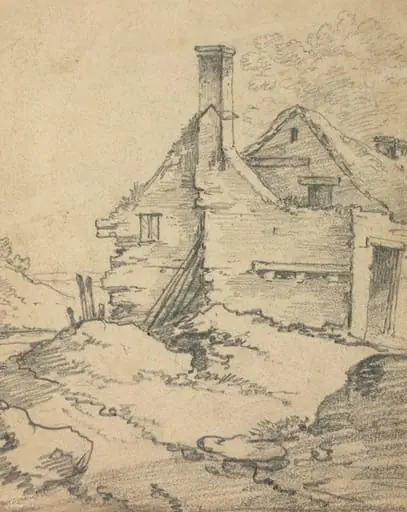
James Duffield Harding’s charcoal drawing portrays a modest wooden cottage, its thatched roof partially collapsed, set within a grove of trees. The composition captures a tranquil, rural scene, emphasizing the interplay of light and shadow across the structure and surrounding foliage.
Subject & Meaning
The work focuses on a solitary, weather‑worn dwelling surrounded by a natural landscape, suggesting themes of decay and the passage of time. The inclusion of a winding path and a low fence hints at human presence while the overall mood remains contemplative and still.
Technique & Style
Executed in charcoal with occasional hints of brown and gray, the drawing employs loose, gestural strokes that convey texture and atmosphere rather than precise detail. Soft shading defines the forms of the roof, walls, and trees, while the limited color accents maintain the sketch‑like quality of the piece.
History & Provenance
Created by the 19th‑century British artist James Duffield Harding, the drawing reflects his interest in rural subjects and landscape studies. The piece is part of a collection that includes similar works documenting English countryside scenes.
Context
During Harding’s career, drawing served both as a preparatory tool for larger paintings and as an independent medium for capturing fleeting impressions of nature. This work aligns with the broader Victorian fascination with pastoral nostalgia and the documentation of disappearing rural architecture.
Artist & collection
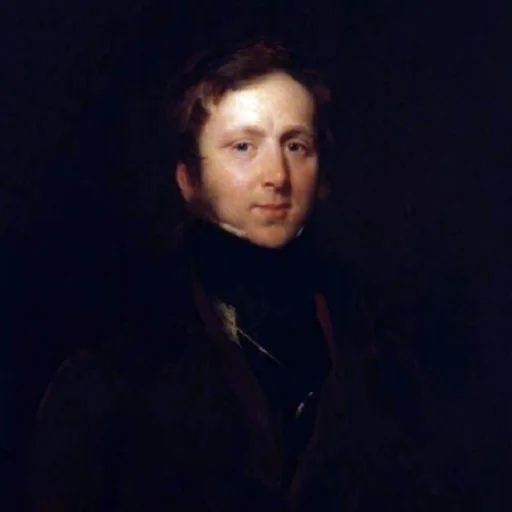
Artist
James Duffield Harding (1798 – 4 December 1863) was a British landscape painter, lithographer and author of drawing manuals. His use of tinted papers and opaque paints in watercolour proved influential.