Artwork
Oriental with a Turban, Three-Quarter View
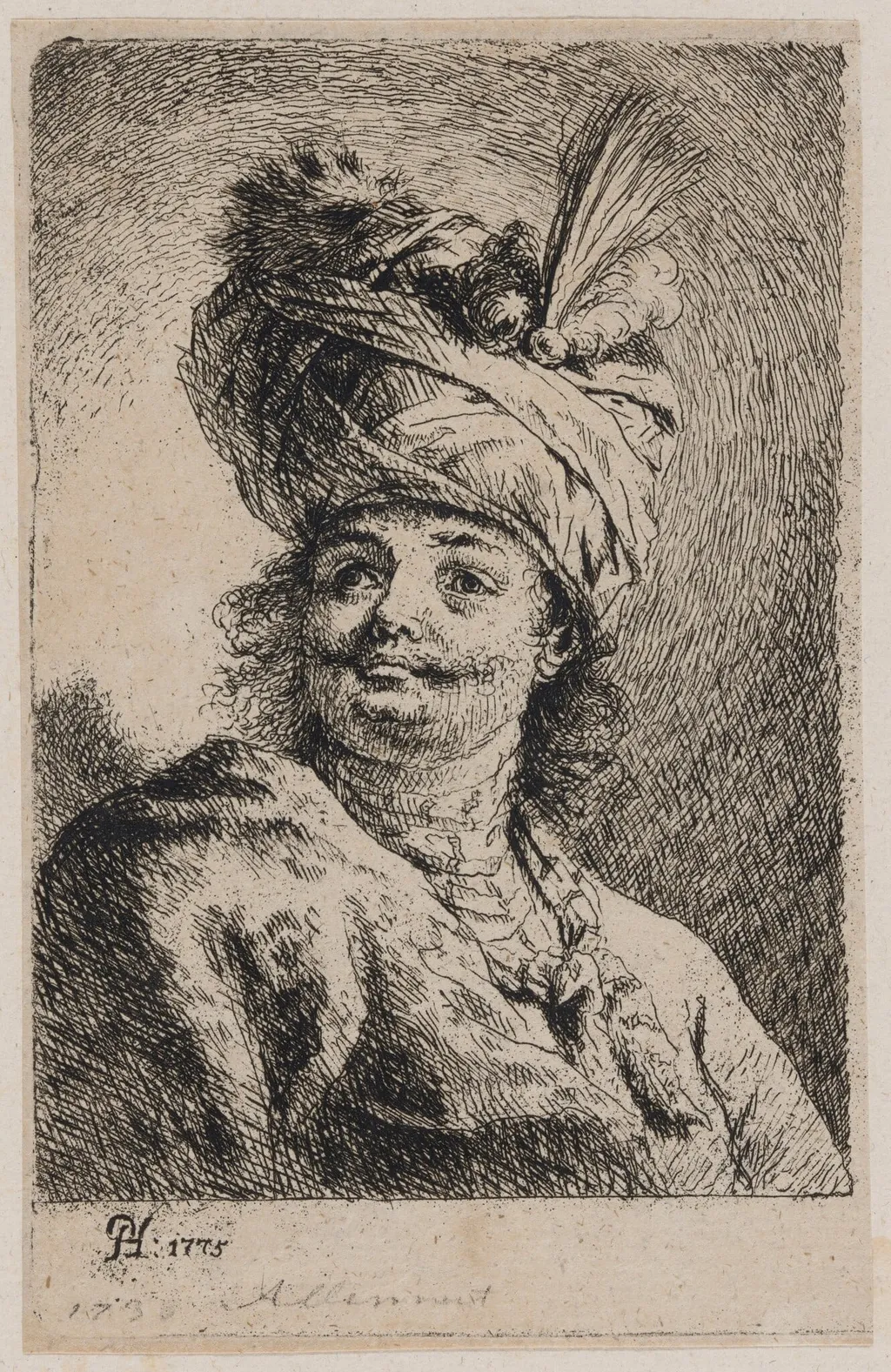
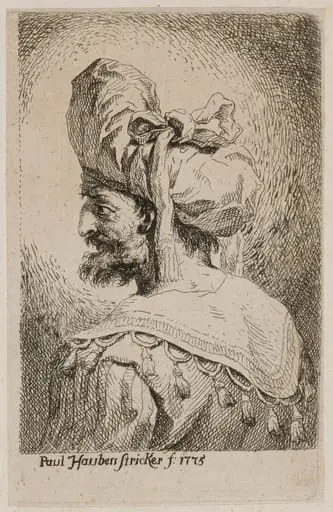
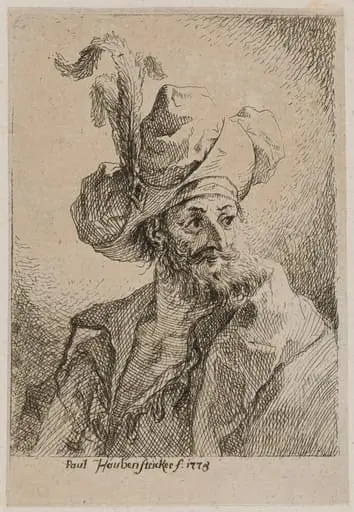
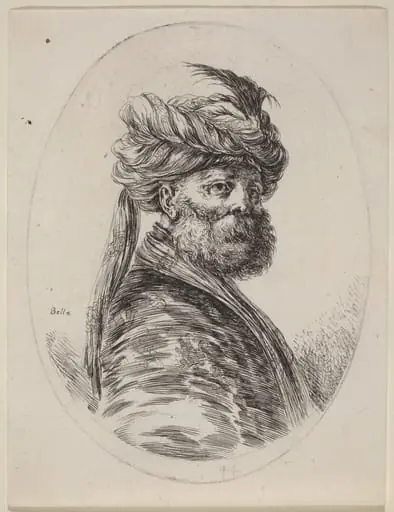
Oriental with a Turban, Three-Quarter View is an ink print by the Romanticist artist Paul Haubenstricker. It dates from 1775 and is held in the collection of the National Gallery of Art. Paul Hausenstricker’s 1775 etching titled “Oriental with a Turban, Three‑Quarter View” presents a monochrome portrait on laid paper.
About this work
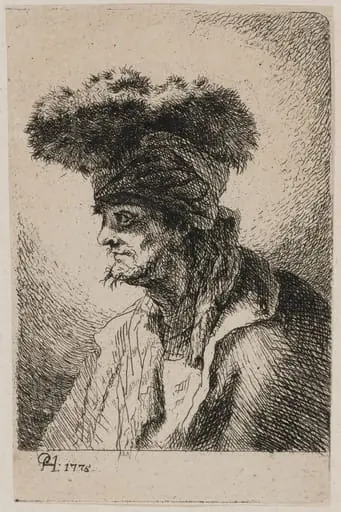
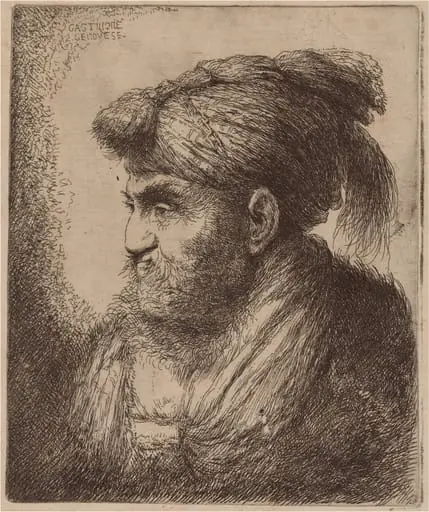
The artist used a technique that leaves visible marks from the etching tool, making the feathers and fur look rough and detailed.
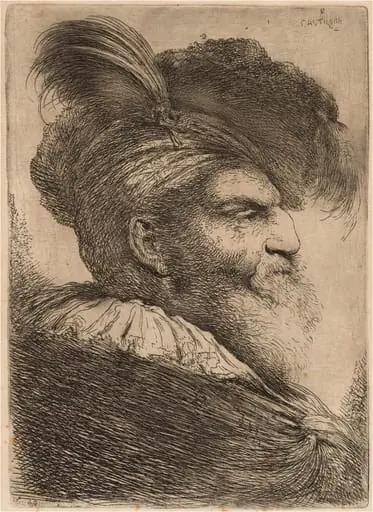
This is a black-and-white etched portrait of a man wearing a tall, feathered turban. His face is turned slightly to the side, showing a strong jawline and a serious expression. The lines are loose and scratchy, giving the image a textured, almost sketchy feel.
The artist used a technique that leaves visible marks from the etching tool, making the feathers and fur look rough and detailed. This was made in 1775 by someone named Haubenstricker.
If you like this style, check out more about etching.
Overview
Paul Hausenstricker’s 1775 etching titled “Oriental with a Turban, Three‑Quarter View” presents a monochrome portrait on laid paper. The composition captures a seated figure whose head is adorned with a tall, feather‑filled turban, while his gaze is directed slightly off‑center, emphasizing a pronounced jaw and a composed expression.
Subject & Meaning
The work depicts a male figure dressed in an exotic costume, reflecting 18th‑century European fascination with Oriental attire. The turban, rendered with elaborate plume, signals status and cultural otherness, while the restrained facial demeanor suggests a dignified, perhaps introspective, presence rather than overt narrative.
Technique & Style
Hausenstricker employed traditional copper‑plate etching, allowing the burin’s marks to remain visible. This deliberate roughness gives the feathers and fur a tactile quality, while the overall line work is loose and sketch‑like, creating a sense of immediacy that contrasts with the precise rendering of facial features.
History & Provenance
Created in 1775, the print is attributed to Hausenstricker, a lesser‑known German printmaker active in the late Baroque period. Documentation of its original circulation is scarce, but the piece survives in museum collections, indicating it was likely distributed among connoisseurs of prints during its contemporary era.
Own this work as a print
Artist & collection