Artwork
The Stables, Youngsbury
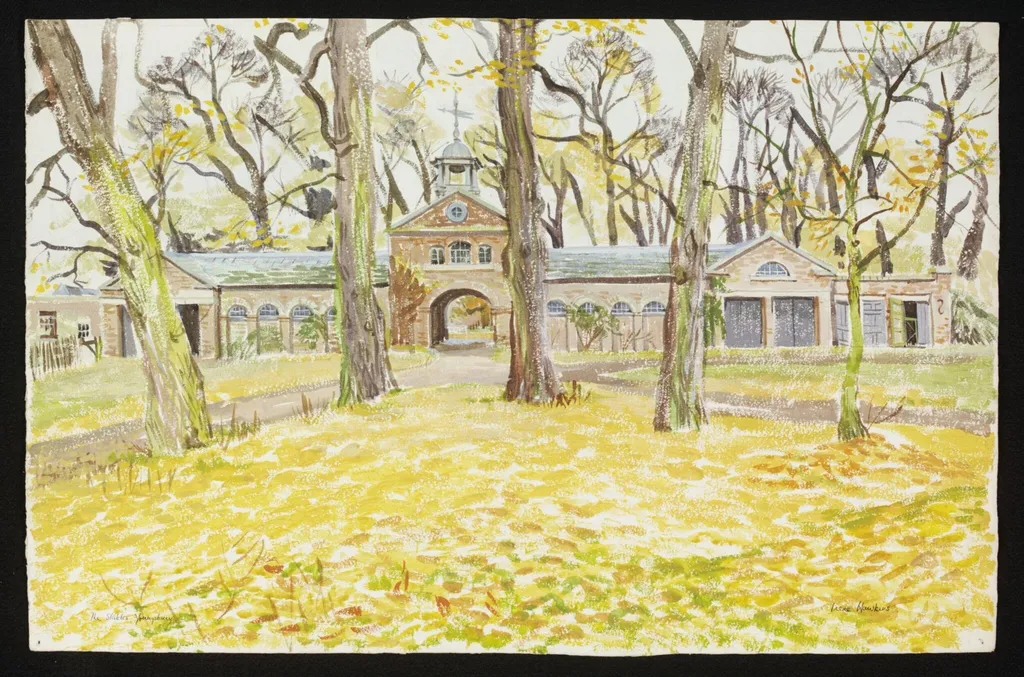
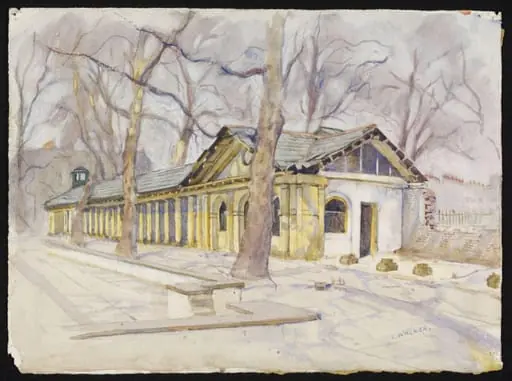
The Stables, Youngsbury is a watercolor work on paper by the Social Realist artist Hawkins. It is held in the collection of the Victoria and Albert Museum.
About this work
Overview
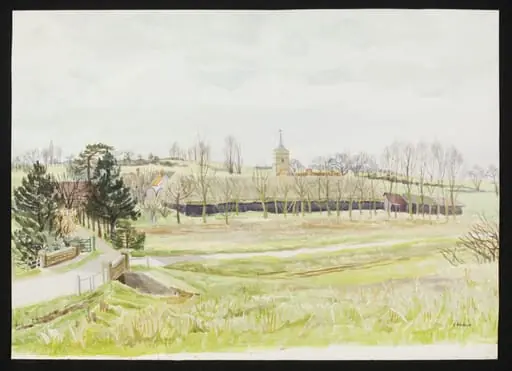
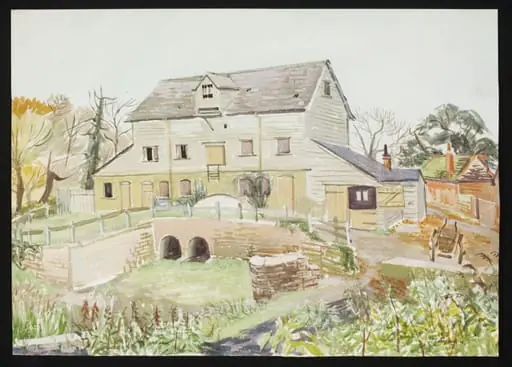
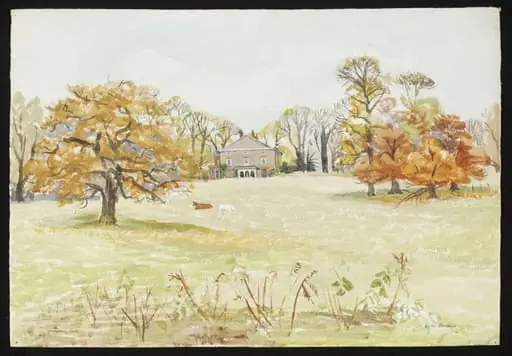
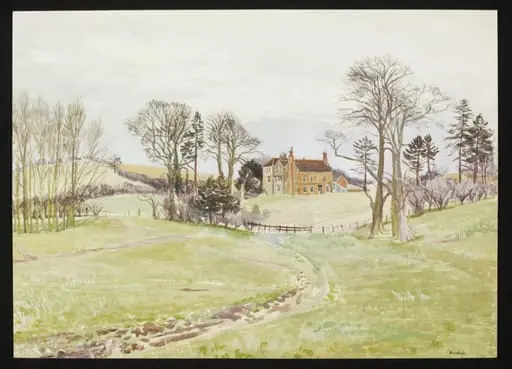
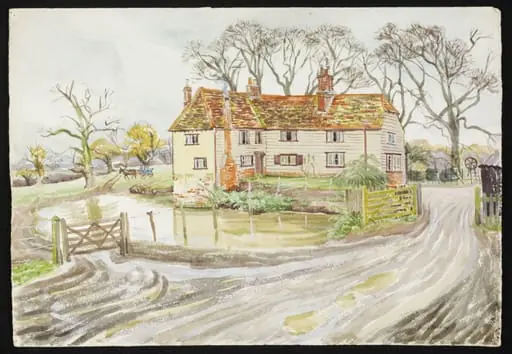
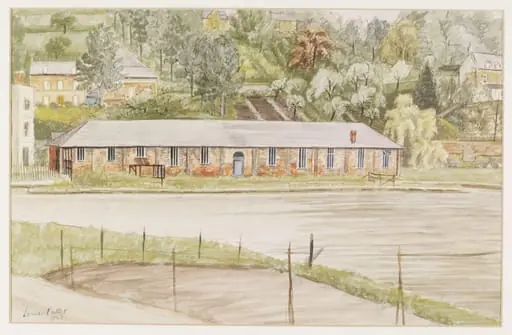
The Stables, Youngsbury is a 1940 watercolour painting by Hawkins, depicting the 18th-century Palladian stables of Youngsbury manor house, set amidst a wooded landscape.
Subject & Meaning
The painting captures a serene scene of the stables, emphasizing architectural detail and natural surroundings, reflecting the wartime effort to document and preserve British heritage.
Technique & Style
Executed in watercolour, the work features a predominantly earthy palette with accents of yellow, conveying a sense of calm through soft, blended brushstrokes and meticulous rendering of architectural and natural elements.
History & Provenance
Commissioned under the 'Recording Britain' project (1940-1943), a Ministry of Labour initiative funded by the Pilgrim Trust, aimed at employing artists to record British landscapes and buildings during WWII.
Context
Created amidst wartime, the painting served as part of a larger national project to bolster identity and morale by documenting vulnerable cultural and architectural treasures.
Legacy
As part of the 'Recording Britain' collection, The Stables, Youngsbury contributes to a comprehensive archive of Britain's pre-war landscape, though the artist's individual prominence in this context is less defined.
Artist & collection
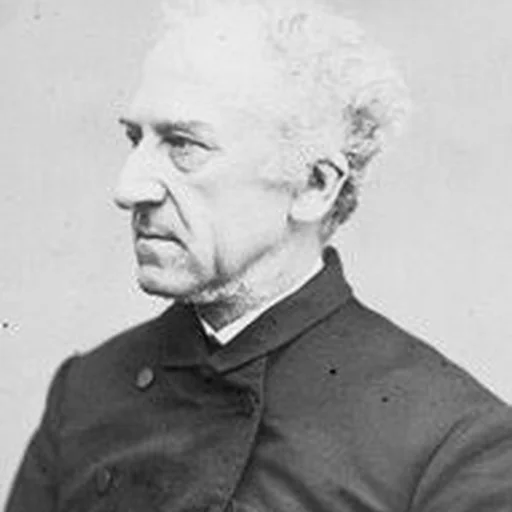
Artist
Benjamin Waterhouse Hawkins (8 February 1807 – 27 January 1894) was an English sculptor and natural history artist renowned for his work on the life-size models of dinosaurs in the Crystal Palace Park in south London.