Artwork
Study for "Queen Victoria"
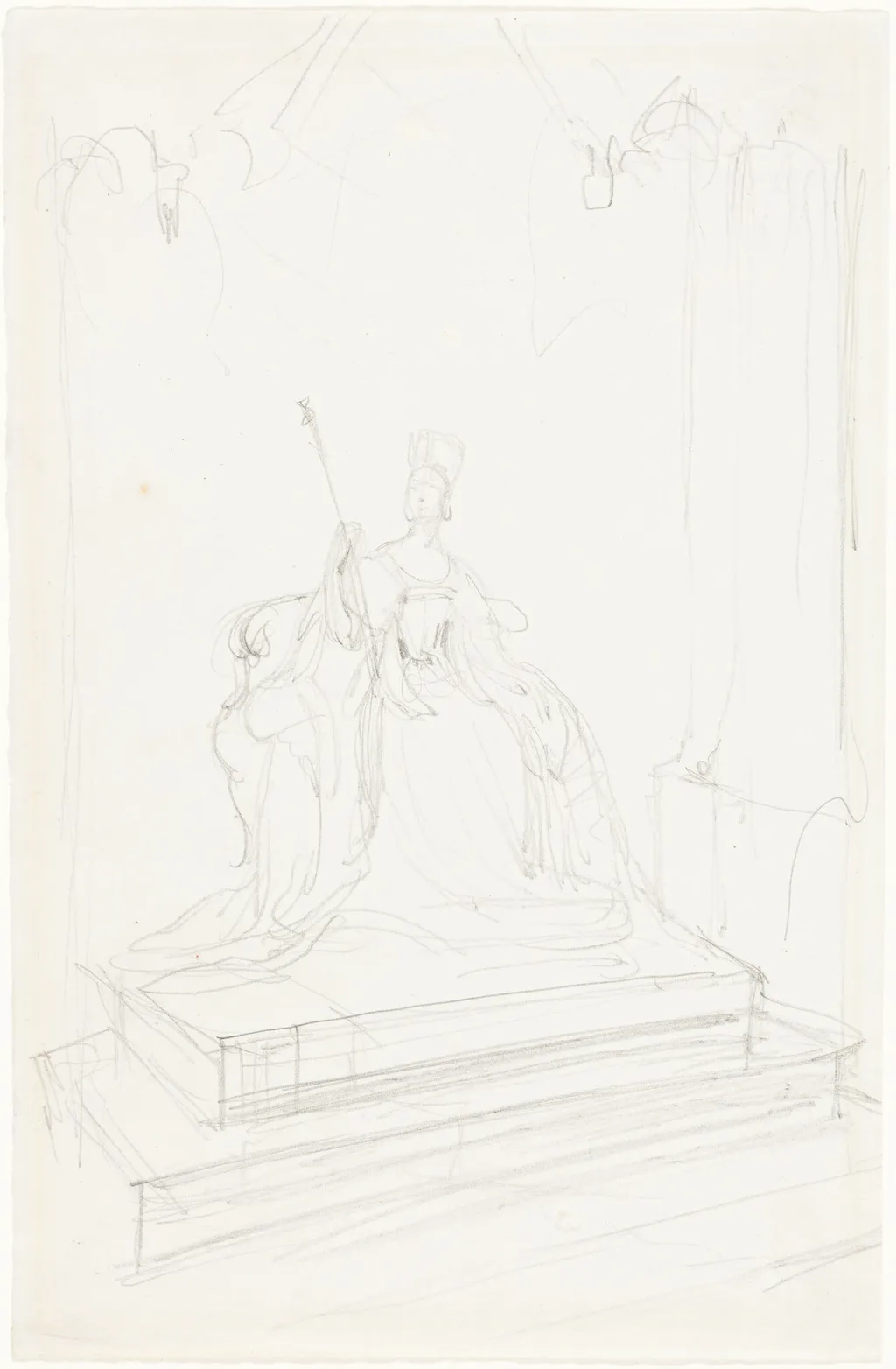
Study for "Queen Victoria" is a graphite drawing by the Romanticist artist George, Sir Hayter. It dates from 1838 and is held in the collection of the National Gallery of Art. Created in 1838 by Sir George Hayter, this graphite study served as a preparatory sketch for a larger portrait of Queen Victoria.
About this work
Overview
Created in 1838 by Sir George Hayter, this graphite study served as a preparatory sketch for a larger portrait of Queen Victoria. Executed on wove paper, the drawing captures the essential pose and regalia intended for the final work, offering insight into Hayter’s planning process.
Subject & Meaning
The figure is a standing woman, identified as Queen Victoria, positioned on a raised platform. She wears a full-length dress and a crown, holding a scepter aloft in her right hand while her left hand rests on the back of a nearby chair, emphasizing royal authority and composure.
Technique & Style
Hayter employs bold, confident graphite lines with minimal shading, relying on clear contours and simple geometric forms to define the composition. The lack of extensive tonal modeling highlights the drawing’s function as a structural study rather than a finished rendering.
History & Provenance
The sketch was produced as part of Hayter’s commission to create a formal portrait of the young monarch. It remained in the artist’s studio archives before entering a public collection, where it is now displayed as an example of 19th‑century preparatory work.
Context
Hayter, a prominent portraitist of the Victorian era, frequently produced detailed studies before executing large oil paintings. This drawing reflects the conventions of royal portraiture at the time, where symbolic objects such as the crown and scepter were integral to affirming sovereign legitimacy.
Artist & collection


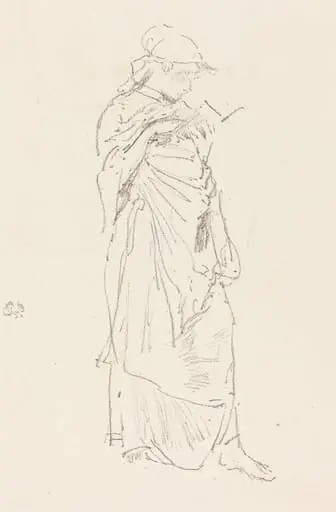 The Novel: Girl Reading
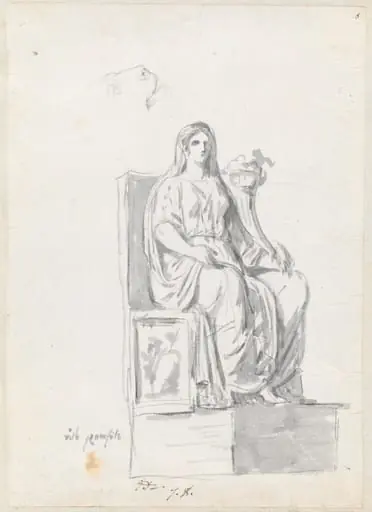 Abundance and the Face of a Lion, from the Villa Pamphili
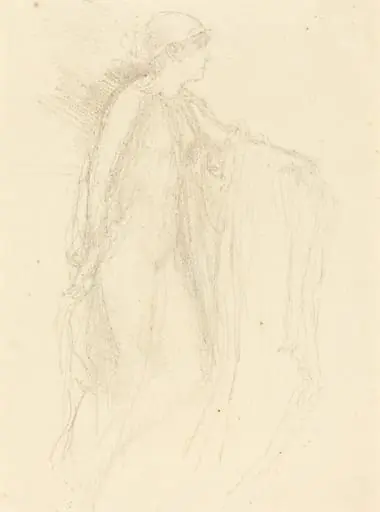 The Cap
![Woman and Smaller Male Figure on Grand Stairway [recto], by Hubert Robert](https://artifactworldgallery.com/img/hubert-robert--woman-and-smaller-male-figure-on-grand-stairway-recto--637e2104bb3633b6-w320.webp) Woman and Smaller Male Figure on Grand Stairway [recto]
Woman and Smaller Male Figure on Grand Stairway [recto]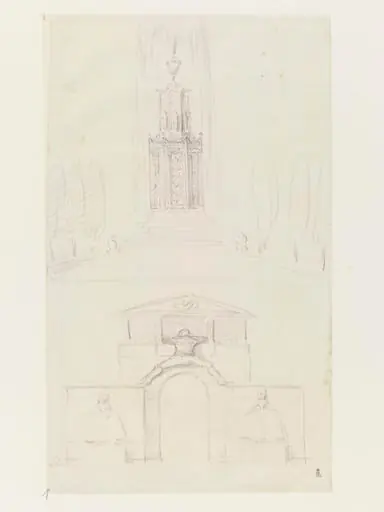 Pencil drawing of a fountain and entryway
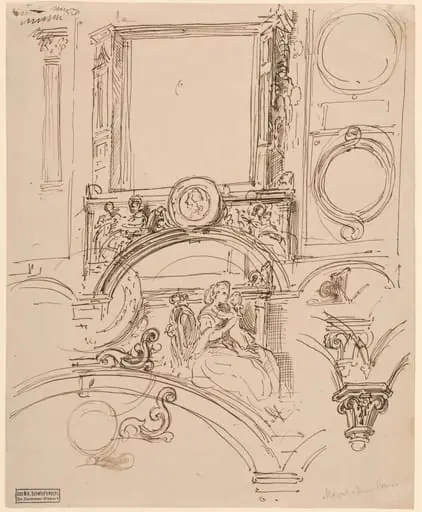 Architectural Details for a Wall Decoration with Empress Maria Theresia Embracing the Young Wolfgang Amadeus Mozart
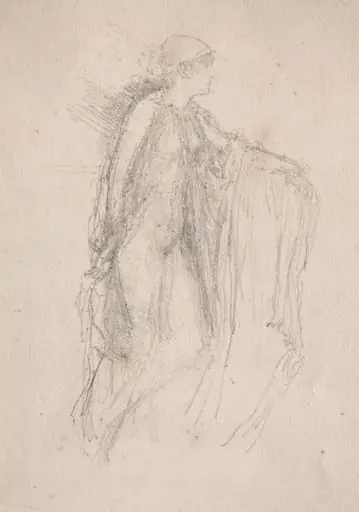 The Cap
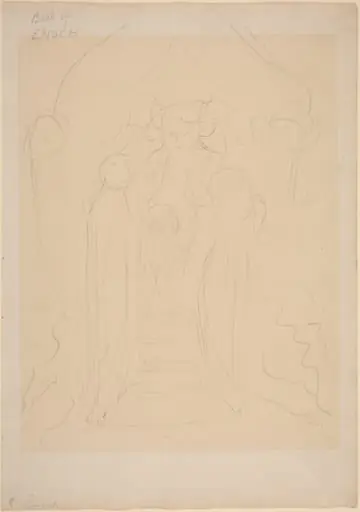 Enoch before the Great Glory