Artwork
The Laying Out of Christ
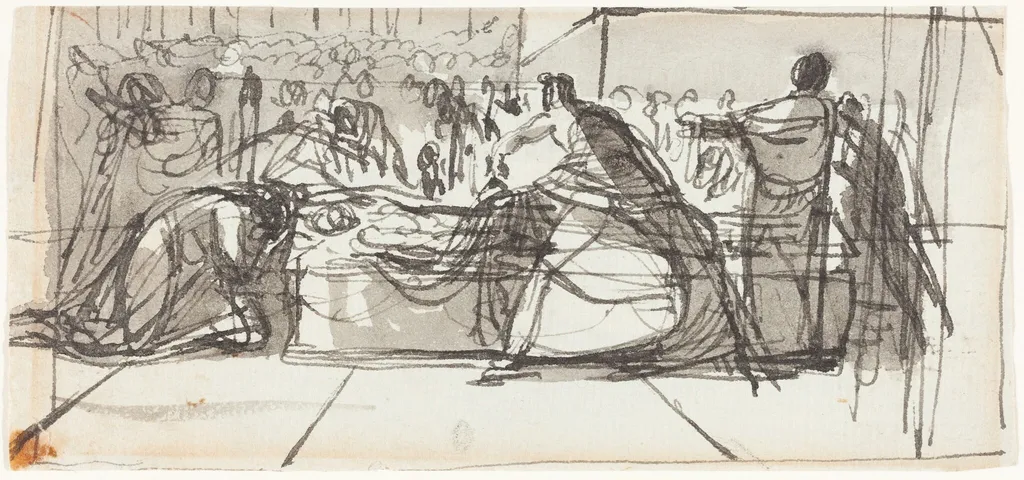
The Laying Out of Christ is an ink drawing by the Romanticist artist George, Sir Hayter. It dates from 1832 and is held in the collection of the National Gallery of Art.
About this work
Overview
The drawing entitled *The Laying Out of Christ* was executed in 1832 by Sir George Hayter. Rendered with pen and black ink complemented by a gray wash on blue‑laid paper, the work records a solemn moment from the Christian narrative. It is catalogued as a religious drawing and measures roughly the size of a standard sheet, allowing the artist’s swift line work to dominate the composition.
Subject & Meaning
A small group of figures gathers around the lifeless form, some positioned close to the body, others receding into the background.
The image captures the moment after Christ’s crucifixion when his body is laid out for mourners. A small group of figures gathers around the lifeless form, some positioned close to the body, others receding into the background. The arrangement emphasizes communal grief and the ritual of preparation for burial, reflecting 19th‑century devotional practices and the theological focus on Christ’s sacrifice.
Technique & Style
Hayter employed a loose, gestural line that conveys immediacy, while layers of gray wash deepen shadows and suggest volume. The ink is applied in overlapping strokes, creating a subtle gradation of tone that intensifies the somber atmosphere. The blue‑tinged paper provides a cool undertone, allowing the black and gray marks to stand out sharply, a characteristic approach in Hayton’s preparatory studies.
History & Provenance
Created in the early 1830s, the drawing belongs to a period when Hayter was establishing his reputation as a portraitist and history painter. Although originally a study for a larger composition, the piece entered private collections before being acquired by a museum in the mid‑20th century. Its provenance traces a typical path from artist’s studio to institutional holdings, underscoring its value as a documentary work.
Artist & collection


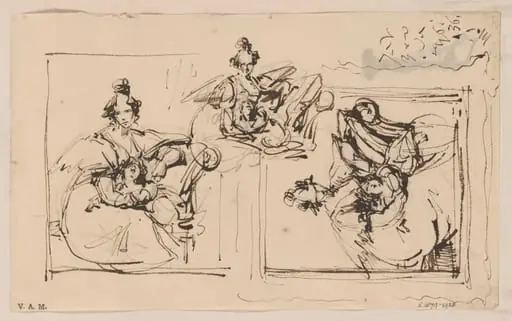 Three studies for a portrait of a Western woman and child
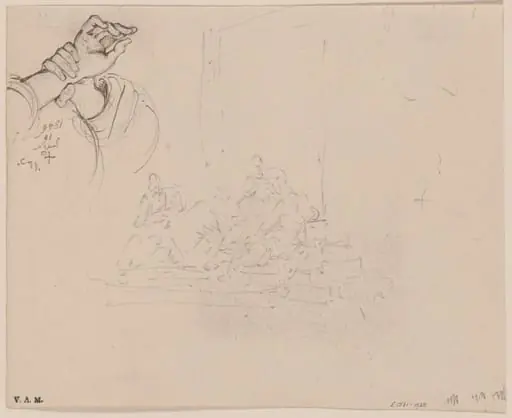 Clasped hands, and a sketch of Chinese figures
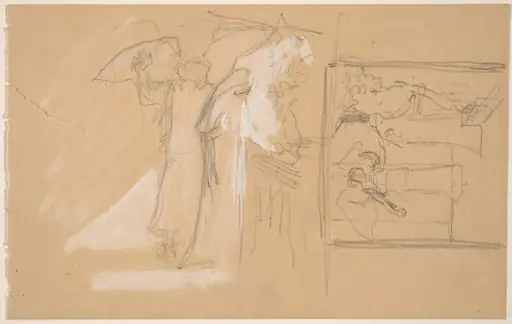 Studies for a Panel
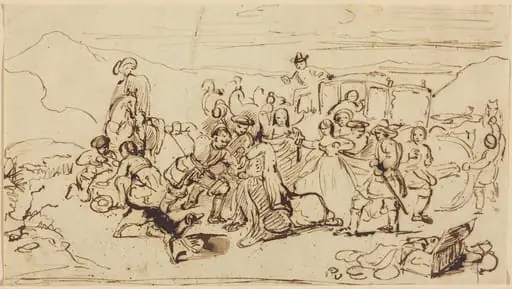 The Murder of Archbishop Sharpe
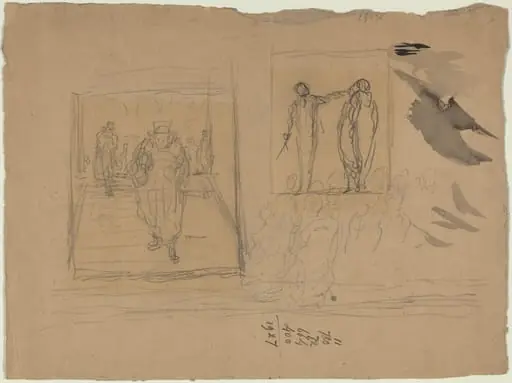 Scene in a Palace of Justice
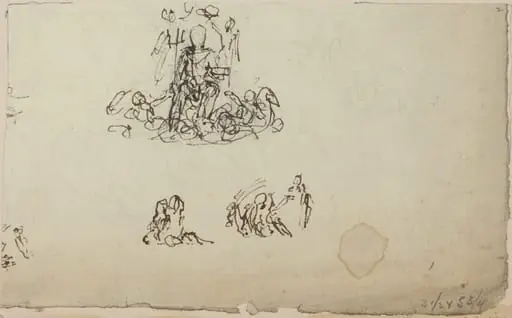 Study of Neptune and Sea Creatures (?)
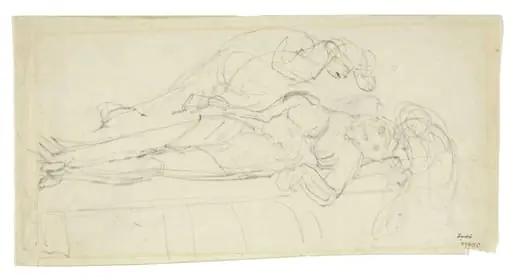 The death of the strong, wicked man
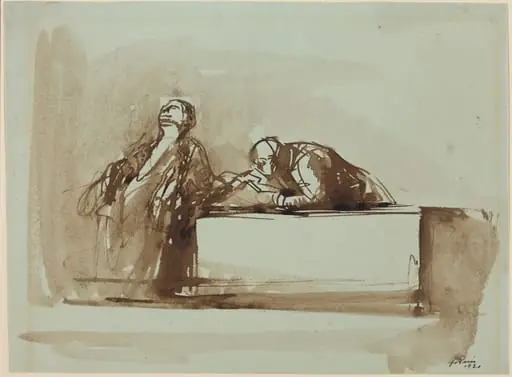 Men of Justice
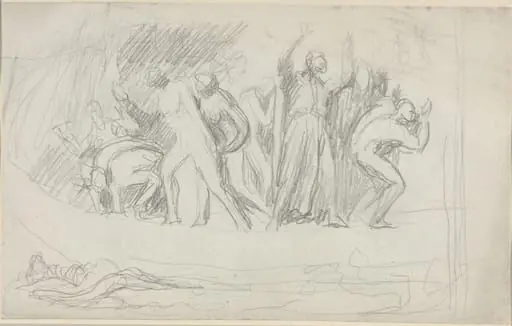 Study for "The Deluge"
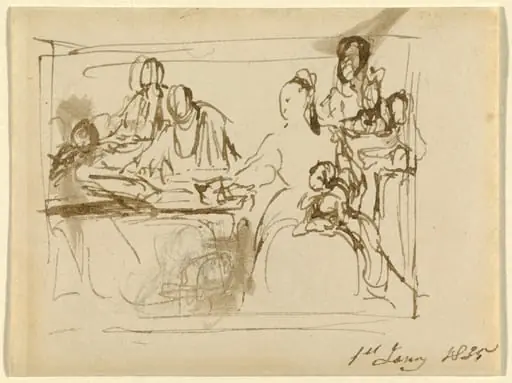 A Family Group
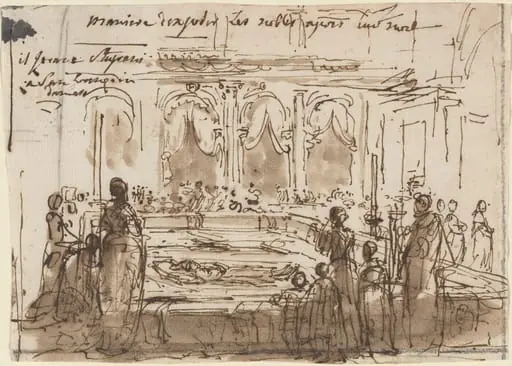 Maniere d'exposer les nobles apres leur mort
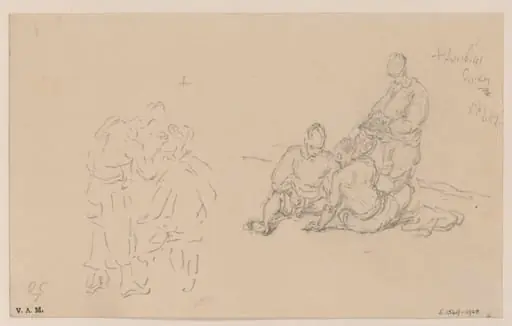 Two sketches of groups of Chinese figures