Artwork
The Triumph of Job
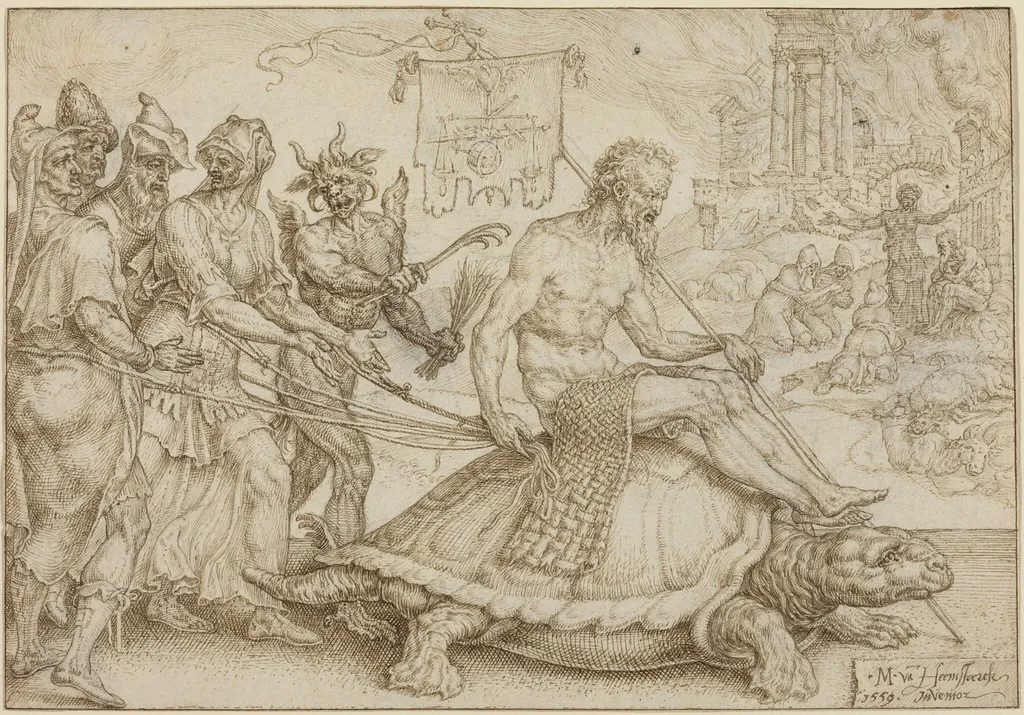
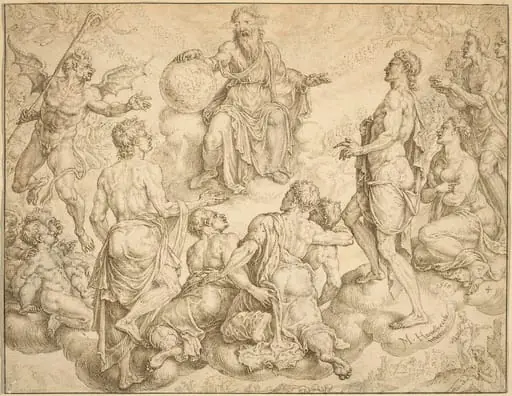
The Triumph of Job is an ink drawing by the Renaissance artist Maerten van Heemskerck. It dates from 1559 and is held in the collection of the National Gallery of Art.
About this work
Overview
Created in 1559, this drawing by Maerten van Heemskerck depicts a biblical narrative through delicate penwork and subtle chalk accents. Executed on laid paper, the piece combines fine ink lines with incised contours to define form and texture. Its medium and scale suggest it was intended as a preparatory study or independent work for private contemplation rather than public display.
Subject & Meaning
The composition emphasizes quiet dignity over dramatic spectacle, reflecting Protestant ideals of endurance and faith.
The drawing illustrates the biblical story of Job, focusing on his restoration after suffering. Heemskerck portrays Job surrounded by family and wealth, symbolizing divine recompense. The composition emphasizes quiet dignity over dramatic spectacle, reflecting Protestant ideals of endurance and faith. Figures are arranged with deliberate stillness, inviting reflection rather than emotional outburst.
Technique & Style
Heemskerck employed fine pen strokes to delineate figures and drapery, layered with light chalk for tonal softness. Incised lines, made by scratching the paper’s surface, add subtle definition to folds and contours. The restrained palette of brown ink and white highlights enhances the drawing’s intimacy. His style merges Northern European precision with Italianate compositional balance, learned during his time in Rome.
History & Provenance
The drawing was completed during Heemskerck’s later years in Haarlem, after his return from Italy. It remained in private collections through the 17th and 18th centuries before entering a public museum collection in the 19th century. Its survival in good condition reflects careful handling and early recognition of its artistic value among collectors of Northern Renaissance works.
Context
Produced during the Reformation, the image of Job resonated with Protestant audiences who valued personal faith and divine justice. Heemskerck, influenced by Italian art yet rooted in Dutch tradition, adapted classical forms to biblical themes. This work aligns with a broader trend of using biblical narratives to explore moral resilience amid religious and political upheaval in the Low Countries.
Legacy
The drawing stands as a refined example of Heemskerck’s mature style, illustrating how Northern artists synthesized Italian compositional principles with local devotional sensibilities. Though not widely exhibited, it has informed scholarly understanding of 16th-century religious drawing practices. Its quiet intensity continues to be studied for its technical subtlety and narrative restraint.
Artist & collection


![Battle of the Sea Gods [left half], by Andrea Mantegna](https://artifactworldgallery.com/img/andrea-mantegna--battle-of-the-sea-gods-left-half--084dd803fb0016b2-w320.webp)