Artwork
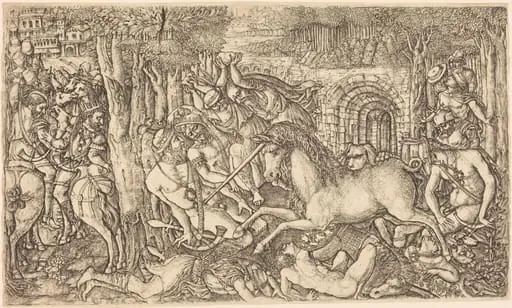
Huntsman Presenting a Gift to a King
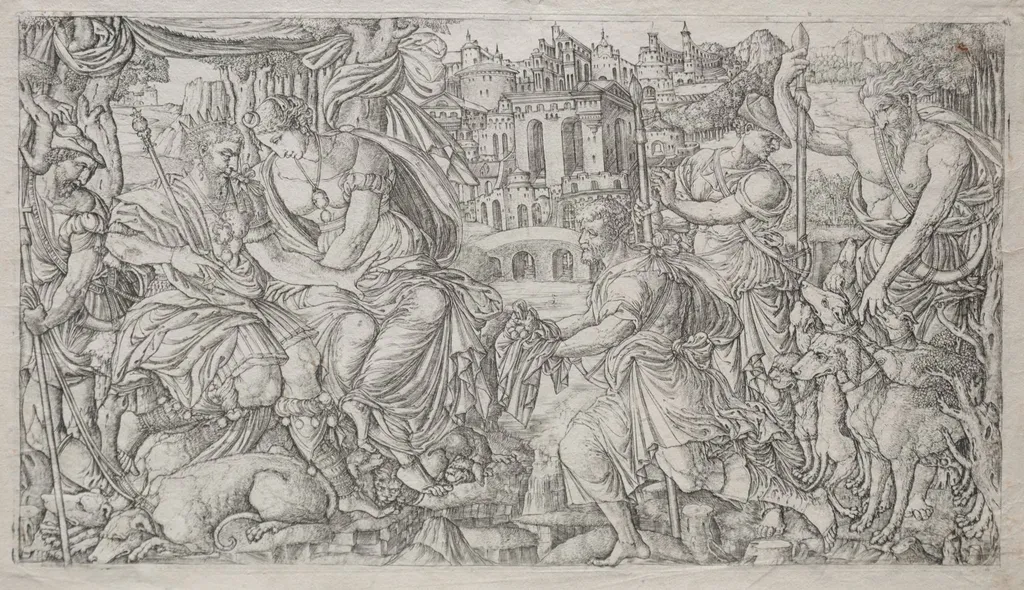
Huntsman Presenting a Gift to a King is a print by the Renaissance artist Jean Duvet. It dates from 1551 and is held in the collection of the Cleveland Museum of Art.
About this work
Overview
Jean Duvet, a French goldsmith and engraver active from the late 15th to mid-16th century, produced *Huntsman Presenting a Gift to a King* around 1551.
Jean Duvet, a French goldsmith and engraver active from the late 15th to mid-16th century, produced *Huntsman Presenting a Gift to a King* around 1551. One of approximately 73 known engravings by him, the work exemplifies his distinctive approach to printmaking, diverging from the polished aesthetics of his contemporaries. Duvet is recognized as the first major French printmaker whose style blended meticulous detail with an expressive, almost folk-like intensity.
Subject & Meaning
The scene depicts a huntsman offering a gift to a seated monarch, likely symbolizing loyalty, tribute, or the connection between nobility and the natural world. The king, adorned in regal garments, occupies a position of authority, while the huntsman, dressed plainly and carrying hunting equipment, embodies a humble yet respected role. The inclusion of a distant castle and forest suggests a world beyond the court, reinforcing themes of hierarchy and the interdependence of social orders.
Technique & Style
Duvet employed fine, dense linework to render textures in fabric, armor, and architecture, creating a tactile richness. His use of chiaroscuro enhances spatial depth, directing focus to the central figures. Unlike the balanced compositions typical of Italian Renaissance prints, Duvet’s work embraces asymmetry and crowded detail, lending a sense of urgency and emotional immediacy. His style, often likened to later visionary artists, prioritizes expressive power over classical harmony.
History & Provenance
The engraving has been held in the collection of The Cleveland Museum of Art since at least the mid-20th century. While its early ownership history is not fully documented, its survival in good condition reflects its continued appreciation among collectors of Northern Renaissance prints. Duvet’s works were relatively rare outside France during his lifetime, making this print a significant artifact of early French graphic art.
Context
Created during the height of the French Renaissance, the print reflects a period when printmaking was gaining status as an independent art form. Duvet worked in a cultural milieu influenced by both Italian humanism and Northern European detail-oriented traditions. His focus on religious and allegorical subjects aligned with broader devotional trends, yet his idiosyncratic style set him apart from mainstream academic practices of the time.
Legacy
Duvet’s engravings, including this one, were largely overlooked until the 19th century, when their emotional intensity and unconventional forms attracted renewed interest. His work is now seen as a bridge between medieval manuscript illumination and the expressive potential of printmaking. Though not widely influential in his own era, he is recognized today as a singular voice in French Renaissance art, valued for his originality and technical daring.
Artist & collection

Artist
Jean Duvet (1485 – after 1562) was a French Renaissance goldsmith and engraver, now best known for his engravings.

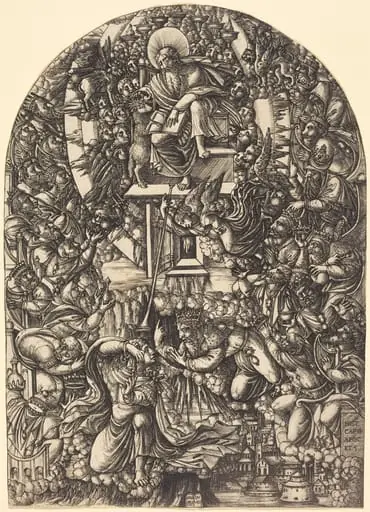
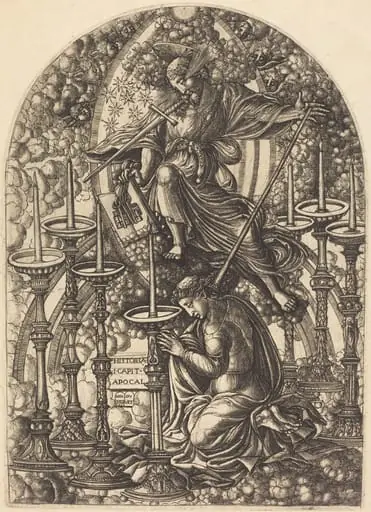
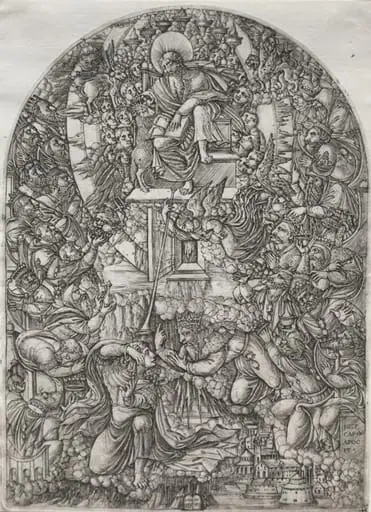 The Apocalpse: St. John Summoned to Heaven
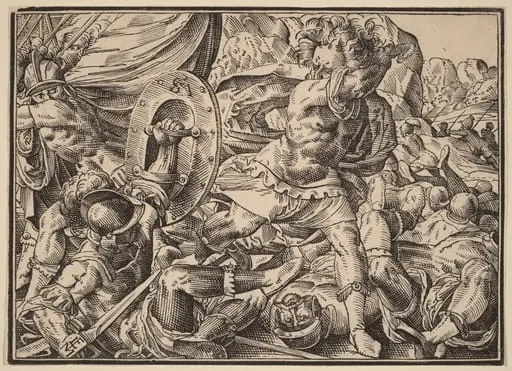 Christ Tells His Disciples of the Last Judgment
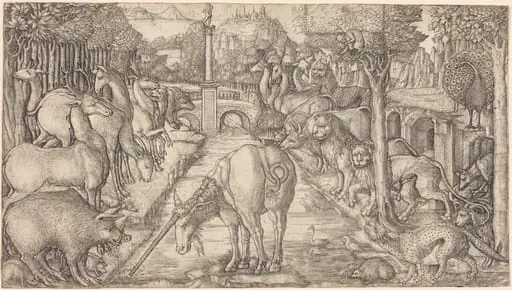
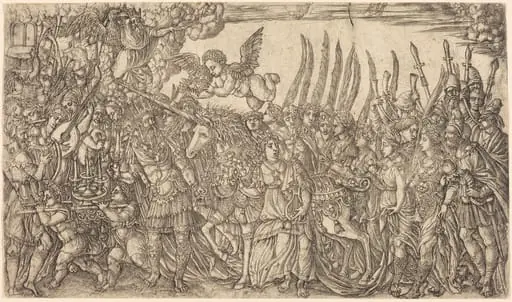 The Triumph of the Unicorn
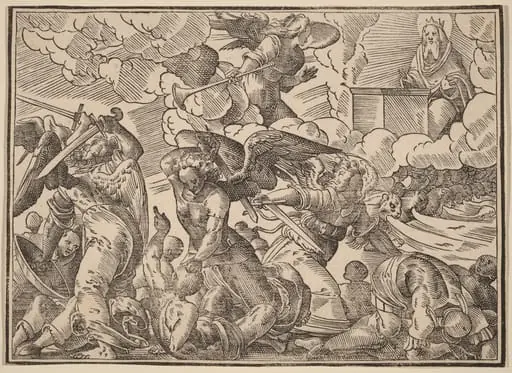 The Four Horsemen of the Apocalypse
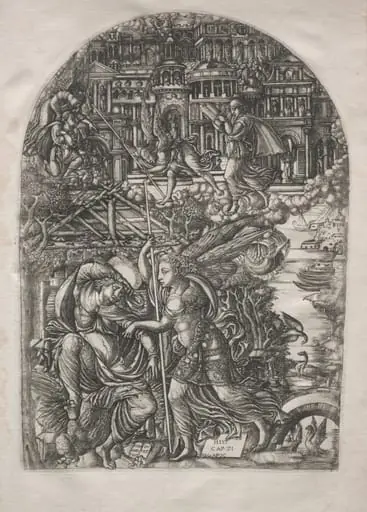 The Apocalypse: The Angel Shows St. John the New Jerusalem
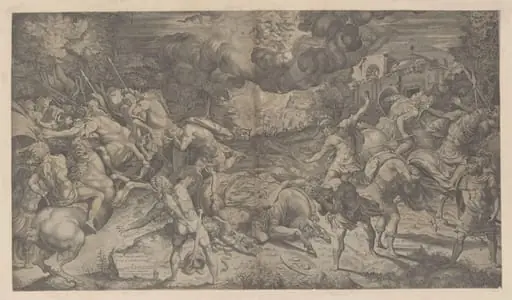 Conversion of Saul
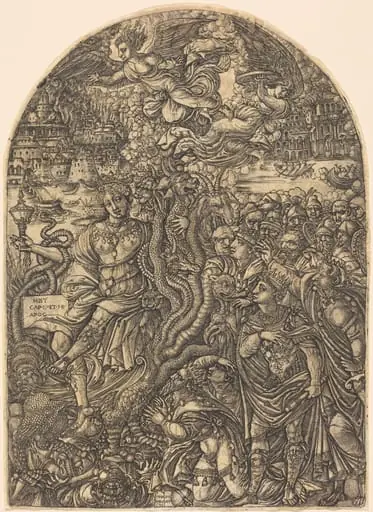 The Babylon Harlot
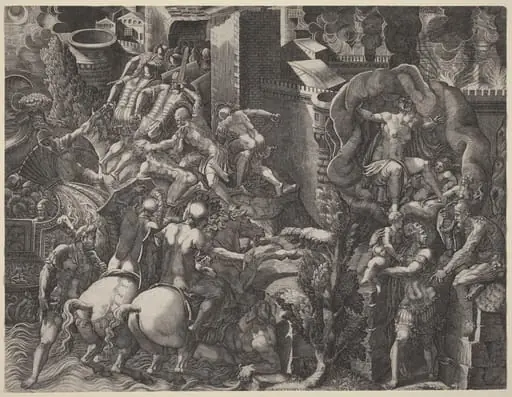 The Fall of Troy and the Escape of Aeneas
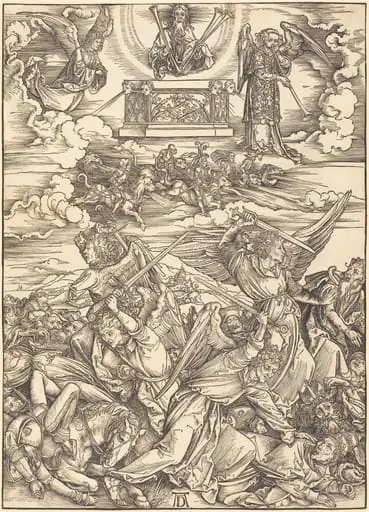 The Four Avenging Angels
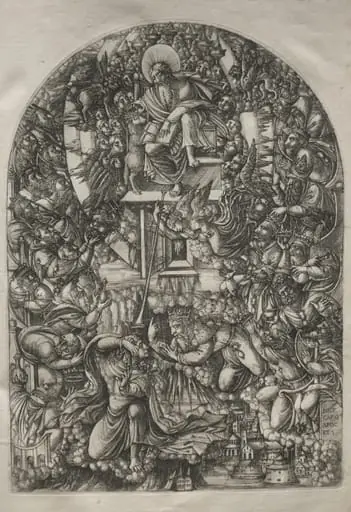 The Apocalypse: St. John Summoned to Heaven