Artwork
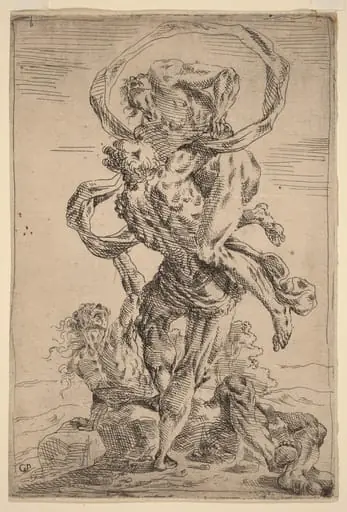
Hercules and the Hydra
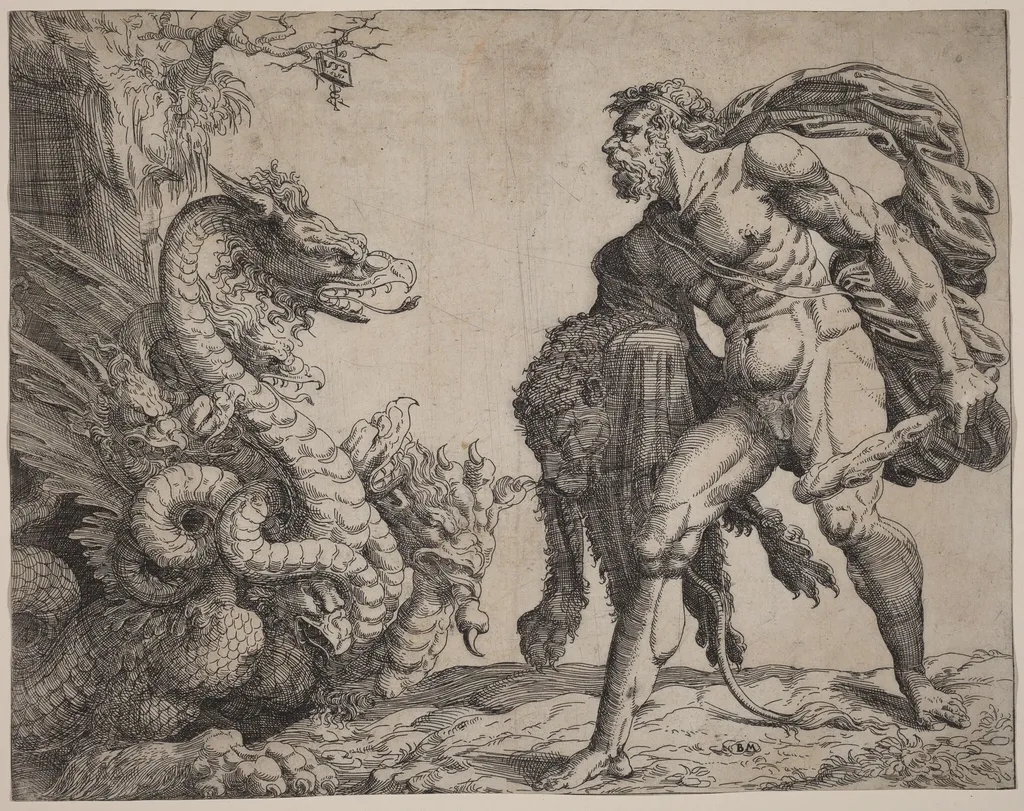
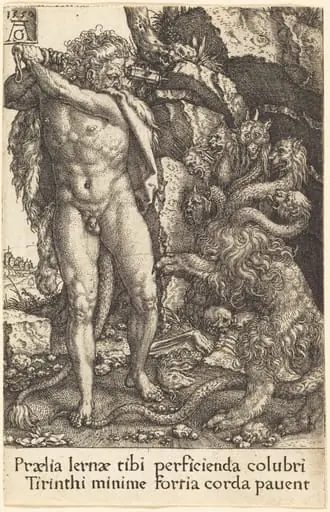
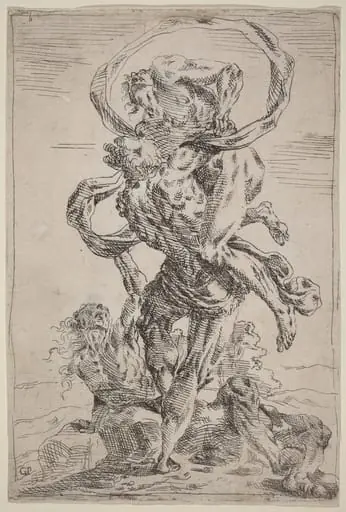
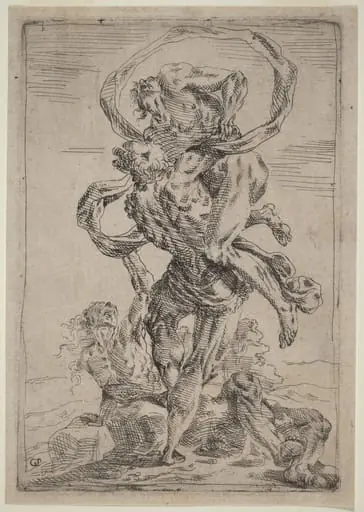
Hercules and the Hydra is an ink print by the Renaissance artist Battista Angolo del Moro. It dates from 1552 and is held in the collection of the National Gallery of Art.
About this work
Overview
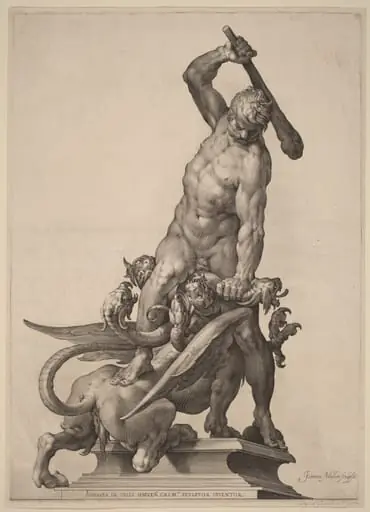
The print, titled *Hercules and the Hydra*, is an etching on laid paper created in 1552 by the Italian printmaker Angolo del Moro, also known as Battista. It presents the hero Heracles confronting the many‑headed Lernaean Hydra within a wooded setting, emphasizing the violent clash between the two mythic figures.
Subject & Meaning
The composition illustrates the moment when Hercules, club raised, strikes at the serpent’s multiple necks, while blood streams from the severed heads. The scene captures the classical theme of heroic struggle against a seemingly endless threat, reflecting the Renaissance fascination with ancient mythology as a vehicle for moral and physical triumph.
Technique & Style
Del Moro combined traditional etching with dry‑point incisions, a method that yields softer, velvety lines alongside the sharper etched marks. This hybrid approach renders the Hydra’s scaled surface and the tensioned musculature of Hercules with contrasting textures, while the overall line work remains vigorous and slightly irregular, conveying the chaos of battle.
History & Provenance
The work dates to the mid‑sixteenth century, a period when Italian printmakers frequently revisited mythological subjects for both decorative and instructional purposes. Although specific ownership records are scarce, the print is catalogued among del Moro’s known oeuvre and appears in several nineteenth‑century collections of Renaissance prints.
Context
Produced during the height of the Italian Renaissance, the image aligns with contemporary humanist interests in classical antiquity. The choice of Hercules, a symbol of strength and virtue, reflects the era’s emphasis on moral exemplars drawn from ancient narratives, often employed in educational and decorative contexts.
Own this work as a print
Artist & collection