Artwork
Print Collection
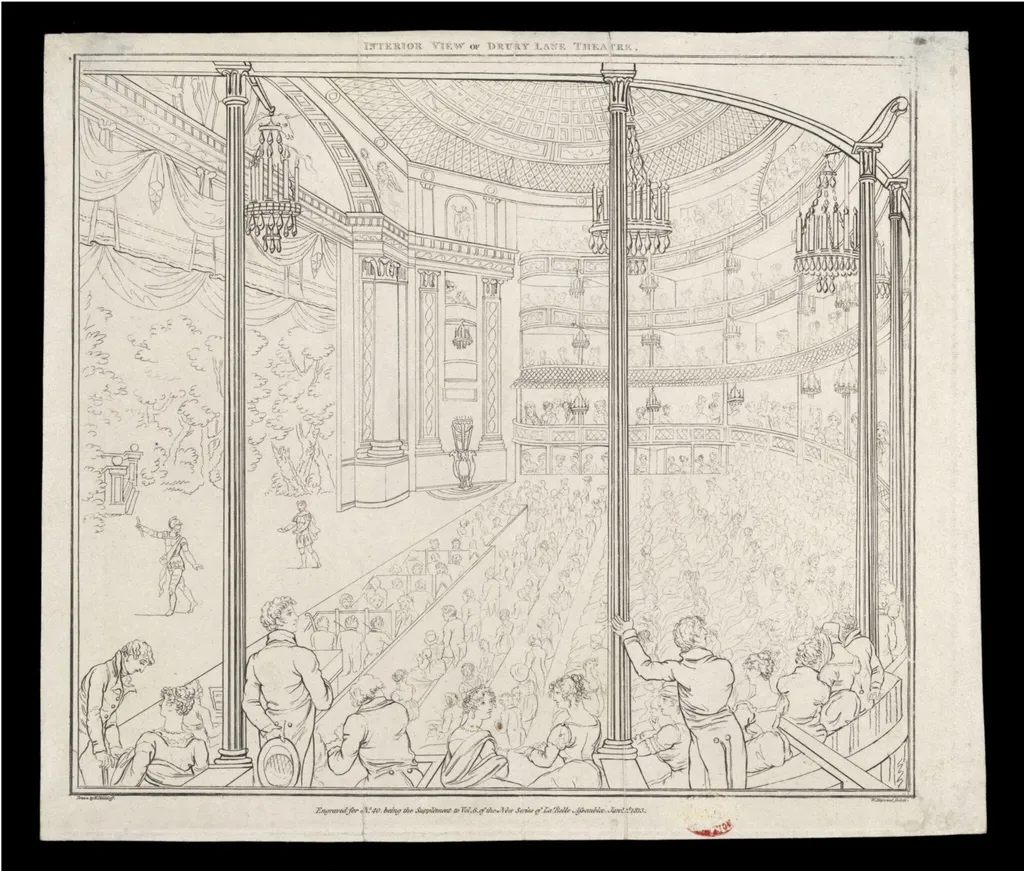
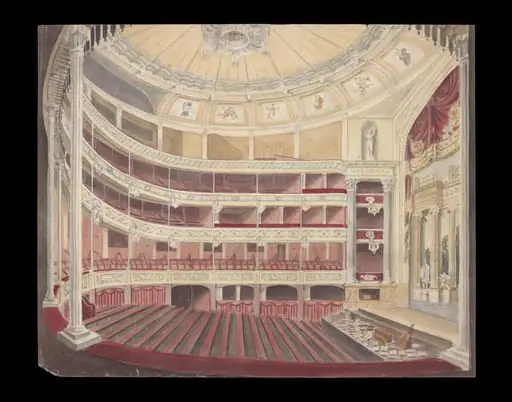
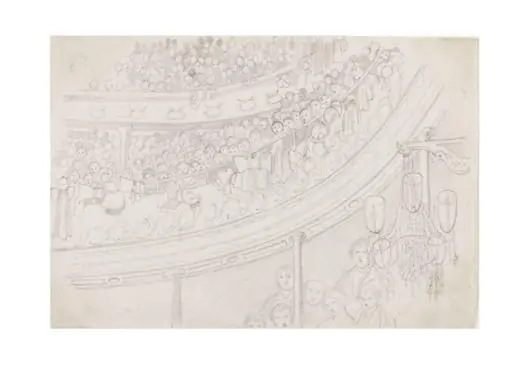
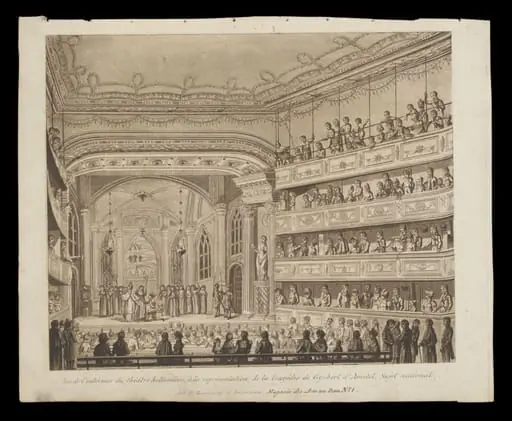
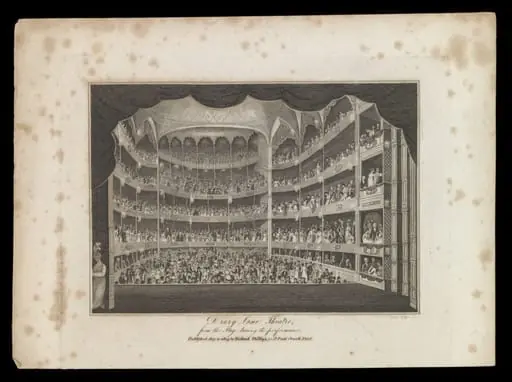
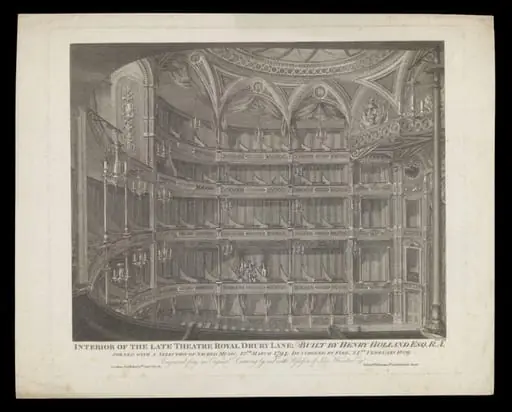
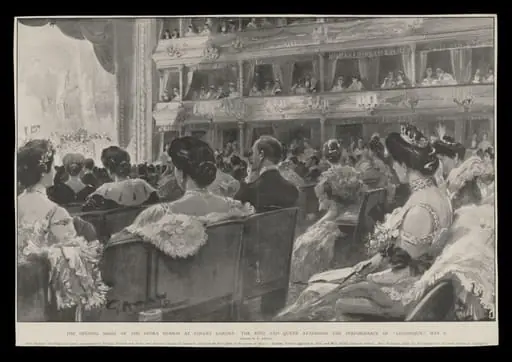
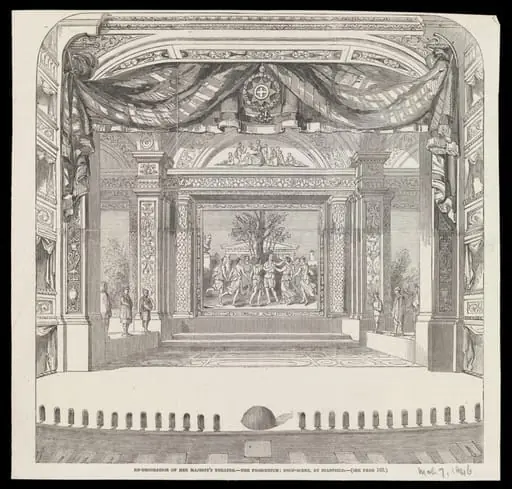
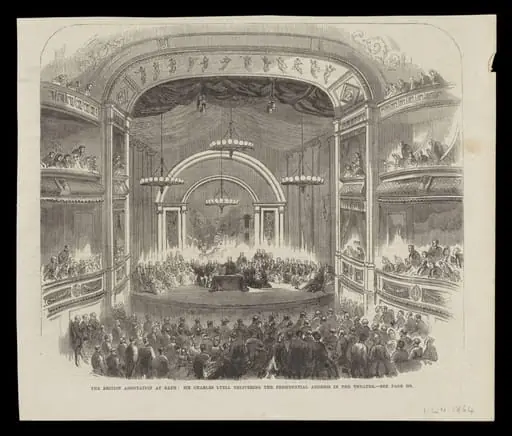
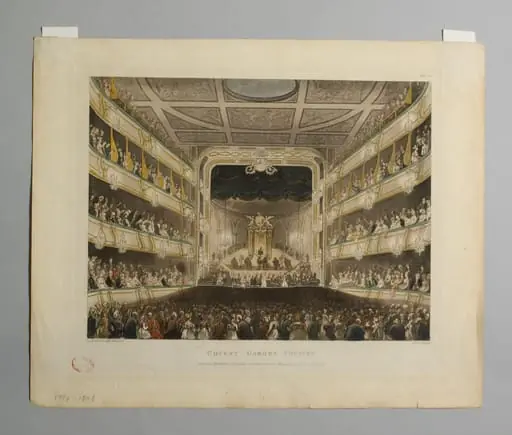
Print Collection is a print by the Romanticist artist N. Heideloff. It dates from 1813 and is held in the collection of the Victoria and Albert Museum. This 1813 print captures the interior of London’s Theatre Royal, Drury Lane, as seen from the left side of the first balcony.
About this work
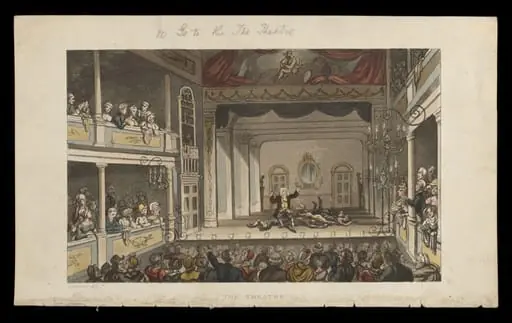
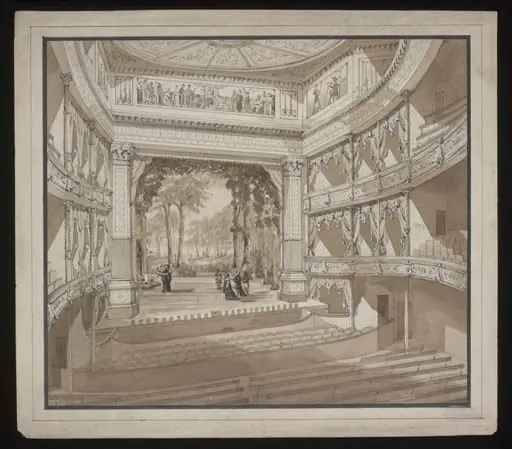
This print shows London’s Drury Lane Theatre alive in 1813. The view is from the left side of the first balcony, facing the stage.
The stage glows with Roman soldiers and a painted forest backdrop. Down below, the orchestra plays while the audience chats in the stalls and balconies.
The whole scene is lit by candle chandeliers and packed with people.
Look up the Victoria and Albert Museum next.
Overview
This 1813 print captures the interior of London’s Theatre Royal, Drury Lane, as seen from the left side of the first balcony.
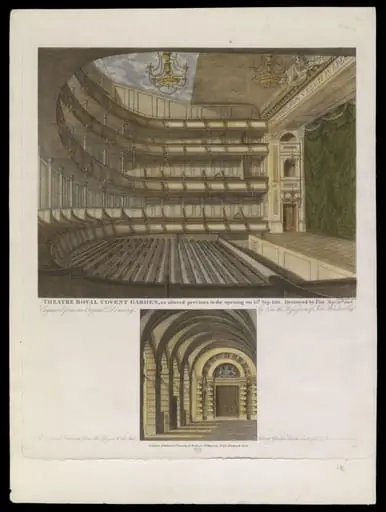
This 1813 print captures the interior of London’s Theatre Royal, Drury Lane, as seen from the left side of the first balcony. Published by La Belle Assemblee, it presents a detailed view of the auditorium during a performance, with the stage, orchestra pit, and seating tiers filled with spectators. The composition emphasizes the social atmosphere of the theater, rendered in precise line work and subtle tonal gradations.
Subject & Meaning
The scene depicts a classical theatrical performance featuring Roman soldiers before a painted forest backdrop, suggesting a historical or mythological drama. The audience, engaged in quiet conversation and observation, reflects the theater’s role as both cultural venue and social space. The print documents not just the performance but the rituals of public attendance in early 19th-century London.
Technique & Style
Executed as a fine-line engraving, the print uses delicate cross-hatching to define architectural details and figures. Lighting is suggested through contrasts between the illuminated stage and the dimmer seating areas, with chandeliers casting soft pools of light. The meticulous rendering of costumes and facial expressions conveys individuality among the crowd, enhancing the sense of realism.
History & Provenance
Produced by La Belle Assemblee, a monthly publication known for fashion and cultural illustrations, the print was part of a series documenting contemporary British life. It was likely distributed to middle- and upper-class subscribers interested in theater and society. The original plate is held in the Victoria and Albert Museum’s print collection, where it remains a key record of Regency-era performance culture.
Context
In 1813, Drury Lane was one of London’s two patent theaters, hosting popular dramas and operas. The building had recently been rebuilt after a fire in 1809, and this print captures its restored interior during a period of renewed cultural activity. The presence of a full audience and active orchestra underscores the theater’s central role in urban social life before the advent of gas or electric lighting.
Legacy
The print serves as a valuable visual archive of Regency-era theater design and audience behavior. Its attention to architectural detail and social interaction provides insight into how performances were experienced by contemporaries. As a published illustration, it also reflects the growing interest in documenting everyday cultural moments during the early 19th century.
Artist & collection
Artist
This German printmaker worked in the early 1800s, making detailed etchings that often captured scenes of daily life.