Artwork
Colonelul Grossmann
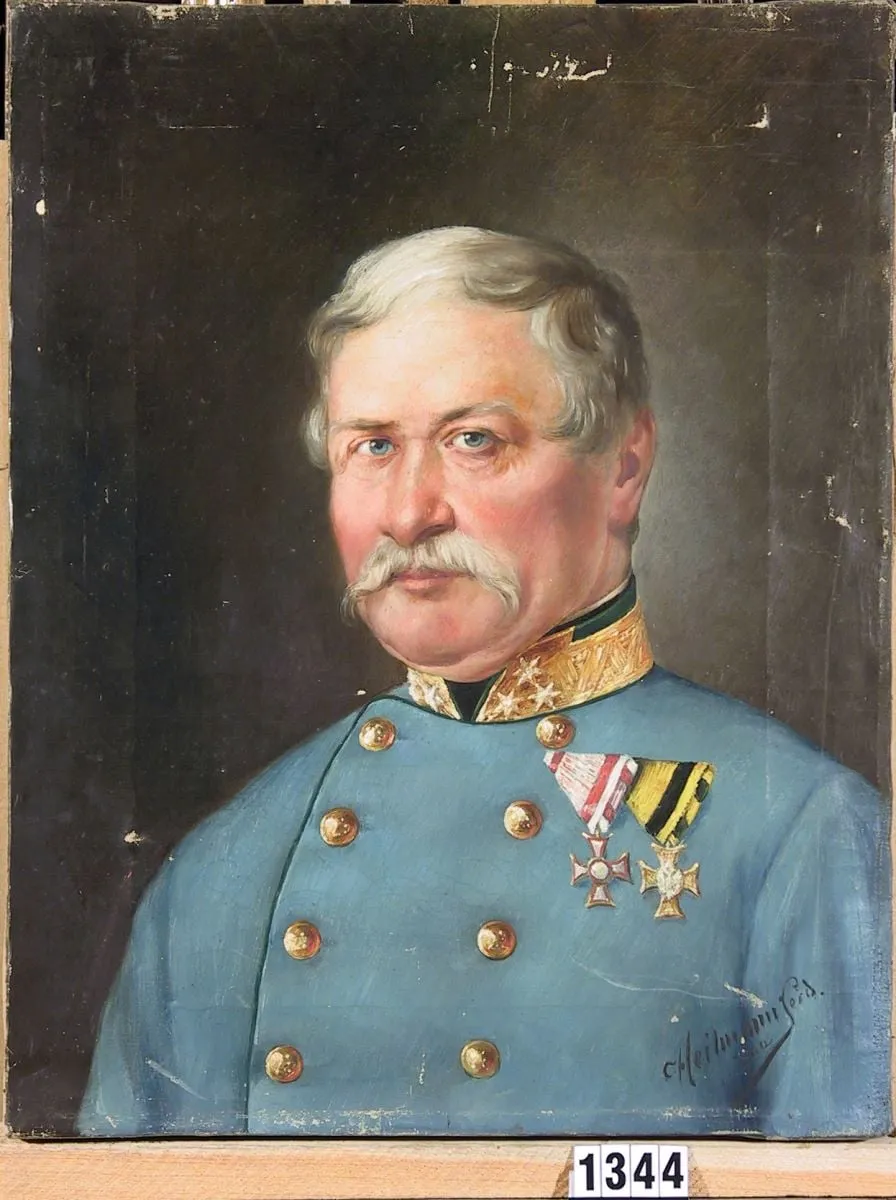
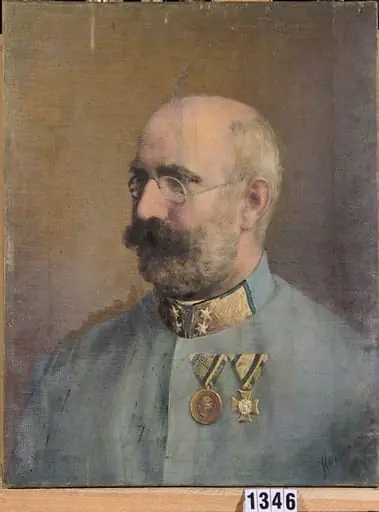
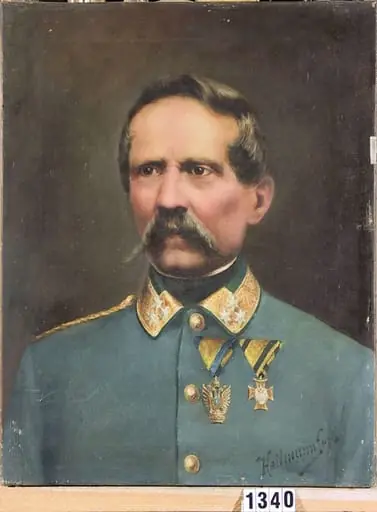
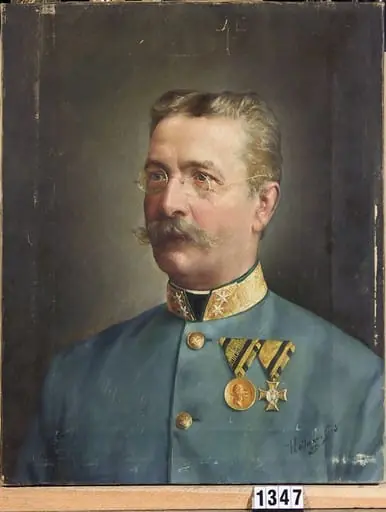
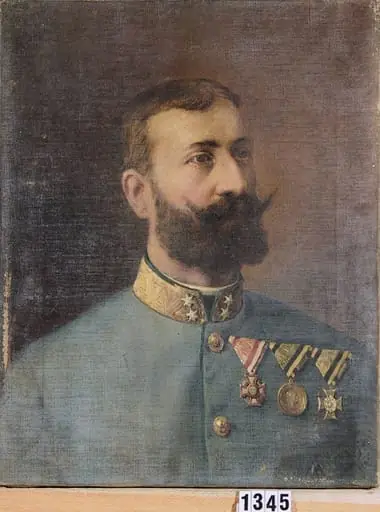
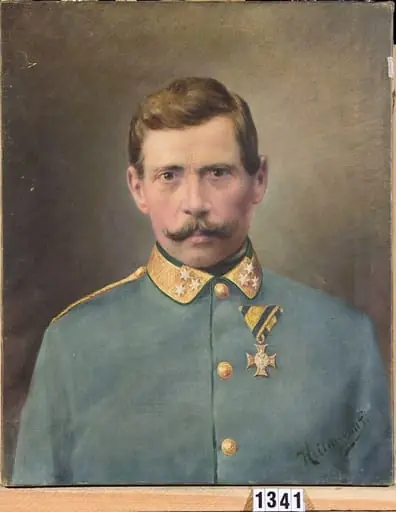
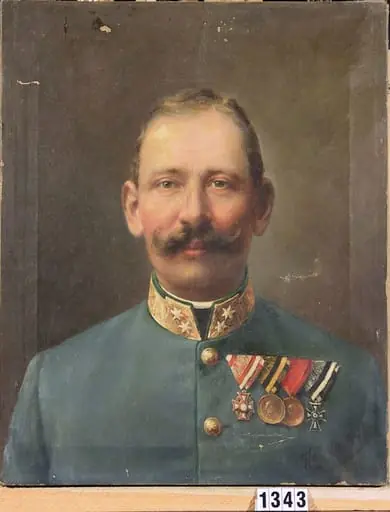
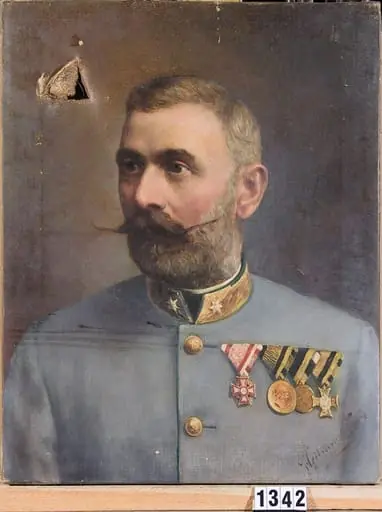
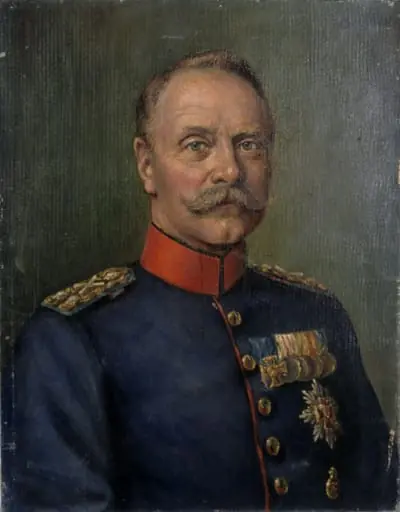
Colonelul Grossmann is an unspecified painting by Ferdinand Heilmann. It is held in the collection of the Brukenthal National Museum. This portrait depicts a military officer in a dark blue uniform adorned with gold buttons and a medal bearing red and yellow stripes.
About this work
Overview
The signature 'Heilmann' in the corner identifies the artist as Ferdinand Heilmann, known for military and portrait subjects in the 19th century.
This portrait depicts a military officer in a dark blue uniform adorned with gold buttons and a medal bearing red and yellow stripes. The subject’s white mustache and hair are carefully styled, and his gaze is direct, conveying composure. The background is uniformly dark, eliminating distractions and centering attention on the figure’s facial expression and attire. The signature 'Heilmann' in the corner identifies the artist as Ferdinand Heilmann, known for military and portrait subjects in the 19th century.
Subject & Meaning
The man’s uniform and medal indicate high military rank, likely from a European army of the mid-1800s. Though his identity remains unconfirmed, the precision of his grooming and the formal pose suggest a man of discipline and status. The absence of contextual elements—such as weapons, insignia, or landscape—focuses the image on personal dignity rather than specific achievements or affiliations, emphasizing character over narrative.
Technique & Style
Ferdinand Heilmann employed a restrained, realistic approach, using subtle tonal variations to render fabric and skin with quiet precision. The dark background enhances the contrast of the uniform’s metallic buttons and the medal’s bright stripes. Brushwork is controlled, avoiding flourish; the face is rendered with soft modeling, suggesting a deliberate, almost clinical attention to detail typical of academic portraiture of the period.
History & Provenance
The painting’s origin is undocumented beyond the artist’s signature. Ferdinand Heilmann, active in the mid-19th century, produced numerous military portraits, often commissioned by officers or institutions. This work likely dates from that era, possibly created as a private commission or institutional record. No public records trace its ownership prior to its current location, leaving its early history speculative.
Context
During the 1840s–1870s, military portraiture flourished across Europe as nations formalized their armies and officers sought to document rank and service. Heilmann operated within this tradition, producing likenesses that balanced individuality with institutional authority. The plain background and focus on uniform reflect a broader trend: portraits designed to affirm status rather than tell personal stories.
Legacy
This portrait contributes to a body of work by Heilmann that preserves the visual culture of 19th-century European military elites. While not widely exhibited, such works serve as historical records of uniform design, grooming standards, and the aesthetics of authority. Its quiet composition reflects a period when portraiture prioritized dignity over drama, offering insight into how rank was visually codified in civilian and military spheres.
Artist & collection
Artist
Ferdinand Heilmann made formal portraits of army officers in the mid-1800s. His brush or needle captured five Hungarian colonels and lieutenants, each shown in full uniform with medals and sashes. The prints and…