Artwork
Cape Town from the Top of Kloof Street
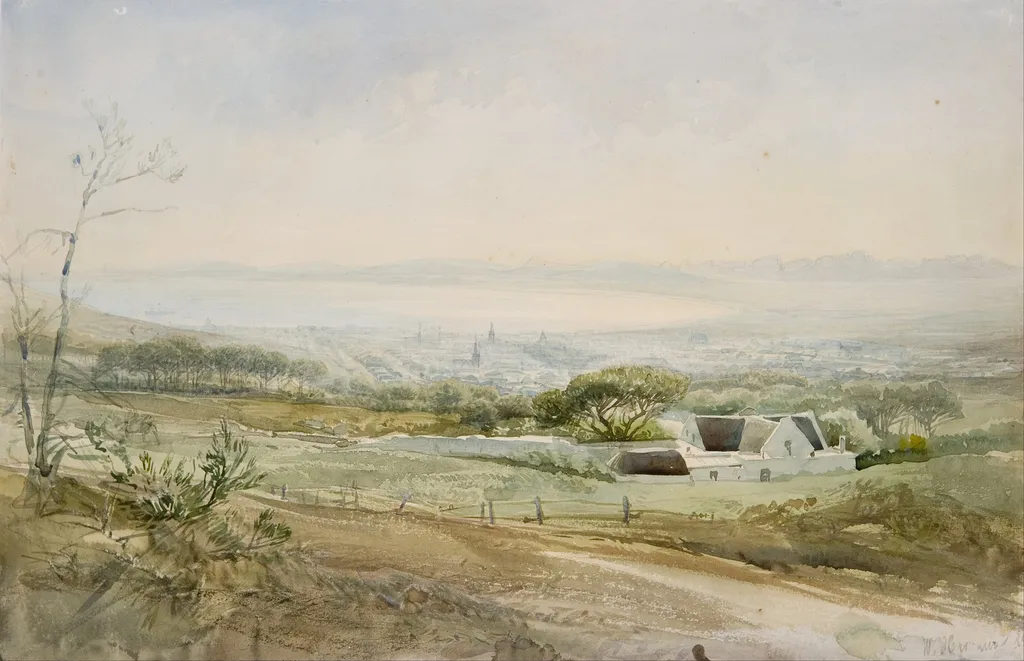
Cape Town from the Top of Kloof Street is a watercolor painting by Heinrich Hermann. It dates from 1900 and is held in the collection of the South African National Gallery.
About this work
Overview
Created in 1900, this watercolor painting by Heinrich Hermann captures a quiet vista of Cape Town as seen from the upper reaches of Kloof Street. Executed in delicate washes, the work belongs to the collection of the Iziko South African National Gallery. Its modest scale and intimate perspective reflect a personal engagement with the urban landscape rather than a grand civic statement.
Subject & Meaning
The composition conveys a sense of stillness, perhaps evoking the transitional character of the city during a period of colonial consolidation and urban change.
The scene presents a white structure with a sloping roof and chimney in the foreground, positioned against gently undulating hills and scattered trees. Beyond, the distant city emerges in hazy outlines, suggesting the quiet expansion of Cape Town at the turn of the century. The composition conveys a sense of stillness, perhaps evoking the transitional character of the city during a period of colonial consolidation and urban change.
Technique & Style
Hermann employed transparent watercolor washes to build subtle tonal gradations, allowing the paper’s white surface to contribute to the luminosity of the sky and distant buildings. Soft, controlled brushwork defines foliage and architectural forms without sharp definition, while muted earth tones and pale blues unify the atmosphere. The technique emphasizes mood over detail, characteristic of late 19th-century watercolor traditions in South Africa.
History & Provenance
The painting has remained in institutional custody since its creation, eventually entering the Iziko South African National Gallery’s collection. There is no documented public exhibition history prior to the 20th century, and its provenance reflects its status as a private work later recognized for its regional significance. It has not been widely reproduced or circulated beyond gallery holdings.
Context
Painted at the dawn of the 20th century, the work coincides with Cape Town’s growth under British colonial administration. The quiet, unpopulated landscape contrasts with the city’s increasing industrial and demographic activity. Hermann’s focus on a secluded viewpoint suggests a preference for contemplative observation over documentary representation, aligning with broader artistic trends among colonial-era watercolorists.
Legacy
Though not widely known outside South African art circles, the painting is recognized as an example of early 20th-century local watercolor practice. It contributes to the historical record of how Cape Town’s topography and built environment were visually interpreted by resident artists. Its preservation in a national collection underscores its value as a quiet witness to the city’s evolving identity.
Own this work as a print
Artist & collection
Artist
Heinrich Hermann spent his life in Cape Town, painting the city from the inside out—always a few steps up, a little closer to the clouds.

 Landscape with Distant Windmill
 Landscape
 Landscape with ruined castle and river
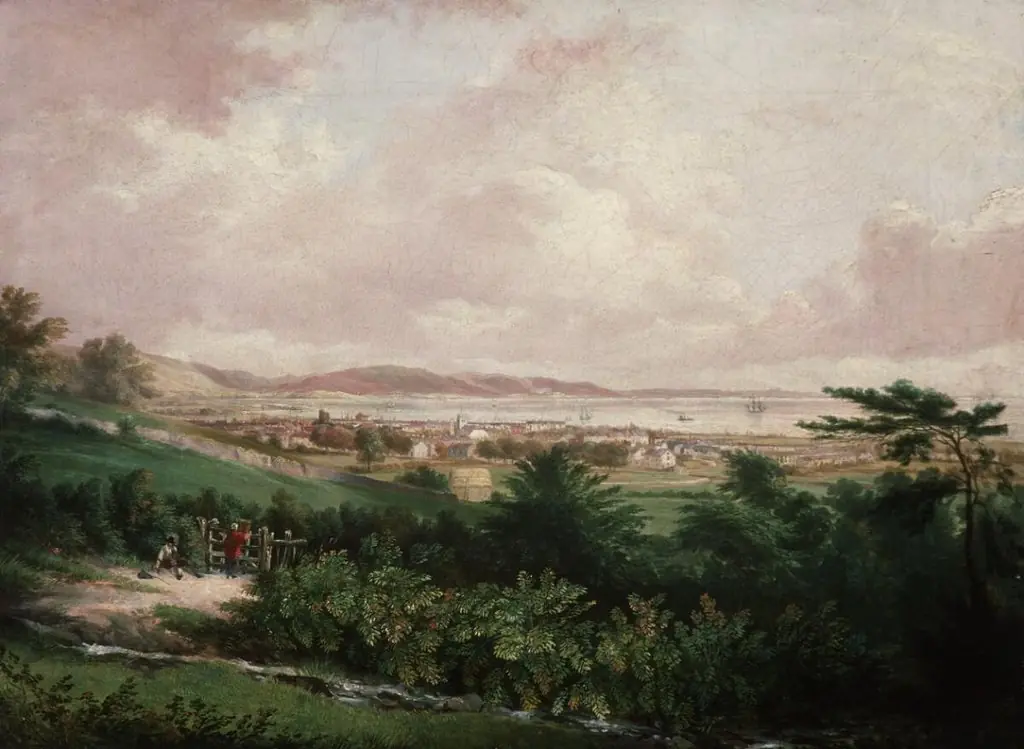 Swansea
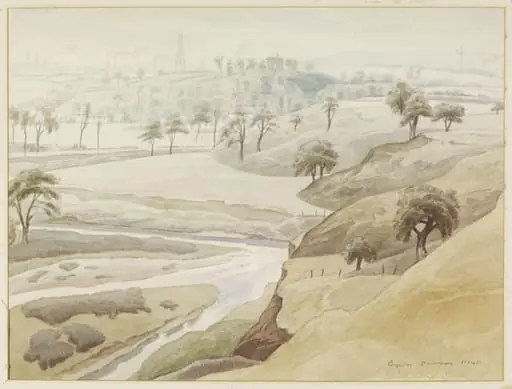 Medlock Valley, Daisy Nook, Oldham
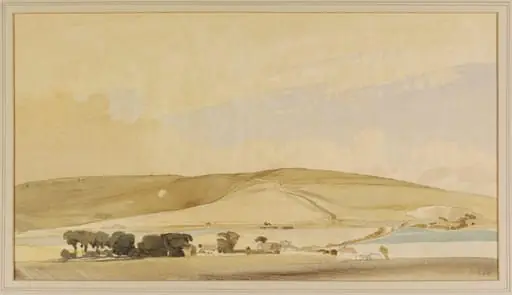 The Southdown, Underhill Road; In the Cuckmere Valley at Milton Street
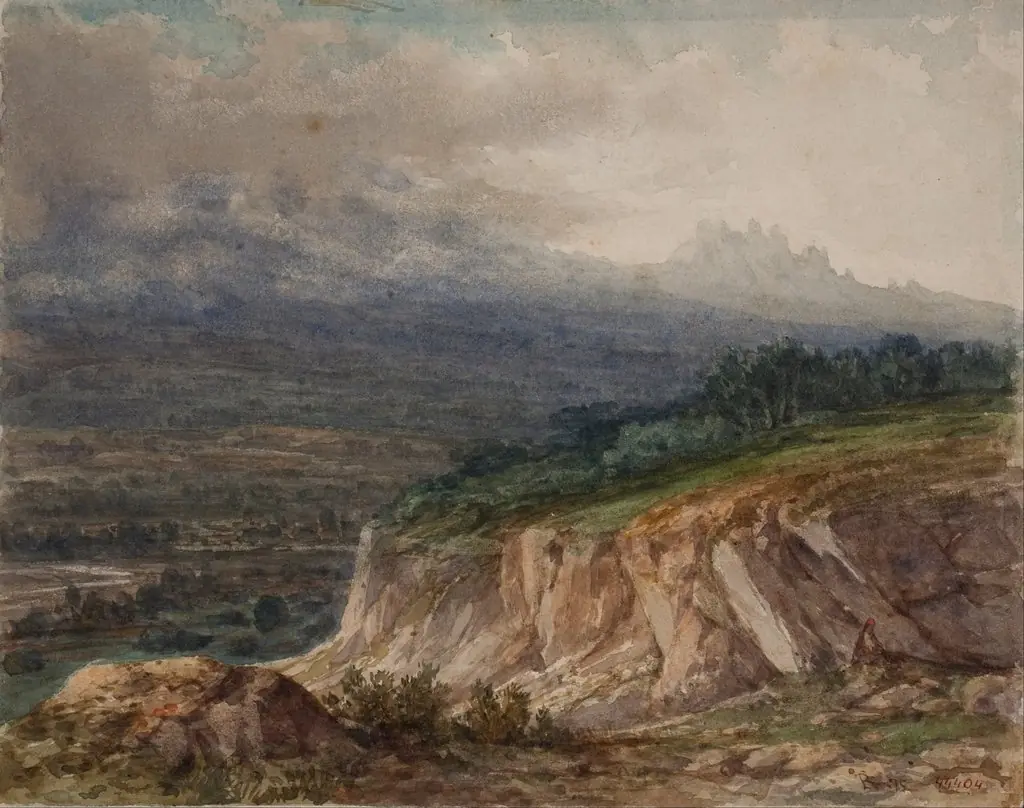 Landscape
 Vale of Dedham
 A Welsh View - Morning
 Landscape with cottage
 Karl Jauslin (1842-1904) - Malerei, Dorfansicht
 Tunis (A Street)