Artwork
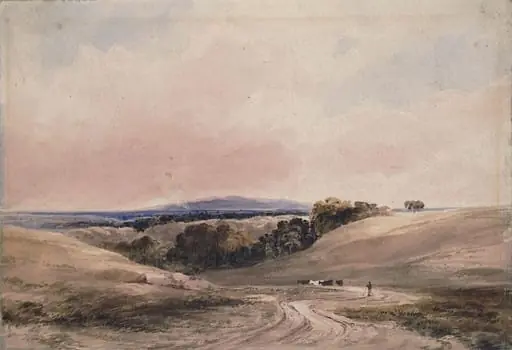
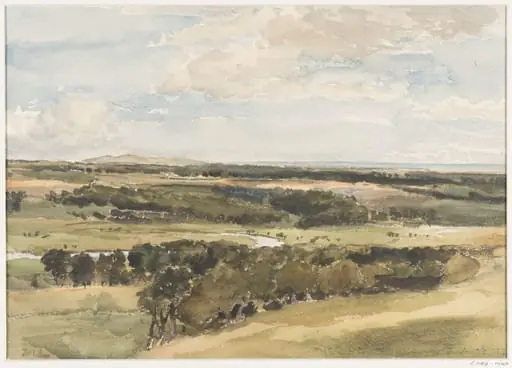
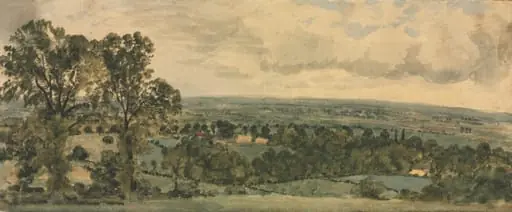
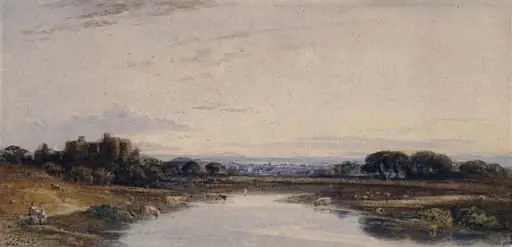
Landscape with Distant Windmill
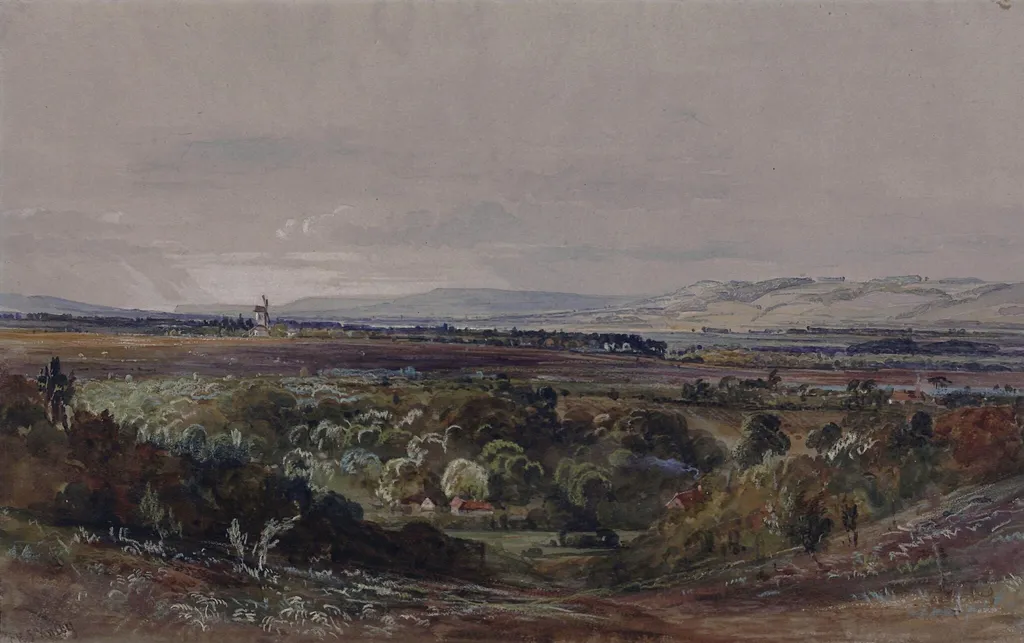
Landscape with Distant Windmill is a watercolor work on paper by the Hudson River School artist Caleb Robert Stanley. It dates from 1815 and is held in the collection of the Victoria and Albert Museum.
About this work
Overview
Created in 1815, this watercolour by Caleb Robert Stanley presents a quiet English countryside scene. Executed in transparent washes, the work captures a moment of stillness with minimal detail and a restrained palette. The artist’s signature appears on the piece, confirming authorship and situating it within his documented output of early 19th-century landscape studies.
Subject & Meaning
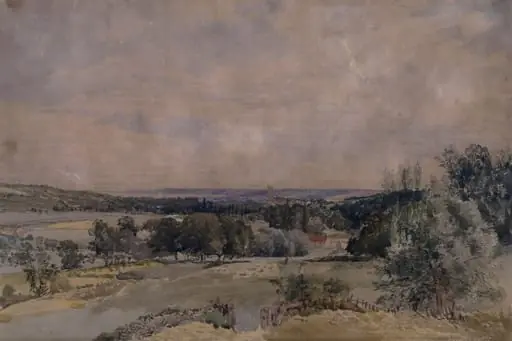
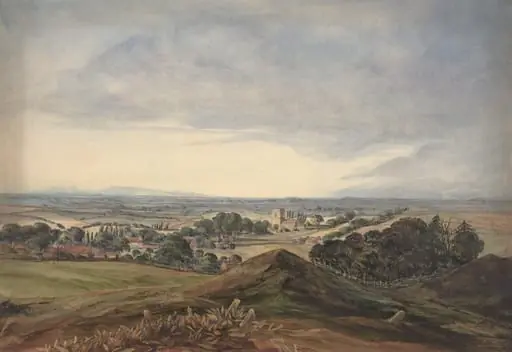
The composition centers on a solitary windmill positioned near the horizon, flanked by undulating fields and scattered dwellings.
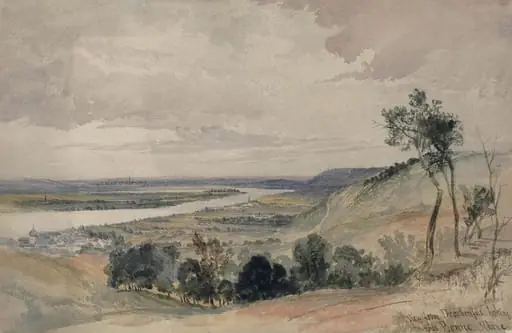
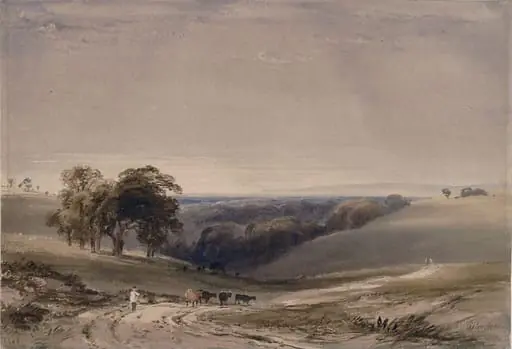
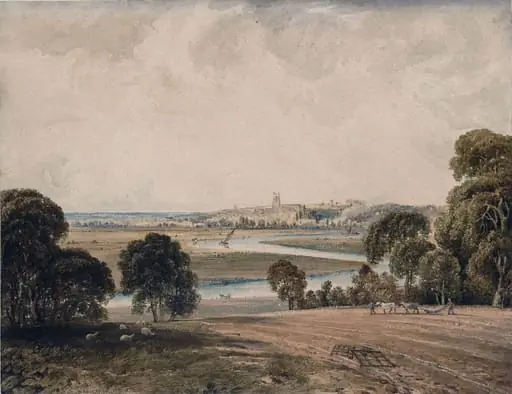
The composition centers on a solitary windmill positioned near the horizon, flanked by undulating fields and scattered dwellings. The windmill, a functional structure rendered without emphasis, suggests rural life rather than symbolic meaning. The absence of human figures and the gentle pacing of the landscape invite contemplation, aligning with a quiet, observational approach to nature common among amateur watercolourists of the period.
Technique & Style
Stanley employed loose, fluid brushwork to suggest form rather than define it. The sky is rendered with pale, diffused washes and faint cloud hints, while trees and fields are indicated through quick, irregular strokes. The watercolour medium allowed for transparency and layering, creating a sense of atmospheric depth without heavy pigment. This technique reflects the prevailing practice among British watercolourists who favored immediacy over finish.
History & Provenance
The work is dated and signed, indicating it was likely a personal study or gift rather than a commissioned piece. No public record of early ownership exists, and it has not been exhibited in major institutions. Its survival suggests it remained within private collections, possibly among the artist’s circle, preserving its modest, unpretentious character.
Context
In early 19th-century Britain, watercolour was widely used by amateur artists and topographical draftsmen to record landscapes. Stanley’s approach aligns with the tradition of quiet, observational landscape drawing, distinct from the dramatic sublime of Romantic painters like Turner. His work reflects a domestic, everyday engagement with the countryside, valued for its tranquility rather than its grandeur.
Legacy
Stanley’s watercolours remain largely outside the mainstream art historical narrative. This piece contributes to a broader understanding of non-professional landscape practice in the period, illustrating how ordinary observers engaged with nature through accessible media. Its significance lies in its unassuming quality, offering insight into the visual culture of its time.
Artist & collection