Artwork
Floral Still Life with a Sunflower
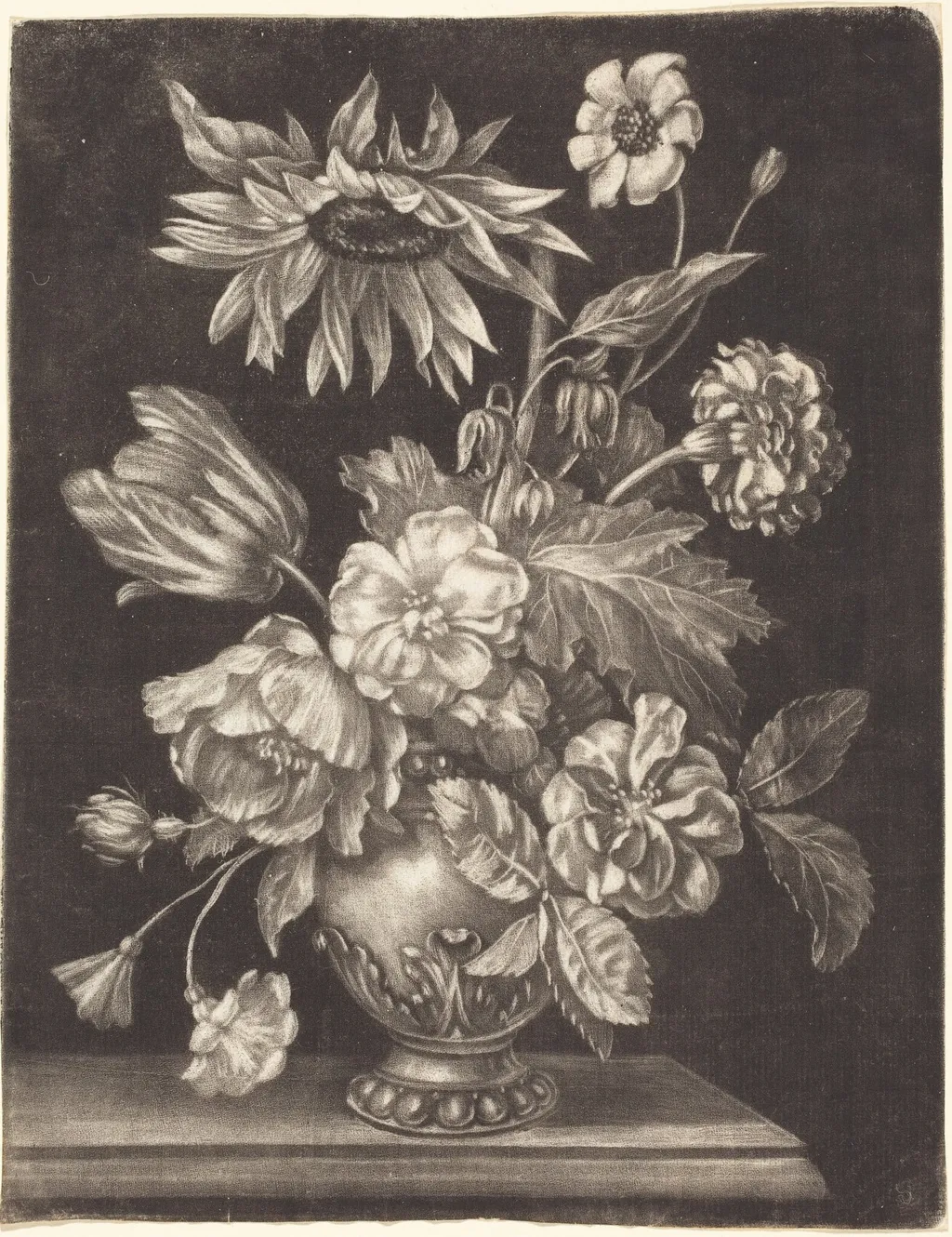
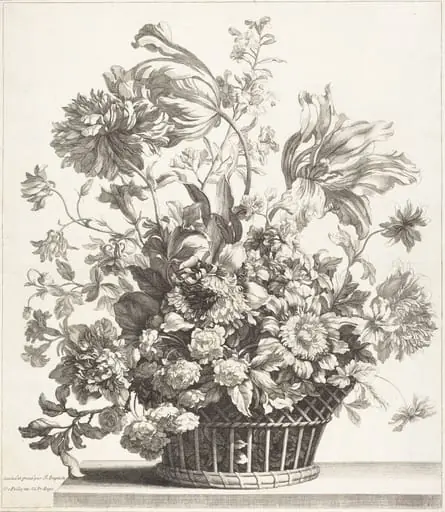
Floral Still Life with a Sunflower is an ink print by the Baroque artist Elias Christoph Heiss. It dates from 1690 and is held in the collection of the National Gallery of Art.
About this work
Overview
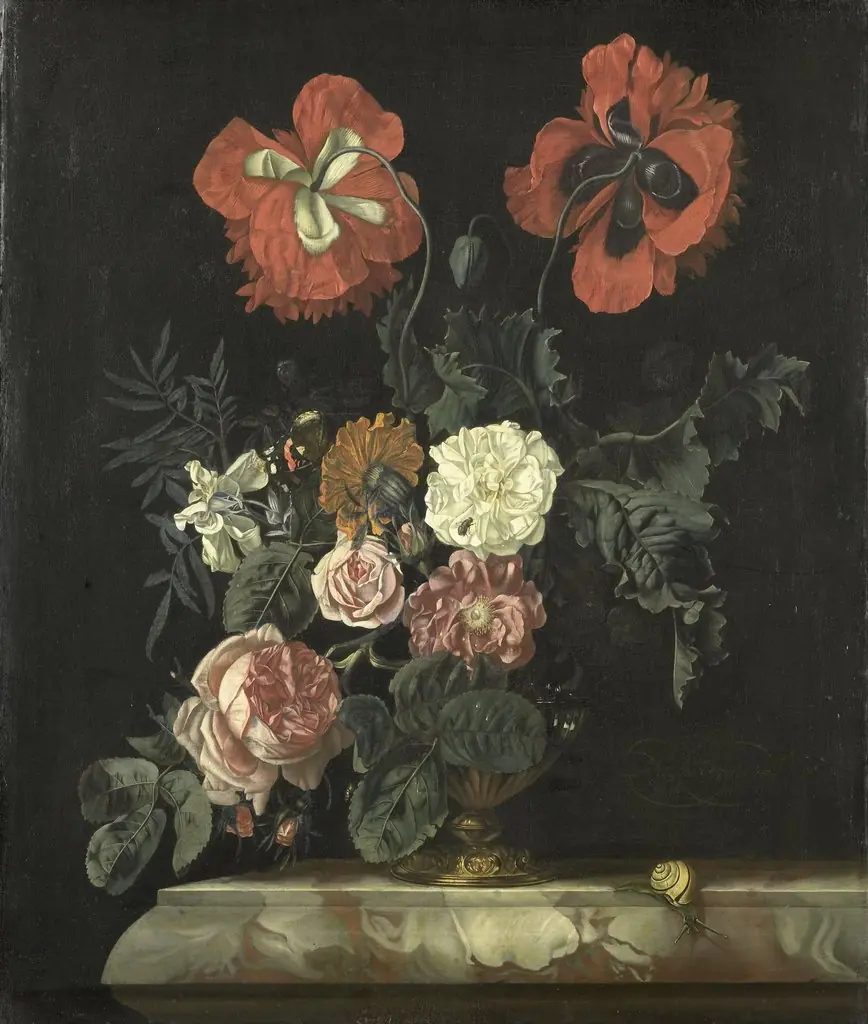
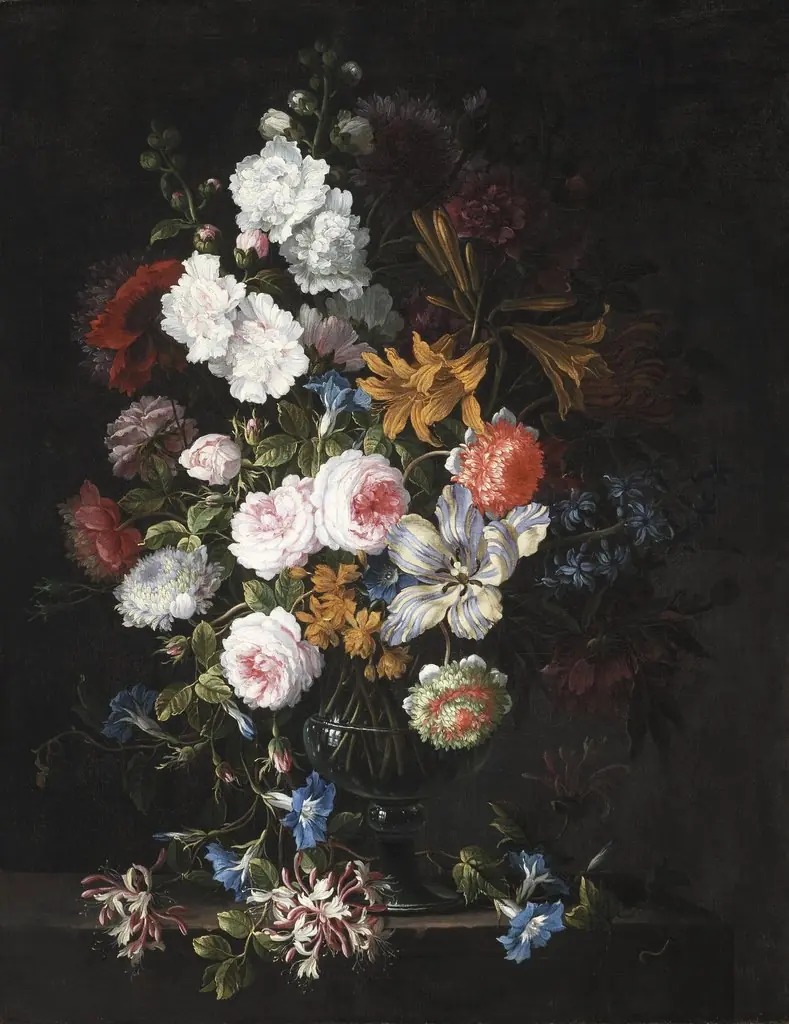
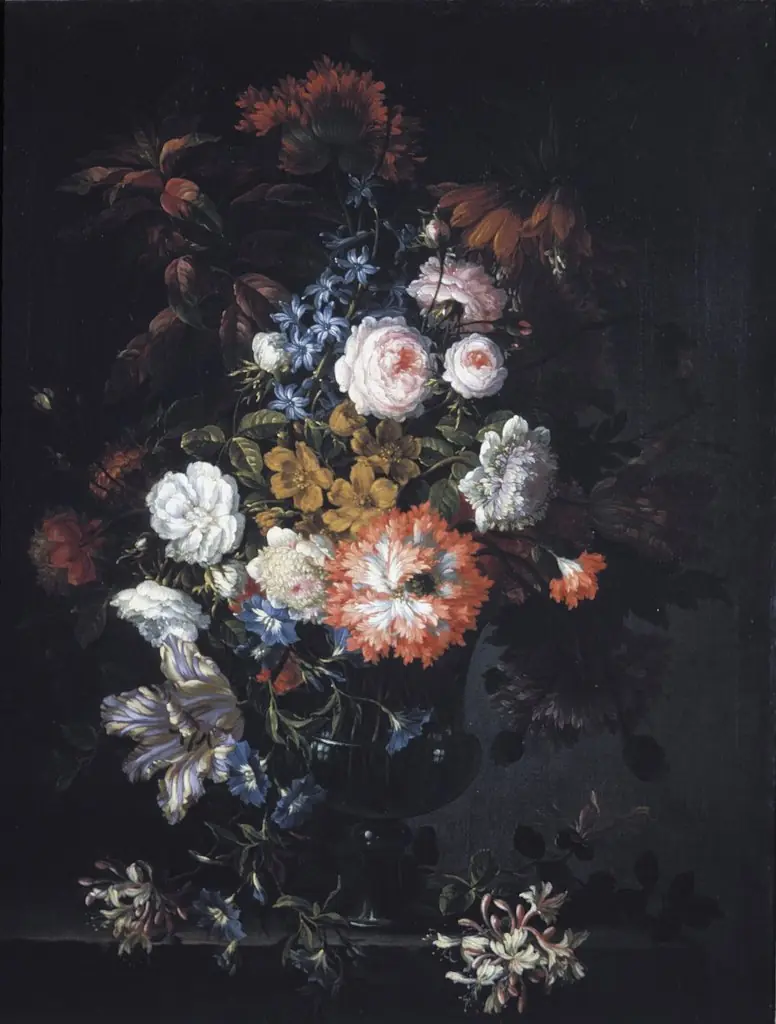
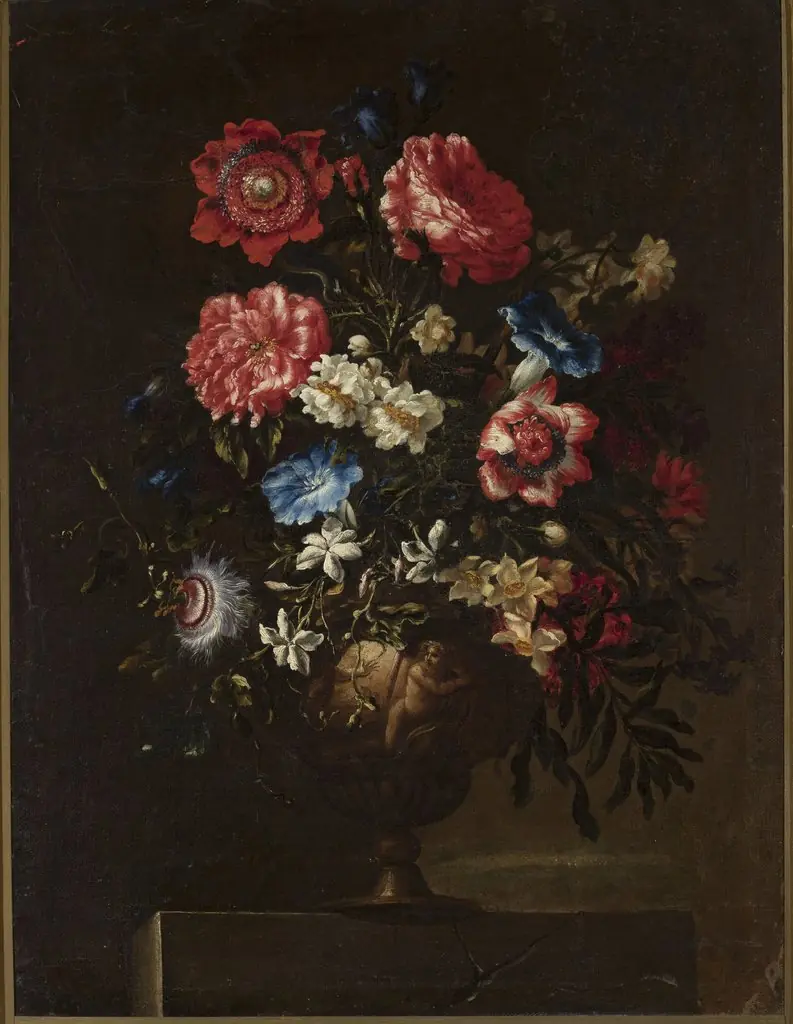
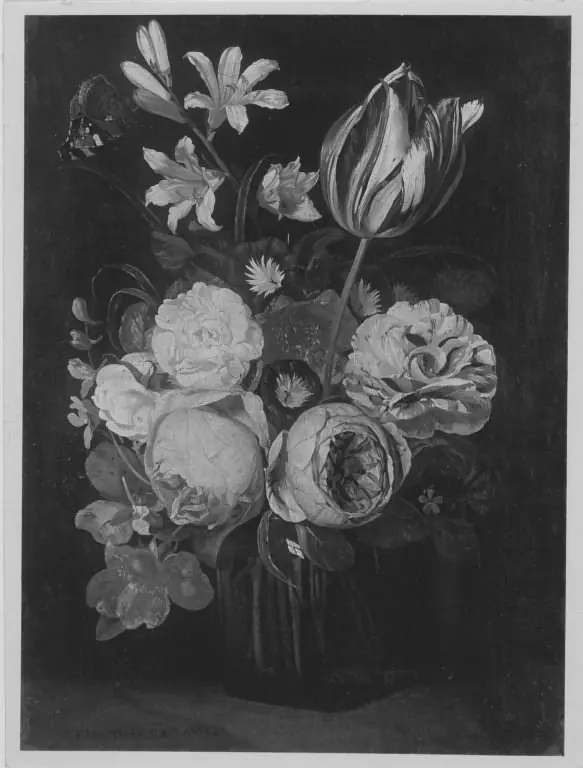
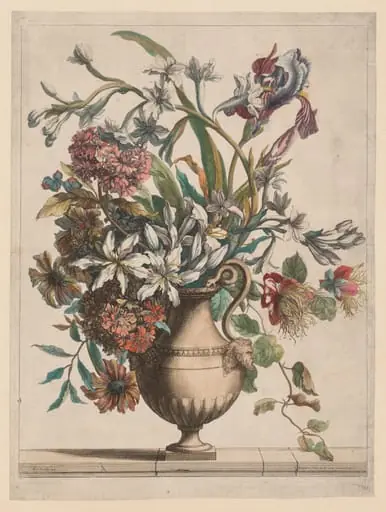
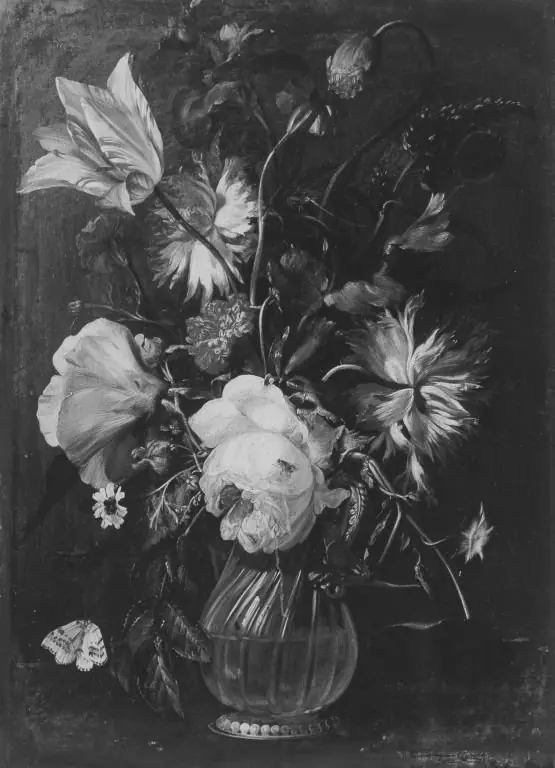
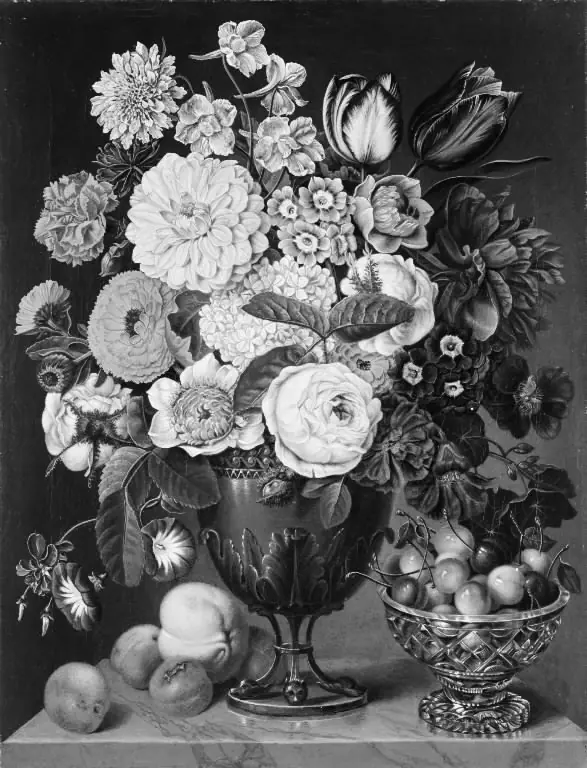
Created around 1690 by Elias Christoph Heiss, this mezzotint on laid paper presents a quiet arrangement of cut flowers in a ceramic vase.
Created around 1690 by Elias Christoph Heiss, this mezzotint on laid paper presents a quiet arrangement of cut flowers in a ceramic vase. Rendered in monochrome, the composition centers on a bouquet spilling over the vessel’s rim, with sunflowers, roses, and smaller blooms interwoven among trailing foliage. The dark, unmodeled background isolates the floral forms, emphasizing their texture and volume through tonal gradation.
Subject & Meaning
The arrangement combines seasonal blooms—sunflowers, roses, and delicate buds—suggesting transience and the passage of time. While not overtly symbolic, the inclusion of the sunflower, a relatively new import to European gardens, hints at the era’s expanding botanical knowledge. The composition reflects a cultivated appreciation for natural beauty, common in Northern European still-life traditions of the late 17th century.
Technique & Style
Heiss employed mezzotint, a printmaking method that achieves rich tonal ranges by roughening a metal plate with a rocker tool. The technique allows for velvety blacks and subtle transitions between light and shadow, enhancing the three-dimensionality of petals and leaves. The sunflower’s intricate petal curves and the soft fall of foliage demonstrate precise control over the medium’s capacity for nuanced chiaroscuro.
History & Provenance
Elias Christoph Heiss, active in Augsburg during the late 1600s, was known for reproductive prints and still-life subjects. This work likely originated as part of a series or independent study in floral observation, reflecting the period’s interest in natural forms. No documented early ownership is recorded, but the print survives in several European institutional collections, indicating its circulation among collectors of graphic arts.
Context
In late 17th-century Germany, botanical illustration and floral still lifes gained popularity as scientific curiosity merged with artistic practice. Mezzotint, introduced from England, became favored for its ability to render subtle light effects. Heiss’s work aligns with a broader trend of printmakers translating painted compositions into accessible graphic forms, catering to an educated middle class interested in nature and aesthetics.
Legacy
Heiss’s mezzotint contributed to the dissemination of floral imagery beyond painting, influencing later printmakers in Central Europe. While not widely celebrated in his lifetime, his technical precision in capturing organic forms helped establish mezzotint as a viable medium for naturalistic subjects. The work remains a quiet example of how printmaking expanded access to detailed botanical observation in the pre-photographic era.
Own this work as a print
Artist & collection