Artwork
A Basket of Spring Flowers
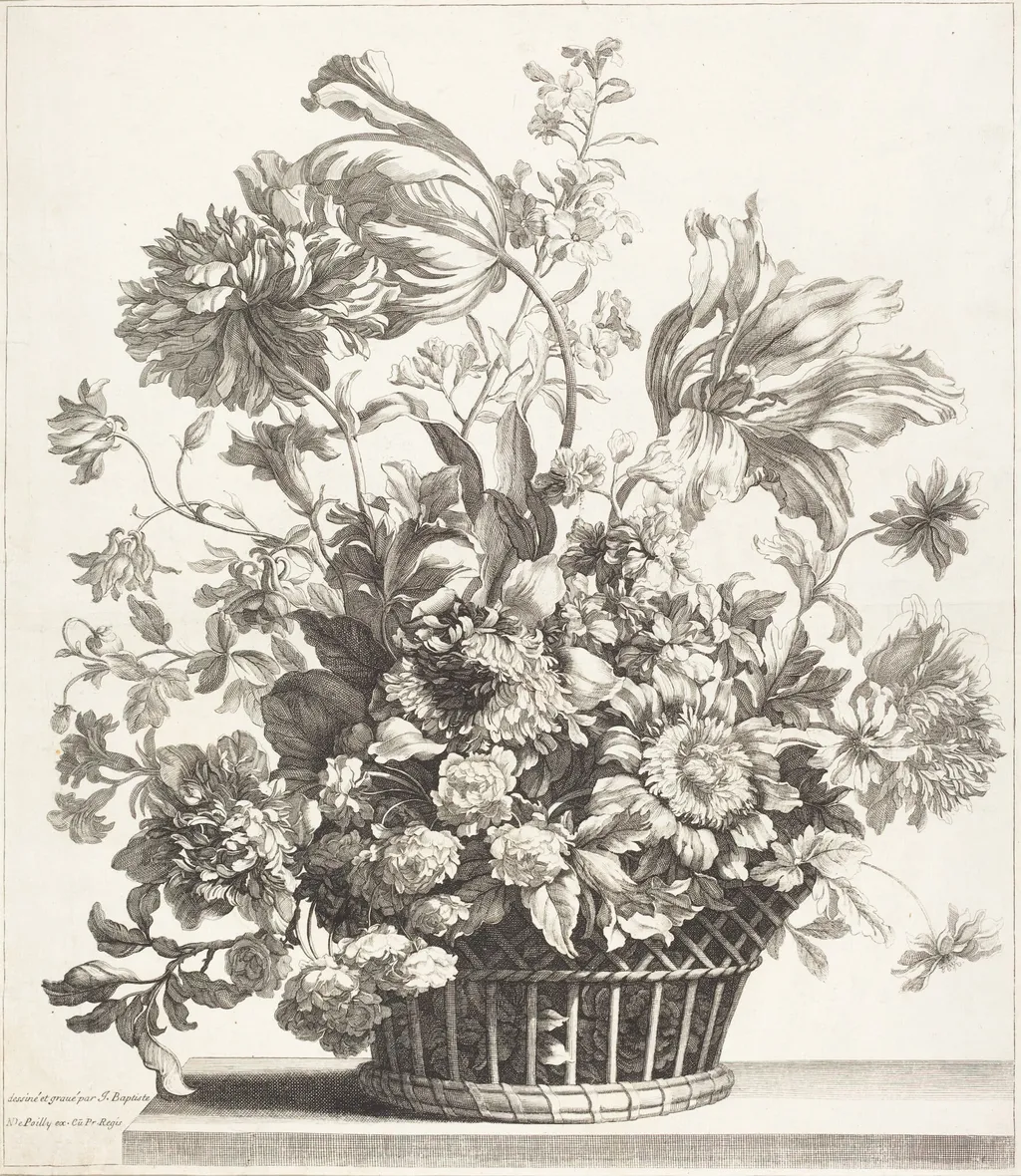
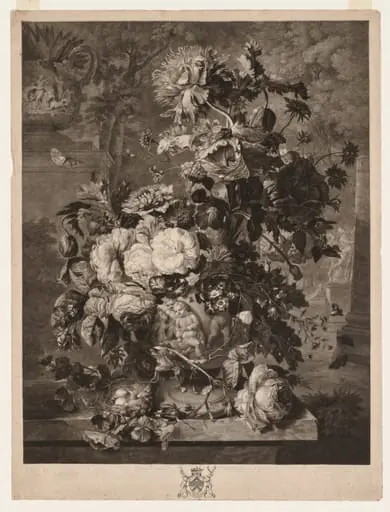
A Basket of Spring Flowers is an ink print by the Baroque artist Jean-Baptiste Monnoyer. It dates from 1680 and is held in the collection of the National Gallery of Art.
About this work
Overview
Created around 1680, this black-and-white print by Jean-Baptiste Monnoyer combines etching and engraving techniques on laid paper.
Created around 1680, this black-and-white print by Jean-Baptiste Monnoyer combines etching and engraving techniques on laid paper. It depicts a woven basket brimming with seasonal blooms, their stems and petals arranged to suggest natural overflow. The composition captures a moment of quiet abundance, with individual flowers rendered in fine, precise lines that convey both variety and vitality without color.
Subject & Meaning
The arrangement features a diverse collection of spring flowers, some fully open, others in bud or turned away, suggesting the fleeting nature of the season. The basket, resting on a flat plane with stray petals and leaves spilling beyond its rim, evokes a sense of organic proliferation. Rather than symbolic allegory, the image emphasizes the quiet beauty of cultivated nature, reflecting contemporary interest in botanical observation.
Technique & Style
Monnoyer employed fine, controlled lines to model each petal, leaf, and weave of the basket, using cross-hatching and delicate stippling to suggest texture and shadow. The absence of color shifts focus to tonal gradation and linear precision. The technique mirrors the precision of scientific illustration, yet retains an artistic sensitivity to form and rhythm, balancing naturalism with compositional harmony.
History & Provenance
The print likely originated as part of a series of floral studies produced for decorative or educational use in late 17th-century France. Monnoyer’s works were widely circulated among collectors and artisans, influencing textile and porcelain design. While the specific early ownership of this impression is undocumented, its survival reflects the demand for detailed botanical imagery in aristocratic and academic circles.
Context
In the late 1600s, France saw a surge in interest in natural history and horticulture, fueled by royal gardens and scientific societies. Artists like Monnoyer translated this fascination into visual form, producing works that bridged art and botany. This print aligns with a broader trend of floral studies used to document plant life, often serving as models for craftsmen in decorative arts.
Legacy
Monnoyer’s floral prints, including this one, contributed to the standardization of botanical representation in decorative arts across Europe. His precise rendering influenced generations of designers in tapestry, ceramics, and wallpaper. Though not widely exhibited today, his work remains a reference point in the history of printmaking and the visual documentation of nature.
Own this work as a print
Artist & collection


 Floral Still Life with a Sunflower
 Liure de Toutes Sortes de fleurs d'après nature: Vase of Flowers
 Twelve Months of Flowers: April
 Marigolds, single Anemone, Jasmine...
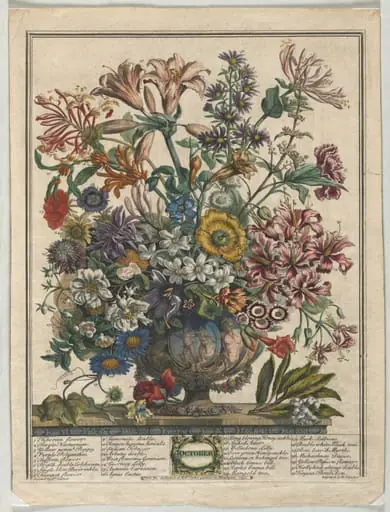 Twelve Months of Flowers: October
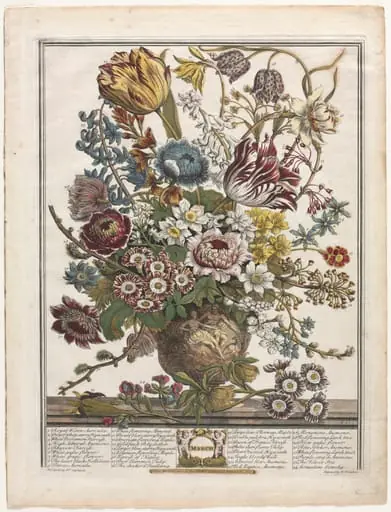 Twelve Months of Flowers: March
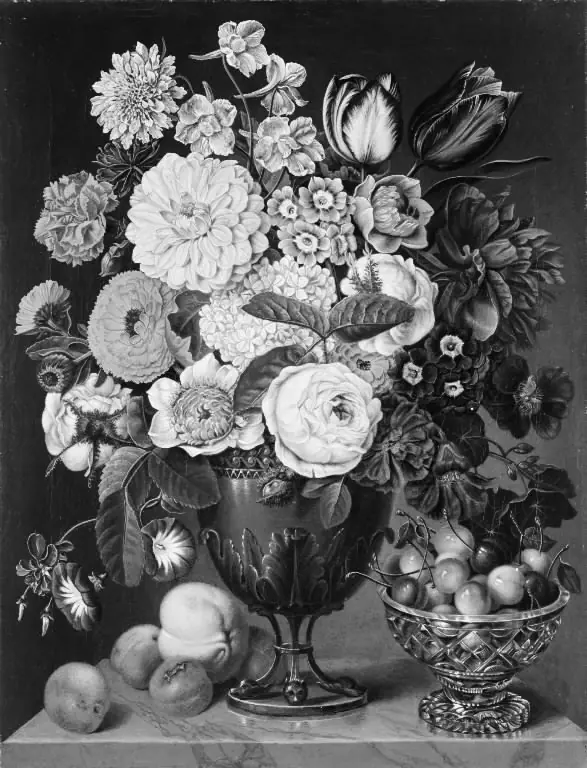 Blomster i en trefodet vase og en skål med kirsebær
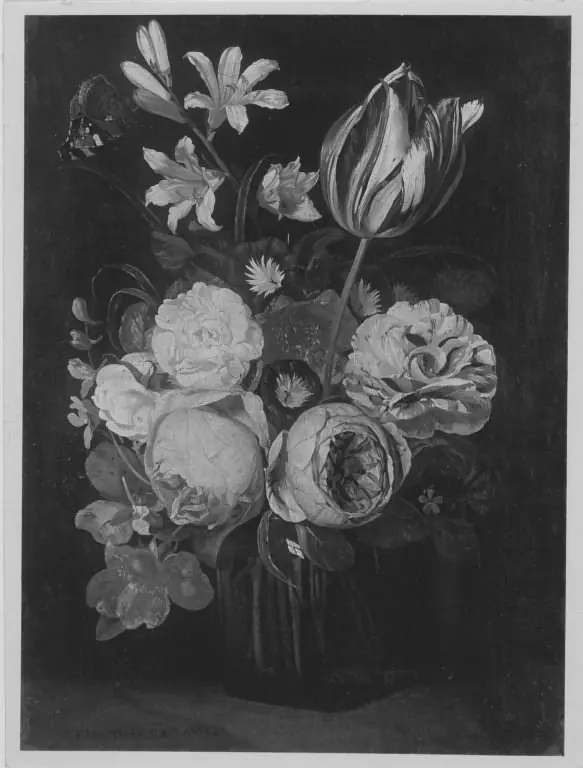 Blumenstück
 A Flower Piece