Artwork
Untitled
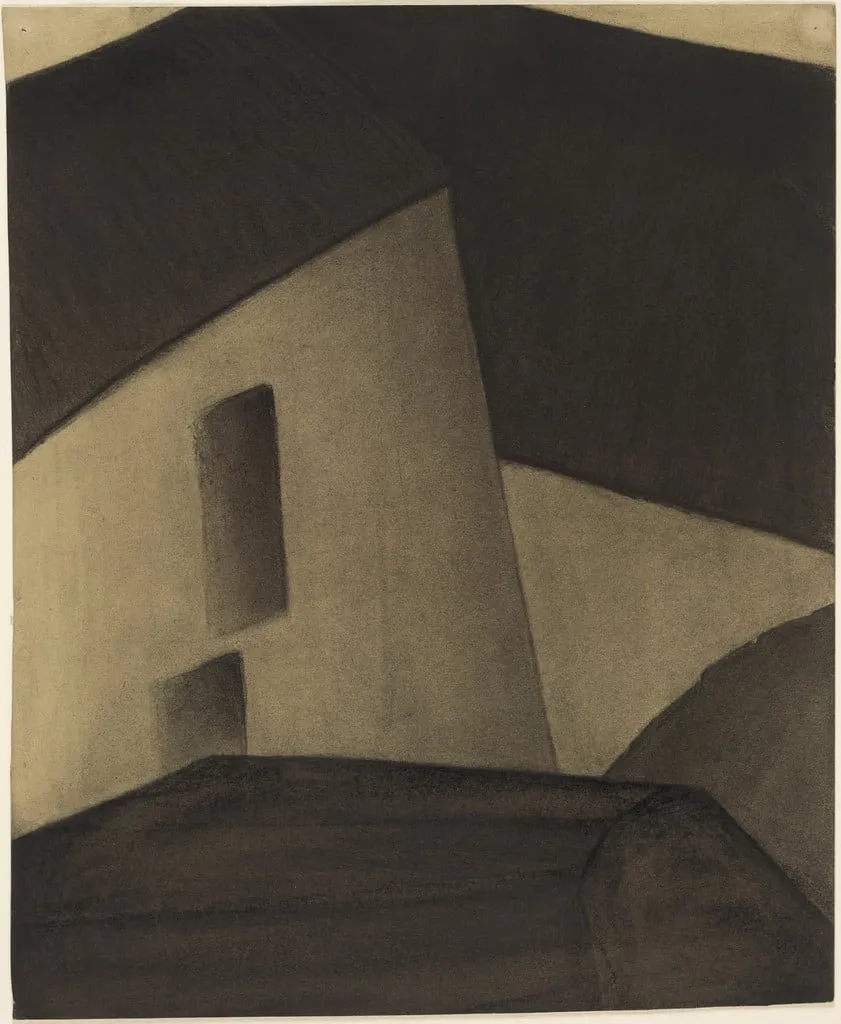
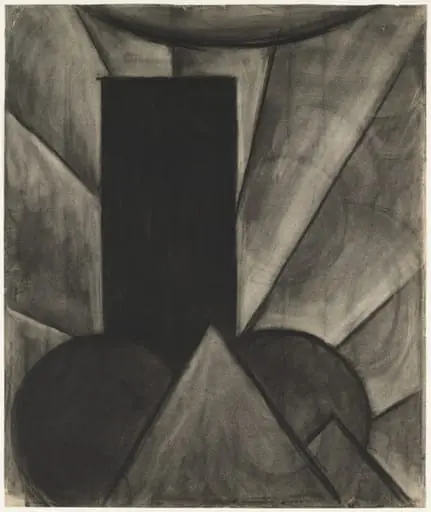
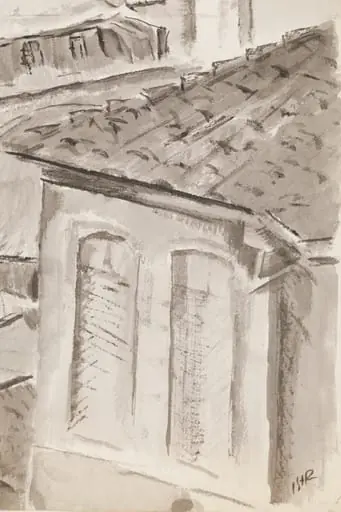
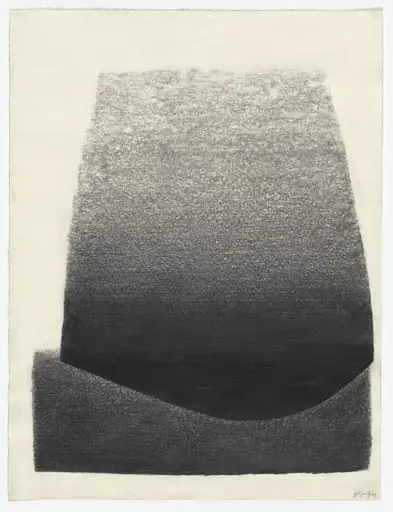
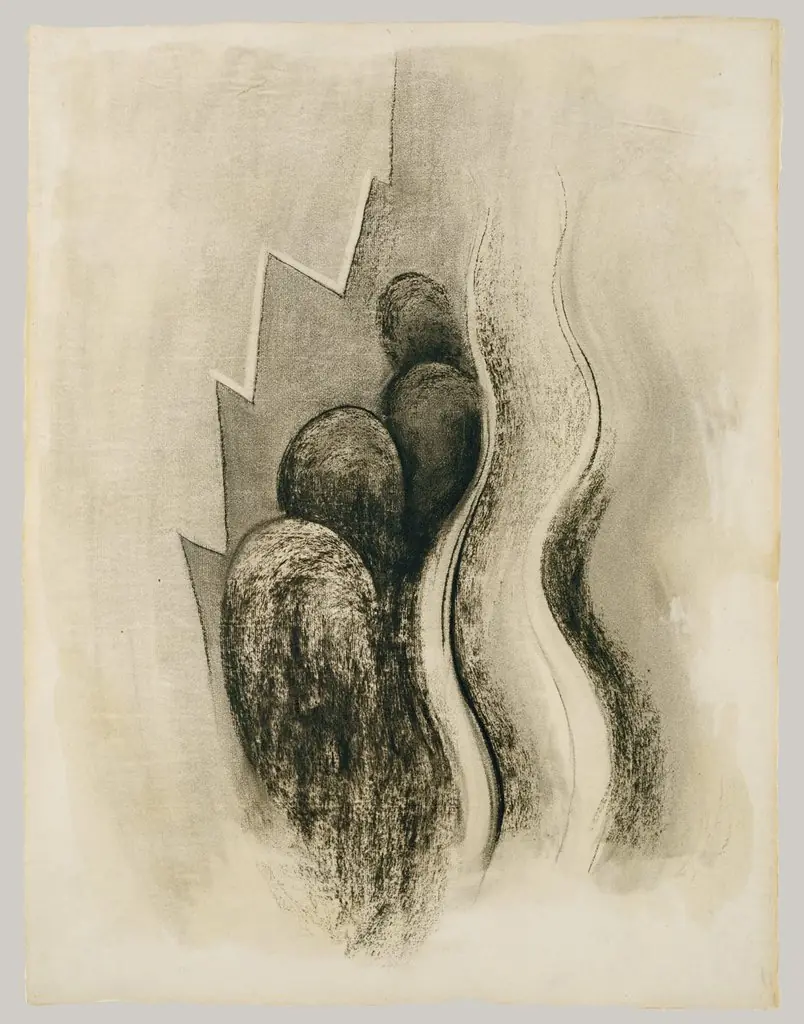
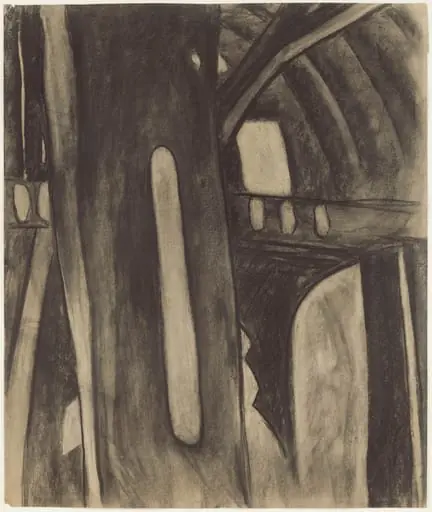
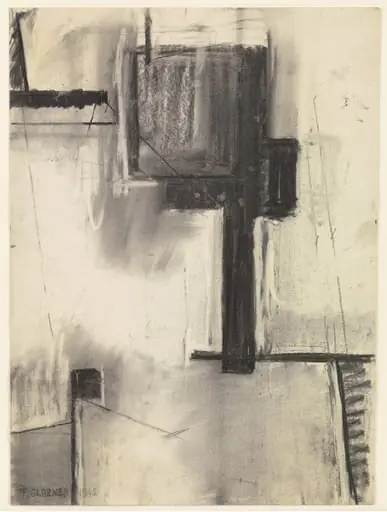
Untitled is a charcoal drawing by Helen Torr. It dates from 1927 and is held in the collection of the Museum of Modern Art.
About this work
Overview
Its composition is dominated by bold, angular forms and a limited tonal range, suggesting architecture through suggestion rather than definition.
Helen Torr created this charcoal drawing around 1927, capturing an abstracted urban scene without literal detail. Executed on paper, the work relies on contrast and gesture rather than representation. Its composition is dominated by bold, angular forms and a limited tonal range, suggesting architecture through suggestion rather than definition. The drawing is part of The Museum of Modern Art’s collection, reflecting its significance in early 20th-century American modernist drawing.
Subject & Meaning
The drawing evokes a cityscape through fragmented geometry, but resists clear identification of buildings or streets. A large, tilted white shape suggests a wall or facade, while a single small window and a horizontal dark line imply interior space or ground level. The absence of detail invites interpretation, emphasizing mood over narrative. The work conveys isolation and structural tension, characteristic of Torr’s response to urban environments during the 1920s.
Technique & Style
Torr employed charcoal with deliberate roughness, using smudging and sharp, uneven strokes to create texture and depth. Areas of dense black contrast with areas of erased or lightly applied graphite, producing a sense of light emerging from shadow. The technique avoids smooth transitions, favoring abrupt tonal shifts that heighten the drawing’s emotional intensity. This method aligns with expressive modernist practices that prioritized gesture over precision.
History & Provenance
Created circa 1927, the drawing emerged during Torr’s active period in New York’s modernist circles. It entered The Museum of Modern Art’s collection in the decades following its creation, likely through acquisition or donation tied to her association with artists like Arthur Dove. Its preservation reflects institutional recognition of her contribution to American abstraction, though she remained relatively private and underrecognized during her lifetime.
Context
Torr worked alongside avant-garde figures in the 1920s, influenced by European modernism and American precisionism, yet her work retained a personal, introspective quality. Unlike contemporaries who depicted cities with clarity, she reduced forms to elemental shapes, reflecting a broader trend toward abstraction in response to industrialization. Her drawings, including this one, offer quiet counterpoints to the era’s more assertive modernist statements.
Legacy
Though not widely exhibited during her lifetime, Torr’s charcoal drawings have gained renewed attention for their emotional restraint and formal innovation. This work exemplifies her ability to convey urban experience through minimal means, influencing later generations interested in abstraction and materiality. Its presence in MoMA’s collection affirms its role in expanding the boundaries of American drawing beyond representational norms.
Artist & collection

Artist
Helen S. "Reds" Torr (1886–1967) was an American early Modernist painter nicknamed "Reds" for her hair color. Torr worked alongside her artist husband Arthur Dove and friend Georgia O'Keeffe to develop a…