Artwork
Tulips and Other Flowers in a Rummer
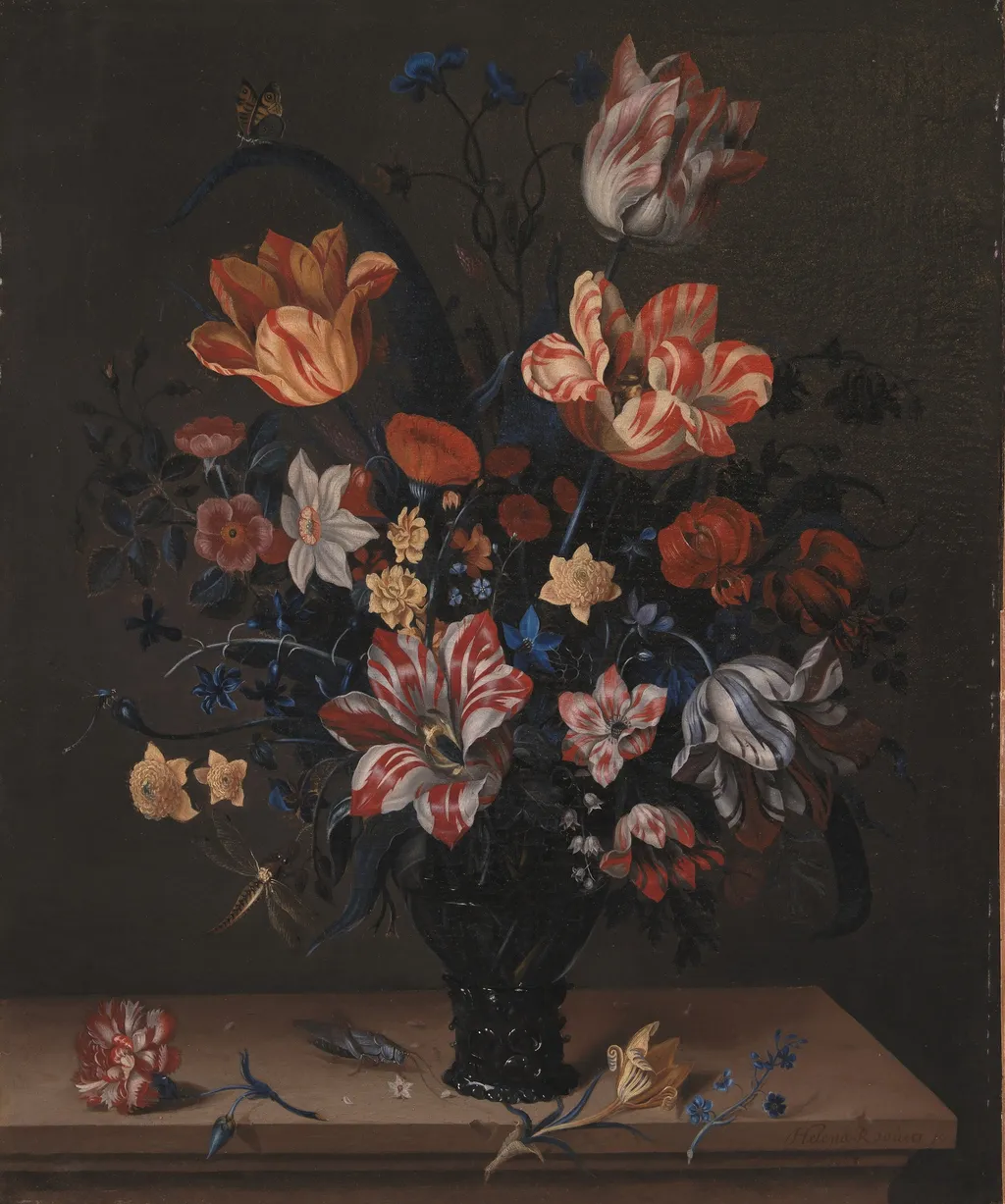
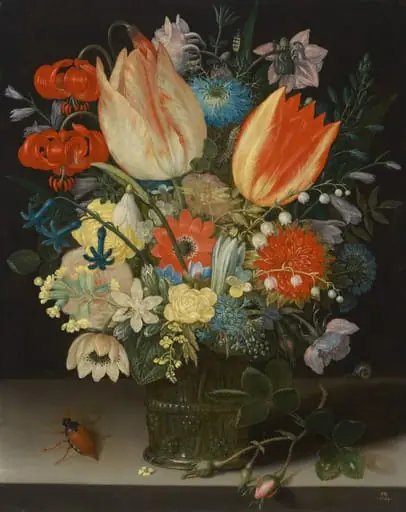
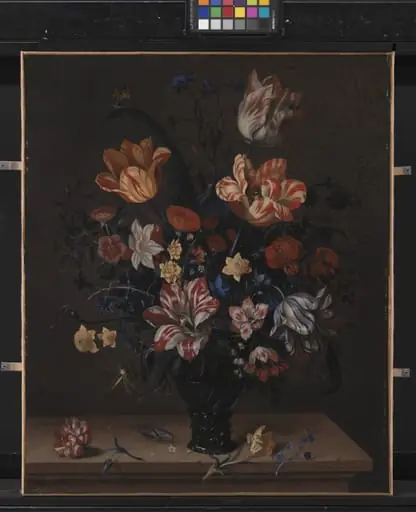
Tulips and Other Flowers in a Rummer is an oil painting by the Dutch Golden Age artist Helena Roovers. It dates from 1663 and is held in the collection of the Statens Museum for Kunst.
About this work
Overview
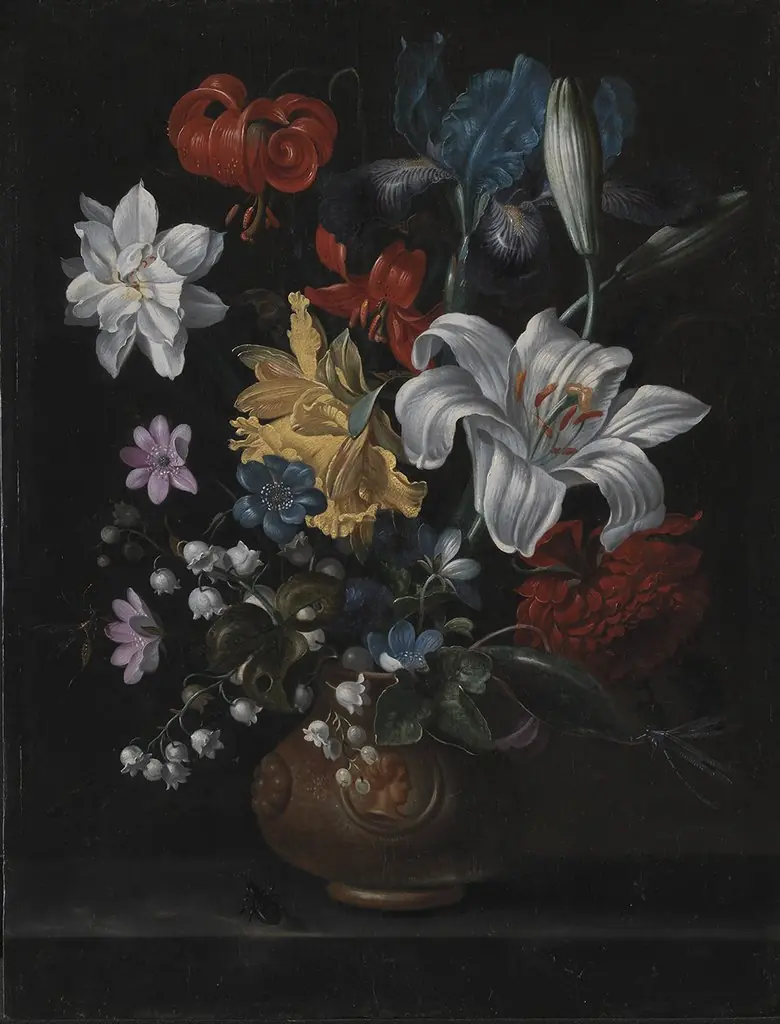
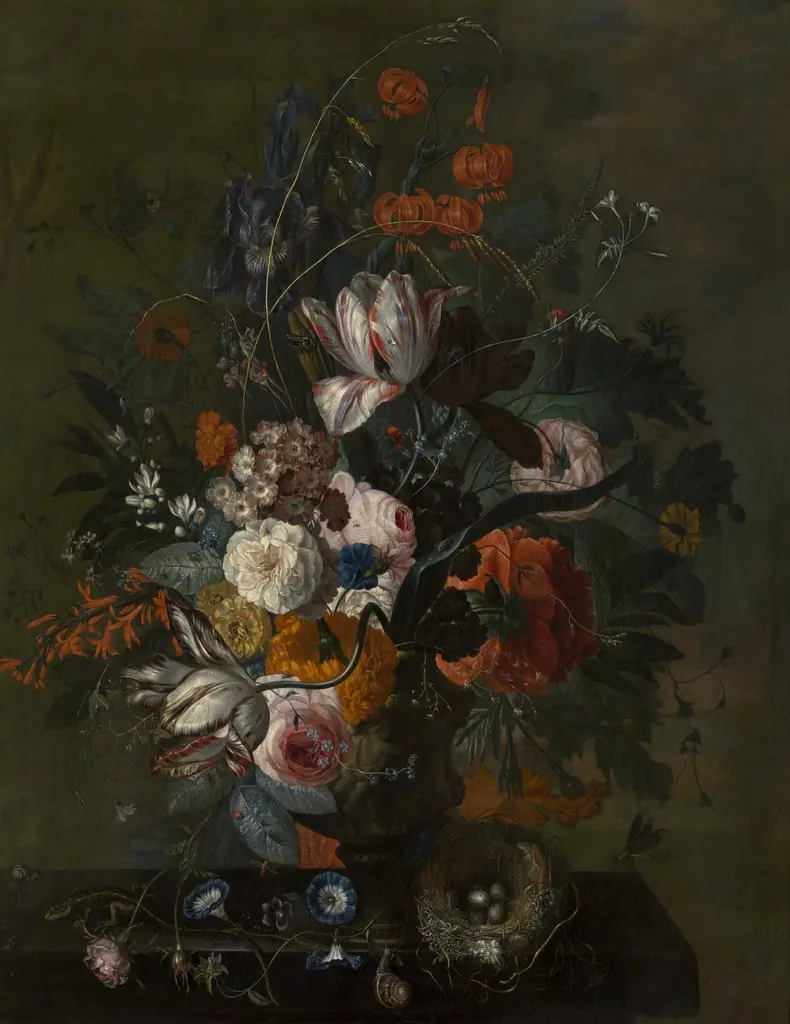
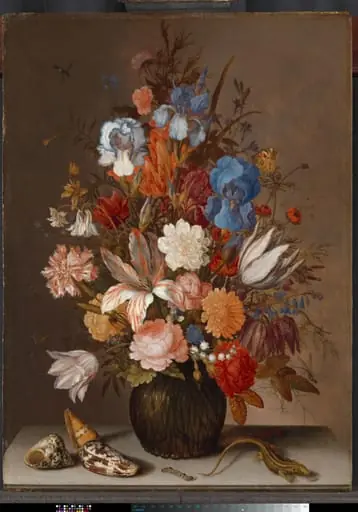
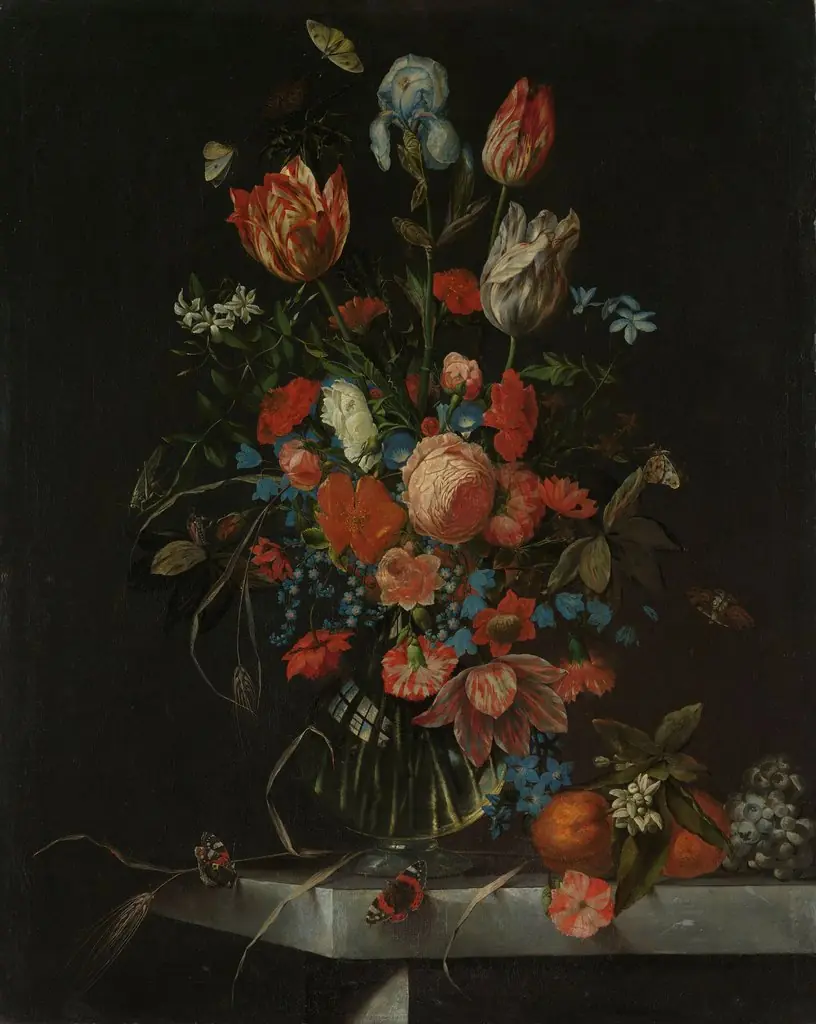
Helena Roovers’ 1663 oil painting Tulips and Other Flowers in a Rummer presents a compact still‑life arrangement. Executed for the Statens Museum for Kunst, the work depicts a dark glass vessel brimming with vividly colored blossoms, set upon a plain ledge. The composition balances naturalistic detail with a restrained setting, inviting close observation of each flower’s form.
Subject & Meaning
Small insects—butterflies and dragonflies—hover near the stems, suggesting a fleeting moment of vitality within an otherwise static tableau.
The central focus is a cluster of tulips rendered in orange‑red tones with white striping, surrounded by pink carnations, blue forget‑me‑nots, and other seasonal blooms. Small insects—butterflies and dragonflies—hover near the stems, suggesting a fleeting moment of vitality within an otherwise static tableau. The juxtaposition of delicate flora and lively insects underscores themes of transience and observation.
Technique & Style
Roovers employs chiaroscuro, allowing a strong light source to illuminate the petals while the surrounding space recedes into shadow. This contrast heightens the saturation of the flowers and gives them a three‑dimensional presence. Fine brushwork captures subtle details such as dewdrops on leaves and the soft transition of light across petal surfaces, creating a near‑photographic realism.
History & Provenance
Created in 1663, the painting entered the collection of Denmark’s national gallery, the Statens Museum for Kunst, where it remains on display. Documentation traces its ownership directly from the artist’s workshop to the museum, indicating a relatively uninterrupted provenance.
Context
The work belongs to the Dutch Golden Age tradition of still‑life painting, where artists often explored the interplay of light, texture, and symbolic objects. Tulips, a luxury commodity in the 17th‑century Netherlands, frequently appear as markers of wealth and fleeting fashion, aligning Roovers’ piece with contemporary cultural references.
Legacy
While not as widely reproduced as some contemporaneous still‑lifes, the painting exemplifies the meticulous observation and technical skill characteristic of the period. It continues to serve as a reference for studies of chiaroscuro application and the botanical accuracy prized by Dutch still‑life painters.
Own this work as a print
Artist & collection